
Auto Repair Labor Guide: Boost Your Shop's Profits
Most shop owners don't have a labor guide problem. They have an estimating problem.
The front counter writes one number. The tech says the job should've been higher. The customer compares the quote to another shop. Then the repair order closes and nobody is fully sure whether the shop priced the work correctly, scheduled it correctly, or made enough on it. That cycle shows up in shops that still use handwritten notes and in shops with software that never got set up properly.
An auto repair labor guide fixes part of that chaos, but only if the shop stops treating it like a dusty reference book. Used well, it becomes the center of estimating, work order consistency, technician planning, customer communication, and margin control. Used poorly, it's just a lookup table that gives false confidence.
The shift is strategic. A labor guide should help the shop standardize labor time, protect against undercharging, and move estimates through a cleaner digital process. That matters even more when the work mix includes diagnostics, electronic systems, and vehicle-specific jobs that punish rough guessing.
Table of Contents
- The End of Guesswork in Auto Repair
- What a Labor Guide Is and Is Not
- How Labor Times and Rates Are Determined
- Applying Labor Charges for Maximum Profit
- Integrating Labor Guides into Your Digital Workflow
- Using Transparency to Build Customer Trust
- Turn Your Labor Guide into a Profit Engine
The End of Guesswork in Auto Repair
The old way of estimating usually fails in the same places. Advisors rely on memory. Techs call out extra time after teardown. Different people quote the same job differently. The shop stays busy but still leaks profit because labor isn't quoted with the same discipline every time.
That isn't just a paperwork issue. It's a control issue.
A labor guide gives the shop a common starting point for repair time, so the estimate doesn't depend on who answered the phone or who was standing at the service counter. Once labor times are standardized, the estimate becomes more consistent, the work order becomes clearer, and the conversation with the customer gets easier.
The problems that show up without one
- Inconsistent quoting: One advisor prices a brake job one way, another prices it differently.
- Underbilled complexity: Vehicle-specific differences get missed, especially when the estimate is based on a generic job name.
- Weak handoff to technicians: The work order says what to do, but not in a standardized format that supports cleaner production.
- Margin erosion: The shop stays active, but too many jobs close below the return the business needs.
Practical rule: If two people in the same shop can quote the same repair two different ways, the shop doesn't have a pricing system. It has habits.
Shops that tighten this up usually don't start by chasing a higher posted rate. They start by making sure labor time is documented the same way every time. That creates a baseline. From there, the shop can price with more confidence, explain charges more clearly, and identify where it is losing time or giving work away.
The labor guide doesn't solve every pricing problem. It does solve the first one, which is guessing.
What a Labor Guide Is and Is Not
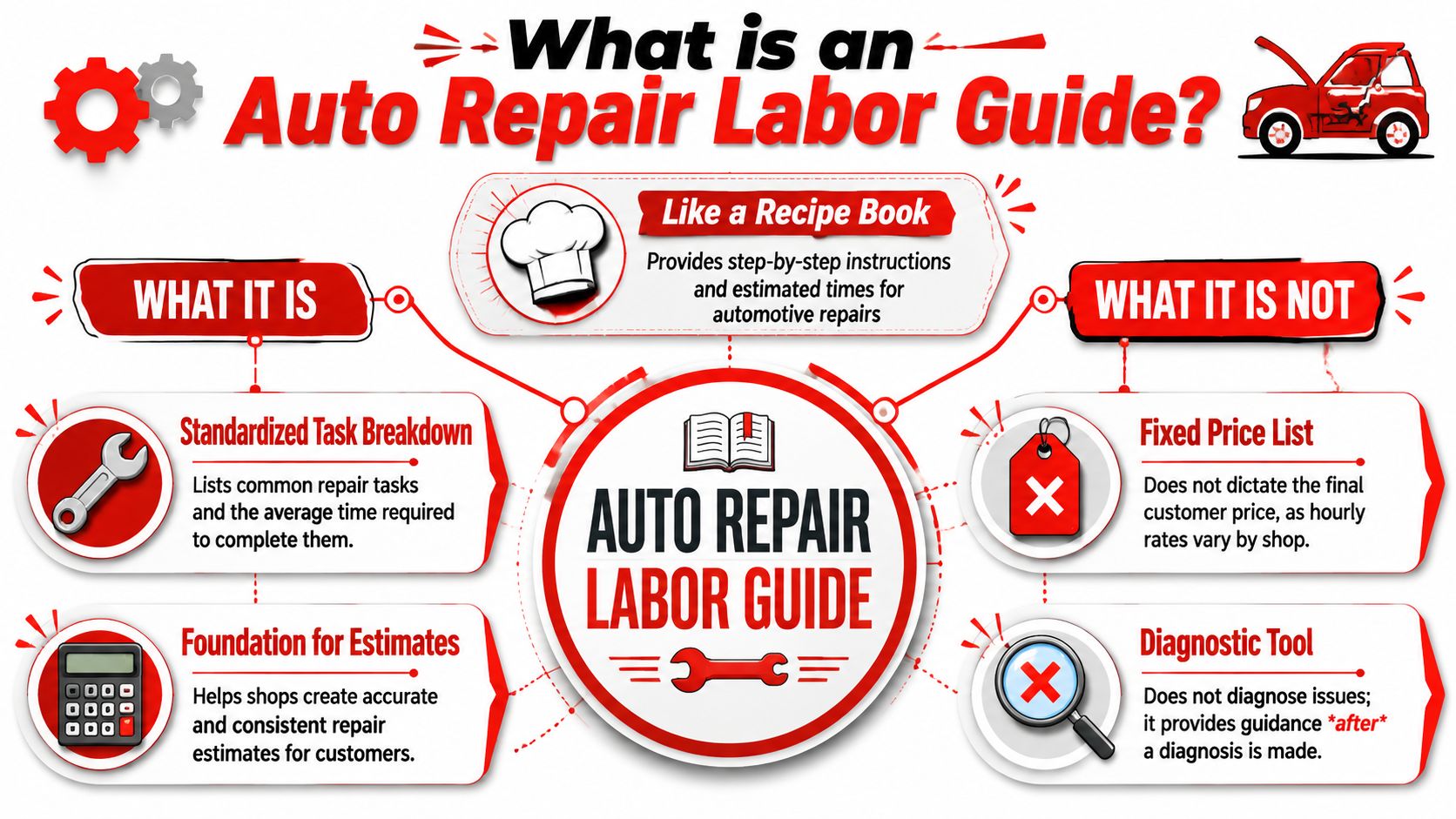
An auto repair labor guide is best understood as a repair cookbook. It tells the shop the standard labor time attached to a specific job, on a specific vehicle configuration, so the estimate starts from something structured instead of memory.
That sounds simple, but the better systems are much more precise than the old flat-rate books typically pictured.
The practical definition
Modern labor guides aren't just generic flat-rate tables. Better systems tie labor times to a specific year, make, model, and engine configuration, then push standardized job descriptions into work orders. That reduces estimate variance and helps prevent undercharging when the repair scope depends on the exact vehicle, not a broad category of car, as described by.
That matters in everyday shop operations because "replace water pump" isn't one job across the entire car park. Access changes. Components in the way change. Procedure assumptions change. A good guide captures that structure before the advisor ever presents the estimate.
Where shops get confused
The confusion starts when shops expect the guide to do jobs it was never built to do.
A labor guide is:
- A time benchmark: It gives the shop a baseline for labor on a defined repair.
- A consistency tool: It helps different advisors write similar estimates for similar work.
- A work-order input: Standardized descriptions reduce ambiguity once the car moves to the bay.
A labor guide is not:
- A final selling price: The guide provides time, not the shop's full pricing strategy.
- A diagnosis engine: It doesn't tell the shop what's wrong with the vehicle.
- A substitute for judgment: It can't see corrosion, hacked prior repairs, broken fasteners, or hidden damage.
A labor guide should standardize the estimate. It shouldn't replace the advisor's responsibility to understand the job.
This distinction matters because many shops either overtrust the guide or ignore it. Both create problems. Overtrust leads to missed labor on messy real-world jobs. Ignoring it leads straight back to inconsistent quoting and front-counter improvising.
The smart middle ground is to use the labor guide as the structured baseline, then apply shop judgment where the actual vehicle or repair path justifies it.
How Labor Times and Rates Are Determined
A service advisor pulls 2.6 hours from the guide for a front brake job. Another advisor writes the same car at 3.4. The technician does the work in 2.1, but the shop still loses money because the posted labor rate never caught up with payroll, scan tools, and overhead. That is how labor problems show up in real shops. Not as theory, but as inconsistent estimates and thin margins.
Where labor time comes from
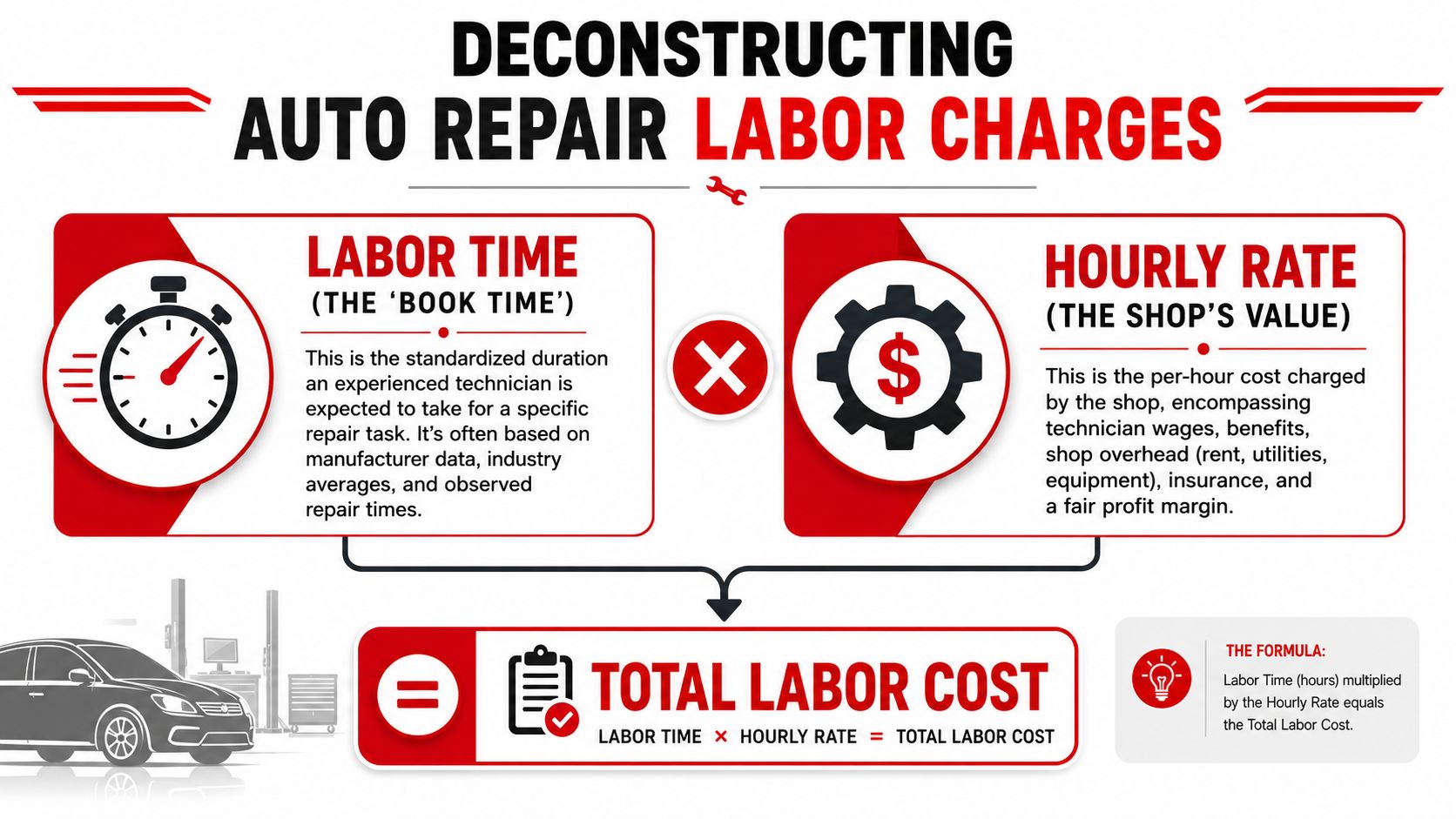
Labor time starts with a published standard. Good databases build that standard from OEM procedures, field-tested repair data, or both. They are trying to answer a practical question: under defined conditions, how much billable time should this operation carry?
Different guides still produce different answers. That usually comes down to source data, update frequency, and the assumptions built into the operation. Some databases account for variation by showing a range or separate low, average, and high times for the same repair, as explained in.
That matters more than many shops realize.
If one guide assumes a clean late-model vehicle and another bakes in more real-world resistance, the time will not match. Neither number is automatically wrong. The advisor has to know what the published time includes, what it excludes, and whether the vehicle in front of the shop fits that baseline. Shops that treat labor time as a static lookup miss the larger point. In a modern workflow, that time standard should feed estimating, technician planning, exception handling, and later analysis of quoted versus billed versus actual hours.
Why labor rate is a management decision
The labor guide gives time. The shop sets rate.
A widely used benchmark for independent shops is $120 to $159 per hour, with a national benchmark near $140 per hour. Regional variation is substantial. West Coast and Mountain states often run $130 to $200 per hour, while the South ranges from $85 to $160 per hour, based on.
Those ranges are useful for context, not permission. Copying a competitor's posted rate is lazy pricing. Shops with the same ZIP code can need very different labor rates because their technician mix, equipment load, warranty exposure, inspection process, and car count are different.
A rate has to support the business behind it:
- Technician pay plans and skill level
- Diagnostic equipment and software subscriptions
- Rent, utilities, insurance, and admin overhead
- Market position
- Target profit on labor
The same benchmark discussion notes that many shops aim for 15% to 25% profit margins on labor, while stronger operators often manage labor using gross-profit targets and tighter cost controls. The point is not the formula by itself. The point is that labor rate should come from math and operating strategy, not habit.
| Component | What it answers |
|---|---|
| Labor time | How long the repair should be billed for |
| Labor rate | What one billable hour must produce for the business |
| Final labor charge | What the customer sees on the estimate |
Shops used to treat those three lines as a basic estimate formula. The better shops treat them as system inputs. Once labor time and labor rate are set correctly, digital shop software can flag underquoted jobs, track effective labor rate by advisor, compare sold hours to produced hours, and show where profit leaks out. AI tools can help spot those patterns faster, but only if the underlying guide data and rate logic are disciplined.
That is the shift. Labor guides are no longer just reference books. Used correctly, they become the control point for pricing consistency, workflow accuracy, and profit management.
Applying Labor Charges for Maximum Profit
A labor guide should never be treated as a magic final answer. It is the baseline. Profit comes from how the shop applies that baseline to real cars, real technicians, and real operating costs.
The strategic mistake is using book time only as a scheduling estimate while leaving pricing to habit. Public guidance around repair billing notes that some shops bill flat rate and others bill actual technician time, but that still leaves a practical gap. Labor guides are built to estimate repair time, not to define the shop's entire labor strategy, as reflected in.
Book time is the starting point
Book time works well when the repair is clean, access is predictable, and the vehicle hasn't been altered by age or previous bad work. For routine jobs on common vehicles, the guide should anchor the estimate. It gives the advisor a defensible starting point and keeps similar jobs priced similarly.
Where shops lose money is when they stop thinking after the lookup.
A labor guide doesn't automatically include every piece of work attached to the repair order. Diagnostics, teardown for confirmation, calibration-related steps, or unusual setup time often need their own line item or explanation. If the shop doesn't separate those tasks clearly, they disappear into the job and the technician's time gets absorbed for free.
What deserves a pricing adjustment
Some situations justify sticking close to listed time. Others justify adding labor or breaking out separate operations.
A practical review before finalizing the estimate should include:
- Vehicle condition: Rust, seized hardware, and age-related wear can change the effort dramatically.
- Previous repairs: Non-standard parts, stripped fasteners, and prior shortcuts usually add time.
- Diagnostic depth: If the problem isn't fully confirmed, diagnostic labor needs its own treatment.
- Related operations: Verification, setup, and support tasks may not belong inside one flat line.
Shops make better money when they stop asking, "What's the book time?" and start asking, "What work are we actually selling on this car?"
That approach is fair to the customer too. It reduces supplements caused by sloppy first estimates and creates cleaner authorization conversations. The customer sees a more complete scope up front, and the shop protects the hours that keep the doors open.
The labor guide should support profitability. It shouldn't cap it.
Integrating Labor Guides into Your Digital Workflow
A labor guide becomes much more useful when it isn't sitting off to the side. The big operational gain comes when labor data is built directly into the estimate, approval process, work order, and production board.
That removes friction at the exact points where shops usually lose time. Advisors don't have to switch between tabs, flip through manuals, or rewrite labor operations by hand. Techs receive clearer work orders. Managers get a cleaner picture of what was sold versus what the day can realistically produce.
What changes when the guide lives inside the workflow
The pressure on workflow is real. In the State of General Auto Repair Shops in the United States, 31% of shops said technician shortages were their biggest challenge and another 7% cited a broader lack of suitable candidates. The same report found that 76% of shops rely on competitive wages and benefits to recruit and retain talent. It also found that shops using digital estimate approvals by SMS and email saw average approval values 50% higher than shops without digital authorization, according to.
When staffing is tight, every avoidable admin step hurts twice. It slows the front counter and steals attention from the technicians the shop already has.
A connected workflow usually improves these areas first:
- Estimate speed: Vehicle-specific labor lines appear faster and with fewer manual edits.
- Approval quality: Customers can review and approve work digitally instead of waiting on repeated phone calls.
- Work-order clarity: Standardized labor descriptions move from estimate to production without retyping.
- Manager visibility: Labor sold, labor pending, and labor in progress are easier to track.
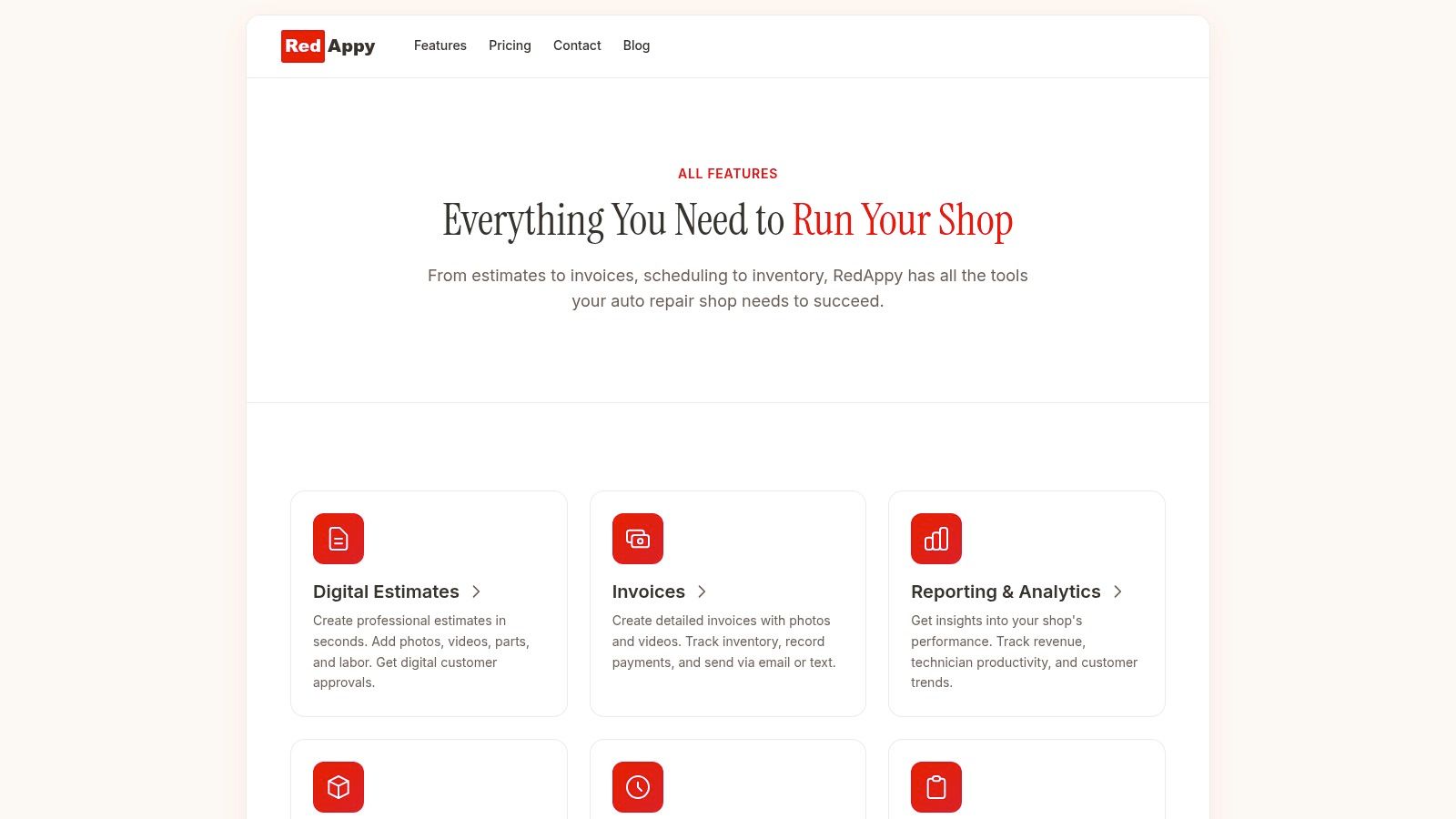
One option in this category is RedAppy features for modern shop workflow, which combines estimating, digital inspections, invoicing, shop board management, and an AI repair assistant that surfaces labor times and diagnostic guidance inside the same system.
Why modern shops need more than static labor tables
Newer vehicles expose the limits of old workflows fast. Published labor times don't always reflect diagnostics, calibration dependencies, scan-tool setup, or verification steps tied to EVs and ADAS-heavy repairs. Industry content increasingly points to software-mediated work and AI-enabled labor guide products because the technician's question isn't only "what's the listed time?" It's "what's missing from the listed time?" as discussed in.
That is why static reference data isn't enough anymore. Shops need a way to connect labor lookup with inspection results, notes, photos, approvals, and job progress.
The same principle applies on the back office side. Once estimates, invoices, and payments move through connected systems, owners can also to reduce manual bookkeeping and tighten the link between sold labor and financial reporting.
The more disconnected the workflow, the easier it is for labor to be estimated correctly and still billed poorly.
Using Transparency to Build Customer Trust
Customers rarely object to labor because they hate labor. They object when the number feels random.
A standardized labor process changes that conversation. Instead of sounding like the shop pulled a figure out of thin air, the advisor can explain that the estimate is based on a structured labor time, then adjusted only when the actual condition of the vehicle justifies it. That makes the quote easier to defend without getting defensive.
What to say when customers question labor
A simple script works better than a long explanation.
Try language like this:
- For standard repairs: "This labor is based on the standard time for this vehicle and repair operation."
- For added complexity: "That time covers the main repair. This vehicle also needs extra work because of its condition or related setup steps."
- For diagnostics: "Diagnosis is separate because the shop has to confirm the fault before replacing parts."
Those conversations go more smoothly when the estimate is clean, itemized, and readable. Shops that want to improve the way they communicate professionalism outside the service lane can also learn from, especially when updating website copy, announcements, or local outreach.
How transparency improves the shop image
Transparency doesn't mean flooding the customer with internal detail. It means showing enough structure that the customer understands the charge.
A clear estimate lowers suspicion. A vague estimate creates negotiation.
The best shops don't argue over labor line by line. They present organized estimates, explain the basis for the work, and document changes when conditions on the vehicle require a supplement. That approach builds trust because it feels disciplined.
It also protects the team. Advisors don't have to improvise explanations, and technicians don't get blamed for prices they never set.
Turn Your Labor Guide into a Profit Engine
Monday at 8:15 a.m., the front counter is stacked with carry-ins, two technicians are waiting on approvals, and an advisor is building estimates from memory because the last repair on that model "usually takes about three hours." That is how shops lose labor gross. Not in one dramatic mistake, but in small misses repeated all week.
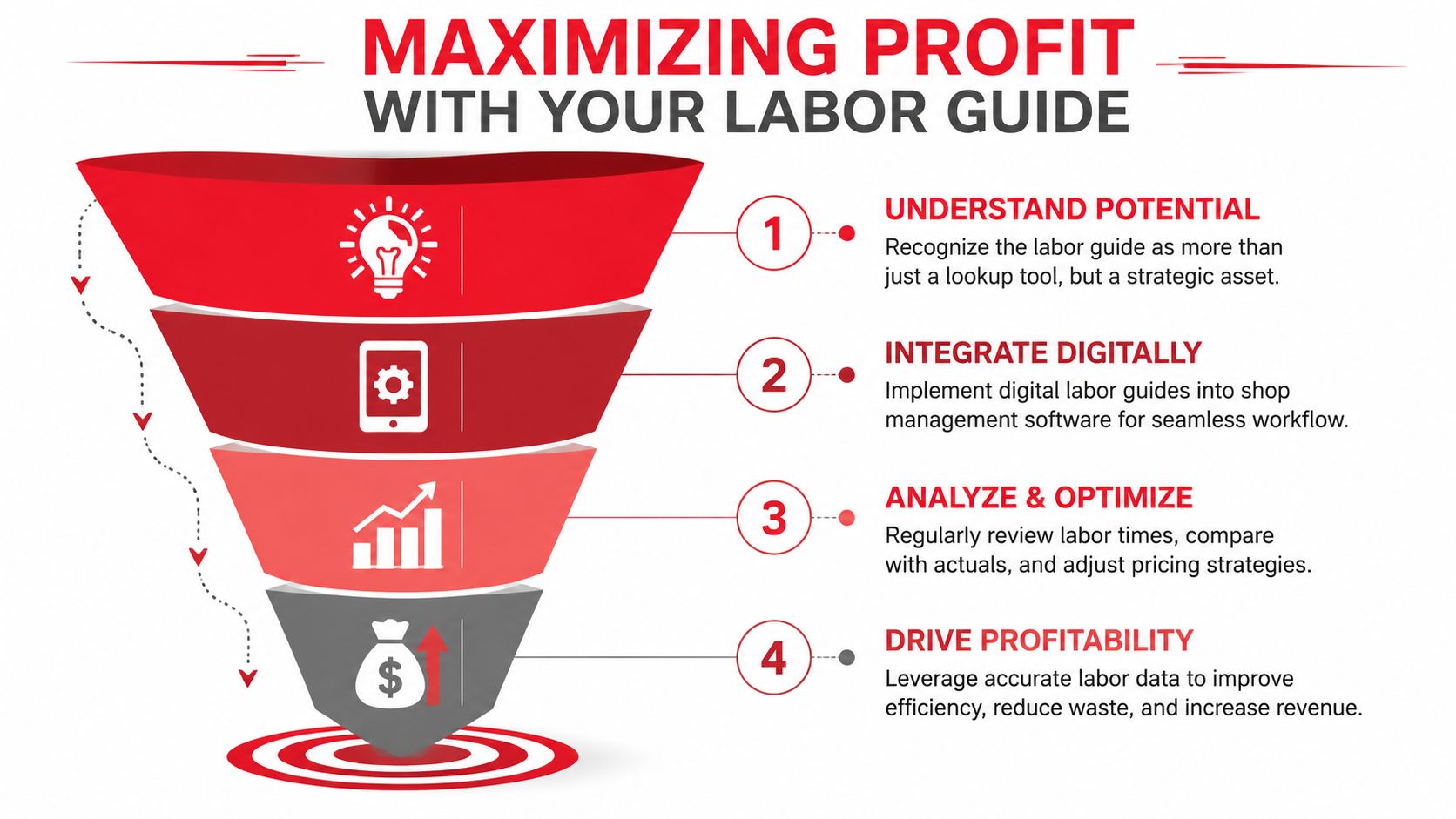
A labor guide earns its keep when it becomes part of the shop's control system. It sets the baseline for quoting, flags where added operations belong, and gives management a clean starting point for scheduling, approvals, and invoice accuracy. Shops that treat it that way make better decisions because the estimate is no longer disconnected from the rest of the job.
From reference tool to operating system
The guide still starts as a lookup source. The difference is what happens after the lookup.
Profitable shops build a repeatable process around labor data. The estimate pulls the correct operation for the vehicle. The advisor separates standard labor from add-ons instead of burying everything in one vague line. The approved work feeds the schedule, the technician sees the right job scope, and the final invoice matches what was sold. That structure protects margin because fewer hours disappear between the estimate and the repair order.
Four habits usually show up in shops that hold labor gross more consistently:
- Vehicle-specific lookups instead of shortcut quoting
- Separate labor lines for standard operations, diagnosis, and added work
- Digital approvals that keep jobs from stalling at the authorization stage
- Production tracking that compares sold hours against actual shop capacity
The shops that keep more of what they earn
Good labor performance is rarely about charging more across the board. It is about charging correctly, documenting exceptions, and keeping the workflow tight enough that approved hours turn into billed hours.
That is the true trade-off. A shop can keep relying on tribal knowledge, handwritten notes, and estimate re-entry, but it will keep eating inconsistencies too. Or it can use the labor guide as the backbone of a connected process and tighten up quoting, dispatching, supplements, and billing.
RedAppy is one example of that connected approach. It brings labor, inspections, approvals, invoicing, and day-to-day workflow into one system, which makes it easier to see where time is being quoted correctly and where profit is leaking out. For shops that want a closer look at setup questions or fit, it's worth reaching out through the RedAppy contact page.
A practical next step is simple. Audit ten recent repair orders and compare the original quoted labor to the final billed labor. If the pattern shows guesswork, missed add-ons, or too much manual re-entry, the process needs work. If the labor guide is tied into the full workflow instead of sitting off to the side, it stops being a reference book and starts acting like a profit control tool.
Ready to Transform Your Shop?
RedAppy helps auto repair shops create professional digital estimates with photos and videos, send them instantly via text or email, and get customer approvals in seconds. No credit card required to start.