
Auto Tune Total Car Care: A Guide for Drivers & Shop Owners
A driver usually lands on a phrase like Auto Tune Total Car Care when something feels off. The check engine light is on. The brakes sound wrong. The car is due for service, and nobody wants to overpay or approve work that isn't needed.
That search starts as a consumer question, but it quickly becomes a business question too. Repair costs have risen sharply, and drivers are more careful about estimates, timing, and trust. In the United States, the Consumer Price Index for motor vehicle maintenance and repair increased 43.6% from January 2019 to January 2025, and the average American spends about $936 per year on routine maintenance and unscheduled repairs, according to. That changes how customers buy, and it changes how shops need to operate.
The shops that stand out today don't just fix cars well. They communicate clearly, run a tight process, and make it easy for customers to say yes to legitimate work.
Table of Contents
- What Auto Tune Total Car Care Really Means
- Core Services You Can Expect
- Red Flags to Watch For and Green Lights to Look For
- The Business of Auto Repair Behind the Counter
- How Modern Shops Streamline Operations for Profit
- Building the Auto Repair Shop of the Future
What Auto Tune Total Car Care Really Means
For most drivers, Auto Tune Total Car Care sounds like a place that can handle everything under one roof. That's the practical meaning. A customer wants one shop that can inspect the car properly, explain what matters now versus later, and complete the job without turning a simple visit into a confusing sales pitch.
That matters more than it used to. When maintenance and repair costs keep climbing, customers become more skeptical. They compare estimates more carefully. They ask better questions. They want to know whether the recommendation is based on inspection findings, mileage, safety, or convenience.
It's not just about fixing what broke
A true total-car-care operation does three things well:
- Finds the problem accurately. Good diagnosis saves the customer from paying for the wrong repair.
- Prevents avoidable failures. Routine service catches wear before it turns into a breakdown.
- Explains priorities clearly. Safety issues, required maintenance, and optional recommendations shouldn't be blended together.
Practical rule: The best shops separate urgent work from watch-list items. Customers trust that structure because it respects both safety and budget.
Many local pages built around the phrase Auto Tune Total Car Care stop at broad claims like “full-service repair” or “complete vehicle care.” That's not enough anymore. Customers want proof in the form of clean inspections, written estimates, realistic timelines, and answers that make sense.
The phrase also reveals a gap in the market
For shop owners, this keyword is useful because it exposes what buyers are really looking for. They aren't searching for spark plugs or belts in isolation. They're searching for a reliable system. They want diagnostics, maintenance, tires, brakes, fluids, electrical work, and communication in one experience.
That's where many shops struggle. The technical work may be solid, but the front-counter process falls apart. Estimates take too long. Updates are inconsistent. Vehicle history is hard to access. The customer approves one thing and then gets surprised by another.
A well-run shop closes that gap. It treats “total car care” as an operational promise, not just a service list. From the customer side, that means less confusion. From the owner's side, it means better approval flow, less wasted technician time, and fewer handoff mistakes.
Core Services You Can Expect
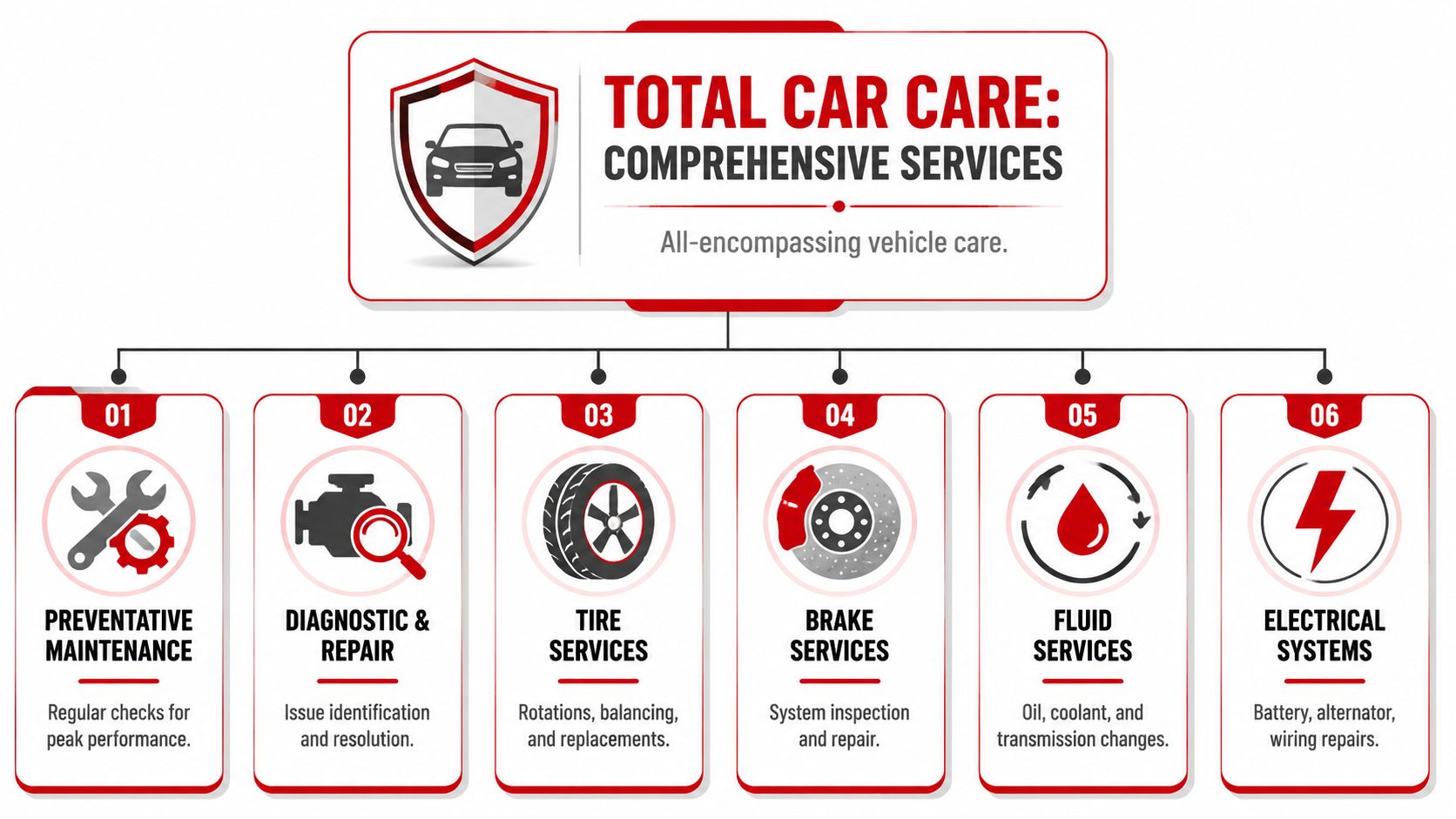
The old idea of a tune-up is outdated. A modern tune-up is closer to a preventive maintenance package guided by mileage, time intervals, and inspection results, not a one-size-fits-all parts swap. Kelley Blue Book notes that today's tune-up typically includes an oil change, tire rotation, and inspection of spark plugs, belts, hoses, fluids, brakes, battery health, and other wear items, with tire rotation commonly recommended every 5,000 to 7,500 miles, as explained in.
It starts with diagnostics
Diagnostics are the first filter between guesswork and a proper repair. A capable shop should be able to investigate warning lights, drivability complaints, charging-system issues, battery concerns, overheating symptoms, and noise or vibration complaints.
The key difference is process. Good diagnostics narrow down the fault before parts get ordered. Weak diagnostics jump to a common failure and hope the symptom goes away.
A driver should expect items like:
- Scan-based fault review: Pulling codes is only a starting point. It isn't the same as diagnosis.
- System testing: Batteries, charging systems, ignition components, and sensors often need confirmation tests.
- Road-test verification: Some complaints only show up under load, speed, temperature, or braking conditions.
Maintenance is the real foundation
Routine maintenance keeps the repair order from getting expensive later. This includes oil service, tire rotation, fluid checks, brake inspections, filter replacement, battery inspection, and scheduled services tied to manufacturer guidance or inspection findings.
A shop that really practices total car care won't present maintenance as filler work. It will explain why the service matters now, what condition the component is in, and what happens if the item is deferred.
Good maintenance recommendations feel specific. “Brake fluid is dark and due by schedule” builds more trust than “you need a flush.”
Repairs range from small fixes to major work
Repairs usually fall into three buckets:
| Service type | What it usually covers | What a good shop should explain |
|---|---|---|
| Minor repair | Bulbs, batteries, filters, sensors, small leaks | Whether the repair solves the root issue or just a symptom |
| Intermediate repair | Brakes, suspension parts, cooling-system parts, starter or alternator replacement | Labor overlap, parts quality options, and urgency |
| Major repair | Engine work, transmission issues, extensive electrical diagnosis | Testing results, repair path, and whether the job is economically sensible |
The strongest shops don't oversell the word “total.” They prove it by moving logically from inspection to diagnosis to recommendation to completed work. That's what customers should expect when they search for Auto Tune Total Car Care.
Red Flags to Watch For and Green Lights to Look For
Choosing a repair shop doesn't require technical expertise. It requires paying attention to how the shop behaves before the wrench ever comes out.
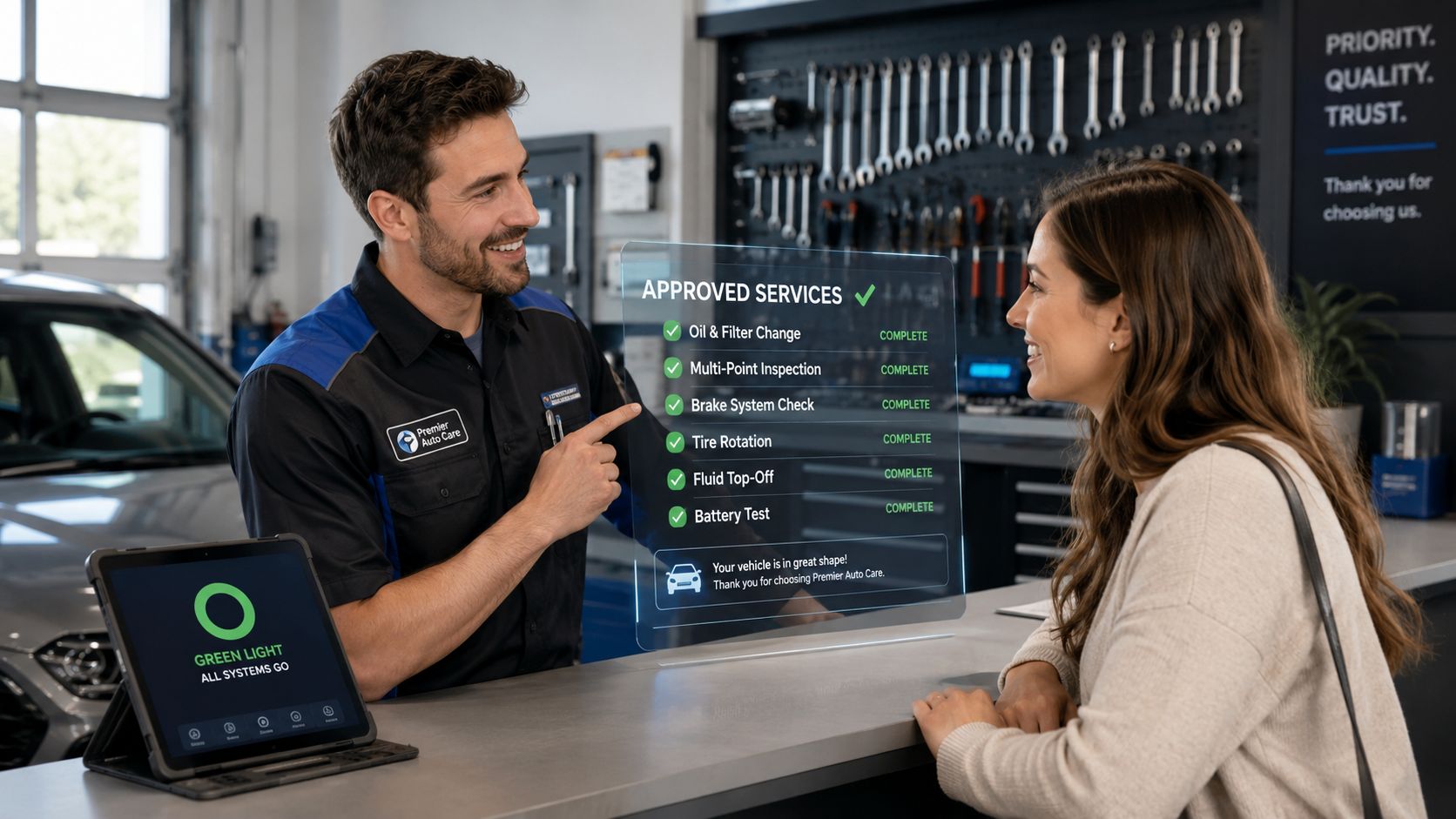
A lot can be learned in the first conversation. Does the advisor ask follow-up questions? Do they distinguish between diagnosis and repair? Do they set expectations on timing and authorization? Those basics tell a customer whether the business runs on process or improvisation.
Green lights that usually signal a well-run shop
Some signs are simple, but they matter.
- Written estimates before work begins: A professional shop documents the concern, the inspection or diagnostic charge if needed, and the next approval step.
- Clear priority language: Safety items should be separated from maintenance and from future watch items.
- Visible organization: The lobby, parking area, and service flow don't need to be fancy, but they should feel controlled.
- Technicians and advisors who explain, not pressure: Customers should understand what failed, why it matters, and what happens next.
- Documentation: Photos, inspection notes, and itemized parts and labor lines help customers make decisions.
A clean estimate is often a better trust signal than a polished website.
Red flags that deserve caution
The warning signs are usually operational, not cosmetic.
- Verbal-only pricing: If a shop won't put the estimate in writing, the customer has no stable reference point.
- Pressure on non-critical work: When every recommendation is framed as urgent, credibility drops fast.
- Diagnosis by assumption: “It's probably this” may be honest in casual conversation, but it shouldn't become a billable repair plan without testing.
- Poor handoffs: If the person at the counter can't explain what the technician found, the customer is left guessing.
- Resistance to showing findings: A shop doesn't need to perform a courtroom presentation, but it should be willing to show evidence.
Another reliable test is how the shop handles declined work. Strong shops document it cleanly and move on professionally. Weak shops become defensive or dismissive because they depend too heavily on pressure-based approvals.
Customers looking for Auto Tune Total Car Care should treat the experience itself as part of the service. If the communication is sloppy during intake, it usually won't improve once the car is in the bay.
The Business of Auto Repair Behind the Counter
The customer sees a repair order. The owner sees labor utilization, parts delays, bay availability, comeback risk, and payroll pressure all at once.
That pressure has increased because the operating environment is tighter on both the vehicle side and the labor side. The average age of vehicles on U.S. roads reached 12.8 years, which tends to increase maintenance demand and repair complexity, as noted in. In Canada, the market had 11,645 job vacancies for automotive service technicians in one quarter, according to.
Complex cars and thin labor capacity
Older vehicles don't just need more work. They often need harder work. Seized components, intermittent electrical faults, oil leaks layered over previous repairs, and deferred maintenance make routine jobs less routine.
At the same time, many owners can't add another strong technician when workflow gets messy. Hiring is difficult. Training takes time. Front-counter mistakes don't stay at the counter. They bleed into the bays through bad scheduling, incomplete estimates, and parts ordered too late.
When labor is tight, every preventable interruption gets more expensive.
That's why operational discipline matters so much. The shop that controls inspection flow, parts approval, and dispatching will often outperform a shop with similar technical talent but weaker systems.
What owners are really managing all day
A repair business runs on dozens of small decisions that compound:
- Scheduling: Avoid overloading the day with too many diagnosis-heavy jobs at once.
- Dispatching: Match the right technician to the right work. Don't bury an advanced diagnostic tech in basic service all day.
- Authorizations: Get approvals while the car is still in a productive window, not after the bay has already gone cold.
- Parts coordination: The wrong ordering sequence turns a same-day job into an overnight problem.
- Customer updates: Silence creates anxiety, and anxiety slows approvals.
Owners in adjacent service businesses face similar issues. Anyone studying will recognize the same pattern. Margins improve when scheduling, workflow visibility, and customer communication are managed with discipline rather than memory.
The strongest operators understand a blunt truth. Auto repair isn't only a technical trade. It's also a throughput business. Profit leaks out through stalled approvals, weak inspection documentation, and poor bay coordination long before it disappears through pricing.
How Modern Shops Streamline Operations for Profit
Technology only helps when it removes friction in real shop workflows. If it adds clicks, duplicates steps, or forces the team into awkward habits, adoption collapses.
Customer expectations are already moving toward digital convenience. As more people manage daily transactions on mobile devices, repair shops are under pressure to provide clearer digital communication. Industry commentary has highlighted digital inspections with photos and text-message approvals as a practical response to that shift, as discussed in.
Where digital tools actually help
Shops don't need more disconnected apps. They need fewer handoffs and fewer blind spots.
A useful system usually improves these areas first:
- Digital vehicle inspections: Photos and technician notes help the advisor present evidence instead of opinion.
- Estimate approvals by text or phone: This reduces voicemail loops and keeps jobs moving.
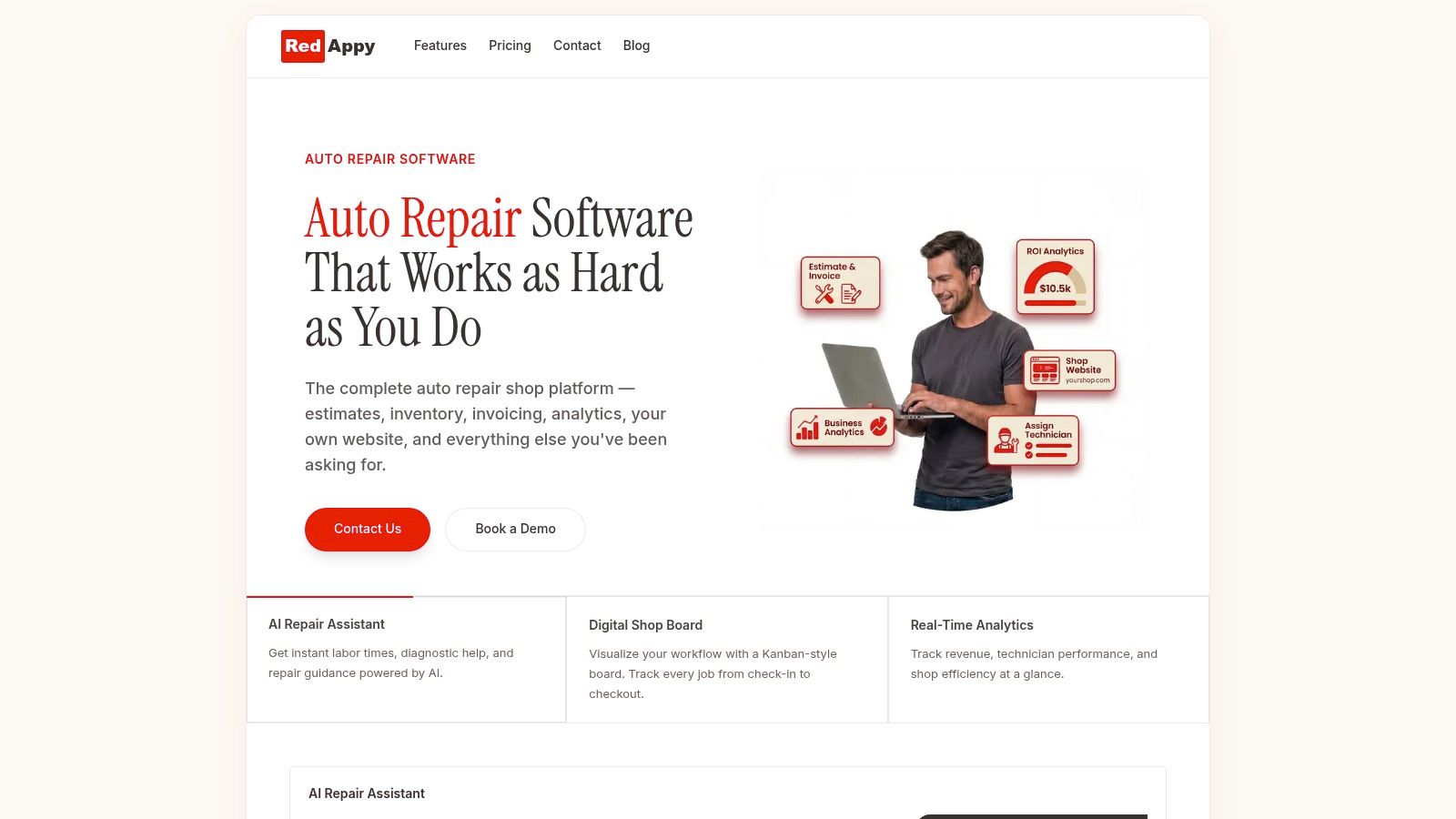
- Live shop workflow visibility: A digital board makes it easier to see what's checked in, waiting on parts, approved, in progress, or ready for delivery.
- Integrated invoicing and payments: Closing out the job should be fast, accurate, and easy for the customer.
- Vehicle history lookup: Service recommendations are stronger when the team can quickly see prior work and deferred items.
One platform built around that model is RedAppy's shop management features. It combines digital inspections, estimates, invoicing, parts ordering, analytics, service history, and a Kanban-style Digital Shop Board in one workflow. That matters because many shops lose time not on the repair itself, but in the gaps between check-in, approval, parts, and checkout.
What doesn't work even with good software
Software won't rescue a shop that still communicates badly. A digital inspection with too many low-value notes can overwhelm the customer. A photo gallery without priority labels can create more doubt, not more trust.
The operational trade-offs are straightforward:
| If the shop does this | The result is usually better |
|---|---|
| Uses concise inspections | Customers can understand the issue quickly |
| Separates due-now from monitor-later items | Approval conversations feel more credible |
| Updates jobs in real time | Advisors stop chasing technicians for status |
| Builds estimates with clean line items | Fewer billing surprises at pickup |
A modern system should support disciplined behavior. It shouldn't replace it. Shops that streamline profitably use digital tools to make the right process easier to follow every single day.
Building the Auto Repair Shop of the Future
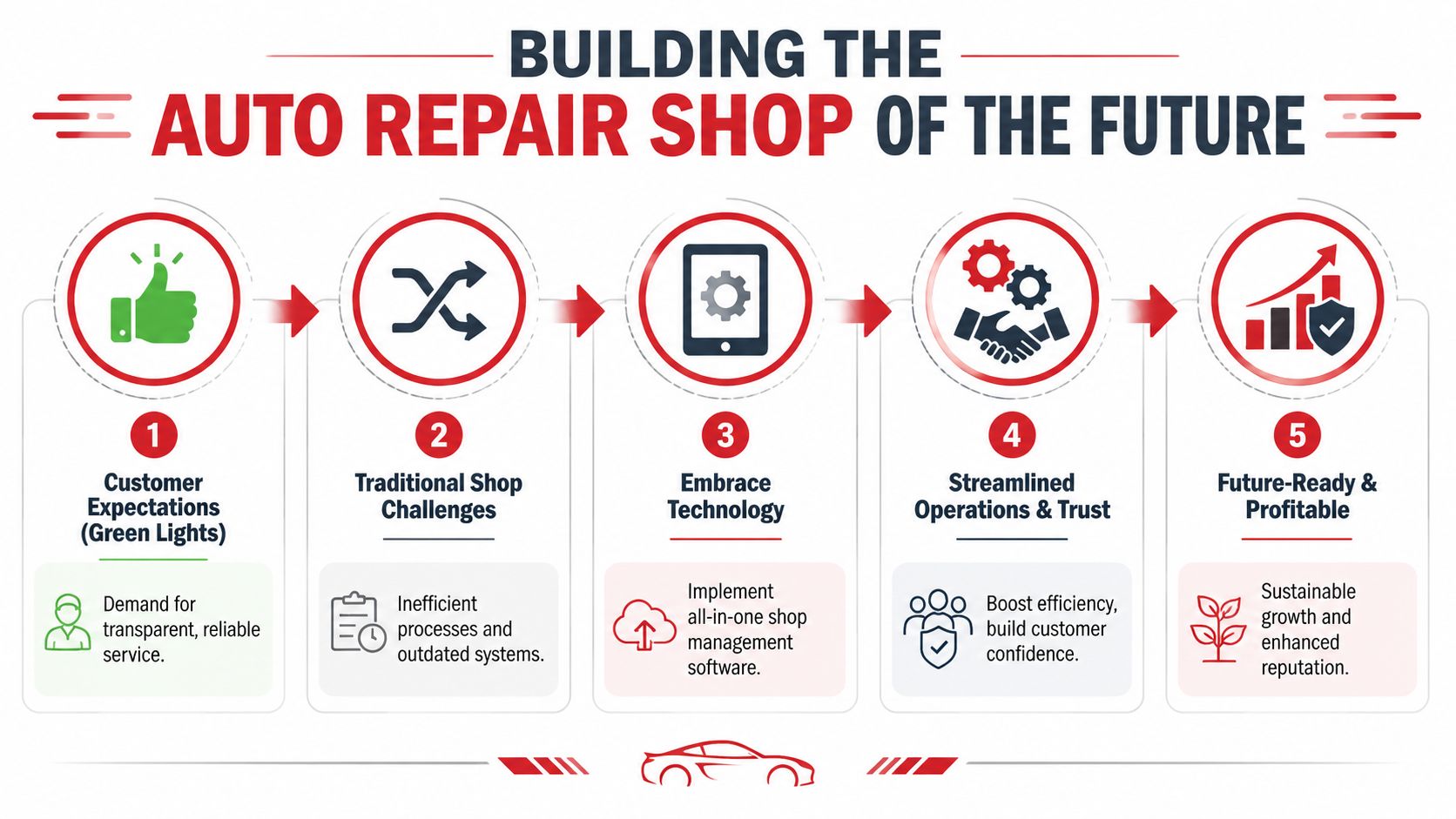
The shop of the future won't win because it uses flashy software or trendy language. It will win because it delivers the exact experience customers already say they want. Clear findings. Logical estimates. Faster approvals. Fewer surprises.
That's the deeper connection between the customer search for Auto Tune Total Car Care and the owner's operating model. The green lights customers look for at the counter come from systems behind the counter. Clean workflow creates clear communication. Clear communication builds trust. Trust improves approvals on legitimate work.
The customer view and the owner view are the same problem
Customers want confidence. Owners want consistency. Those are really the same thing.
When a shop can show what it found, explain why it matters, and move the job from inspection to approval without delay, everyone benefits:
- The customer gets clarity
- The advisor gets a smoother sale
- The technician gets less stop-and-start disruption
- The owner gets better throughput and fewer avoidable mistakes
Shops earn trust operationally. The conversation at the counter reflects the process in the back.
The future-ready shop is disciplined, not flashy
A durable repair business doesn't depend on one superstar advisor or one technician who remembers everything. It builds repeatable habits. Inspection standards. Approval rules. Bay-status visibility. Complete service history. Consistent follow-up.
That's what creates a resilient business when labor is tight and customers are more careful with every dollar. The future-ready shop isn't trying to sound modern. It is modern in the way it documents, schedules, communicates, and closes work.
Owners who are still running key parts of the business from memory, sticky notes, or disconnected tools usually feel the strain first in the front office. Then it reaches technician productivity. Then it shows up in customer confidence.
Shops that want a cleaner workflow, better estimate communication, and stronger day-to-day control can explore RedAppy or contact the team directly to see how a more organized process fits their operation.
Ready to Transform Your Shop?
RedAppy helps auto repair shops create professional digital estimates with photos and videos, send them instantly via text or email, and get customer approvals in seconds. No credit card required to start.