
7 Best Auto Repair Shop Websites to Inspire You
A shop owner already knows the problem. A driver searches for a mechanic, clicks the site, and lands on a page that looks decent but doesn't help them act. The phone number is buried. The hours are hard to find. There's no clear way to request an estimate or book a job. That visitor leaves and calls the next shop.
That's why the best auto repair shop websites don't act like brochures. They act like front desk staff. They answer basic questions fast, show trust signals early, and move customers from search to booking without friction. In a large, fragmented market, that matters.. Shops compete shop by shop, not against one giant winner.
A strong website also has to handle price anxiety. Drivers want clarity before they commit, especially when repair bills can vary widely. Shops that make it easy to request quotes, review services, and book quickly have an edge. A simple starting point is using a so estimate requests don't get lost in email.
Table of Contents
- 1. RedAppy
- 2. KUKUI
- 3. Autoshop Solutions
- 4. AutoVitals
- 5. Repair Shop Websites
- 6. CarCareCONNECT
- 7. Shop Marketing Pros
- Top 7 Auto Repair Website Comparison
- Build Your Best Website From Inspiration to Action
1. RedAppy
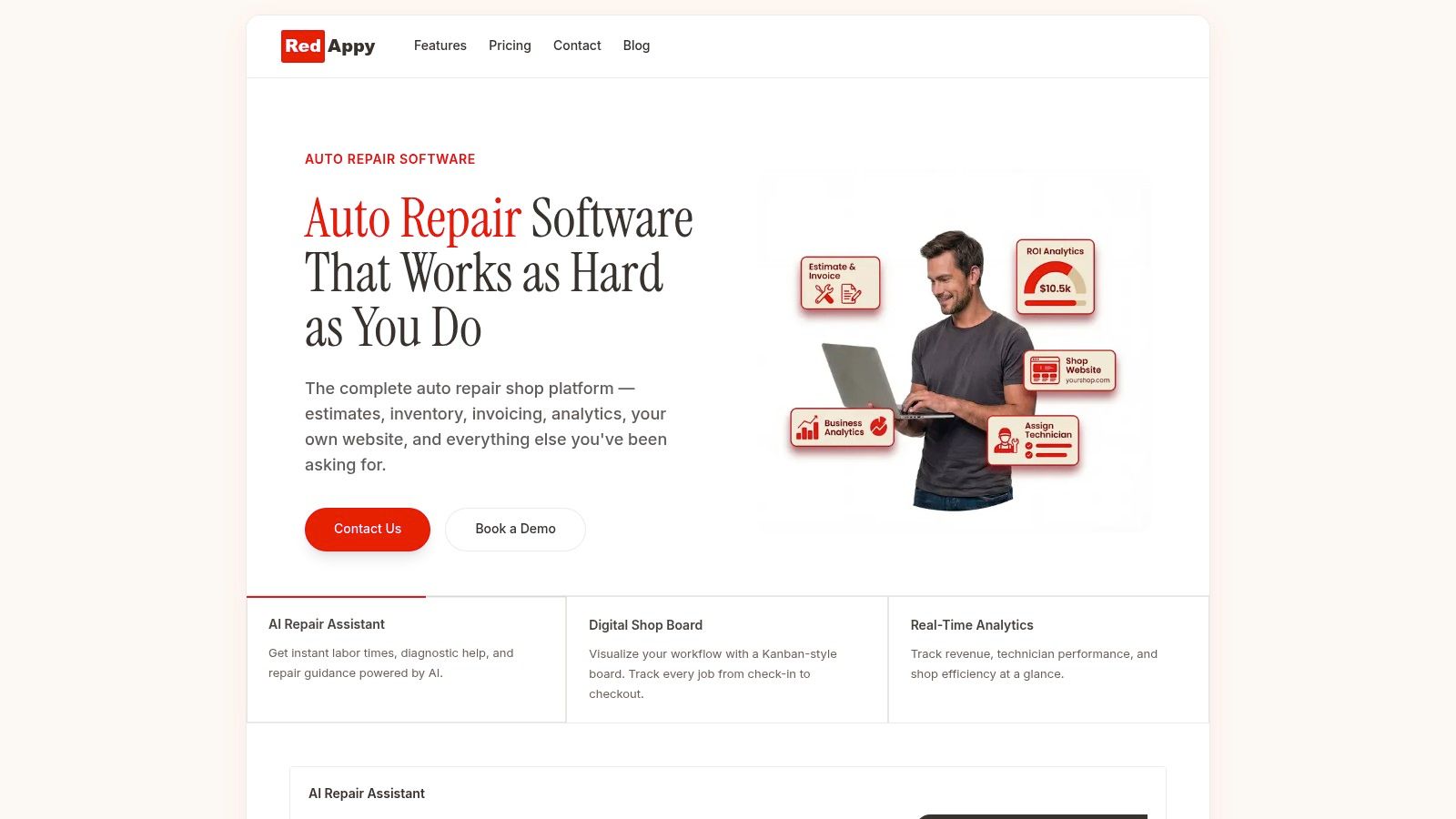
A customer books from your website at 10:30 p.m. If that request lands in an inbox, waits until morning, and still has to be re-entered into your shop system, your website is acting like a brochure. It should act like part of the front counter.
RedAppy earns the top spot because it treats the website as an operating tool tied to the shop's actual workflow. The platform combines a branded website with shop management functions like digital inspections, instant estimates, one-click invoicing, online payments, parts ordering, analytics, and a Kanban-style Digital Shop Board that tracks jobs from check-in to checkout. For independent shops and multi-location operators, that setup cuts handoff friction and gives the owner one system to manage instead of a pile of disconnected apps.
Why RedAppy stands out
RedAppy's advantage is operational depth. Advisors can look up customers by name, plate, or VIN, pull vehicle history, schedule work on the team calendar, and keep communication moving inside the same environment. The built-in AI Repair Assistant adds labor times, diagnostic guidance, and shop insights directly into the daily process.
That connection is what shop owners should look for now. The strongest auto repair websites do more than collect leads. They tie booking, communication, approvals, and payment back to the systems that control car count, technician time, and ARO. Tekmetric describes the same broader shift toward unified workflows, digital inspections with photos and videos, real-time reporting, and visibility into ARO, technician efficiency, and close ratio across single and multi-shop operations in its overview of. RedAppy aligns well with that direction.
Practical rule: If the website creates leads but your team still re-enters customer details, chases status updates, and rebuilds estimates by hand, the site is wasting labor.
RedAppy also includes a branded website with contact forms and optional used-car listings. That gives owners one accountable vendor for both lead capture and shop execution. The business result is simple. Faster booking, fewer dropped inquiries, quicker approvals, and better visibility into what the website is producing.
Best fit
RedAppy fits shops that want the website to produce booked work and support higher-value jobs after the customer says yes. It is a strong choice for owners focused on cleaner handoffs, faster advisor response, and tighter control over repeatable revenue processes.
Pros:
- One connected workflow: Website, inspections, estimates, invoices, payments, and scheduling live in one system.
- Useful shop intelligence: The AI Repair Assistant and analytics support faster advisor decisions.
- Parts and inventory support: Multi-supplier ordering with real-time visibility helps reduce delays.
- Included web presence: A branded website comes with the platform, which adds practical value for busy operators.
Cons:
- Pricing requires a sales conversation: Exact plan details were not listed publicly.
- Setup takes commitment: A full operating system needs training, process discipline, and owner follow-through.
Start by reviewing RedAppy's platform features.
2. KUKUI
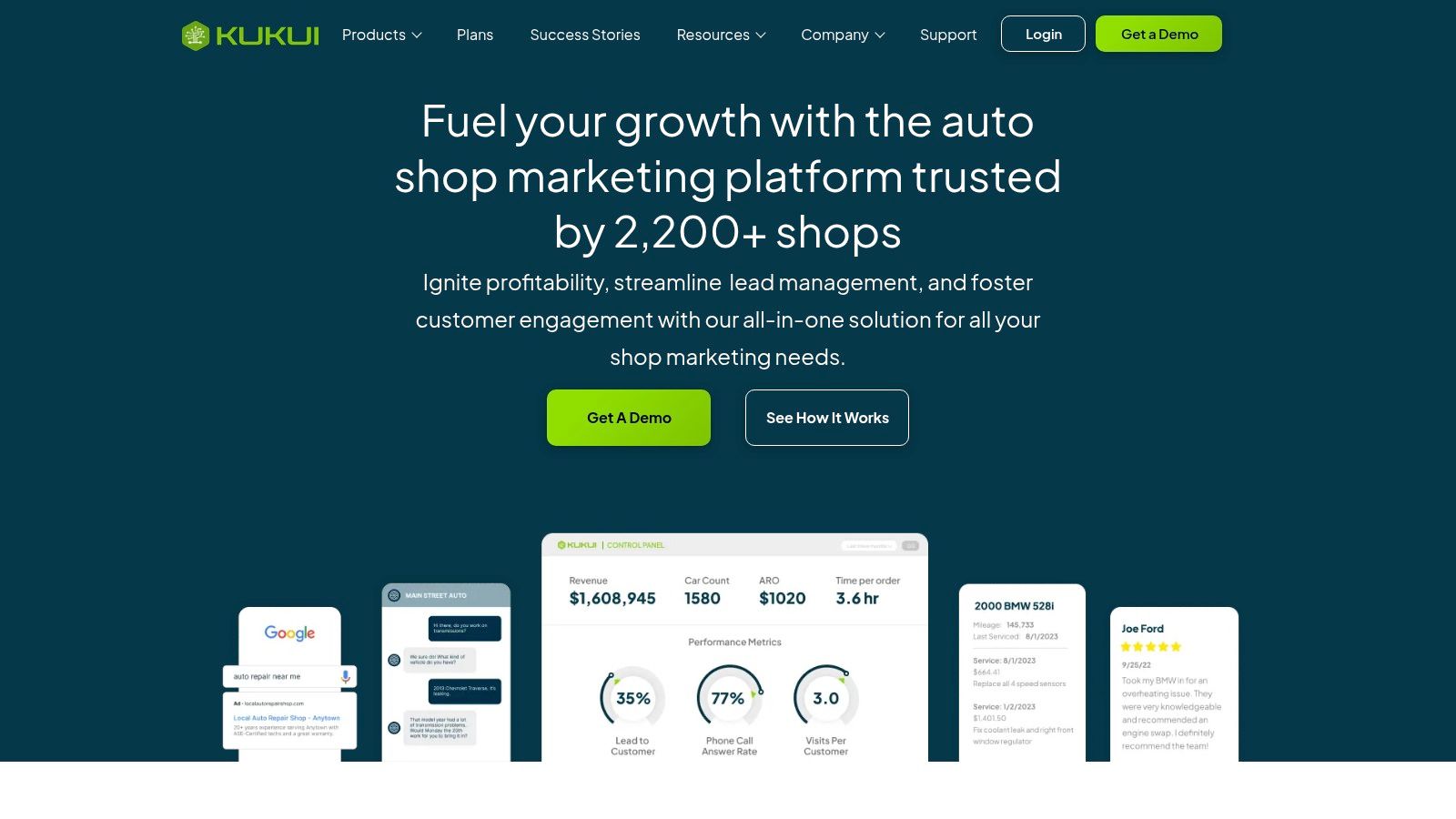
A customer finds your shop on Google at 8:30 p.m., lands on your site, wants to book, and has one question before committing. If your website only collects a form submission, that lead sits until morning. KUKUI is built for shops that want that moment handled faster with online scheduling, texting, CRM follow-up, review tools, and call tracking tied to the website.
That setup is a primary selling point. KUKUI is not just a nicer homepage for an auto shop. It is a marketing system wrapped around the site, so owners can connect traffic, calls, appointments, and follow-up in one place instead of stitching together separate vendors.
Where KUKUI wins
KUKUI makes the most sense for shops that want tighter control over inbound demand and better visibility into what the website is producing. If your advisors are missing calls, slow to respond to web leads, or guessing which campaigns bring in profitable work, KUKUI solves a business problem, not just a design problem.
The strongest auto repair websites reduce delay between interest and action. KUKUI helps by putting booking, messaging, and tracking closer to the customer decision point. That usually means more scheduled visits, fewer dropped leads, and cleaner attribution for the shop owner.
It also supports the trust signals customers look for, such as reviews, service information, shop credentials, and convenience details. As noted earlier, those details influence whether a visitor books or keeps shopping. KUKUI gives shops a practical way to present them clearly and keep them updated without waiting on a developer.
Pros:
- Connected marketing tools: Website, CRM, texting, call tracking, and review management work together.
- Built to drive action: Scheduling and lead capture are part of the core setup.
- Better follow-up: Shops can respond faster and track whether inquiries turn into appointments.
- Owner-friendly editing: Content changes do not require technical help for every update.
Cons:
- Pricing isn't public: You need a quote.
- Works best as a system: The value is higher when the website, communication, and marketing tools are all in use together.
Website:
3. Autoshop Solutions
Autoshop Solutions is a better fit for shops that want a hands-on agency, not just a site builder. Its value is custom design plus ongoing digital marketing support. That includes SEO, PPC, social media support, reporting dashboards, and account management.
Some owners need more than software. They need a team to shape messaging, improve local visibility, and keep campaigns moving. That's where Autoshop Solutions makes sense.
What makes it different
This provider focuses heavily on custom builds for independent repair shops, tire shops, collision businesses, and multi-location groups. The websites are designed to convert, but the bigger story is the support around them. Shops that don't have internal marketing capacity often benefit from that higher-touch model.
There's also a practical business reason to care about conversion quality over raw traffic. Shops should judge website performance against business metrics such as average repair order, car count, labor gross profit, parts gross profit, technician efficiency, and gross profit per hour. Kaizen CPAs notes that. A website should support estimate acceptance and booking quality, not just lead volume.
Advisor note: A pretty homepage that sends low-intent callers to the front desk can waste more time than it saves.
Pros:
- Deep automotive specialization: The agency understands shop categories and local service marketing.
- Broader growth support: SEO, paid media, and reporting come with the website work.
- Custom creative: Shops that want a distinct look won't feel boxed into a template.
Cons:
- Consultative pricing: Costs aren't posted publicly.
- May be too much for tiny shops: A very small operation may not need the full agency model.
Website:
4. AutoVitals
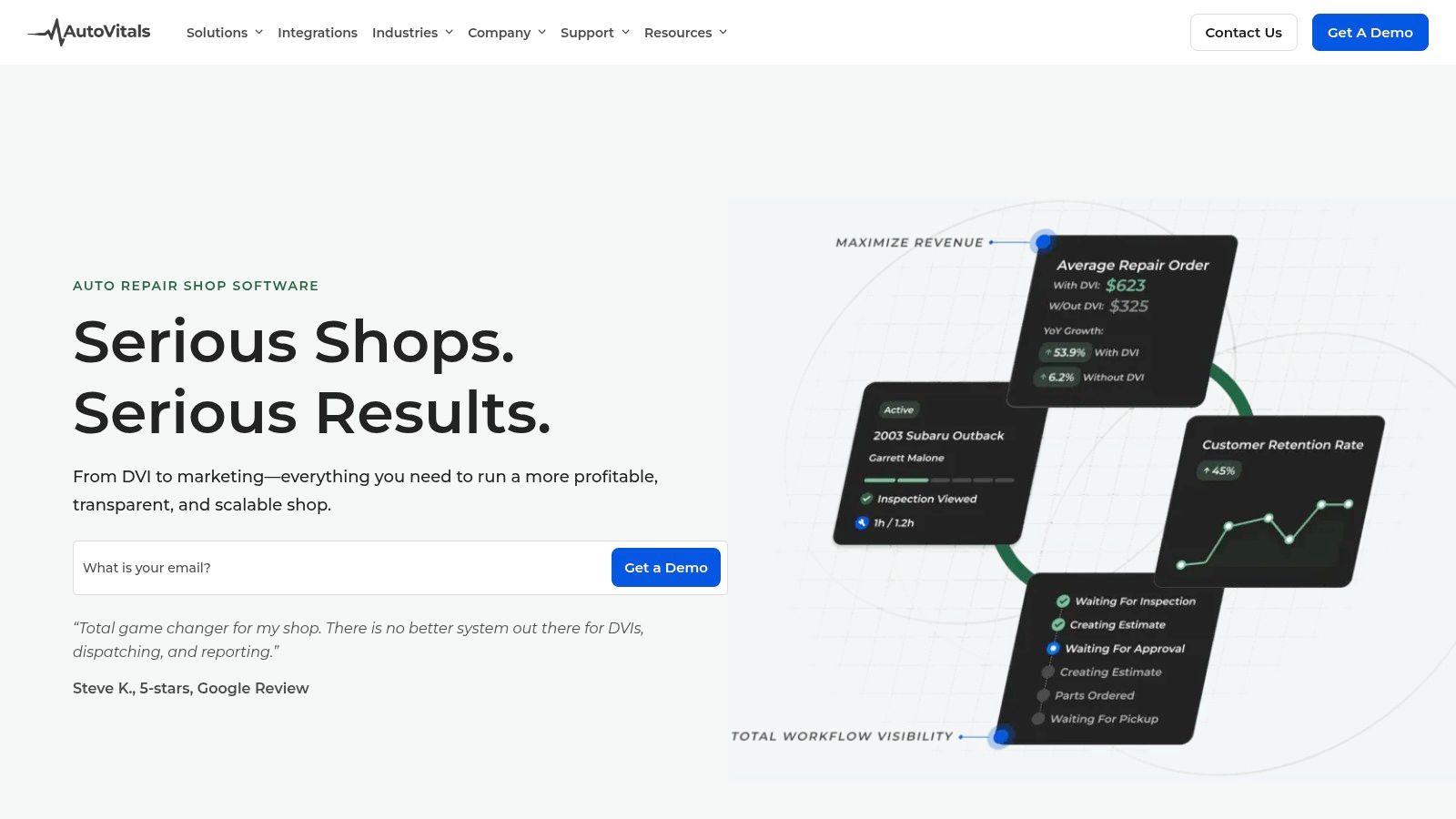
AutoVitals is one of the strongest options for owners who already think in terms of workflow. Its websites are designed to drive appointments, but the bigger draw is how they can connect with digital inspections, CRM, workflow, and campaigns inside the broader AutoVitals ecosystem.
That approach is closer to what modern shop buyers expect. Many shop sites still operate like simple contact pages, even though customers compare businesses digitally before calling. The bigger opportunity is reducing friction after the click, not just polishing the design, as discussed in this review of.
Operations first
AutoVitals is appealing when the shop wants website leads to flow into an organized customer experience. A visitor books service. The shop communicates clearly. Inspections and follow-ups support estimate approval and repeat visits. That's better than running a website that generates demand while the shop handles delivery with disconnected systems.
Its mobile-first structure also matters because a lot of repair decisions happen on a phone. Drivers want quick proof that the shop works on their make, offers the right services, and makes it easy to move forward.
Pros:
- Website plus workflow: Good fit for shops that want operations and marketing connected.
- Conversion-focused: Scheduling and reputation support are built in.
- Ecosystem value: Better long-term fit when the shop wants DVI and CRM support too.
Cons:
- Best when bundled: Standalone website buyers may not get the full value.
- Pricing needs a demo: Public plan details aren't readily available.
Website:
5. Repair Shop Websites
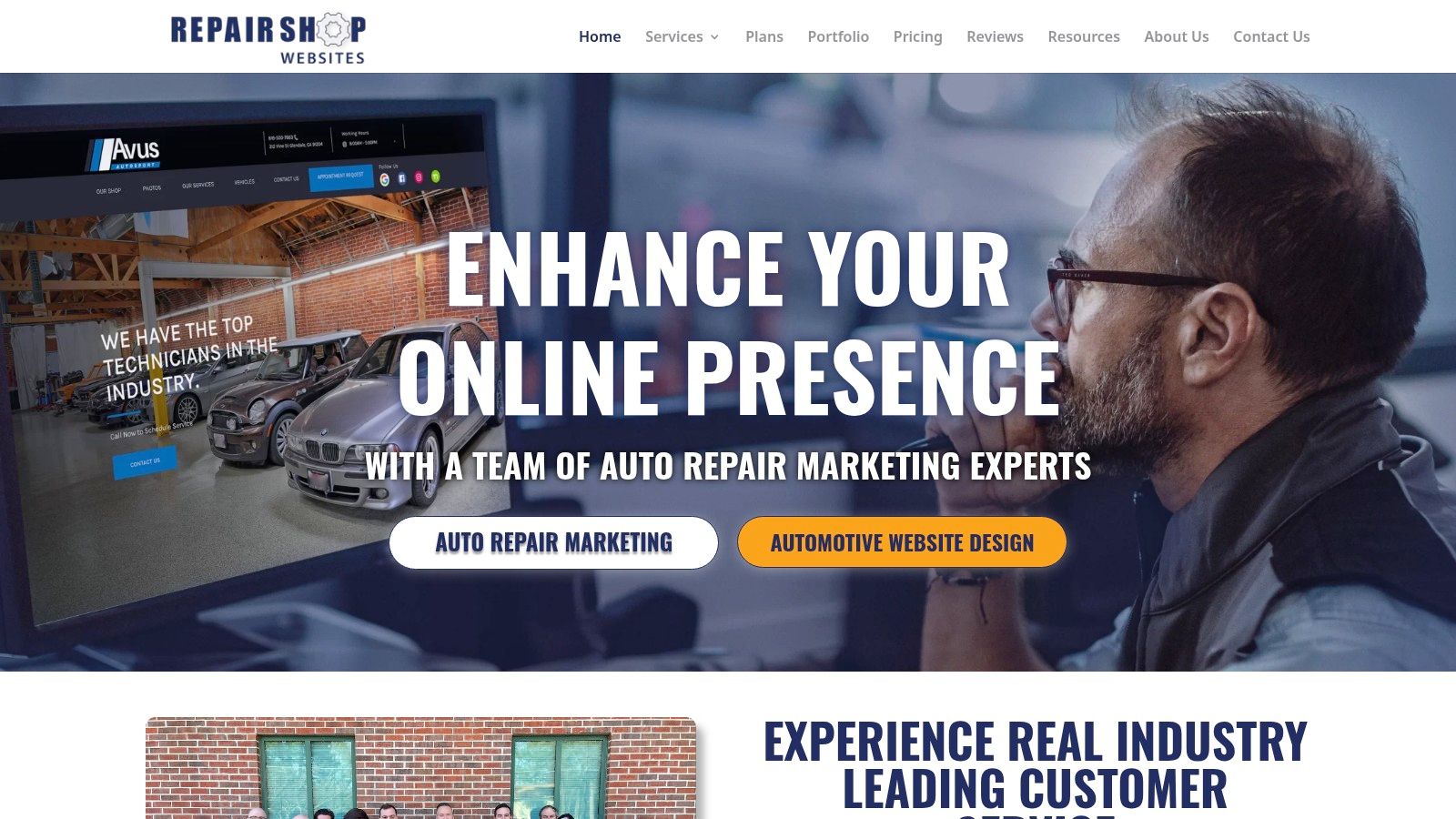
A driver lands on your site after searching for brake repair, taps around for 20 seconds, then leaves because the next step is unclear. That lost visit is not a design problem alone. It is a process problem. Repair Shop Websites appeals to owners who want a custom automotive site and marketing support without buying an all-in-one software stack, but the main question is simpler: does the site help the shop turn traffic into booked work?
That is where this provider can make sense. Repair Shop Websites stays focused on auto repair and related niches, then adds local SEO, listings management, paid ads, social support, and reputation tools around the website. For many independent shops, that setup is easier to manage than a larger platform with features the front counter never uses.
Its value comes from speed and relevance. If your team needs a new service page, updated hours, a seasonal offer, or revised financing copy, delays cost calls and appointments. A provider that already understands repair categories, common customer objections, and local search intent can usually get those changes live faster than a general web agency.
The bigger opportunity is operational. Repair Shop Websites is not a shop management system, but it works best when the website is treated like the front end of your sales process, not a digital brochure. The booking path should be obvious. Phone numbers should be tap-to-call on mobile. Review proof, warranty messaging, financing options, and service-area pages should answer the questions that stall approvals. Owners who pair that structure with their existing SMS, CRM, or shop management workflow will get more value than owners who stop at "looks good."
Pros:
- Built for auto repair: Service pages, local intent, and industry-specific messaging are easier to get right.
- Fast support for real shop needs: Quick edits help when promotions, staffing, or hours change.
- Flexible marketing stack: SEO, reviews, listings, and ads can be added without changing providers.
Cons:
- No public pricing: You need to contact sales for a quote.
- Less operational depth on its own: Shops still need their own systems for scheduling, follow-up, and customer communication.
Website:
6. CarCareCONNECT
A customer lands on your site after getting a high estimate somewhere else. They are nervous, price-sensitive, and not ready to call unless the next step feels easy. CarCareCONNECT works best in that moment because it combines a ready-to-launch website with follow-up tools that keep the conversation moving instead of letting the lead disappear.
Powered by RocketLevel, CarCareCONNECT gives shops a fast website setup, then adds local SEO, citation management, reviews, ads, automation, and landing pages. That matters because the website should do more than look credible. It should connect to the way your shop books work, answers questions, and stays in front of undecided customers.
Best for shops that need speed plus follow-up
The template approach is fine if the business system behind it is strong. For many owners, the primary problem is not design originality. It is wasted leads. A shopper asks for an appointment, clicks on an offer, or submits a form after hours, then hears nothing fast enough to stay engaged.
CarCareCONNECT is more useful when you treat it like the front end of an automated sales process. Landing pages support specific campaigns. Review tools add trust. Communication automation helps shops respond faster and keep prospects warm while advisors handle the bays and phones. That can mean more booked jobs from the same traffic, especially for higher-ticket repairs where hesitation slows approvals.
A repair shop website should not stop at lead capture. It should help the shop respond, remind, and convert.
Pros:
- Fast setup: Shops can launch quickly without building every page from scratch.
- Built-in marketing tools: Reviews, ads, citations, and landing pages support lead generation.
- Stronger follow-up potential: Automation helps reduce missed opportunities after form fills and inquiries.
Cons:
- Template limitations: Shops that want a highly distinct brand look may outgrow the default structure.
- No public pricing: You need to go through the sales process to understand scope and cost.
Website:
7. Shop Marketing Pros
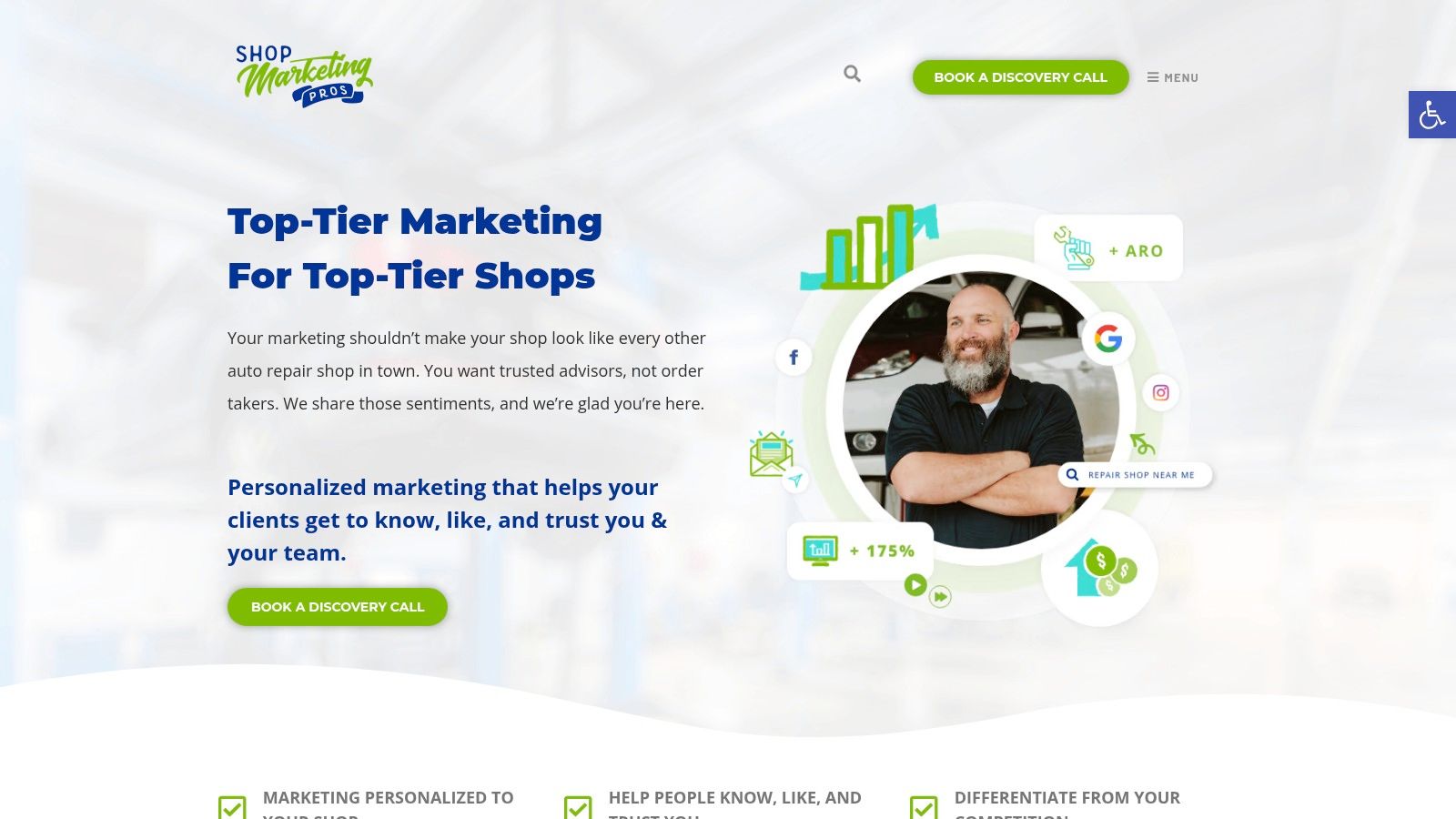
A driver searches for brake repair, opens three shop websites, and all three say the same thing. Honest service. Fair prices. Experienced technicians. The shop that gets the call is usually the one that explains its difference fast, makes booking easy, and backs up the pitch with visible proof.
Shop Marketing Pros is a fit for owners who need that kind of positioning. The company builds custom websites and pairs them with SEO, PPC, local service ads, social media, and content. The bigger point is business performance. A site should not just look better. It should attract the right jobs, support stronger trust, and connect cleanly with the systems your team uses to handle leads, appointments, and follow-up.
Best for shops with a clear specialty or higher-value service mix
This provider makes more sense for a shop with a real angle to sell. European specialists. Diesel shops. Fleet accounts. Family-owned businesses with pickup and delivery. Shops offering financing, long warranties, or faster communication. If those strengths drive better customers and higher ARO, they need to shape the homepage, service pages, calls to action, and booking flow.
Trust is a revenue issue. Auto repair buyers are cautious, and many compare shops before they call. The Better Business Bureau tracks complaint patterns across industries through its. A strong website helps counter that skepticism with specific service process details, clear guarantees, review proof, staff photos, and direct next steps. That reduces drop-off and gives the front office better leads to work.
A key upside comes when branding connects to operations. If a campaign promotes diagnostics, fleet work, or a premium specialty service, the website should route that visitor into the right form, the right appointment request, and the right follow-up. That is how marketing stops being decoration and starts producing booked work.
Pros:
- Positioning-first websites: Good for shops that need a distinct message instead of another generic repair template.
- Automotive-specific marketing support: The team understands how repair customers search, compare, and decide.
- Better revenue alignment: Stronger service page strategy can help attract more profitable work, not just more traffic.
Cons:
- Quote-based pricing: You need a sales call to get scope and cost.
- More than some shops need: Very small operators may prefer a simpler site if they are not investing in active marketing.
Website:
Top 7 Auto Repair Website Comparison
| Solution | 🔄 Implementation complexity | ⚡ Resource requirements | 📊 Expected outcomes | 💡 Ideal use cases | ⭐ Key advantages |
|---|---|---|---|---|---|
| RedAppy | Medium–High, full-featured platform with onboarding and supplier integration | Moderate–High, subscription, training time, supplier setup | Faster workflows; ~10+ admin hrs saved/week; improved approvals and cash flow | Independent to multi‑location shops needing end‑to‑end shop management | All‑in‑one workflow, AI Repair Assistant, parts sourcing, real‑time analytics |
| KUKUI | Low–Medium, site + integrated marketing modules, easy editor | Low–Moderate, marketing stack subscription, module adoption | Better lead capture and conversion; measurable via call tracking and reviews | Shops prioritizing SEO‑optimized, conversion‑focused websites and integrated marketing | Mobile‑first, SEO‑optimized sites, integrated scheduling and tracking; NAPA recognition |
| Autoshop Solutions | High, custom design + agency-managed marketing engagements | High, agency fees, ongoing campaign management and account services | Targeted traffic growth and measurable ROI via dashboards and case studies | Shops wanting bespoke sites and full digital marketing support | Deep aftermarket focus, design awards, documented case results |
| AutoVitals (Websites & Digital Marketing) | Medium, website build with option to bundle into wider ecosystem | Moderate–High, site plus optional DVI/CRM/workflow modules | Improved appointment conversion; tighter ops-marketing integration | Shops that want websites tightly integrated with shop operations and campaigns | Integration with DVI/CRM/workflow, reputation/listings support, proven case studies |
| Repair Shop Websites | Low–Medium, custom site focused on quick updates and support | Low–Moderate, U.S.‑based support; add‑ons for advanced work | Professional site, local SEO and reputation support; fast updates | Shops wanting dedicated auto‑repair website provider with responsive support | Exclusive auto‑repair focus, responsive U.S. support, no long‑term contracts stated |
| CarCareCONNECT (RocketLevel) | Low, turnkey templates customized per shop; fast deployment | Low–Moderate, managed setup, citation and ads services available | Fast launch with conversion‑focused pages and marketing automation | Shops seeking turnkey website + local listings, ads and review management | Turnkey templates, local citation management, marketing automation, widely deployed |
| Shop Marketing Pros | High, consultative process with discovery, strategy and custom creative | High, agency engagement, audits, ongoing content and PPC/LSA management | Differentiated brand messaging and growth support for multi‑location shops | Shops focused on storytelling, differentiation and multi‑location growth | Niche auto‑repair focus, audits/consultative planning, tailored creative strategy |
Build Your Best Website From Inspiration to Action
The best auto repair shop websites do three jobs well. They build trust fast, they make booking easy, and they connect cleanly to daily shop operations. Anything less leaves money on the table.
A shop owner should judge a website the same way a customer does. Can the visitor find the phone number right away? Can they request service without hunting through menus? Can they see what makes the shop credible, such as certifications, warranty terms, written estimate expectations, reviews, hours, and convenience details? If those answers aren't obvious, the site needs work.
The next level is operational. A website should push leads into the same system the team already uses for inspections, estimates, scheduling, invoicing, and follow-up. That reduces duplicate entry, shortens response time, and gives the owner a clearer view of whether the site is helping increase booked work and support higher ARO. That's where integrated platforms stand apart from design-only providers.
Dedicated marketing agencies still have value. Some shops need custom creative, paid media, and heavier strategic support. But for many independent repair businesses, the strongest move is choosing a website solution that also improves front-desk execution. Better intake. Faster approvals. Smoother communication. Cleaner closeout.
A practical next step is to review the site as if it belonged to a competitor. If the homepage doesn't answer the customer's first questions in seconds, the shop should rebuild it. If the lead form isn't tied to workflow, the shop should fix that next. If the current site looks fine but staff still re-enter data by hand, the website isn't finished.
Owners who want a simpler path should look closely at RedAppy. It combines a professional website with inspections, estimates, invoicing, payments, analytics, and workflow management in one platform. That's a better setup than paying for separate tools that don't talk to each other. For shops ready to tighten operations and improve conversion, contact RedAppy for a demo. For a broader view on service-business performance, this offers useful context.
A shop website should do more than look professional. It should help the front desk book more work, support better estimate approval, and remove wasted admin time. RedAppy gives auto repair shops a branded website plus the operational tools behind it, so the site and the shop finally work as one system.
Ready to Transform Your Shop?
RedAppy helps auto repair shops create professional digital estimates with photos and videos, send them instantly via text or email, and get customer approvals in seconds. No credit card required to start.