
Best OBD Scanner: A Pro Shop's Buying Guide
A lot of shop owners start looking for the best OBD scanner after a rough week. A bay gets tied up on a no-start or intermittent drivability issue. A tech pulls generic codes with a cheap reader, clears them, road tests, and still doesn't have an answer. The service advisor is waiting on a clear estimate, the customer is calling for an update, and the next vehicle is already parked outside.
That's usually when the full cost of the wrong scan tool shows up. It isn't just the purchase price. It's lost diagnostic time, weaker estimates, delayed approvals, and jobs the shop either underbills or sends somewhere else. For a professional shop, the best OBD scanner isn't the one with the longest feature list. It's the one that helps the team diagnose faster, document better, and keep work moving.
A good tool earns its place. A weak one creates drag.
| Shop need | Best scanner tier | What it should do well | Where it falls short if you buy too low |
|---|---|---|---|
| Quick code checks | Basic code reader | Read and clear common engine codes | Won't handle deep diagnostics or active testing |
| Daily general repair | Bidirectional scanner | Live data, special functions, active tests, broad coverage | Limited coding or advanced module work |
| Complex electrical and programming work | Advanced diagnostic and programming tool | ECU coding, manufacturer-level functions, wider system access | Higher cost and steeper learning curve |
Table of Contents
- Your Scanner Is Costing You More Than You Think
- Understanding the Three Tiers of OBD Scanners
- Essential Scanner Features a Pro Shop Cannot Ignore
- Top OBD Scanners for Different Shop Needs
- Beyond Diagnostics Integrating Scanners Into Your Workflow
- How RedAppy Turns Your Scanner Into a Profit Engine
- Frequently Asked Questions About Professional Scanners
Your Scanner Is Costing You More Than You Think
A stalled job rarely looks dramatic at first. A tech plugs in a low-end reader, grabs a basic fault code, and starts chasing the obvious path. Then the code turns out to be a symptom instead of the failure. Now the bay stays occupied, a second tech gets pulled in, and the advisor still can't present a confident estimate.
That's why the cheapest tool in the cabinet often becomes the most expensive one in the building. It slows diagnosis, weakens confidence at the front counter, and turns what should be billable diagnostic work into unpaid time.
Practical rule: If a scanner can only confirm that a problem exists, but can't help prove what failed, it's not a shop tool. It's a starting point.
The market makes that pretty clear. The global OBD2 scanner market is projected to reach $11,011.4 million by 2033, more than doubling its $5,567 million valuation, according to. Shops keep buying these tools because vehicle systems keep getting more layered, not simpler.
What the wrong scanner really costs
A weak scanner usually creates problems in three places:
- At the bay: The tech can't run active tests, so diagnosis turns into parts swapping or extra teardown.
- At the service desk: The advisor gets vague notes instead of a clear story that supports an estimate.
- At delivery: The shop has less confidence that the repair fixed the root cause, not just the code.
What the best OBD scanner should really do
For a professional shop, the best OBD scanner should improve three things fast:
| Priority | What good looks like |
|---|---|
| Diagnostic speed | Faster verification of faults and fewer dead-end tests |
| Repair accuracy | Better access to live data, module functions, and system-specific information |
| Shop throughput | Fewer backed-up bays and cleaner handoff from tech to advisor |
A scanner isn't just a diagnostic expense. It's a production tool. Shops that buy one like a consumer gadget usually feel the difference in labor efficiency long before they see it on a balance sheet.
Understanding the Three Tiers of OBD Scanners
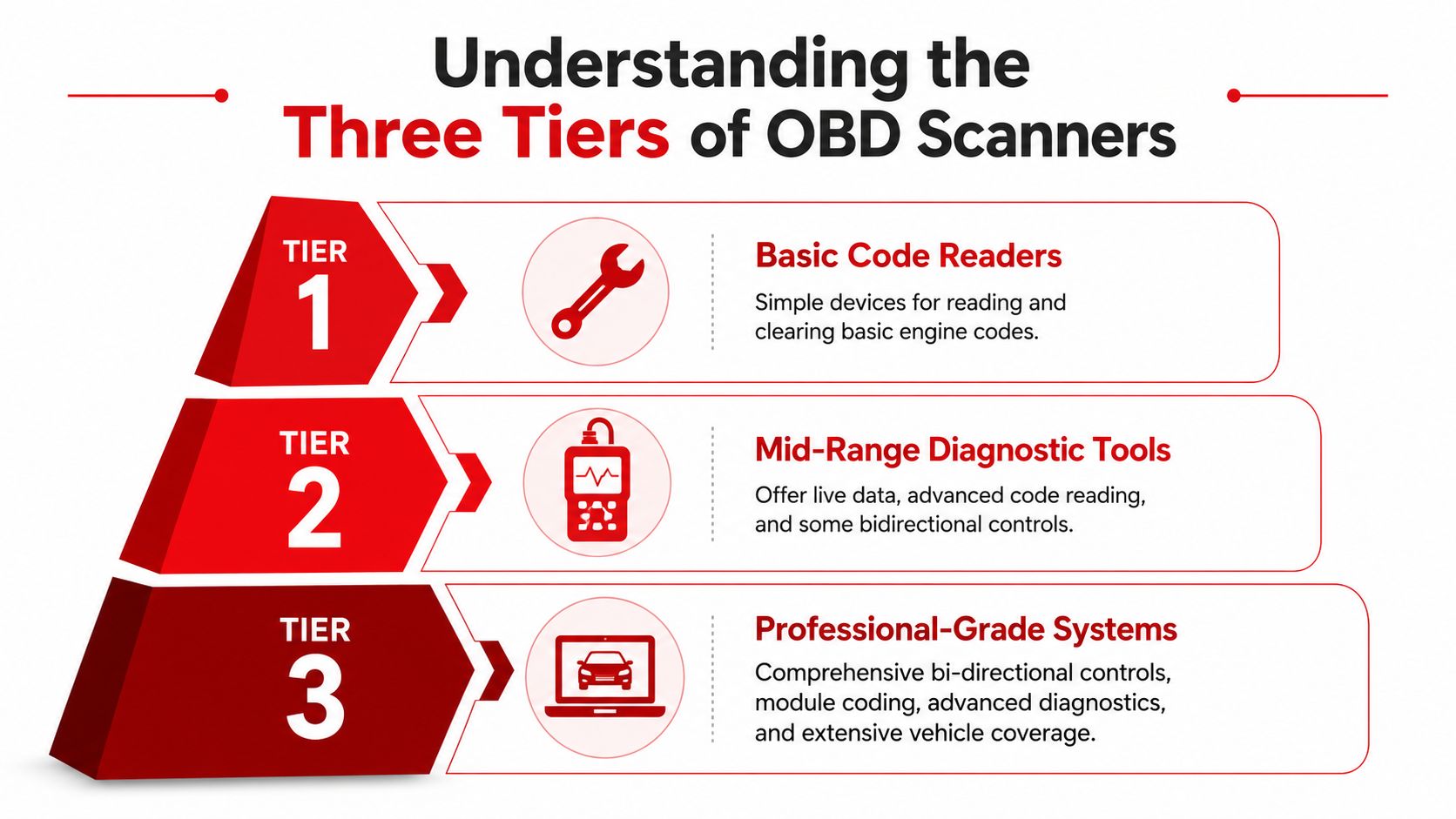
Most confusion around the best OBD scanner comes from comparing tools that aren't built for the same job. A simple code reader, a bidirectional scan tool, and a programming-capable diagnostic tablet may all plug into the same port, but they belong in very different conversations.
Tier 1 basic code readers
This is the entry level. These tools read and clear common engine codes and usually provide limited emissions-related data. They're fine for quick triage, used-car checks, or confirming whether the check engine light is tied to a common fault.
They are not enough for a working repair shop that handles modern vehicles every day.
A basic reader won't usually give the team what it needs for ABS, SRS, body modules, special functions, or active component testing. It answers, “Is there a code?” It usually can't answer, “What failed, and can the shop prove it before ordering parts?”
Tier 2 bidirectional scanners
This is the sweet spot for most independent shops. A bidirectional scanner doesn't just read data. It sends commands. That means the tech can trigger fans, cycle injectors, command throttle movement, test solenoids, and verify whether a component responds.
That changes diagnosis from educated guessing to controlled testing.
A bidirectional tool pays for itself when it cuts one unnecessary part replacement or one extra teardown on a difficult job.
Tier 2 tools also tend to include stronger live data, more service functions, and wider access beyond powertrain codes. For many shops, this is the practical answer to the best OBD scanner question because it balances capability, speed, and cost.
Tier 3 advanced diagnostic and programming tools
This tier is for deeper work. Think module replacement, coding, adaptation, key-related functions, brand-specific procedures, and broader system coverage across domestic, Asian, and European vehicles.
These tools make sense for shops that regularly handle:
- Complex electrical issues
- European vehicles with coding requirements
- Late-model systems that need calibration or adaptation
- Work that lower-tier tools would force the shop to sublet
The trade-off is obvious. Higher-end tools cost more, usually require paid updates, and demand more technician skill. But for the right shop, they also keep more profitable work in-house.
The mistake isn't buying advanced capability. The mistake is buying too little tool and expecting advanced results.
Essential Scanner Features a Pro Shop Cannot Ignore
A long feature list doesn't make a scanner valuable. The best OBD scanner for a professional shop earns its place by solving common diagnostic bottlenecks fast and consistently.
The features that save real labor time
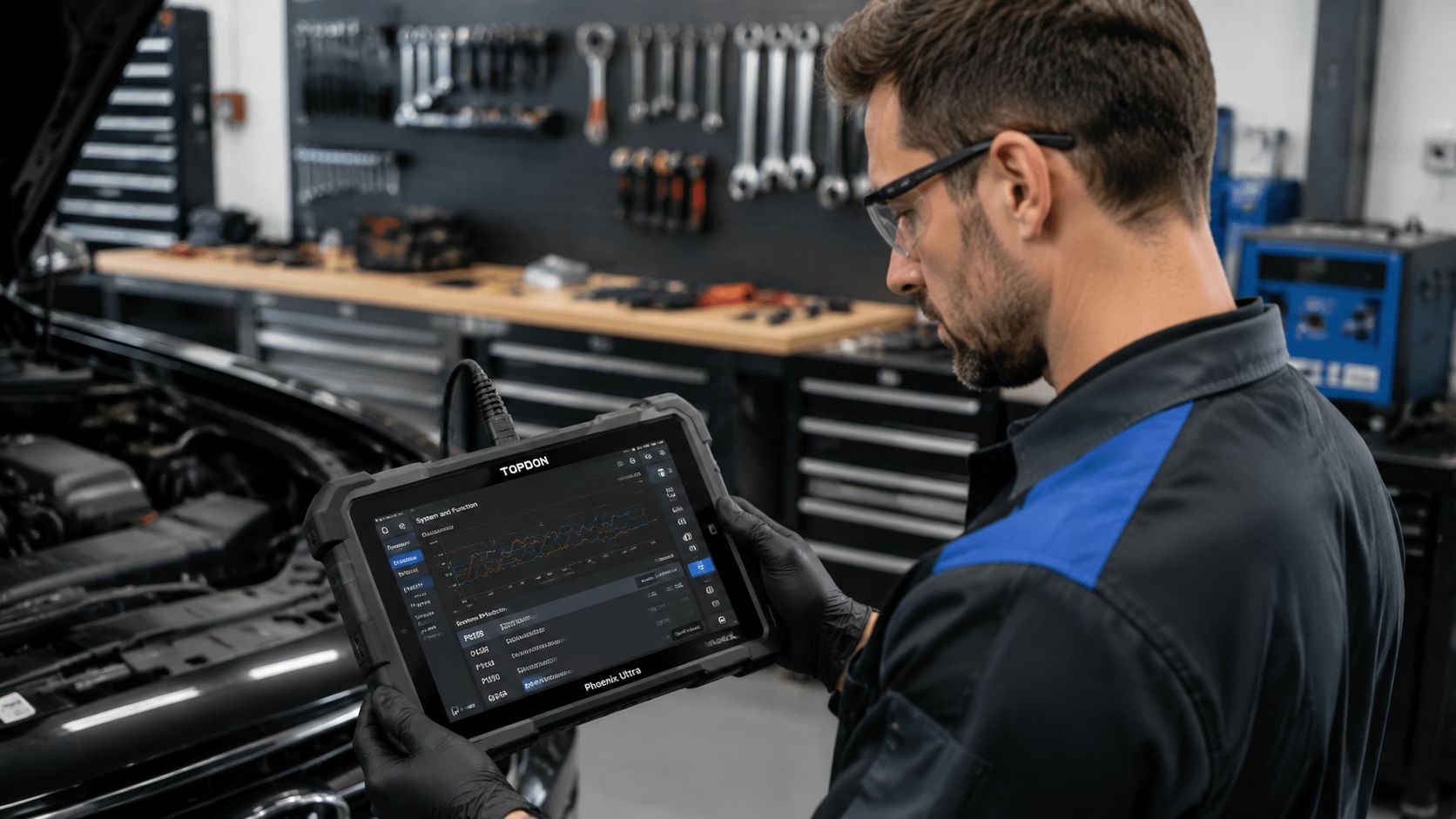
Bidirectional control matters because it lets the tech command a system and watch the response. If a fan won't run, a pump won't prime, or a throttle plate won't move, the scanner helps separate command issues from hardware failure. That shortens the path to a confident estimate.
Live data streaming and graphing matter because many problems don't fail hard enough to leave a clear trail. Intermittent sensor dropouts, fuel trim shifts, and temperature-related faults often show up in patterns, not static snapshots.
VIN auto-detect matters because it cuts intake friction. A scanner that can retrieve the VIN in real time helps the tool match the correct vehicle profile for code interpretation, which is a practical advantage noted in.
What separates a shop tool from a gadget
A professional scanner should also handle the jobs that feed the front counter every week.
- Special functions: Oil resets, ABS bleeding, steering angle calibration, and similar tasks keep routine work moving without outside help.
- Manufacturer-specific coverage: Generic access is never enough for a busy mixed-car shop. The scanner needs depth, not just breadth.
- Reliable connection options: Bluetooth-connected OBD2 scanners are increasingly preferred because they integrate with mobile diagnostic apps and allow real-time streaming of engine parameters without the clutter of wired connections, which improves inspection efficiency, as noted in.
A wired-only setup can still work, but mobile flexibility matters in active bays, on test drives, and during quick write-up checks.
The best shops don't buy scanners for the rare hero job. They buy them for the repetitive daily work that needs to move faster.
A few buying filters help cut through marketing noise:
| Feature | Why it matters in a shop | What happens without it |
|---|---|---|
| Bidirectional control | Confirms component response | Diagnosis takes longer and gets less certain |
| Live data and graphing | Helps catch intermittent faults | Techs rely too much on stored codes |
| VIN auto-detect | Speeds setup and improves accuracy | More manual entry and more room for error |
| Service functions | Keeps routine repairs in-house | Simple jobs turn into delays |
| Brand-specific coverage | Supports mixed fleets and modern systems | Profitable jobs get declined or sublet |
If a scanner can't support those basics, it won't hold up in a professional workflow, even if the screen looks good and the marketing sounds impressive.
Top OBD Scanners for Different Shop Needs
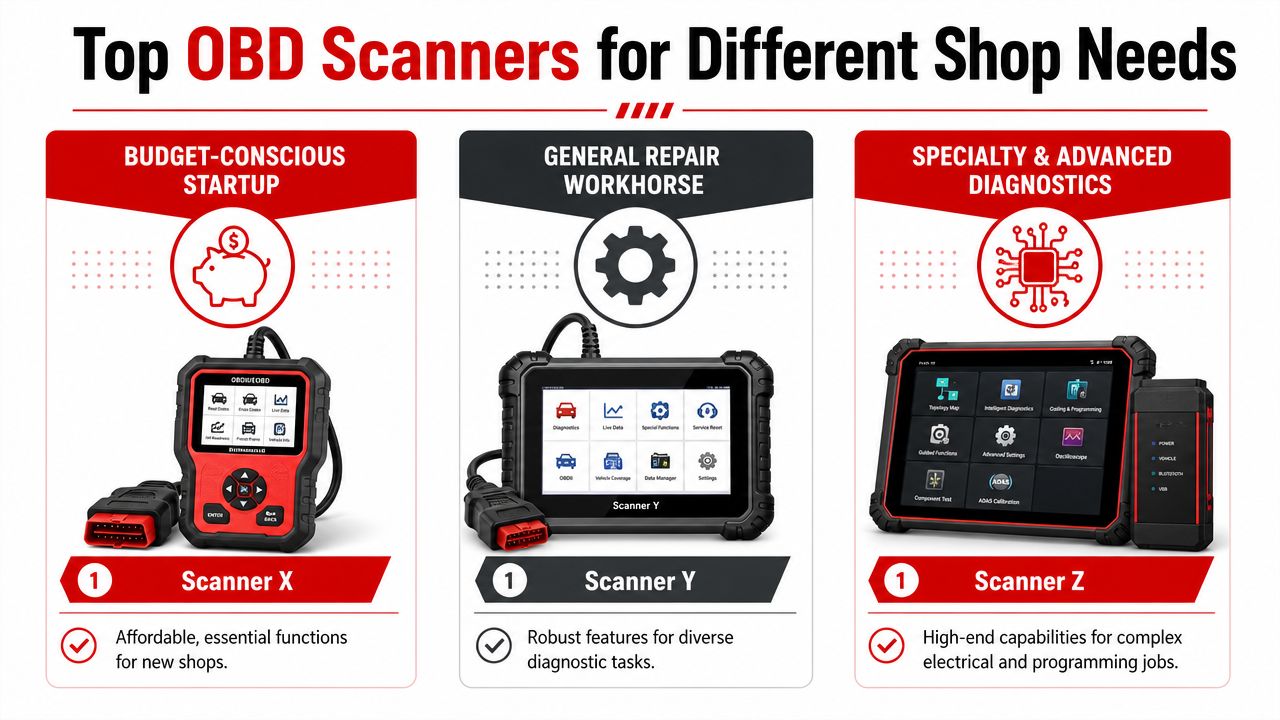
There isn't one best OBD scanner for every business. A mobile mechanic has different priorities than a general repair shop, and both are different from a specialist handling advanced European or EV-related work. The better way to buy is to match the tool to the kind of labor the shop wants to sell.
For a mobile mechanic or small garage
Portability matters most here. The tool needs to connect quickly, handle common diagnostics, and avoid turning every on-site call into a laptop-and-cable setup.
A strong Bluetooth-based scanner can be a smart fit when paired with a solid app workflow. These setups are cleaner in the field and easier to carry between vehicles. The downside is depth. Many compact tools are excellent at code access and live data but weaker on advanced functions, coding, and niche manufacturer routines.
This tier works best for shops that focus on maintenance, common repairs, and fast vehicle checks.
For a general independent repair shop
A full-featured bidirectional tablet earns its keep. A general shop sees enough variety that broad coverage, active tests, and useful service functions matter more than ultra-low purchase price.
The TopDon Phoenix Nano stands out in this category because it provides full bidirectional control, live data streaming at 100ms intervals, supports over 80 vehicle makes, and includes ECU coding for BMW and Mercedes, according to. That profile fits the daily reality of an independent shop that needs one tool to cover a lot of ground without stepping up to a full specialist platform.
What makes a tool like that attractive isn't just the spec sheet. It's the practical middle ground:
- Broad daily usefulness: Enough depth for common drivability, brake, and system issues
- Good front-to-back value: Strong capability without forcing every shop into the highest tier
- Less job leakage: More repairs stay in-house instead of being referred out
For a specialty shop handling deeper systems work
Specialty shops need more than code access and actuation. They need a scanner that supports coding, adaptations, and manufacturer-level routines with enough reliability that the shop can build processes around it.
High-end scan tools from brands such as Topdon, Launch, and Autel are often chosen by professional mechanics because they support yearly update packages and ECU coding capabilities, giving access to diagnostics and software functions basic readers don't provide, as reflected in.
That kind of tool makes sense when the shop regularly handles:
| Shop type | Best fit |
|---|---|
| General maintenance-heavy shop | Mid-range bidirectional scanner |
| Mixed-car independent shop | Broad-coverage tablet with active tests and coding support |
| Euro, electrical, diesel, or EV-focused shop | Advanced diagnostic and programming platform |
Buy for the work the shop wants more of, not just the work it already sees.
A scanner should open profitable doors. If it only helps clear codes faster, it's probably underbought for a professional environment.
Beyond Diagnostics Integrating Scanners Into Your Workflow
Monday at 8:15, the first hard-start vehicle is in a bay, a waiting job needs approval, and the advisor is already asking the tech what the scanner found. The diagnosis may be right, but the shop still loses time if that result has to be repeated three different ways before it becomes sold work.
That is the part many scanner reviews miss. They judge the tool as a standalone device. A working shop has to judge it as part of a process that runs from intake to estimate to authorization to invoice.
The bottleneck usually starts after the scan
The tech identifies the fault. Then the shop has to turn that finding into notes on the repair order, a clear explanation for the service advisor, documentation the customer can understand, and a job that keeps moving through the day. If those handoffs are messy, even a strong scanner produces less billable value than it should.
Plenty of shops feel this every week. Time disappears into retyping notes, walking back to the bay to clarify findings, rebuilding the same story for the customer, and checking status in multiple places. That is why scanner selection should include one practical question. How well does this tool fit the way the shop sells and manages repairs?
What a connected workflow changes
A scanner that sits on its own usually creates extra labor in four spots:
- Fault data has to be transcribed into the estimate or repair order
- The diagnosis gets explained twice from technician to advisor, then advisor to customer
- Support for the estimate gets rebuilt with notes, photos, and line items
- Job progress gets checked manually because the team lacks one shared view of status
That friction costs more than people think.
In a profitable shop, the scan result should feed the next step with as little rework as possible. The findings should support the inspection, strengthen the estimate, help win approval, and stay attached to the job through invoicing. That is where a better scanner decision improves more than diagnostics. It improves throughput.
A scanner should start the repair story, not leave the staff to rewrite it three times.
Shops do not lose margin only on missed diagnoses. They lose it in the handoff between diagnosis and sale. The right scanner helps the tech find the problem. The right workflow helps the shop get paid for finding it.
How RedAppy Turns Your Scanner Into a Profit Engine
A good scan is only the first billable step. Margin shows up when your team can carry that diagnostic result straight into the estimate, the repair order, the parts list, the customer approval, and the final invoice without stopping to rebuild the same story at every handoff.
In a busy shop, the scanner and the management system either work together or they create drag. A tech finishes diagnosis. The advisor needs clear notes, photos, and recommended work. The front office needs an estimate that goes out fast. The foreman needs to see whether the car is waiting on approval, parts, or a bay. If that chain breaks, the shop loses time it cannot sell twice.
RedAppy solves the part hobbyist scanner reviews usually miss. It gives the shop one operating system for the work that starts after the fault code appears.
The return shows up in day-to-day shop math:
- Digital inspections keep findings, photos, and technician notes tied to the job instead of scattered across paper, texts, and memory
- Estimates and invoices move out faster, which shortens the gap between diagnosis and approval
- Parts ordering and job tracking reduce stalls caused by unclear status or missing information
- AI Repair Assistant access helps the team build labor, diagnostic, and repair plans with less back-and-forth
That matters because scanner value is often lost in the middle, not at the point of diagnosis. I have seen shops spend serious money on capable scan tools, then give back the gain through weak handoffs and poor visibility. The tool found the issue. The process failed to turn that finding into approved, organized work.
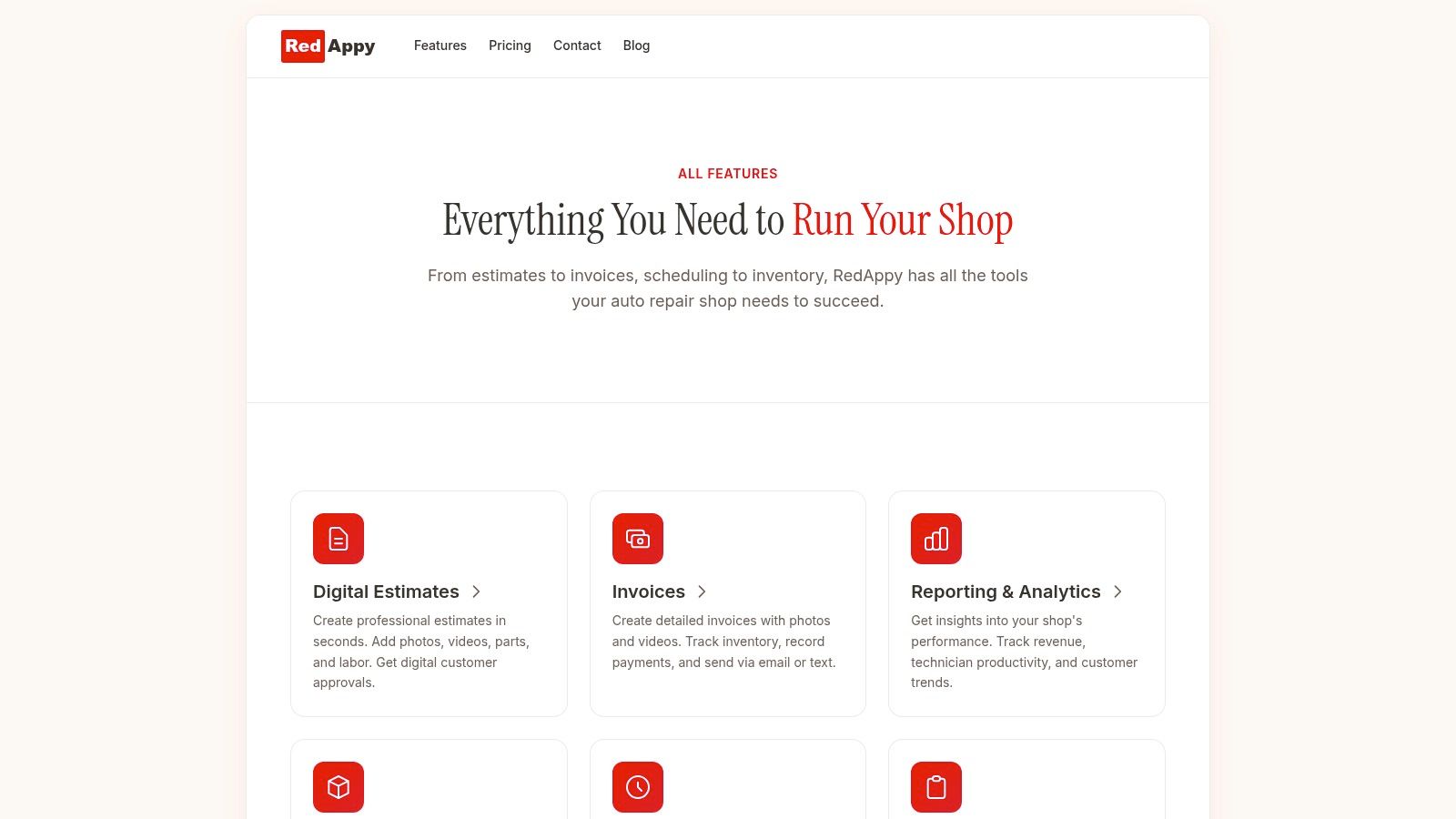
RedAppy connects inspections, estimates, invoices, payments, analytics, vehicle history, and a digital shop board in one place. That setup helps advisors sell with better documentation, helps managers see bottlenecks earlier, and helps technicians spend more time fixing cars instead of chasing updates.
For a shop owner making a major scanner decision, that is the bigger ROI question. Buy the right scan tool, but make sure the rest of the shop can carry its output all the way to payment. That is how a scanner stops being a cost center and starts producing cleaner approvals, better throughput, and stronger gross profit per ticket.
Frequently Asked Questions About Professional Scanners
Do electric vehicles change what scanner a shop needs
Yes. EV work and late-model diagnostics put more pressure on scanner choice because module setup, coding, recalibration, and security access come up more often after routine repairs.
A general repair shop does not need an EV-only tool on day one. It does need to verify what happens after a module replacement, battery service, ADAS-related work, or a software-driven repair. Many scanner roundups stop at code reading and live data. In a working shop, the expensive part is finding out too late that the tool cannot finish the job.
The practical question is simple. Can the scanner support the repairs your shop wants to bill for from start to handoff, without pushing the car to the dealer for the last 10 percent?
Are annual updates worth paying for
For a shop using the tool every day, usually yes.
Coverage changes fast. New model years, revised procedures, bug fixes, topology changes, and added service functions all affect whether a scanner saves time or creates a comeback risk. A scanner with expired updates may still connect, but partial coverage slows diagnosis and forces technicians into workarounds.
I look at update cost the same way I look at information access in the bay. If the tool helps the team close jobs faster on the vehicles you see every week, the subscription is part of production cost, not overhead. If the scanner sits in a drawer for specialty cases once a month, the math is different.
Can one scanner really cover domestic and European vehicles
One scanner can cover a large share of mixed-car work, but no single platform is strongest on every make. That is the trade-off.
Broad-coverage tools make sense for shops that service domestic, Asian, and some European vehicles every day. Specialty shops need depth first. BMW, Mercedes, VW-Audi, JLR, and newer Volvo work can expose the limits of a general-purpose scanner quickly, especially if your shop sells coding, programming support, or deeper system tests.
A practical buying rule helps:
- For a mixed general repair shop, buy the broadest dependable mid-tier or upper-tier tool your car count can justify.
- For a niche-heavy shop, buy around the brands that drive your labor sales.
- For expansion into coding and module work, verify the exact functions on your common makes before you buy.
The right scanner is the one that supports your profitable jobs, fits your technician skill level, and feeds clean information into the rest of the shop process without adding delays.
Ready to Transform Your Shop?
RedAppy helps auto repair shops create professional digital estimates with photos and videos, send them instantly via text or email, and get customer approvals in seconds. No credit card required to start.