
Customer Retention Software for Auto Shops: 2026 Guide
A customer calls an auto repair shop because the check-engine light came on. The team diagnoses the vehicle, completes the repair, collects payment, and moves to the next job. Months later, that customer needs maintenance again, but nobody remembers to follow up. The customer searches for another shop, while the original business spends money trying to replace a relationship it already earned.
That pattern is common in service businesses. New leads arrive, work gets approved, and vehicles leave the bay, yet repeat business remains unpredictable because follow-up depends on memory, sticky notes, and whoever happens to be at the front desk. Customer retention software closes that gap by connecting service history, scheduling, reminders, communication, and customer feedback in one operating process.
Table of Contents
- Why Your Best Customers Are the Ones You Already Have
- Understanding Customer Retention Software for Shops
- The Core Features Your Shop Software Needs
- Key KPIs to Track for Customer Loyalty
- Choosing and Implementing Your New System
- How RedAppy Drives Customer Retention
- Your Next Step Toward a More Profitable Shop
Why Your Best Customers Are the Ones You Already Have
A shop owner can spend the morning watching the phone, the afternoon handling parts delays, and the evening reviewing unpaid invoices. Customer follow-up often gets pushed aside, not because it lacks value, but because urgent shop work always wins. A customer who left satisfied can still disappear just because nobody contacted them at the right time.
That creates a leaky bucket. New customers pour in through referrals, search, roadside problems, and local advertising, but existing customers leak away through missed reminders, unclear recommendations, poor scheduling, or a service experience that ends too abruptly. The shop may see a busy calendar while its customer base becomes less dependable.
Retention isn't the same as sending more promotions. A vehicle owner returns when the shop remembers the vehicle, explains the work clearly, makes booking easy, and follows through after the visit. Those actions build confidence because they reduce the effort and uncertainty associated with the next repair.
Retention is an operating discipline
Customer retention software gives the shop a repeatable way to handle those moments. It can prompt a service reminder, identify a customer who hasn't returned within a meaningful period, send a rebooking message, and request a review after the visit. The system doesn't replace a service advisor's judgment. It makes sure the advisor doesn't have to rely on memory for every customer.
The broader retention conversation often includes campaign design and text messaging tactics. Shops comparing channels can use this guide to as a useful reference for understanding how message timing and relevance influence repeat engagement, even though an auto repair workflow requires service-specific triggers.
Practical rule: A retention message should answer a real customer need, such as when to return, what was recommended, or how to book, rather than simply announce another discount.
The commercial benefit is practical. Fewer missed appointments protect bay capacity, better follow-up brings deferred work back into view, and clearer service communication can support stronger work approval. The customer already knows the shop, the location, and the team. A reliable process gives that relationship a reason to continue.
Understanding Customer Retention Software for Shops
Generic CRM software usually starts with contacts, sales activity, and broad communication campaigns. That model can work for an online store, where retention often follows product purchases, browsing behavior, replenishment timing, and promotional offers. Auto repair shops operate differently because the customer relationship is tied to a physical vehicle and a sequence of service events.
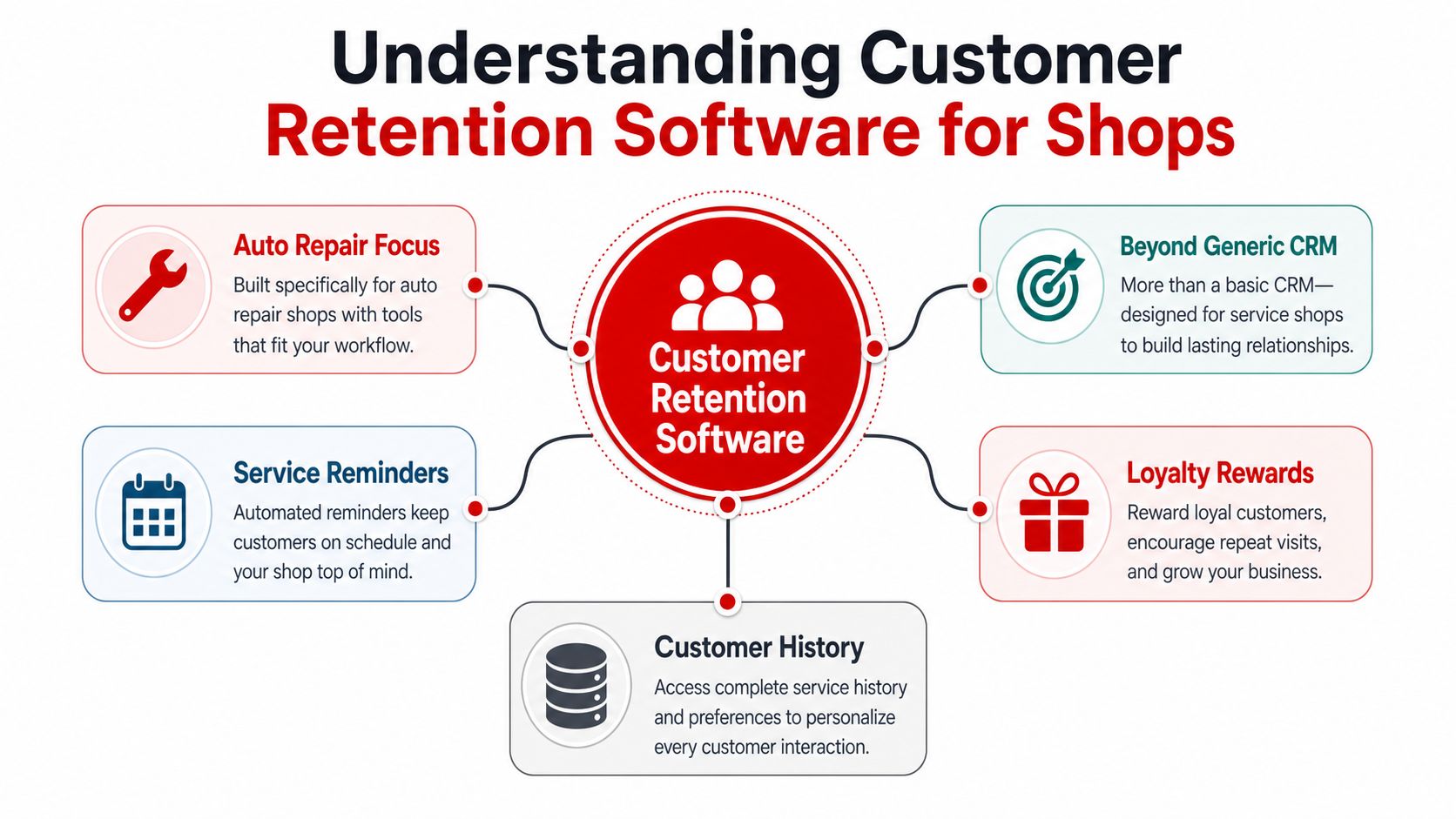
A useful way to understand shop-focused customer retention software is to treat it as a digital service advisor. It remembers which vehicle belongs to which customer, records completed and recommended work, watches appointment activity, and helps the team contact the customer when action makes sense. It supports the human advisor without asking the advisor to maintain a separate spreadsheet or search through old messages.
Service history should drive communication
The strongest systems connect customer records to vehicle history, appointment schedules, inspection findings, estimates, invoices, and payment status. That connection matters because a reminder without context feels generic. A reminder tied to a specific vehicle, previous recommendation, or expected maintenance need feels useful.
A shop shouldn't ask a customer to repeat information already stored in its system. The advisor should be able to see the vehicle, understand prior work, review declined recommendations, and make the next conversation relevant. That continuity improves trust and helps the customer feel recognized.
Trust beats broad promotion
A generic CRM might send an email blast to every contact. A service-focused platform can separate a customer waiting for a recommended repair from one who missed an appointment, a customer due for routine maintenance from one who recently completed a major repair, and an inactive customer from someone who visited recently.
This is why sector-specific retention requires more than a marketing layer. Coverage of customer retention software often treats the category as a cross-industry CRM and analytics problem, while service businesses depend on scheduling, follow-through, and operational records. provides useful broader context, but auto repair shops need workflows that connect communication directly to service operations.
Subscription companies face a different renewal rhythm, billing model, and cancellation process. For comparison, helps clarify why a shop shouldn't copy a subscription retention playbook. A vehicle doesn't renew on a fixed contract. Its next visit depends on mileage, condition, recommendations, scheduling, and the customer's confidence in the shop.
The Core Features Your Shop Software Needs
A software demo can look impressive while failing at the front desk. The right evaluation starts with the workflows that influence whether a customer books, approves, pays, and returns.
Automated appointment reminders
Reminders should go out through the channels customers use, with enough context to make the appointment easy to confirm or change. A useful workflow can include the appointment details, shop location, vehicle information, and a direct path for rescheduling.
This reduces dependence on manual calls and gives the front desk a cleaner schedule. The platform should also support follow-ups for missed appointments, because an unconfirmed booking isn't the same as a lost customer.
Digital vehicle inspections
A digital inspection turns a technician's findings into a customer-facing explanation. Photos, notes, recommended work, and priority levels help the advisor show why a repair matters instead of asking the customer to approve an unfamiliar line item over the phone.
Better communication can support stronger approval decisions and a higher average repair order, but software alone can't create trust. The inspection must be accurate, readable, and connected to the estimate. A photo-rich report that arrives promptly is useful. A generic checklist sent after the vehicle is already picked up isn't.
Integrated customer communication
SMS and email should be connected to customer and vehicle records rather than managed from separate inboxes. The system should support service reminders, estimate updates, approval requests, post-visit follow-ups, review requests, and rebooking prompts.
A client-engagement platform should automate reminders, follow-ups, promotions, and rebooking prompts. It should also identify clients who haven't visited within a selected timeframe for personalized reactivation messages, while post-visit review requests can keep review generation inside the retention workflow, as described by.
Loyalty programs and incentives
Loyalty features can help a shop recognize repeat customers, but rewards shouldn't become the entire retention strategy. A discount may bring back a price-sensitive customer while weakening the perceived value of professional work. Service reminders, convenient booking, transparent inspections, and dependable follow-through usually deserve priority.
Digital payments
Online payment options shorten the final step in the customer journey. Customers can settle an invoice without waiting for a phone call or returning to the shop, while the team can close work orders and move vehicles through checkout more efficiently.
Centralized vehicle history
Vehicle history should be searchable by customer details and vehicle identifiers, with completed repairs, declined recommendations, inspections, invoices, and notes in one record. This gives the advisor enough context to make a sensible recommendation and prevents the customer from repeating the vehicle's story at every visit.
Performance analytics
Analytics should connect activity to shop outcomes. Useful dashboards show repeat business, appointment completion, response activity, approved work, average repair order, technician efficiency, and revenue by workflow. The value comes from action. If a report shows many inactive customers, the team needs a reactivation process, not another dashboard.
| Feature | Primary Benefit for Your Shop |
|---|---|
| Automated appointment reminders | Fewer forgotten appointments and less manual calling |
| Digital vehicle inspections | Clearer recommendations and stronger work approval conversations |
| Integrated SMS and email | Faster, more relevant customer communication |
| Loyalty programs | Recognition for repeat customers without relying only on discounts |
| Digital payments | Easier checkout and faster invoice completion |
| Centralized vehicle history | More informed service advice and consistent customer experiences |
| Performance analytics | Visibility into repeat business, workflow performance, and revenue opportunities |
Key KPIs to Track for Customer Loyalty
Retention software only earns its place when the shop uses its data to make better decisions. Owners don't need every available metric. They need a small set of measures that reveal whether customers return, whether the shop remains relevant between visits, and whether the team acts on warning signs.
Are customers coming back?
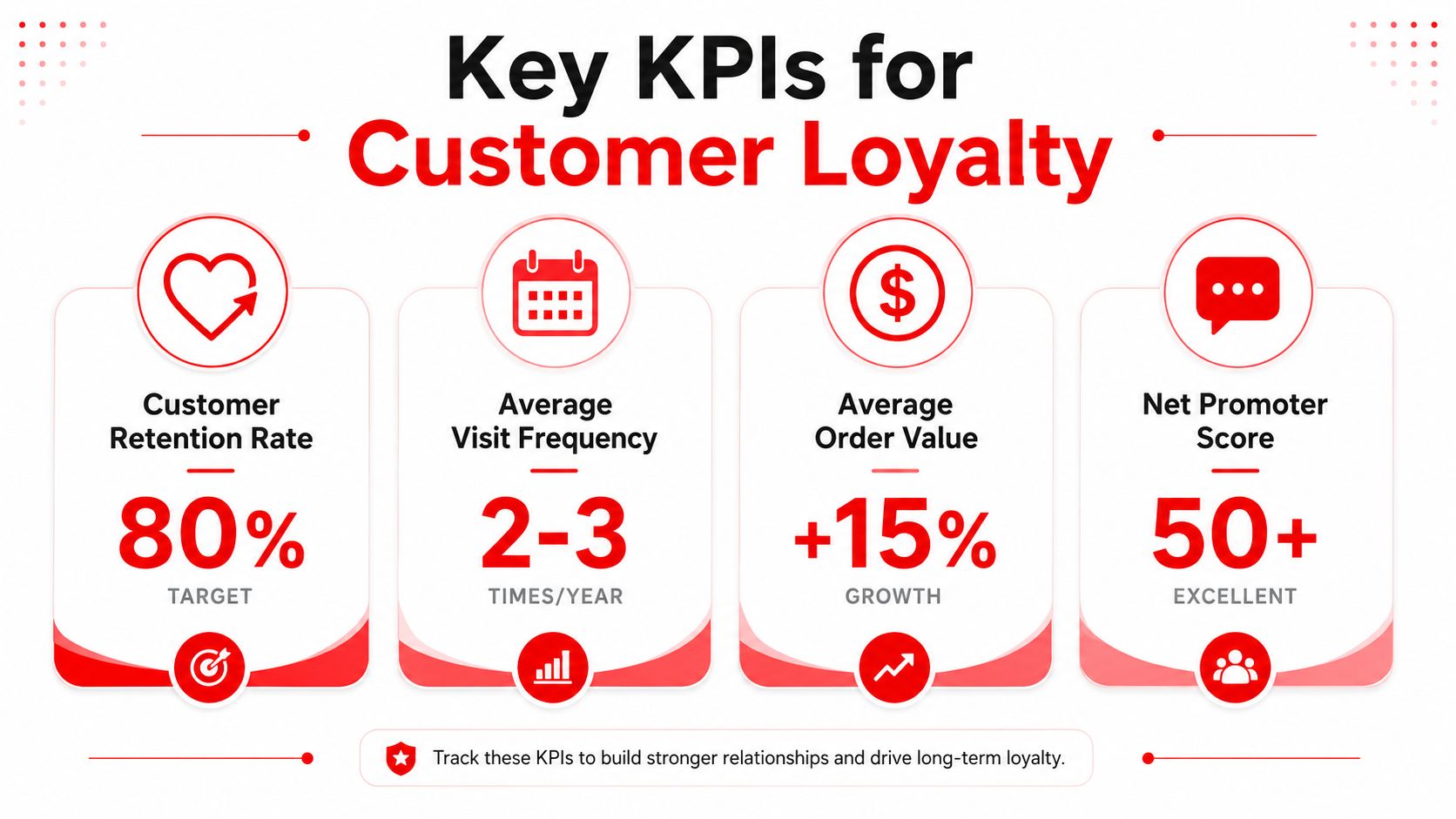
The core measure is the 12-month retention rate. Auto repair shops can calculate it as:
Customers who returned within 12 months ÷ total unique customers from 12 months ago × 100
That formula compares a defined customer group with the customers from that same group who returned. It prevents a busy month driven by new customers from being mistaken for stronger loyalty. also recommends identifying customers who haven't returned in 6, 9, or 12 months as at-risk, rather than automatically treating them as lost.
How often do customers visit?
Average time between visits shows whether customers follow a predictable service pattern. The useful comparison isn't an arbitrary industry target. It's the customer's normal buying cycle and the vehicle's service context.
A customer who usually returns around a familiar maintenance interval may need a reminder when that interval approaches. A customer whose visit gap has become unusually long may need a personal check-in. The software should help advisors distinguish those situations instead of sending identical messages to everyone.
Are returning customers creating healthy value?
Customer lifetime value combines repeat visits, average repair order, service mix, and relationship duration. A rising value can indicate that customers aren't only returning, but are trusting the shop with more of the work their vehicles need.
The number needs context. A higher average repair order isn't automatically positive if comeback work or customer complaints are rising. Pair order value with inspection quality, approval patterns, customer feedback, and warranty outcomes.
Are customers recommending the shop?
Net Promoter Score and review activity provide a view of customer sentiment. Neither should replace direct conversations. A low score or negative review is most useful when the manager traces it to a specific moment, such as delayed communication, an unexpected invoice, or a scheduling problem.
The best dashboard places metrics beside owners and actions. The service advisor owns follow-up, the manager reviews inactive segments, and the shop leader checks whether operational changes improve repeat behavior over time.
Choosing and Implementing Your New System
The wrong platform creates another place for the team to enter information. The right one removes duplicate work and makes the preferred process easier to follow. Evaluation should begin with the shop's actual customer journey, from first call through the next recommended visit.
Evaluate the workflow before the feature list
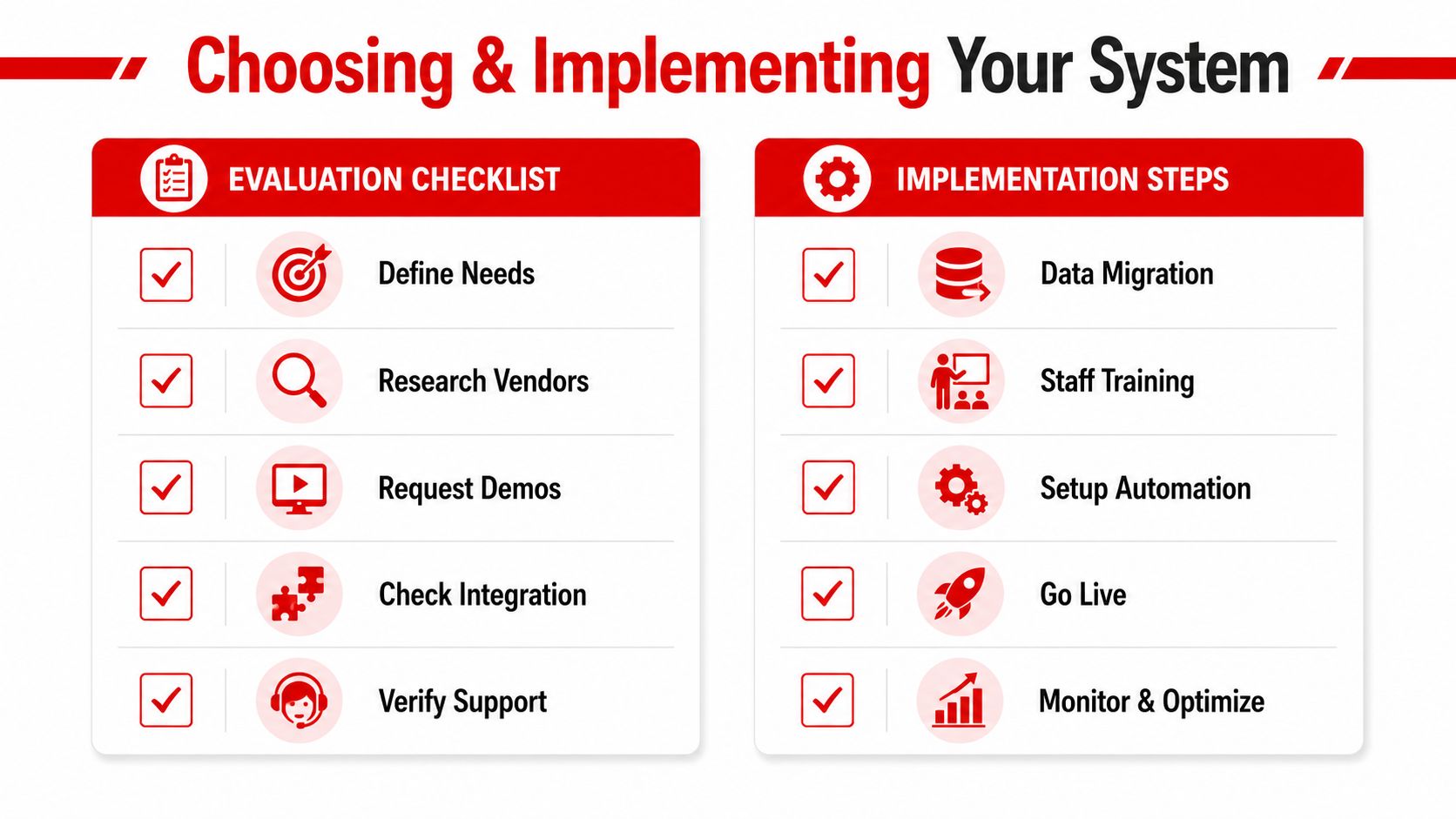
A vendor should demonstrate a real repair scenario, not just display a collection of screens. Ask the vendor to show how a customer record is created, how a vehicle is identified, how an inspection becomes an estimate, how approval is captured, how payment closes the invoice, and how a future reminder is triggered.
The important questions include:
- Data ownership: Can the shop export customer, vehicle, appointment, inspection, estimate, and invoice data if it changes providers?
- Integration depth: Does the system connect with the shop's scheduling, payment, accounting, parts, and communication workflows?
- Automation control: Can managers define who receives reminders, what event triggers a message, and when a human should take over?
- Support quality: Does the vendor provide onboarding, training, troubleshooting, and usable documentation?
- Reporting clarity: Can the shop separate new customers from returning customers and trace retention activity to completed work?
Build a controlled launch
Data migration deserves careful review. The shop should clean duplicate customer records, verify phone numbers and email addresses, match vehicles to owners, and preserve meaningful service history. A small shop can begin with the most active customers and core workflows. A multi-location group also needs shared naming rules, permissions, location reporting, and a consistent definition of a returning customer.
Team training should follow the daily sequence, not a feature catalog. Service advisors need practice booking, confirming, updating, and following up. Technicians need to know how to document inspection findings clearly. Managers need to review exceptions and act on reports.
Make the change visible to customers
Customers should hear about practical conveniences, such as text reminders, online approvals, digital inspections, and online payments. The message should focus on less waiting and clearer communication, not on the software itself.
Implementation test: If a service advisor still needs a separate spreadsheet to know who needs a reminder, the rollout hasn't solved the retention problem.
After launch, managers should review missed appointments, uncontacted recommendations, message responses, approval activity, and repeat visits. Automation should remain adjustable. A reminder that arrives too early, too late, or without useful vehicle context can damage relevance instead of improving it.
How RedAppy Drives Customer Retention
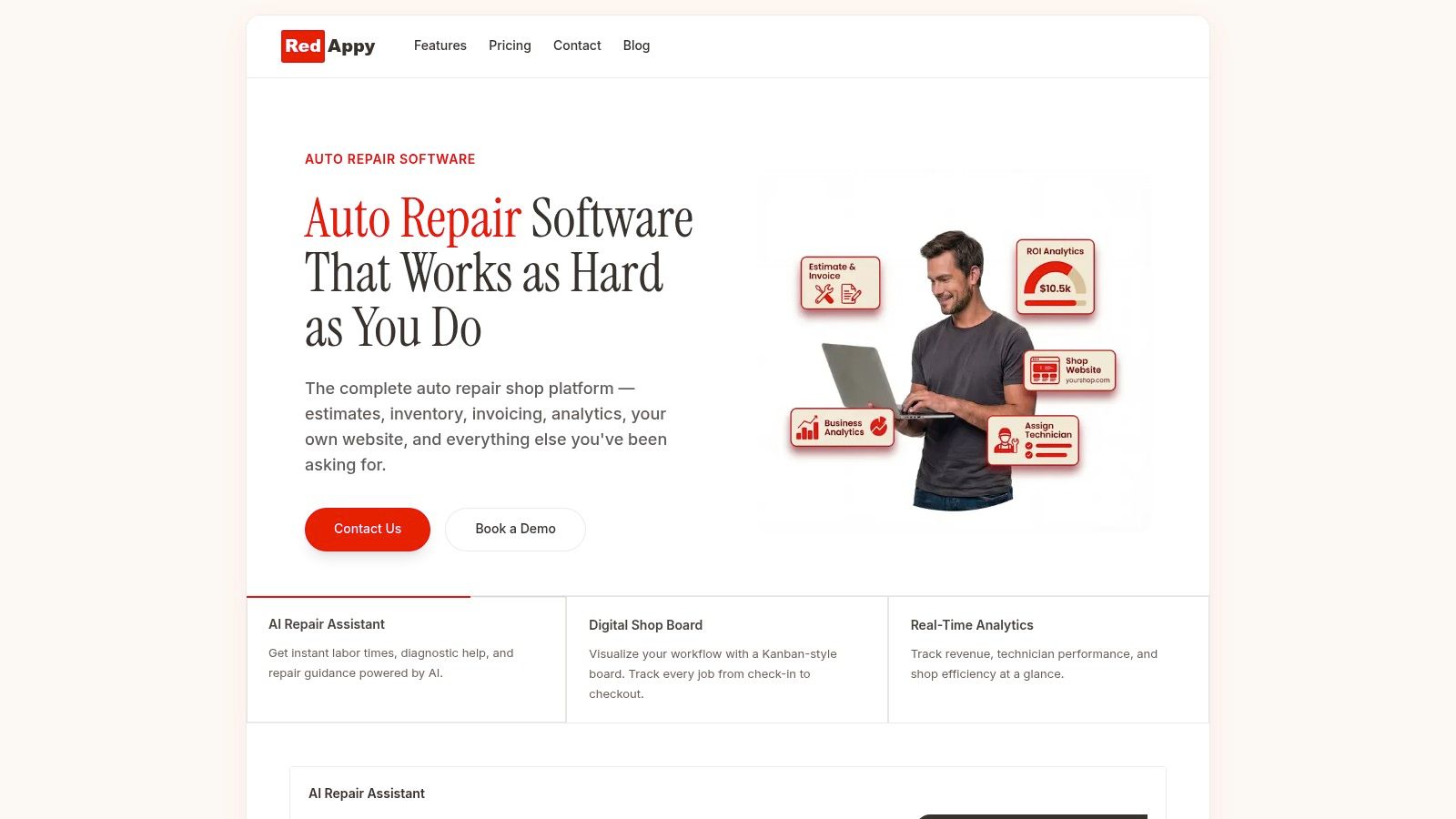
RedAppy brings retention into the same workflow that moves a repair order through the shop. Its Digital Shop Board gives the team a Kanban-style view of jobs from check-in to checkout, while vehicle history, customer lookup, scheduling, digital inspections, estimates, invoicing, and online payments keep the customer record connected to the work.
Consider a typical service visit. A technician documents a concern with inspection notes and photos. The advisor sends the inspection to the customer, answers questions, and records the approved or declined work. The completed repair remains attached to the vehicle history, giving the next conversation useful context instead of forcing the customer to start over.
A later reminder can reference the vehicle's service needs and previous recommendations. If the customer hasn't returned, the team can use a reactivation workflow rather than hoping someone notices the gap. The same record supports review requests after the visit, helping the shop treat feedback as part of service delivery.
A system built around shop decisions
The distinction matters because retention software must support operational speed. A shop doesn't retain a customer by sending a beautifully designed campaign while an estimate waits unanswered. It retains the customer by making the next decision clear, responding promptly, documenting work accurately, and making the next appointment easy.
CRM adoption is already broad among companies with 10 or more employees, with 91% using CRM software, and businesses using CRM tools see about a 27% higher customer retention rate, according to. That broader evidence supports the role of organized customer records, but an auto shop still needs workflows designed around vehicles, service events, and bay operations.
RedAppy is one option for shops seeking that combination. Its platform includes digital inspections, customer and vehicle history, automated service reminders, online payments, analytics, parts ordering, and the Digital Shop Board, allowing retention activity to stay close to the work that creates customer trust. Shop owners can review the RedAppy features to compare the workflow with their current process.
Your Next Step Toward a More Profitable Shop
Customer retention software should not be treated as a separate marketing expense that sends occasional promotions. For auto repair businesses, retention starts with operational consistency. The shop schedules accurately, reminds customers at useful moments, explains recommendations clearly, follows up on declined work, closes payment efficiently, and records enough history to make the next visit personal.
The financial effect appears in practical places. Fewer no-shows protect available appointment capacity. Better inspection communication can support work approval and average repair order. Faster follow-up brings deferred maintenance back into consideration. A searchable history helps the team serve returning customers without wasting time reconstructing past work.
Market estimates also show that customer retention software is a durable enterprise category rather than a small add-on. One estimate places the market at USD 6.25 billion, with a projection of USD 13.39 billion by 2032 and an implied 11.5% CAGR, while another estimates USD 5.49 billion and projects USD 15.0 billion by 2035 at a 10.6% CAGR, as reported by. The different estimates should be read as directional market evidence, not as a reason to buy the most complex platform available.
A small garage may need dependable reminders, vehicle history, inspections, and payment tools before it needs advanced predictive analytics. A multi-location operation may need permissions, standardized workflows, location reporting, and centralized oversight. The right system fits the shop's operating model and helps people act faster.
RedAppy connects auto repair scheduling, digital inspections, estimates, payments, vehicle history, customer communication, and shop analytics in one platform built for service workflows. Visit RedAppy to see how the system can help the team reduce missed follow-up, improve customer communication, and create more repeat business.
Ready to Transform Your Shop?
RedAppy helps auto repair shops create professional digital estimates with photos and videos, send them instantly via text or email, and get customer approvals in seconds. No credit card required to start.