
Diesel Fuel Cold Weather Additives: A Shop Owner's Guide
The first hard freeze always exposes the same shops. The phone starts ringing before opening. A pickup won't start. A skid steer died at the jobsite. A farm truck made it two miles and lost power. By lunch, a bay is tied up with a diesel that should've been handled before the temperature dropped.
Most of those no-starts aren't mysterious. They're fuel problems. More specifically, they're wax, water, bad prep, and bad advice. Shops that treat winter diesel complaints like random emergencies stay buried in comebacks. Shops that understand diesel fuel cold weather additives turn the whole season into something manageable, predictable, and profitable.
Table of Contents
- The Winter Rush No Shop Owner Wants
- Why Diesel Fuel Hates the Cold
- Decoding the Different Types of Winter Additives
- Proper Use Timing and Dosage Are Critical
- Troubleshooting Gelled Fuel and Common Myths
- Turning Knowledge into Profit A Guide for Shop Owners
- Frequently Asked Questions About Diesel Additives
The Winter Rush No Shop Owner Wants
The first cold snap doesn't just test diesel trucks. It tests the front counter, the scheduler, the parts shelf, and the discipline of the whole shop.
One customer says the truck cranks but won't light. Another says it starts, runs rough, then quits. A third swears the batteries are new, so it “can't be fuel.” Meanwhile, a work truck is sitting outside a jobsite losing money by the hour, and the owner wants a miracle fix in one phone call.
That rush is expensive when the shop reacts instead of leading. Bays get blocked with avoidable fuel issues. Techs lose time thawing, checking filters, and sorting out mistakes that started days earlier at the pump. Service advisors get trapped in the same conversation over and over, trying to explain why a diesel that ran fine yesterday is now dead in the lot.
What usually went wrong
Most winter diesel failures fall into a short list:
- Untreated fuel: The customer assumed local fuel was already protected enough.
- Late additive use: The bottle got poured in after the fuel was already cloudy or partially gelled.
- Water in the system: Ice and contamination added another restriction on top of wax.
- Wrong home-brew fix: Somebody mixed in something that was never meant to protect modern diesel fuel systems.
Shop reality: A winter diesel complaint is rarely just a repair. It's usually a service failure that happened before the vehicle reached the lot.
The shops that handle this well don't wait for breakdowns. They teach customers early, stock the right products, and build a repeatable winterization process. That's how a seasonal headache stops being a comeback machine and starts becoming a trust builder.
Why Diesel Fuel Hates the Cold
Diesel fuel contains paraffin wax. That wax is useful when the fuel is warm, but it becomes a problem when temperatures drop. The simplest way to explain it to a customer or a new advisor is bacon grease in a pan. Warm grease flows. Cold grease turns cloudy, thick, and stubborn.
That's what diesel does. The fuel doesn't fail all at once. It changes in stages, and those stages matter because the truck may still crank, start, or move for a short time before the filter finally plugs.

What is actually happening in the tank
As diesel cools, wax starts coming out of solution and forming crystals. At first, those crystals are small. Then they grow and gather. Once they build into larger structures, they stop being a chemistry topic and become a plugged-filter problem.
A service advisor doesn't need to sound like a chemist. The practical explanation is enough. The wax crystals get big enough to block fuel flow. The engine gets starved. The customer calls for a tow.
The three temperature points that matter
Three terms matter in real shop talk:
- Cloud Point: This is when wax crystals first become visible and the fuel starts looking hazy or cloudy.
- Pour Point: This is when the fuel gets so thick it won't pour or flow normally.
- Cold Filter Plugging Point or CFPP: This is the one that matters most in the bay. It's the temperature where the fuel stops moving through the filter well enough to keep the engine running.
CFPP is the actual operational limit. A truck doesn't care what the chemistry textbook says if the filter is blocked and fuel can't get to the high-pressure side.
A diesel can still have fuel in the tank and act empty if the filter is packed with wax.
Why additives changed the game
The best cold weather additives work because they interfere with how wax crystals form. Earlier and effective additive chemistry, especially ashless copolymers of ethylene and vinyl acetate, became the industry standard because it improved low-temperature filterability without sacrificing cetane quality, according to.
That matters for shop owners because the old answer used to be simple blending with No. 1 diesel. That still has a place in severe cold, but modern additive chemistry gave the industry a better first line of defense. Shops can keep customers moving longer on treated fuel instead of jumping straight to a full blend strategy every time the forecast turns ugly.
Decoding the Different Types of Winter Additives
A lot of comeback trouble starts when somebody thinks every winter additive does the same thing. It doesn't. One bottle may help wax control. Another helps with moisture. Another helps cold starts. Some products combine functions, but the shop still needs to know what job each one is doing.
The safest move is to treat winter fuel issues like any other diagnostic path. Match the product to the failure.
Not every winter bottle does the same job
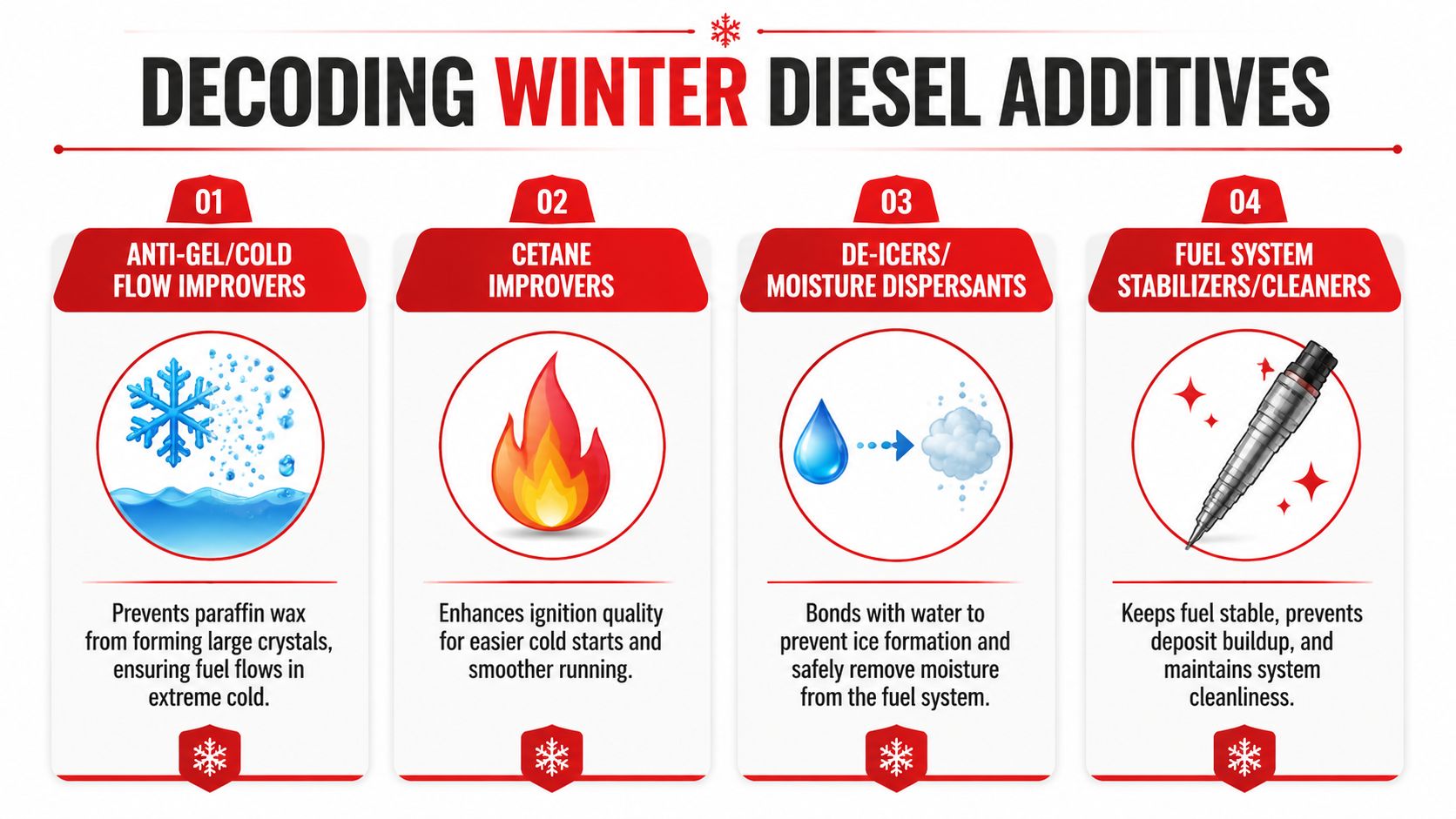
Anti-gel or cold flow improvers are the main defense against gelling. They chemically change how wax crystals form so those crystals don't clump into filter-blocking masses. High-quality winter additives can lower the CFPP by up to 40°F (22°C) and extend the fuel's working range by about 15 to 20 degrees Fahrenheit compared with untreated fuel, as explained in.
Anti-icing or moisture-control additives target water. They matter because winter fuel complaints aren't always pure wax problems. Water in the system can freeze and create restrictions that look a lot like gelling.
Cetane boosters help cold starts. They don't replace anti-gel treatment. They support ignition quality, which can help when an engine is reluctant to fire in low temperatures.
Lubricity additives protect fuel system components. That matters more on modern diesel platforms with tight tolerances and expensive injection parts. They aren't winter magic by themselves, but they belong in the bigger fuel quality conversation.
Winter Diesel Additive Functions
| Additive Type | Primary Function | When It's Needed Most |
|---|---|---|
| Anti-Gel / Cold Flow Improver | Modifies wax crystal formation so fuel keeps moving through the filter in cold weather | Before freezing conditions and before any clouding starts |
| Anti-Icing / Moisture Control | Helps manage water contamination that can freeze in the fuel system | When vehicles sit, tanks collect condensation, or water contamination is suspected |
| Cetane Booster | Improves ignition quality for easier cold starts | During hard starting complaints in cold weather |
| Lubricity Additive | Helps protect pumps and injectors in modern diesel systems | For regular protection when fuel quality or system wear is a concern |
What should stay on the shelf
The smart shelf isn't the shelf with the most bottles. It's the shelf with products the counter staff can explain clearly.
A good winter stock setup usually includes:
- A preventive anti-gel product: For regular tank treatment before temperatures drop.
- A rescue product: For fuel that has already gelled or for roadside recovery situations.
- A moisture-focused additive: Useful for vehicles with known storage, condensation, or separator issues.
- A multi-function treatment: Helpful for shops that want one straightforward recommendation for common light-duty diesel customers.
That lets the advisor stop guessing. If the complaint is “won't start after sitting outside,” the conversation gets specific fast. Was the fuel treated? Was it treated early? Is this a wax issue, a water issue, or both?
Proper Use Timing and Dosage Are Critical
The best additive in the building is useless if it goes into the tank too late. That's the mistake that creates some of the dumbest arguments at the front counter. The customer says the truck was treated. The advisor hears that and assumes fuel can't be the problem. Then the filter comes off full of wax.
The timing matters more than the brand loyalty speech.
The timing mistake that wastes the additive
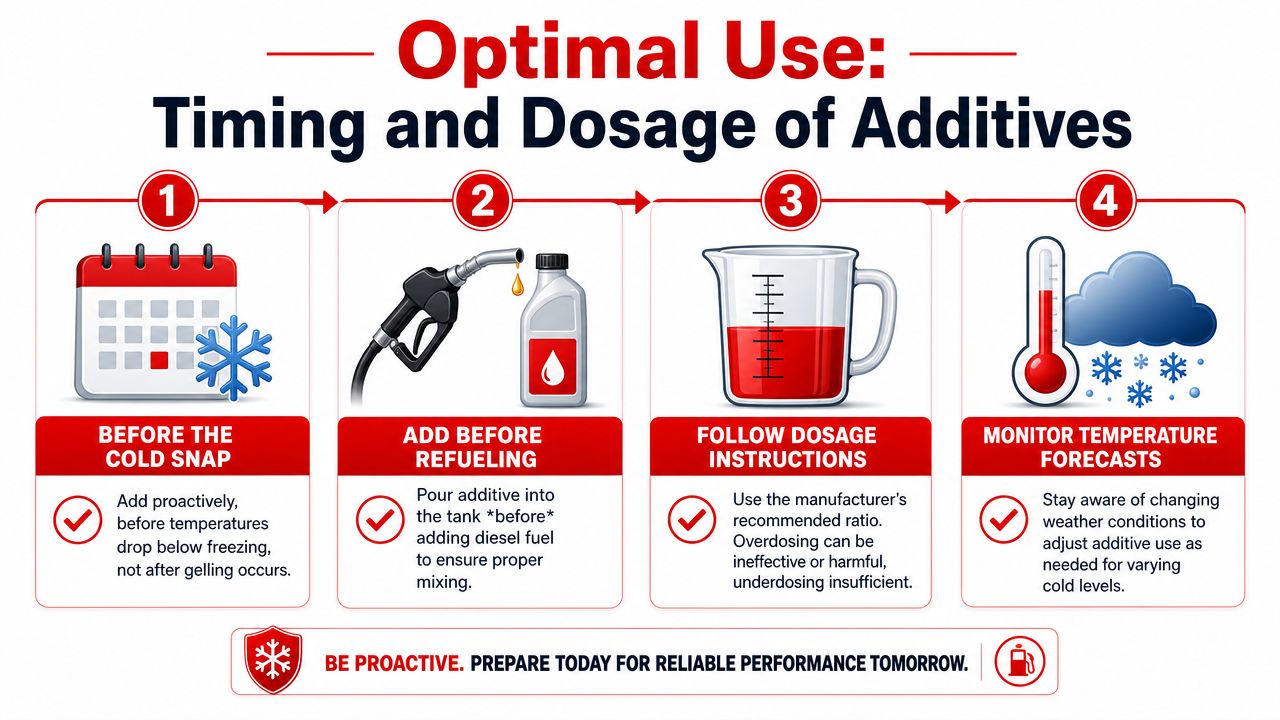
Cold-flow chemistry has one job. It has to interact with the fuel before wax crystals build into a blockage. The technical benchmark is straightforward. The additive needs to lower the CFPP to at least 18°F (10°C) below the fuel's Cloud Point, and it has to be added above the Cloud Point. Once wax has already crystallized, the additive won't mix the way it needs to, according to.
That's the rule a shop should repeat all winter. Treat early or don't expect preventive results.
Practical rule: Pouring preventive anti-gel into already gelled fuel is like trying to fix a plugged filter with hope.
A shop process that actually works
Shops need a process, not loose advice.
- Check the forecast early: If a cold snap is coming, winter treatment should start before customers feel pain.
- Add product before fueling: Filling the tank after the additive helps mix it properly.
- Use the label rate: The bottle tells the tech or advisor how much product matches the tank volume. Guessing creates problems.
- Document it on the RO: If the vehicle was winter-treated in the shop, the invoice should say so. That protects the shop and educates the customer.
A service advisor should also ask one basic question during write-up. “Was the additive added before the cold hit, or after the truck already had trouble?” That answer changes the whole diagnostic direction.
Preventive products versus rescue products
Preventive additive and rescue additive are not the same thing. Shops need both categories clear in the minds of the staff.
- Preventive treatment: Used during fill-up before temperatures reach trouble range.
- Emergency treatment: Used when the vehicle is already disabled and the system needs thawing or recovery steps.
- Filter service: Often necessary after a gelling event because the restriction may remain even after thawing.
A lot of bad diagnoses come from treating a recovery bottle like regular maintenance, or treating a maintenance bottle like it can reverse a wax blockage. It can't. The shop that explains that clearly sounds competent. The shop that doesn't sounds like it's making excuses.
Troubleshooting Gelled Fuel and Common Myths
Once a diesel is in the bay with gelled fuel, the job changes. Prevention is over. Recovery starts. Sloppy habits during recovery cost the customer a fuel filter, a tow bill, and confidence in the shop.
The first step isn't heroic chemistry. It's warmth.
First fix the condition not the symptom
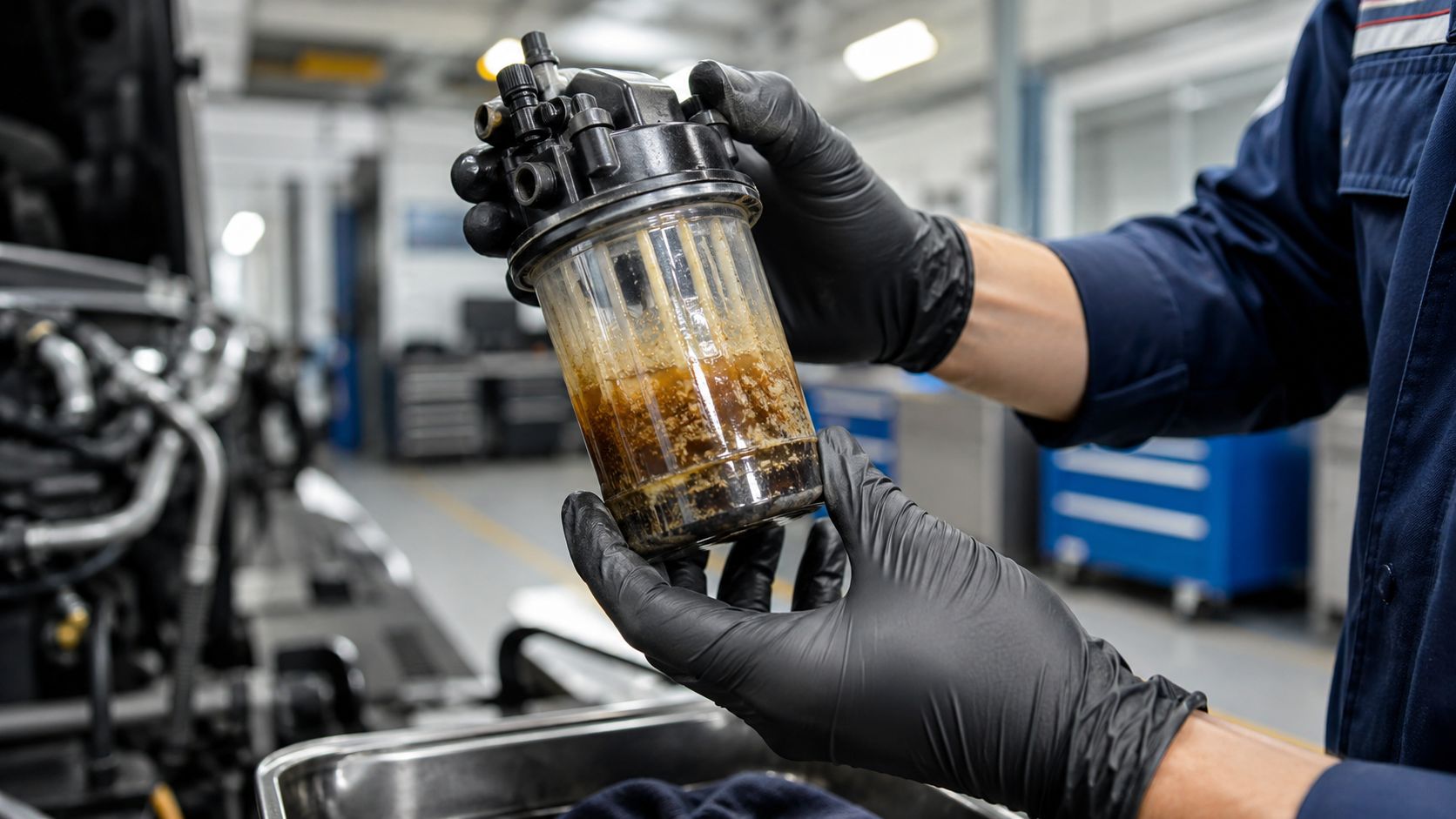
If the fuel is gelled, get the vehicle into a warm space and let the fuel system thaw. That's still the cleanest first move. Then inspect the filter, check for contamination, and decide whether the restriction is wax, ice, debris, or a combination.
A good shop also asks where the fuel came from and how it was stored. Bulk tanks, transfer tanks, and low-turnover storage setups create their own winter trouble. For shops helping customers think through storage practices, this guide to is a useful reference because poor storage habits usually show up as winter fuel complaints later.
The blend decision for brutal cold
There's a point where additives alone stop being enough. For extreme cold, additive effectiveness drops sharply below -30°F. At that point, a 30/70 blend of No. 2 and No. 1 diesel is required at -30°F, and 100% No. 1 diesel is required below -40°F to keep equipment operable when additive-only treatment won't cut it.
That's the kind of hard recommendation shops need because vague advice creates stranded customers. If the truck or equipment operates in those conditions, the advisor should stop talking about “maybe adding a bottle” and start talking about proper fuel selection.
Bad shop folklore that needs to die
Some winter fuel myths survive because they used to get old mechanical diesels limping. That doesn't make them smart now.
- Gasoline in diesel: Bad idea. Modern diesel fuel systems are too expensive and too sensitive for backyard blending tricks.
- Two-stroke oil as anti-gel: Wrong product, wrong purpose. It isn't a substitute for cold-flow chemistry.
- Waiting until the truck won't start: That's not a strategy. That's how bays get clogged with preventable work.
Don't let counter talk turn into fuel policy. If a product isn't built to control wax or moisture, it doesn't belong in the winter treatment conversation.
A shop owner who kills these myths early saves time, protects parts, and sounds like the professional in the room. That matters when a fleet account is deciding who to trust with winter prep.
Turning Knowledge into Profit A Guide for Shop Owners
Winter diesel problems create revenue two ways. The bad way is emergency work, angry customers, and schedule disruption. The good way is planned winterization, cleaner communication, and repeat business from people who stop getting stranded.
The smart play is prevention. Shops should package the fuel conversation with other cold-weather checks and sell it before the first hard freeze.
Sell prevention not panic
A solid winter diesel service package is easy to explain:
- Fuel treatment: Add the correct preventive product based on use and climate.
- Fuel filter inspection or replacement: Especially on trucks with known service intervals coming due.
- Battery and charging check: Hard starts aren't always fuel, but cold weather exposes weak electrical systems fast.
- Block heater verification: If equipped, it should be tested before the customer needs it.
- Water separator service: If the platform uses one, it should be checked and drained as needed.
That package helps the advisor speak in outcomes. Fewer no-start mornings. Fewer work interruptions. Fewer tow bills. Customers understand that.
Stock smarter and script the counter
Shops don't need ten different winter products. They need a clean recommendation ladder. One preventive additive. One emergency product. One moisture-focused option. One filter strategy for common diesel applications.
The counter script should also be consistent. Ask how the vehicle is used, where it's parked, whether it sits for long periods, and whether it pulls fuel from bulk storage. Shops that handle fleets can sharpen that process further by reviewing these, because winter reliability starts with repeatable operating habits, not one-off fixes.
Build a winter package customers understand
The best winter package has plain language on the estimate and invoice. No jargon dump. No chemistry lecture.
Use phrases like:
- Prevent fuel filter plugging in freezing weather
- Reduce cold-start fuel issues
- Inspect for moisture-related winter fuel restrictions
- Prepare diesel system for low-temperature operation
That makes the service easy to approve. It also makes follow-up marketing easy. A shop can pull diesel customers by vehicle type, service history, or seasonal need and remind them before winter trouble starts.
When the team handles winter prep as a system instead of a scramble, bays stay open for higher-value work. Customer trust rises because the shop solved the problem before the breakdown happened.
Frequently Asked Questions About Diesel Additives
Can different brands of diesel additives be mixed
That's not a habit worth encouraging. Shops should pick a product line they trust and stay consistent. Mixing brands without clear compatibility guidance creates avoidable variables, and winter fuel diagnosis already has enough of those.
Are diesel fuel cold weather additives safe for newer diesel engines
They can be, if the product is made for modern diesel applications and used exactly as directed. The label matters. So does using the right product for the right purpose. A preventive anti-gel isn't the same thing as an emergency de-geller or a general cleaner.
What about biodiesel blends like B5 or B20
Biodiesel blends need extra caution in winter. Shops should advise customers to treat early, buy seasonally appropriate fuel, and avoid guessing. Cold weather complaints on blended fuels should be handled conservatively because fuel quality and storage conditions matter even more.
Can additive fix a truck that is already gelled
Not with a standard preventive product. Once the fuel is already gelled, the vehicle needs recovery steps such as warming the system, checking the filter, and using the correct emergency treatment if appropriate.
Shops that want tighter winter scheduling, cleaner customer communication, better inventory control, and a smoother process from estimate to invoice should take a hard look at RedAppy. The platform helps repair shops keep seasonal services organized, and owners who want to see what that looks like can review the shop management features or contact the RedAppy team for a closer look.
Ready to Transform Your Shop?
RedAppy helps auto repair shops create professional digital estimates with photos and videos, send them instantly via text or email, and get customer approvals in seconds. No credit card required to start.