
First Time Fix Rate: Key to Profit and Loyalty
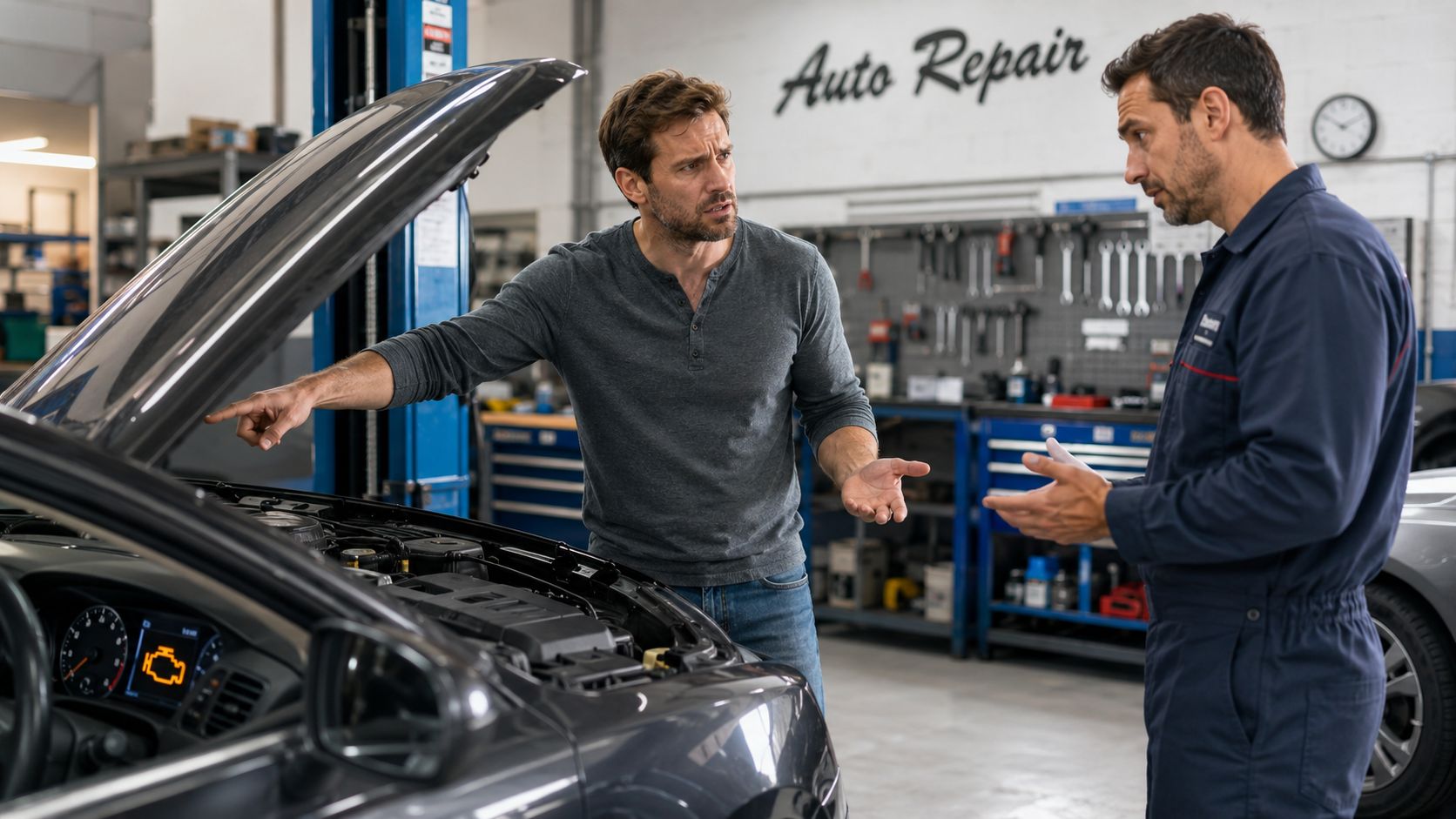
A shop can do everything right on paper and still lose the job at the counter. The customer arrives with a check engine light, gets a diagnosis, hears the estimate, and leaves thinking the fix is handled, then comes back days later because the car still isn't right. That second visit is where profit leaks, trust cracks, and the next review turns ugly.
For shops trying to improve service quality, the idea lines up with other customer-facing businesses too, and a useful cross-industry read is. The details differ, but the same truth shows up everywhere, the first visit sets the tone.
Table of Contents
- The Cost of a Customer Walking Out Unhappy
- What First Time Fix Rate Means
- Benchmarking Your Shop's First Time Fix Rate
- Why Repeat Repairs Happen in Auto Shops
- Proven Ways to Raise Your First Time Fix Rate
- Putting It All Together Your FTFR Improvement Plan
The Cost of a Customer Walking Out Unhappy
A repeat visit starts as a small miss and ends as a shop reputation problem. The car comes back because the part wasn't in stock, the diagnostic was rushed, or the tech didn't have the right tool to finish the job the first time. What looked like a simple repair now takes another bay slot, another callback, and another apology.
That second appointment also changes the customer's mood. The visit stops feeling like professional service and starts feeling like a hassle, especially when the same vehicle fault keeps showing up on the same invoice. At that point, the repair isn't just late, it feels uncertain.
Practical rule: every comeback repair should be treated like a process failure, not just a difficult ticket.
The damage rarely stays inside the shop. A frustrated driver tells friends, leaves a sour review, and starts looking for another place to go next time. One repeat visit can wipe out the goodwill that a clean, efficient first visit would've built in a single morning.
For an auto repair business, that matters because the customer usually doesn't separate the technical issue from the experience. They remember who took the car, how many times they had to return, and whether anyone seemed prepared. The mechanics may have been working hard, but the customer judges the result by whether the car stayed fixed.
That's why first time fix rate belongs in the same conversation as trust, retention, and margin. It's not some back-office vanity number. It's the difference between a repair that closes cleanly and a repair that keeps dragging money and patience out of the shop.
What First Time Fix Rate Means
First time fix rate is the share of repair jobs completed successfully on the first visit, with no return trip needed for the same problem. In a shop, that means the vehicle comes in, the issue gets resolved, and the customer leaves without booking a second appointment for the same fault. A stricter maintenance definition says the job only counts if it's finished on the first visit with no return trip, no additional parts order, and no repeat work order.
The simplest way to think about it
A test works as a comparison. A student passing on the first try is a successful outcome. Needing to retake the exam is a repeat occurrence. Auto repair follows the same pattern, where the first attempt either solves the issue or it does not.
The usual formula is straightforward. First time fix rate = jobs fixed on the first visit ÷ total jobs × 100. One glossary also notes that the denominator is all work orders attempted in the measurement period, and that 82% means 82 of every 100 jobs were resolved on the first visit.
A clean example makes it obvious. A shop completes 100 repairs, and 75 of them are resolved on the first visit. That shop's first time fix rate is 75%. Nothing fancy, no hidden adjustment, just a straight count of what held and what came back.
First time fix rate is not a speed metric. A rushed repair that comes back is worse than a slower repair that holds. Accuracy, parts readiness, and solid diagnosis matter more than racing through the ticket. In an auto repair shop, that often comes down to whether the right part was on hand, whether the scan data pointed to the underlying fault, and whether the customer described the problem clearly enough before the car ever rolled into the bay.
Practical rule: a fast comeback is still a failure, even if the clock looked good on the first visit.
The measure only gets useful when the shop defines it clearly and uses it the same way every time. If one team counts a returned vehicle as fixed and another team counts it as a repeat, the number stops telling the truth. A good FTFR number should make the daily workflow more honest, not more creative.
Benchmarking Your Shop's First Time Fix Rate
A shop's first time fix rate only means something when it is measured against a real benchmark. In Aberdeen's research, the broad average sat around 75%, which means roughly 1 in 4 service calls needed at least one additional visit, and unresolved calls required an average of 1.6 additional dispatches to reach full resolution. That gives a practical floor for auto repair shops, too. If you are seeing a lot of returns, you are not alone, but the number still tells you there is room to tighten the process.
Where strong shops land
The same Aberdeen material reported best-in-class teams at 88% to 89%, about 13 to 14 percentage points above the average. IBM's overview says average performance is around 80%, while best-in-class providers in mature or narrowly scoped environments reach 89% to 98%. Older benchmark summaries also place the broader market average at 75%, with top performers around 88% and laggards as low as 63%.
That spread matters because it shows the ceiling is not fixed. Shops improve the number when they standardize diagnosis, keep the right parts moving, schedule the right technician for the job, and send the bay in with useful pre-visit information. The score rises when the system supports the repair instead of making the technician guess his way through it.
A shop-size example makes the difference easy to see. At 75% FTFR, a shop handling 10,000 jobs a year would expect about 2,500 repeat-visit cases, while 88% FTFR would reduce that to 1,200, a difference of 1,300 cases. That is fewer comebacks at the counter, fewer interruptions in the schedule, and fewer tech hours spent on work that should have stayed closed the first time.
How to read the benchmark honestly
A shop should compare itself to the kind of work it does. A specialized operation with familiar vehicle patterns and a tight parts pipeline can set a different target than a general repair business that sees a wider mix of problems and fewer repeatable jobs.
Practical rule: the right target is not “better than average,” it is “fewer returns caused by the process.”
If the number sits in the 70% range, the shop is holding the middle of the pack. If it climbs into the 80% range, the business is starting to run with more discipline. If it reaches the high 80s, the system is doing a lot of the heavy lifting before the wrench ever turns.
Why Repeat Repairs Happen in Auto Shops
Repeat repairs in auto shops rarely come from one simple mistake. The easy answer is “technician error,” but that is usually too shallow. The problem often starts with the system around the technician, parts flow, intake quality, diagnostic support, and scheduling, all shaping whether the job closes cleanly the first time. That is why a shop can have a strong foreman and still keep seeing the same comeback pattern.
The parts weren't ready
A diagnosis can be right and still fail on the first visit if the part is not on hand. The tech knows what is wrong, but the car cannot be finished because the missing part turns a one-stop repair into a waiting game. That means another bay opening, another appointment, and another customer who had to make extra time for the same issue.
Parts availability matters even more in a shop than many FTFR discussions admit. Auto repair does not work like a truck roll where the visit ends once a field unit gets the right equipment. If the part is late or the wrong part gets ordered, the bay sits idle while the customer waits for a return visit.
The tech didn't have enough depth for the job
Modern vehicles are not all basic brake jobs and oil changes. Complex systems, scanner work, and module-related faults need the right experience, and a generalist may not be enough for every ticket. When the wrong person gets the wrong job, the repair slows down, the diagnosis gets fuzzy, and the callback risk climbs.
That is where shop-specific assignment matters. A suspension specialist, or a tech with the right training for that system, will usually get to the root faster than someone who has to learn the pattern while the car is occupying the bay. The same idea shows up in partner examples like the, where the right service focus avoids avoidable rework.
The bay was under too much time pressure
When the schedule is stacked, shortcuts creep in. A tech skips a step, confirms too little, or signs off before the fix is fully proven. Time pressure does not always show up as obvious carelessness. More often, it shows up as a job that looked nearly done until the customer drove away.
That pressure is real in auto shops because the bay is a hard constraint, not a spreadsheet line. If dispatch keeps feeding in work without protecting time for verification, the shop can make the day look productive while pushing repeat repairs into the next one. The repair may be technically close, but “close” is what creates comebacks.
The car arrived with weak information
A vague complaint can send the whole visit off course. The customer says one thing at drop-off, the problem sits somewhere else, and the shop starts the job with incomplete context. If the pre-visit information is thin, the repair team spends more time rediscovering the issue than solving it.
That is one of the biggest differences between field service and a repair shop. In the shop, the car may already be on site, but that does not mean the team has good information. Poor intake notes, missing photos, and unclear symptoms all raise the odds of a second visit because the first diagnosis was built on a weak starting point.
| Repeat Visit Root Causes | How It Shows Up | Impact on FTFR |
|---|---|---|
| Parts unavailable | The job stalls after diagnosis because the needed component isn't ready | The first visit closes incomplete |
| Skill mismatch | The assigned tech can't finish a complex repair cleanly | More comebacks and longer cycle time |
| Time pressure | Steps get skipped or verification gets rushed | Higher chance of an unresolved fault |
| Weak pre-visit info | The ticket doesn't match the real problem | More diagnostic misses and wasted labor |
The practical takeaway is blunt. Repeat repairs usually happen when the shop lets one weak link pull the whole visit off course. That weak link might be inventory, training, scheduling, or intake quality. The bill lands on the same customer either way.
Proven Ways to Raise Your First Time Fix Rate
A shop raises first time fix rate by tightening the handoff from intake to repair. The work is usually won or lost before the car ever reaches the bay. Parts availability, technician matching, process discipline, and the quality of the pre-visit information all shape whether the first repair finishes the job or creates a repeat visit.
Parts need to be visible before the car lands
A shop cannot finish a repair cleanly if the needed part is still a question mark. Real-time inventory visibility reduces guessing, avoids backorders, and stops the counter team from promising work on wishful timing. When the team knows what is on hand and what still has to be sourced, the repair plan gets set with fewer surprises.
That matters more in auto repair shops than many field service articles admit. A truck roll can be rescheduled, but a vehicle already in the bay ties up space, labor, and customer patience. If the part is missing after diagnosis, the first visit is already at risk.
Staffing has to match the job
The next lever is job matching. A complex electrical complaint should go to the technician who handles that kind of work with confidence, not just the person with the freest stall. Diagnostic training matters, and so does knowing who can finish the repair without a second pass.
That trade-off is real. Pushing every ticket to the nearest open bay may look efficient on paper, but it often creates comebacks when the repair needs a different skill set. A shop that routes work by repair type protects the first visit and usually spends less time cleaning up unfinished jobs later.
Process should catch misses before the wrench turns
A shop needs a repeatable way to catch weak information before the repair starts. A structured checklist helps, because it forces the team to confirm the symptom, verify the concern, and check for obvious gaps before anyone commits labor. That kind of discipline is plain, but it keeps small misses from turning into expensive repeat work.
Pre-visit digital inspections do the same thing at intake. Photos, notes, and symptom details give the advisor and the tech a shared starting point instead of a half-remembered conversation at the counter. In a shop setting, that is often the difference between a clean first fix and a car coming back because the original complaint was never fully captured.
Technology should reduce guesswork, not add noise
The right tools help the team make a better call faster. Labor times, diagnostic guidance, repair notes, and vehicle history should be easy to reach without making the tech click through clutter. A useful system helps the shop decide whether the job can move now, needs a part, or belongs with a different technician.
The wrong system does the opposite. It buries the useful details, adds another screen to manage, and leaves the counter team guessing while the customer waits. For repeat-visit reduction, the goal is simple. Use technology to surface the right facts early, then keep the workflow moving.
A simple quick-start workflow keeps this practical:
- Confirm parts before scheduling. If the part is not available, do not promise a same-day finish.
- Assign by repair type, not just open bay. Let experience guide the handoff.
- Use a digital inspection on every high-risk job. Photos and notes beat memory.
- Add a closeout check before delivery. Verify the fault is gone, not just that the work order is signed.
For shops that want a more connected setup, the is a reminder that specialized work runs better when preparation and job flow stay tight. The same principle holds in a repair shop. The cleaner the front end, the fewer comebacks at the back end.
Practical rule: the best first visit is the one where the shop already knows what it needs before the hood opens.
How to Read the Benchmark
The benchmark gives the improvement target some shape. As noted earlier, average first-time fix rates tend to sit around 75%, unresolved calls can require 1.6 additional dispatches, and the strongest teams reach 88% to 89%. That gap matters because it shows where a shop loses time, parts, and customer trust.
The lesson is straightforward. Shops do not improve FTFR by working harder at the end of the visit. They improve it by removing the reasons a vehicle has to come back in the first place.
Putting It All Together Your FTFR Improvement Plan
First time fix rate is not really a training issue by itself. It's a systems issue. Parts availability, pre-visit information quality, and job matching all shape whether a repair closes on the first pass or turns into a repeat.
The most effective shops don't leave those moving pieces scattered across separate tools. They use one workflow that ties the whole job together from intake to payment. That can include digital inspections before the bay door opens, real-time parts ordering tied to the repair order, AI Repair Assistant support for labor times and diagnostic guidance, and a board that shows where every job sits from check-in to checkout. RedAppy is one option in that category, since it combines vehicle history, digital inspections, invoicing, online payments, parts ordering, and shop tracking in one platform.
The practical value is simple. The counter team spends less time chasing updates. The tech gets more context before touching the car. The customer sees a cleaner repair process and fewer surprises. A setup like that also makes it easier to track repeat business and technician efficiency without cobbling together separate systems.
Shops often notice the same pattern after they tighten the front end. Administrative time drops, photo-rich inspections make approvals easier, and the workflow gets less dependent on memory and hallway conversations. That's where a first time fix rate improvement starts to stick, because the shop isn't hoping for better outcomes, it's building them into the process.
The next move is straightforward. Pick the one bottleneck that causes the most repeats, parts, diagnostics, or intake quality, and fix that before chasing everything at once. A shop that improves one weak link at a time usually sees the cleanest gains.
RedAppy brings together digital inspections, parts ordering, diagnostic help, and shop tracking so a repair doesn't start blind and end in a comeback. If a shop wants a tighter first time fix rate and a cleaner workflow from check-in to payment, visit RedAppy to see how the platform fits the way the shop already works.
Ready to Transform Your Shop?
RedAppy helps auto repair shops create professional digital estimates with photos and videos, send them instantly via text or email, and get customer approvals in seconds. No credit card required to start.