
How to Start a Mobile Mechanic Business & Thrive
A lot of technicians get to the same point. They're tired of shop politics, tired of flag-hour games, and tired of watching customers pay big invoices while the person doing the work gets a fraction of it. The mobile mechanic model looks like the clean exit. Grab a van, load tools, answer calls, and keep the money.
That part is real. So is the trap.
The trap is thinking a mobile mechanic business is just wrenching in a different location. It isn't. A shop can hide weak systems behind a front desk, a service writer, and a building. A mobile mechanic has nowhere to hide. If calls get missed, estimates go out late, parts aren't tracked, or invoices look sloppy, customers notice fast. Good technical work alone won't fix a bad workflow.
The operators who last don't run as “a guy with a truck.” They run a field-service business with clean processes from first contact to final payment. That matters in every home-service category. Even outside auto repair, customers expect convenience, speed, and a professional booking experience. That's one reason platforms like make sense in their own lane. The same customer mindset applies here. People pay for convenience, but they also expect a polished system around it.
This guide stays focused on that reality. It covers how to start a mobile mechanic business with the legal basics, money decisions, service menu, pricing logic, and, critically, the workflow that keeps the business from turning into chaos.
Table of Contents
- From Side Hustle Dream to Business Reality
- Laying Your Business Foundation and Legal Framework
- Budgeting and Equipping Your Mobile Workshop
- Defining Your Services and Pricing for Profitability
- Building Your Professional Workflow from Day One
- Finding Your First Customers and Building Your Brand
- Your Launch Checklist and First 90 Days
From Side Hustle Dream to Business Reality
The side-hustle version of mobile repair usually starts the same way. A tech takes weekend jobs for friends, then for friends of friends. The work feels better than the dealership or independent shop because there's no advisor in the middle, no waiting on a bay, and no manager asking why a simple job is still open.
Then the business part shows up.
Calls come in while a brake job is half-finished. A customer asks for an ETA while parts are still being sourced. Another customer wants an invoice for records. Someone else wants a quote but only sends half the vehicle details. By the time the day ends, the technician worked hard but still has unpaid jobs, missing notes, and no clean record of what happened on each car.
A mobile mechanic business breaks down faster from weak admin than from weak technical skill.
That's the shift often underestimated. Freedom doesn't come from leaving the shop. It comes from replacing the shop's systems with better ones. Booking, dispatching, approvals, parts coordination, customer communication, and payment collection all become the technician's job unless a workflow handles them.
The business has to look professional before it feels big
Customers don't judge professionalism by toolbox brand alone. They judge it by whether the phone gets answered, whether estimates are clear, whether arrival windows are realistic, and whether payment is easy when the job is done.
That's why learning how to start a mobile mechanic business has less to do with buying more tools and more to do with building repeatable habits. A clean process creates fewer disputes, fewer forgotten parts charges, and fewer awkward “send payment when you can” conversations.
What works and what fails early
A few patterns show up over and over.
- What works: Clear service boundaries, written estimates, photos, on-site payment, and a schedule with breathing room.
- What fails: Taking every job, diagnosing by text message, underpricing labor, and trying to remember everything from memory.
- What keeps a business stable: Treating customer communication like part of the repair, not like extra paperwork.
The mobile model can absolutely become a real business. But only if it's built like one.
Laying Your Business Foundation and Legal Framework
A mobile mechanic usually feels legit the day the first paying customer calls. The business gets tested the day something goes wrong. A comeback claim, a broken stud, a parking lot manager asking why repairs are happening on site, or a customer asking for paperwork you never set up. That is why the foundation has to be built before the schedule fills up.

Map the local market before buying equipment
Start with territory, not tools.
A useful first move is building a hyperlocal market map. recommends reviewing nearby mobile mechanics and brick-and-mortar shops, comparing services, hours, and reviews, and planning for startup needs such as a used work van, insurance, and working capital before revenue settles down.
That exercise does more than show who else is out there. It shows which jobs are already crowded, which areas are underserved, and how far you can drive before the day stops making money.
I would also track details most starters miss. Who answers the phone after 5 p.m.? Who advertises diagnostics instead of maintenance? Who serves apartment complexes, fleets, or used car buyers? Those gaps matter more than trying to beat everybody on price.
Choose a business structure with liability in mind
Sole proprietorship is simple. An LLC often gives a cleaner setup for separating business finances and reducing personal exposure. The right choice depends on state rules, taxes, and how your accountant and attorney want it handled.
What matters in practice is risk.
Mobile repair puts you in customer driveways, office lots, apartment garages, and roadside situations. You may test-drive a vehicle, move it, store parts in your van, or leave a job halfway through while waiting on a component. Every one of those situations creates liability that casual side-work usually ignores.
Set the business up assuming a claim will happen at some point. Because over time, one usually does.
Handle registration, permits, and insurance before the first real rush
Paperwork gets ignored until a customer asks for an invoice with a business name, a property manager objects to on-site repairs, or a bank account and tax form are needed in a hurry. Fix that early.
notes that licensing and certification requirements can vary by state. Check your state, county, and city requirements directly for mechanic licensing, business registration, local permits, and tax ID setup before you start taking regular jobs. If an EIN applies to your setup, get it before opening vendor accounts and payment processors. It is faster to build the admin right once than to rebuild it after customers already have your number.
Insurance deserves the same level of attention. General liability and commercial auto are the obvious starting points, but mobile work adds questions that fixed-location shops do not always deal with the same way. Where is the vehicle parked? Is it in your care, custody, or control? Are tools and parts covered in the van? Are you doing roadside work or only scheduled on-site service? Those details matter when a claim lands.
For operators comparing policy language, this overview of is useful because it helps frame what coverage may apply when a customer's vehicle is under your care.
One more hard lesson. Write your operating rules down before customers start asking for exceptions. Decide where you will work, what jobs you will decline, whether roadside calls are allowed, and what documentation you require before turning a wrench. That policy protects your time as much as your liability.
A simple launch checklist keeps this clean:
- Business registration: Choose the entity and register it correctly.
- Tax setup: Get an EIN if needed, open a separate business bank account, and keep personal spending out of it.
- State and local compliance: Verify mechanic licensing, permits, and any restrictions on mobile repair where you plan to work.
- Insurance review: Confirm general liability, commercial auto, and any coverage tied to customer vehicles in your care.
- Operating policy: Define approved job types, service area, payment terms, and locations where work is off-limits.
Skipping this work does not keep the business lean. It creates a weak operation that starts improvising the moment pressure shows up.
Budgeting and Equipping Your Mobile Workshop
The phrase “low overhead” causes a lot of bad decisions. It makes new operators think startup costs are minor. They aren't.
A practical benchmark for launching a mobile mechanic business is $10,000 to $50,000, covering the major early needs such as a service vehicle, tools, diagnostic equipment, licensing, insurance, and working cash, according to. The same source also notes that many operators start part-time, which can reduce launch risk while demand is being tested.
What low overhead actually means
Low overhead means lower fixed facility costs than a traditional shop. It does not mean low capital.
The van has to be reliable. The tool loadout has to support the actual work being sold. Diagnostic equipment has to do more than read basic codes. The business also needs working cash because fuel, parts runs, software, insurance, and dead schedule gaps don't wait for customer payments to catch up.
A lot of underfunded launches fail for a simple reason. The technician can repair cars, but the business runs out of operating room before the schedule gets consistent.
Sample Startup Budget for a Mobile Mechanic Business
| Expense Category | Low-End Estimate | High-End Estimate | Notes |
|---|---|---|---|
| Service vehicle | Included within overall startup range | Included within overall startup range | Vehicle cost is often the largest line item. Condition matters more than cosmetics. |
| Tools and diagnostic equipment | Included within overall startup range | Included within overall startup range | Launch with the tools needed for the service menu, not every tool ever made. |
| Licensing and registration | Included within overall startup range | Included within overall startup range | Costs vary by location and business setup. |
| Insurance | Included within overall startup range | Included within overall startup range | Must reflect mobile field-service risk, not just personal driving. |
| Working cash | Included within overall startup range | Included within overall startup range | This covers fuel, small supplies, admin costs, and slow early collections. |
| Total startup benchmark | $10,000 | $50,000 | Practical benchmark from Entrepreneur for a mobile mechanic launch. |
The table stays broad for one reason. Real budgets vary heavily by vehicle choice, existing tool inventory, and whether the operator is launching full-time or easing in part-time. But the benchmark is useful because it keeps expectations grounded.
What to buy now and what can wait
The fastest way to waste capital is buying for an imaginary future business instead of the first service menu.
Start with gear that supports the jobs most likely to be booked and completed efficiently in the field. That usually means dependable hand tools, safe lifting equipment, a serious scan tool, battery and charging diagnostics, fluid-handling basics, and strong lighting. A clean storage system matters too. Lost time in a van adds up all day.
What can usually wait:
- Specialty tools for rare jobs: If a tool supports work that won't be sold often, rent, borrow, or delay it.
- Cosmetic upgrades: Fancy wraps and polished shelving look good, but reliability and organization pay first.
- Deep inventory: Carrying too many parts ties up cash and creates clutter.
- Nonessential add-ons: Buy them after workflow problems are solved.
Two launch styles that both work
Some people launch scrappy. Others launch polished. Both can work if the business understands the trade-off.
A scrappy start often means using tools already owned, buying a reliable used vehicle, and taking carefully selected jobs while operating part-time. That approach preserves cash and lets the operator learn the market without the pressure of needing immediate full-time revenue.
A professional launch means more capital up front, cleaner branding, stronger systems, and a wider ability to handle jobs from day one. It looks more established faster, but it increases pressure on cash flow early.
The wrong budget doesn't always look reckless. Sometimes it looks optimistic.
The right move is the one that leaves room for mistakes, delays, and slow weeks. Mobile repair rewards skill, but it punishes thin cash reserves.
Defining Your Services and Pricing for Profitability
A lot of mobile mechanics get into trouble the same way. They say yes to too many job types, quote too low, stay booked, and still wonder why cash is tight at the end of the month.
Profit starts with a service menu that fits mobile work.
The best mobile jobs share a few traits. They can be diagnosed with reasonable confidence before the visit, completed safely in a driveway or parking lot, and finished without turning one appointment into an all-day teardown. That usually means maintenance, brakes, batteries, starting and charging problems, no-start diagnostics, minor electrical faults, and selected cooling system or drivability repairs.
The bad fit jobs are usually obvious once you have eaten the cost of a few. Engine internal work, major transmission repairs, jobs that need a lift, and anything likely to sit half-disassembled while waiting on parts can wreck a mobile schedule. Those repairs are not always impossible. They are often poor business.
A simple filter helps:
- Take it: Jobs with clear symptoms, predictable labor, and a safe working setup on site.
- Quote with caution: Diagnostics, intermittent faults, and repairs that often grow once testing starts.
- Refer out: Work that needs shop-only equipment, long teardown time, or conditions you cannot control in the field.
That discipline matters. Mobile work has less room for schedule drift than a shop with multiple bays and a service writer covering the front counter.
Pricing needs the same discipline. A labor rate is not just wrench time. It has to pay for travel, fuel, dead time between jobs, parts pickup, insurance, software, phone time, estimates, payment processing, and the hours spent doing admin after the tools are put away.
That is where new operators cut their own throat. They compare their rate to the shop down the road, knock a little off to win the job, and forget that the shop is spreading overhead across more work, more staff, and a different operating model.
Cheap pricing fills a calendar fast. It also attracts customers who argue over diagnosis time, delay approvals, and expect shop-level scope for driveway prices.
A stronger pricing system has a few rules:
- Charge for diagnostics. Time spent testing, verifying, and narrowing a fault is billable work, even if the customer does not approve the repair.
- Use fixed labor prices where you can. Brake jobs, batteries, alternators, starter replacement, and common maintenance should have a standard structure so quoting is fast and consistent.
- Get approval before the job expands. Scope creep kills margin, especially when the van is already on site and the customer assumes you will "just handle it."
- Set a service area and trip policy. Long drives, traffic, and remote calls can turn a decent invoice into a weak day.
- Build in the ugly parts of the job. Rust, seized fasteners, poor parking access, and missing wheel locks are common. Your pricing has to leave room for reality.
One of the best early moves is to build three internal categories for every service you offer. Standard jobs, diagnostic-heavy jobs, and shop referral jobs. That sounds simple because it is. It also keeps you from quoting every call from scratch and making emotional pricing decisions on the phone.
Software helps here more than many mechanics expect. If you track your approved estimates, actual time on site, return visits, and parts delays in one system, patterns show up fast. You will see which jobs pay well, which ones create callbacks, and which ones only look profitable until travel and admin time are included. That is how a mobile business starts acting like a business instead of a hustle.
The goal is not to be the cheapest name that pops up on Google. The goal is to price work in a way that lets you show up prepared, keep the schedule under control, and still make money after the day is over.
Building Your Professional Workflow from Day One
The biggest difference between a stressed-out solo operator and a real mobile service business is workflow. Not skill. Workflow.
The difference between busy and organized
A disorganized mechanic starts the day by answering messages from three different apps, trying to remember which customer said the battery was already replaced, and digging through notes to find an address that should've been confirmed the night before. The first estimate goes out late. The second customer doesn't approve in writing. A parts run interrupts the schedule. Payment for the first job is supposed to be sent later.
That operator feels slammed. But the true problem isn't workload. It's leakage.
Every missing detail creates friction. Every friction point steals time, creates confusion, or delays payment. In mobile work, those losses stack up fast because there's no front desk catching mistakes.
A field workflow that protects time and margin
A professional workflow starts before the van moves.
Initial contact and job qualification
The first conversation should capture the basics in one place. Customer name, vehicle info, symptoms, location, preferred timing, and whether the job sounds mobile-friendly. If that information lives in scattered texts, the day is already off track.
A good intake process also filters bad jobs early. If access is unsafe, the repair is too large for the field, or the customer wants a full diagnosis through messages before booking, that should be handled before time gets blocked.
Arrival and inspection documentation
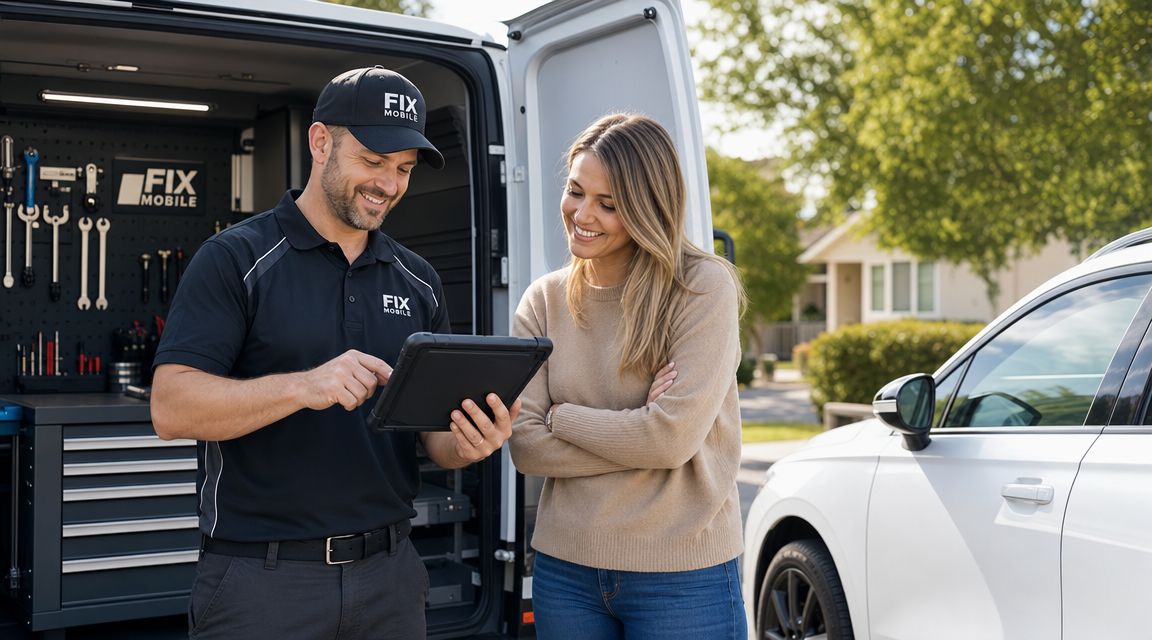
When the vehicle is in front of the technician, notes and photos matter. They protect the business and help the customer understand what's being found. Digital inspections are especially useful because they turn vague verbal explanations into visible proof.
A battery terminal issue, fluid leak, torn boot, or damaged connector is easier to approve when the customer can see it.
Customers approve work faster when the problem is documented clearly and explained without jargon.
Estimate approval before parts and labor expand
The estimate shouldn't be a rough text with a total. It should be a professional work order that records labor, parts, and scope. That keeps both sides aligned. It also reduces the ugly moment where a customer says, “That's not what was discussed.”
For mobile operators, written approval is one of the simplest ways to avoid disputes. It's not about being formal for the sake of it. It's about making sure the job stays profitable and documented.
Digital systems stop preventable mistakes
At this point, software stops being “nice to have” and starts acting like overhead control.
A platform like RedAppy's feature set for auto repair workflow handles several of the points that usually break down in the field: digital inspections with photos, estimates, invoices, online payments, parts ordering across suppliers, scheduling, vehicle history, and a visual job board. For a mobile mechanic, that matters because one person is often acting as technician, service writer, dispatcher, and cashier all at once.
A practical day looks cleaner when the system is consistent:
- Booking: Customer and vehicle records are captured once, not retyped all day.
- Inspection: Photos and findings are attached to the job.
- Estimate: Approval is documented before work expands.
- Parts: Sourcing happens without juggling disconnected notes.
- Invoice: The bill is generated immediately after the repair.
- Payment: The customer pays on-site instead of “later tonight.”
What a tight workflow actually changes
A tighter workflow changes more than appearance.
It shortens the gap between diagnosis and approval. It reduces forgotten charges. It keeps vehicle history attached to the customer record. It helps a technician remember what happened on a car months later. It also makes the business easier to hand off if help is added later.
Without that system, growth gets ugly. Every added customer increases confusion. Every added technician multiplies it.
A simple operating standard
A mobile mechanic doesn't need dealership bureaucracy. But the business does need a repeatable sequence:
- Qualify the job.
- Confirm the appointment.
- Inspect and document.
- Send estimate.
- Get approval.
- Order parts.
- Complete repair.
- Invoice immediately.
- Collect payment before closing the work order.
- Save notes for the next visit.
That's how to start a mobile mechanic business that still looks professional when the schedule gets busy. The wrench work earns trust. The workflow keeps the business alive.
Finding Your First Customers and Building Your Brand
Plenty of good mobile mechanics stay invisible because they assume marketing means running ads. Early on, it usually means something simpler. It means being easy to find, easy to trust, and easy to book.
Start with the places buyers already look
For local service businesses, the first battle is visibility when someone already has a problem. That means a complete Google Business Profile, a simple professional website, clear service-area language, real job photos, and a contact path that doesn't make people work to reach the business.
The website doesn't need to be fancy. It needs to answer the basics quickly:
- What the business does
- Where it operates
- What types of jobs it takes
- How to request service
- Why the operator looks credible
The best early branding isn't clever wording. It's consistency. The same business name, same phone number, same services, and same tone should appear across the website, business listings, van graphics, invoices, and review profiles.
Offline trust still closes jobs
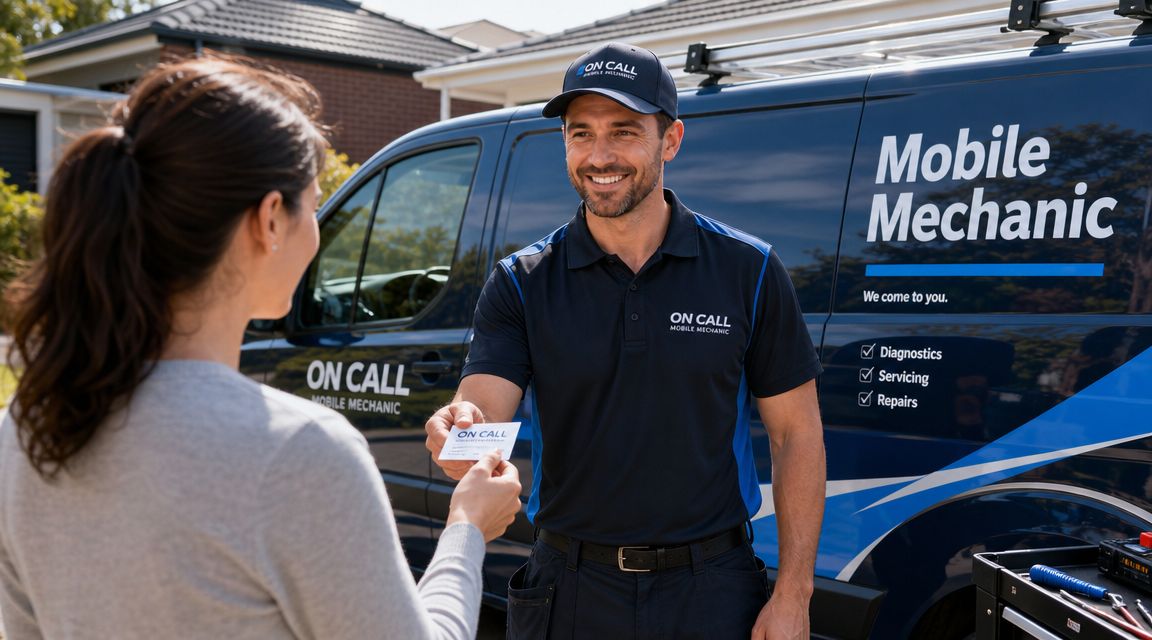
Mobile mechanics sometimes over-focus on online marketing and ignore what customers see in person. A clean van, readable uniforms or workwear, organized tools, and professional communication close more jobs than flashy promotion.
The first customers often come from practical relationships too. Local parts stores, property managers, small businesses with a few vehicles, and people who need repeated convenience all matter. Those referrals tend to be better than bargain hunters because they come with a layer of trust.
A few habits move the needle fast:
- Ask for reviews after a smooth job: Not with pressure. Just directly and consistently.
- Carry clean business cards: Hand them to customers who already trust the work.
- Use before-and-after photos carefully: They help future buyers see professionalism.
- Stay in the customer's phone correctly: A saved business name beats a forgotten paper receipt.
Reputation compounds when the service feels easy from the customer's side.
Brand promise matters more than logo polish
A strong local brand usually rests on one or two clear promises. Fast response. Honest diagnostics. Clean communication. Convenient driveway service. Reliable fleet support. Pick promises that can be kept under pressure.
If the whole message is “cheap mobile mechanic,” the business will attract price shoppers who compare every invoice. If the message is “professional on-site repair with clear approvals and documentation,” the buyer relationship starts in a better place.
For a new operator, the brand is built one appointment at a time. The vehicle, the estimate, the photos, the invoice, and the follow-up all speak louder than a slogan.
Your Launch Checklist and First 90 Days
Starting strong matters more than starting big. A small mobile operation with clean systems usually outperforms a messy one that bought more gear than it can manage.
What needs to be ready before the first call
Before taking paid jobs, the business should already have the basics locked down.
Pre-launch checklist
- Business setup: Registration, tax setup, and local compliance are handled.
- Insurance: Coverage matches mobile field work, not personal-use assumptions.
- Vehicle readiness: The van is reliable, organized, and stocked for the actual service menu.
- Service boundaries: The business knows what jobs it takes and what jobs it refers out.
- Pricing rules: Labor and diagnostic policies are defined before customers test them.
- Workflow: Intake, approvals, invoicing, and payment collection follow the same process every time.
- Customer presence: Business listing, website, phone, and branding are consistent.
- Record keeping: Every job can be documented and retrieved later.
If any of those pieces are missing, the launch is still in trial mode.
What to focus on in the first 90 days
The first stretch of operation shouldn't be treated like a race to do everything. It should be treated like a testing window.
The first priority is cash discipline. Watch fuel use, small supply purchases, software costs, and slow-paying customers closely. A business can look active and still create financial stress if money management is loose.
The second priority is service pattern recognition. Notice which jobs are profitable, which ones create delays, which neighborhoods or customer types are easiest to serve, and which repair requests should be declined earlier. The market will show where the business fits if the operator pays close attention.
The third priority is workflow consistency. Don't keep changing the process every other day. Tighten it. Remove friction. Improve intake questions. Improve estimate clarity. Improve the way follow-up notes are stored. That's how a one-person operation gets ready to scale without chaos.
A useful early review rhythm looks like this:
- Weekly: Review open invoices, pending parts issues, missed calls, and schedule gaps.
- After each job: Ask whether the intake, documentation, and approval process held up.
- Monthly: Look for the services that create the best mix of margin, speed, and low headache.
The goal in the first 90 days isn't to look big. It's to become reliable.
A reliable mobile mechanic business can grow. An inconsistent one just gets busier and harder to run. Anyone serious about building the business side properly can contact RedAppy to see how a structured workflow fits a mobile operation.
A mobile mechanic business gets stronger when the workflow is as solid as the repair work. For operators who want a cleaner system for estimates, inspections, invoicing, payments, and customer management, RedAppy is worth a look.
Ready to Transform Your Shop?
RedAppy helps auto repair shops create professional digital estimates with photos and videos, send them instantly via text or email, and get customer approvals in seconds. No credit card required to start.