
Instant Quote Online Setup for Auto Shops
Most advice about an instant quote online gets the central issue wrong. It tells shop owners to publish a fast final price, as if speed matters more than technical certainty. That approach turns a useful sales tool into a margin leak, especially when a vehicle needs diagnosis, calibration, or an inspection before anyone can price the repair responsibly.
Customers still need an immediate answer. Google reported that 43% of drivers searched online for a service center when they needed repair or maintenance in 2013, while an automotive price-transparency report found that approximately 80% of auto consumers checked prices online before visiting a repair shop and 40% checked the price even after authorizing the work by 2024. The right response isn't a blind promise. It's a structured estimate that shows what the shop knows, what remains uncertain, and what approval happens next.
Table of Contents
- Rethinking the Digital Estimate for Modern Repair
- Building a Defensible Online Estimate Structure
- Routing Requests Through Confidence Gates
- Validating Estimates with Digital Inspections
- Managing Revisions and Legal Approval Thresholds
- Upgrading Your Shop Management Workflow
Rethinking the Digital Estimate for Modern Repair
A digital quote shouldn't pretend that every repair can be priced from a vehicle description and a symptom. A routine maintenance operation may support a near-fixed price, but an intermittent electrical fault, hidden damage, battery-system concern, or advanced driver-assistance system calibration can change scope after inspection. Publishing one attractive total before gathering enough information creates the exact dispute a modern front desk is trying to prevent.
The better model is a confidence-gated estimate. The customer receives useful pricing immediately, but the price reflects the quality of the available information. A low-risk service can show a defined amount. A symptom-based repair can show a range or charge for diagnosis first. A complex job can require a physical inspection before the shop offers repair authorization.
Transparency beats false precision
Customers aren't asking for certainty the shop can't provide. They're asking whether the repair fits their budget, whether the shop understands the vehicle, and whether the price will change without explanation. A clear estimate answers those questions by separating the known work from the conditions that could alter it.
The cost of ownership makes that clarity important. A Harris Poll conducted for Ally Bank found that the average American spent nearly $2,000 on vehicle repairs and maintenance over a five-year period. The same summary reported that 81% of American adults researched products or services before making a purchase, with search engines used by 80% of people researching automotive products for auto parts and 78% for tire dealers.
Practical rule: Give customers a fast answer to the question they actually have, but don't disguise an estimate as a guarantee.
A well-designed online estimate can qualify a lead before a phone call, capture the vehicle details an advisor needs, and set a professional tone before arrival. It can also protect the shop's margin because the customer sees the assumptions behind the price. The objective isn't just faster quoting. It's faster, more defensible communication.
Building a Defensible Online Estimate Structure
A defensible estimate begins with identification, not a price field. The customer should provide the vehicle's year, make, model, VIN, mileage, engine, drivetrain, configuration, and reported symptoms. VIN data helps reduce configuration mistakes, but it doesn't replace diagnosis. The service advisor still needs to determine whether the request describes maintenance, inspection, diagnosis, or a specific repair.
The estimate should then follow a consistent sequence:
- Define the condition or requested work. Record the diagnosed condition when one exists. If the customer has only described a symptom, label the work as diagnostic or preliminary.
- Separate parts by specification. Identify whether each part is OEM, aftermarket, remanufactured, or used. The source, availability, warranty, and compatibility should be visible.
- Show labor separately. List the labor operation, estimated hours, labor-time source, and shop hourly rate. The FTC explains that flat-rate labor commonly relies on an independent or manufacturer estimate of repair time, so the source shouldn't remain hidden.
- Add every additional charge. Diagnostic fees, shop supplies, disposal, taxes, and other applicable fees should appear as their own lines.
- State the commercial terms. Include warranty terms, estimate expiration, exclusions, assumptions, and the approval requirement for work outside the quoted scope.
A customer comparing two totals needs more than the bottom line. One shop may include diagnosis and a premium part, while another excludes both. Itemization makes the comparison fair and gives the advisor a script when the customer asks why two estimates differ.
For smaller operations, a well-structured can help standardize descriptions, line items, terms, and customer approvals. A template isn't a substitute for shop software, but it can expose missing fields before a digital workflow is automated.
The FTC recommends written estimates that identify the vehicle condition, parts, anticipated labor charge, and a defined approval threshold for additional time or money. That recommendation maps directly to an online workflow. Every estimate should have a status, a revision history, an approval timestamp, and a clear distinction between estimate, diagnostic authorization, and fixed-price repair.
Routing Requests Through Confidence Gates
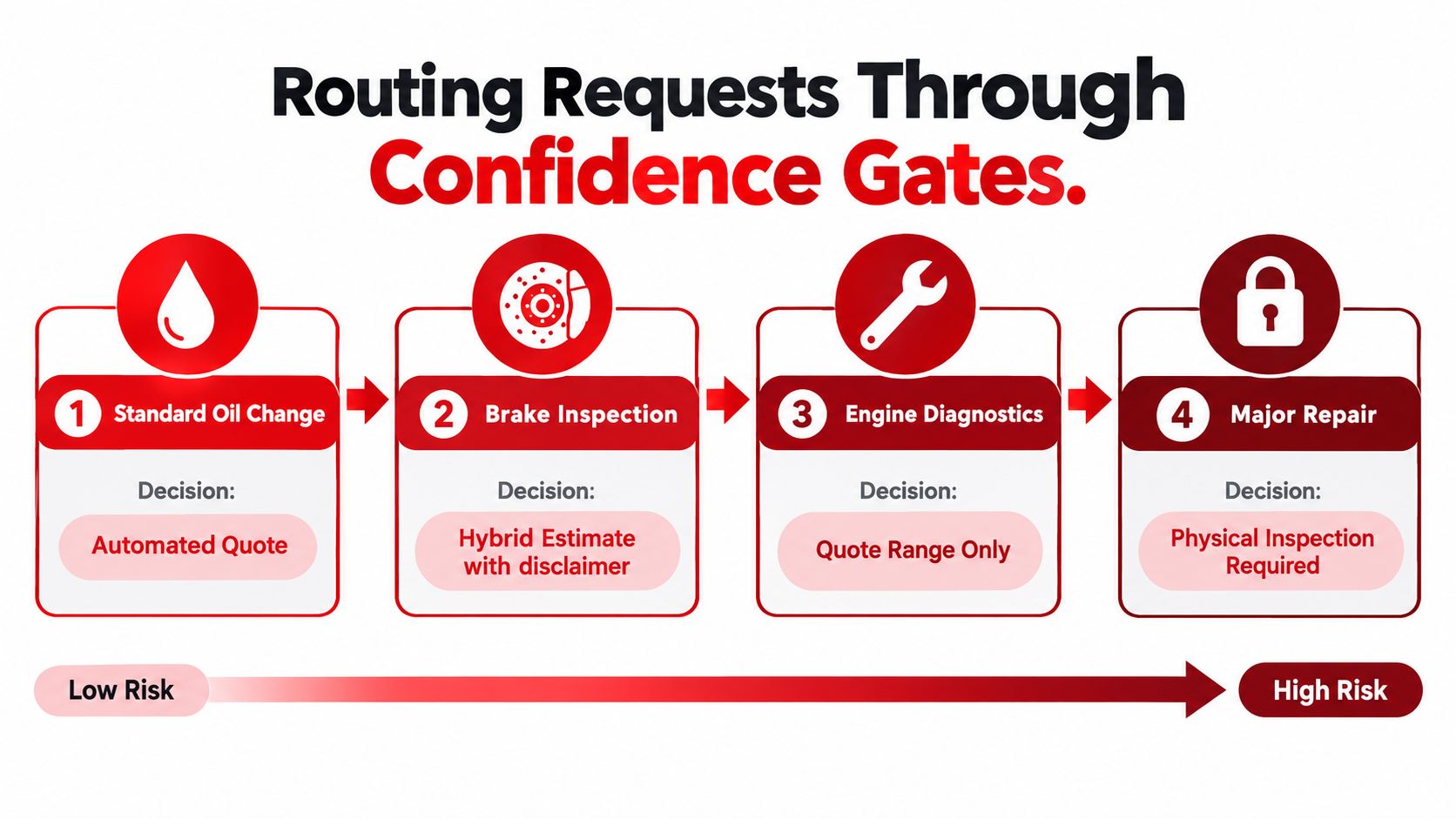
A shop should never route every request through the same pricing logic. The service type determines how much certainty exists before inspection.
Gate one is vehicle certainty. If the system can't validate the VIN, engine, drivetrain, or relevant configuration, it shouldn't produce a confident repair amount. The request can move to an advisor for clarification rather than forcing a questionable result.
Gate two is repair certainty. Routine maintenance with known vehicle-specific parts and labor can often receive a near-fixed quote. A brake inspection may need a hybrid response, combining a defined inspection or diagnostic charge with conditional repair pricing. An engine symptom should usually produce a diagnostic authorization or price range, not a single replacement total.
Gate three is technical complexity. EV systems, ADAS, software-dependent functions, battery safety procedures, and post-repair scans create additional variables. Evidence from the automotive aftermarket found that 53% of battery-electric-vehicle owners trusted independent workshops for complex repairs, compared with 73% for conventional vehicles, while confidence for simple BEV repairs reached 70%. The operational lesson is clear. A fast quote that ignores specialist labor or required procedures can reduce trust rather than build it.
Collision repair shows the same pattern. Direct-repair-program appraisals including a scan reached nearly 88% in Q3 2025, while calibrations approached 36%, according to the same report. Those figures don't mean every mechanical shop needs the same workflow, but they demonstrate how scans and calibrations increasingly affect repair scope.
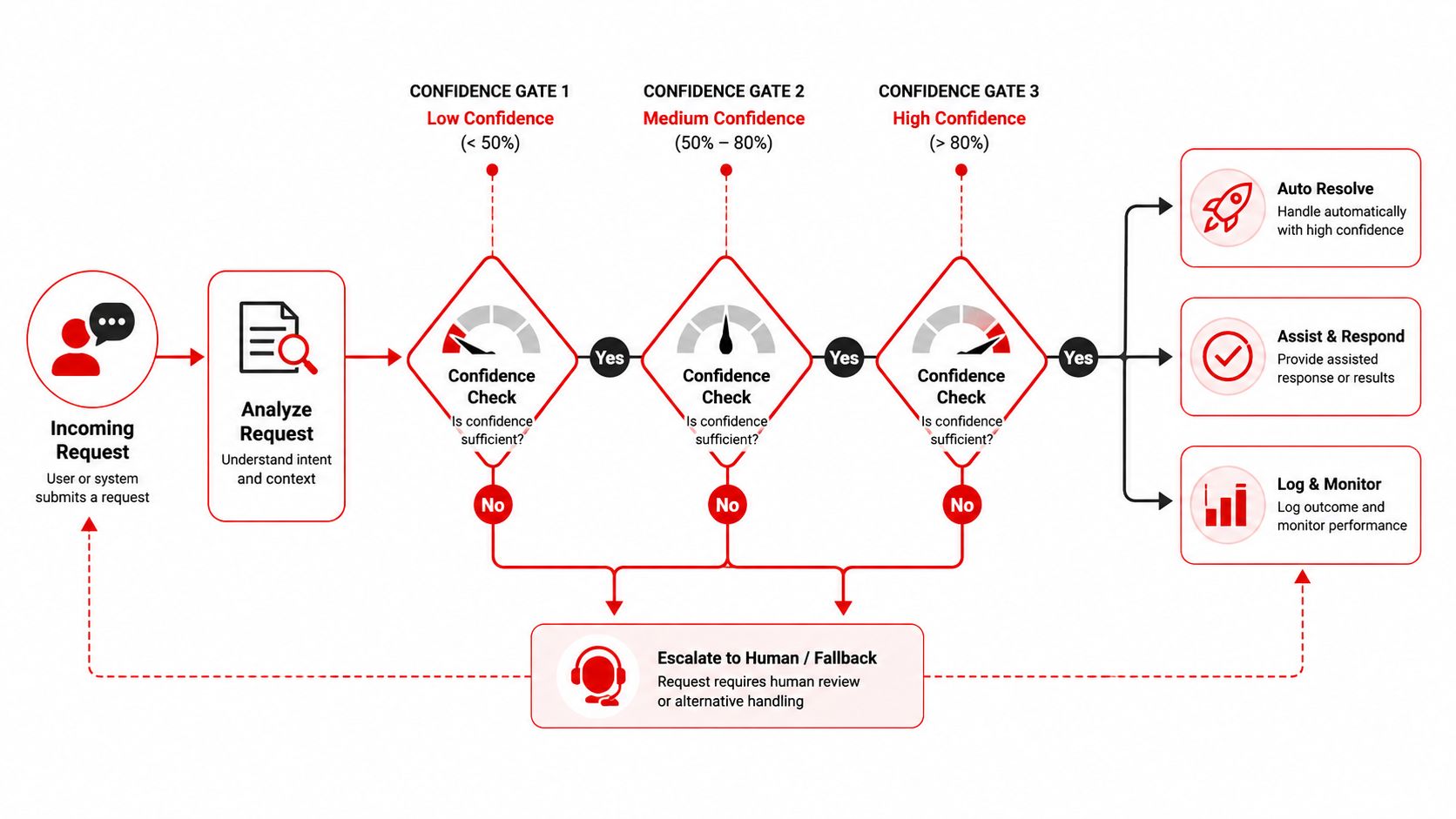
A practical routing policy looks like this:
- Routine maintenance: Show a near-fixed estimate when vehicle data, parts, and labor are reliable.
- Inspection-led work: Quote the inspection first, then request approval for repairs supported by findings.
- Symptom-based diagnosis: Provide a range or diagnostic authorization with a defined next step.
- EV, ADAS, or major repair: Require inspection, testing, and documented scope before final repair authorization.
This routing logic resembles lead qualification systems in other service operations. Teams evaluating software can review how businesses and apply the same principle here, route each request according to confidence rather than treating every inquiry as identical.
Validating Estimates with Digital Inspections
The online estimate becomes credible when the vehicle reaches the shop and the inspection either confirms or challenges the initial assumptions. The advisor should not replace the original price with a new total. The advisor should show the customer what changed and why.
A digital inspection creates that evidence trail. The technician can attach photos, videos, measurements, fault information, and notes to the vehicle record. The customer then sees the original request, the inspection finding, the affected line item, and the revised approval amount in one mobile-friendly conversation.

Show the cause of every change
Suppose a preliminary brake estimate assumes standard pad and rotor replacement. Inspection reveals a seized caliper, damaged hardware, or a related condition outside the original request. The revised estimate should add the affected part and labor, explain the finding, attach supporting evidence, and request approval. It shouldn't alter the original document without notice.
That process protects both parties. Customers can distinguish a legitimate scope change from an unexplained price increase. Advisors can answer questions without searching through text messages, paper notes, and disconnected spreadsheets. Technicians can see exactly what work has been authorized before proceeding.
The inspection record should remain connected to:
- Vehicle identity: VIN, mileage, and validated configuration.
- Customer request: The original symptom or service selection.
- Evidence: Photos, videos, test results, and technician notes.
- Estimate history: Original scope, revisions, reasons, and timestamps.
- Authorization: The approving customer, approved amount, and approval time.
J.D. Power's 2025 aftermarket study scored technology trust for full-service maintenance and repair at 5.97 out of 7, compared with 6.161 for dealerships, based on 10,348 vehicle owners. (J.D. Power aftermarket service study) That gap reinforces a practical point: independent shops can't rely on speed alone. They need to make their technology visibly useful, especially when the price changes.
A revised estimate earns approval when the customer can follow the evidence from symptom to finding to added work.
Managing Revisions and Legal Approval Thresholds
A shop that allows added work without recorded authorization has a process failure, not a communication problem. Technicians need a clear stop point, advisors need a controlled revision workflow, and customers need to know exactly what they approved.
The software should halt progress when the estimate reaches its configured time or monetary threshold. The advisor then updates the estimate, records the reason, sends the revision, and waits for approval before the technician continues. The system should preserve the original version rather than overwriting it.
State rules show why this control matters. In Florida, when a repair is expected to cost more than $150, the customer must be offered the choice of requesting a written estimate, receiving notification when the repair exceeds a specified amount, or waiving a written estimate. If the customer uses a written estimate, the shop must obtain approval before exceeding the repair cost by more than $10 or 10%, whichever is greater.
Virginia requires a written statement when a customer requests one before work begins and the customer may be charged more than $25. The statement must cover estimated labor, estimated parts, the described problem or authorized work, and estimated completion time. The final charge generally can't exceed the written estimate by more than 10% without authorization, while vehicles at least 25 model years old have a 20% threshold under the statute.
Those rules aren't a universal compliance checklist for every jurisdiction. They are a strong design warning. A digital quote system should make customer choice, approval, threshold, revision reason, and final authorization auditable.
Configure the control points
The front desk should define:
- Estimate status: Draft, sent, viewed, approved, declined, expired, or revised.
- Approval boundary: The monetary or time limit that stops additional work.
- Revision ownership: The advisor responsible for updating the customer.
- Evidence requirement: Photos, test results, or notes required for changed scope.
- Variance review: Quoted versus actual parts, labor, and total invoice values.
Variance reporting is more useful than an unsupported quote-conversion benchmark. It tells management whether estimates are accurate, profitable, and safe to execute. A shop can then adjust labor assumptions, parts sources, inspection questions, or confidence gates based on actual operational results.
Upgrading Your Shop Management Workflow
Disconnected spreadsheets, generic email templates, and phone tag create too many opportunities for pricing errors. A shop owner should audit the full path from the first online request to the paid invoice, not just the calculator on the website.
The evaluation should start with five questions:
- Can the system identify the vehicle reliably? It should support lookup by VIN and preserve mileage, configuration, and service history.
- Can the advisor separate estimate types? A routine quote, diagnostic authorization, and fixed-price repair shouldn't use the same wording or approval path.
- Can technicians send evidence into the estimate? Photos, videos, notes, and inspection findings should connect directly to revisions.
- Can the platform control parts and labor? Parts ordering across suppliers, real-time availability, labor guidance, taxes, fees, warranty terms, and expiration should work from one record.
- Can management measure variance? The platform should compare quoted and actual labor, parts, totals, approvals, technician efficiency, revenue, average repair order, and repeat business.
A unified shop board also matters. A Kanban-style view can show whether a vehicle is awaiting inspection, estimate approval, parts, repair, quality control, payment, or pickup. That visibility helps the front desk act before a stalled job becomes a customer complaint.
RedAppy is one example of this model. Its platform connects digital inspections, instant estimates sent by text or email, online approvals, parts ordering, invoicing, payments, vehicle history, scheduling, analytics, and a Digital Shop Board, with an AI Repair Assistant for labor times and diagnostic guidance.
The right upgrade doesn't begin with buying features. It begins with documenting the current workflow, identifying where estimates change, counting the approvals that lack a timestamp, and checking whether technicians can see scope before work starts. Then the shop can test a platform against real service requests, including a routine maintenance job, a symptom-based diagnosis, and a complex repair requiring inspection.
Shops ready to replace blind pricing with confidence-gated estimates can review RedAppy for a connected workflow from digital inspection through customer approval, invoicing, and payment. Visit the RedAppy features page or contact the team through the RedAppy contact page to see how the platform can fit the shop's existing front-desk process.
Ready to Transform Your Shop?
RedAppy helps auto repair shops create professional digital estimates with photos and videos, send them instantly via text or email, and get customer approvals in seconds. No credit card required to start.