
Local SEO for Auto Repair Shops: A 2026 Playbook
Some weeks, the front counter stays quiet even though drivers in the area still need brake work, diagnostics, tires, and check engine light repairs. The problem usually isn't demand. It's visibility. A stranded driver doesn't compare twenty shops. That driver pulls out a phone, searches for a nearby mechanic, and taps one of the businesses that shows up first.
That's why local SEO for auto repair shops matters so much. It isn't a side project for the marketing folder. It's the system that helps a shop appear when someone is ready to call, ask for directions, or book service. For shop owners, that turns local search from a branding exercise into a bay-filling process tied directly to daily operations.
A lot of shops still treat local SEO like a one-time setup. Claim the listing, add a few photos, and move on. That approach usually stalls out. Modern local visibility depends on accurate business data, strong review signals, location relevance, and a website that supports what the Google Business Profile promises.
Table of Contents
- Why Your Competitor's Phone Keeps Ringing
- Master Your Digital Front Door with Google Business Profile
- Build Local Trust with Consistent Business Listings
- Turn Customer Reviews into Your Best Marketing Asset
- Transform Your Website into a Local Customer Magnet
- Advanced Tactics to Dominate Your Service Area
- Tracking What Matters and Proving Your ROI
- Your Local SEO Implementation Checklist
Why Your Competitor's Phone Keeps Ringing
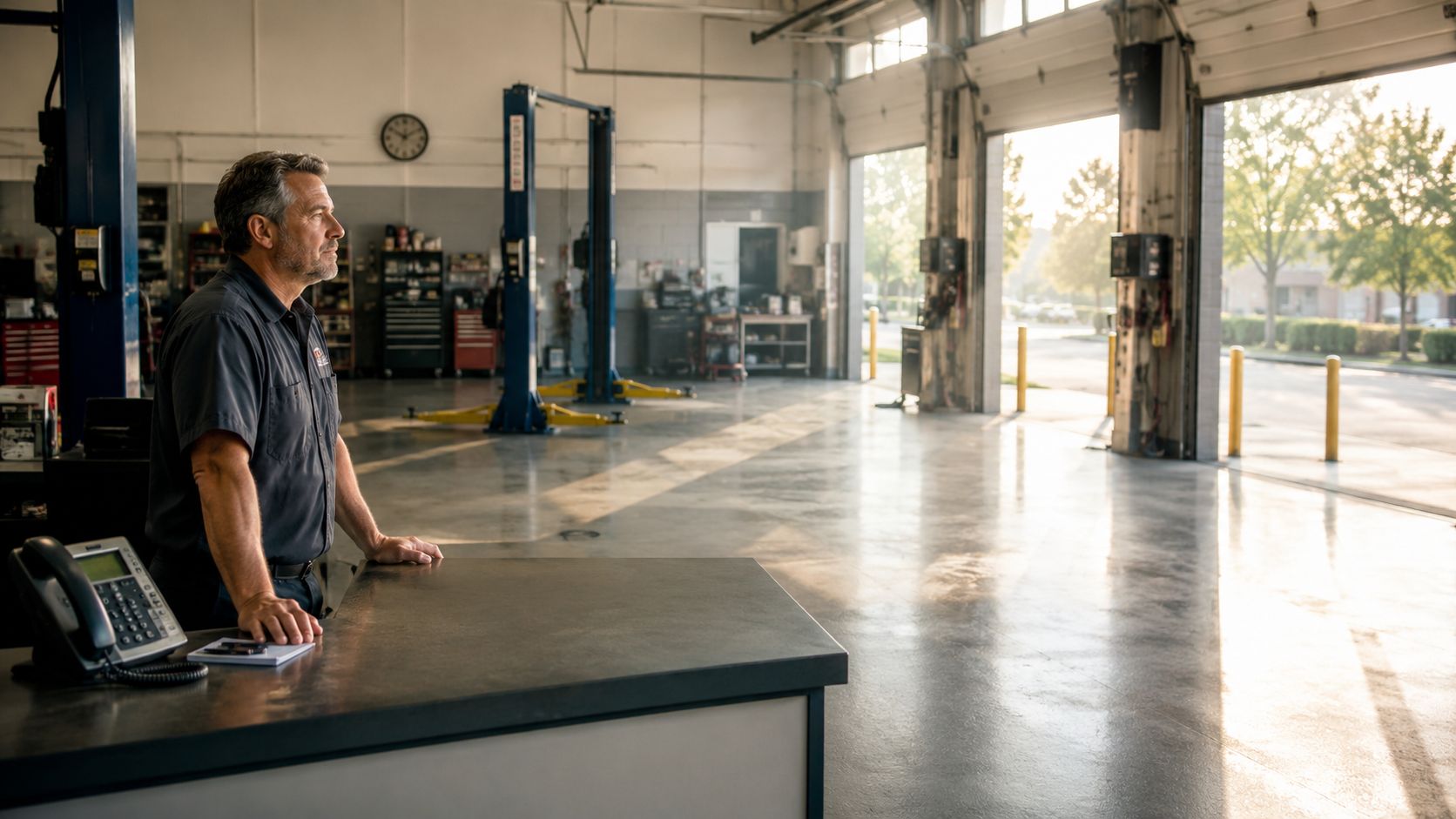
A common shop-owner complaint sounds like this: the techs are good, the warranty is solid, the team answers the phone, but the bays still aren't as full as the shop across town. Then the owner searches “auto repair near me” and sees the issue. The competitor shows up in Maps with recent reviews, updated hours, photos, and a listing that looks active. Their phone rings because they're visible at the exact moment a driver is looking.
For auto repair, that moment matters more than broad national rankings. One industry summary notes that 97% of consumers search online for local businesses, 92% choose businesses on the first page of Google, and around 46% of all Google searches have local intent, which is why map-pack visibility matters so much for shops targeting nearby drivers.
What the search really looks like
Drivers don't search like marketers. They search with urgency and context:
- Breakdown intent like “mechanic near me”
- Service intent like “brake repair in Dallas”
- Symptom intent like “check engine light shop near me”
- Vehicle-specific intent like “Honda AC repair in Phoenix”
Those searches usually come from people who aren't researching for fun. They need a shop.
Practical rule: The shop that shows up clearly, looks trustworthy, and makes calling easy usually wins before a customer ever visits a website.
Why local SEO is an operations issue
A weak local presence creates shop-floor problems. Advisors field fewer inbound calls. Empty bays make labor planning harder. Slow weeks push owners toward discounting just to keep car count moving. Good local SEO reduces that volatility by making the shop easier to find when demand already exists.
What works is straightforward. Accurate profile data, visible reviews, location-focused service pages, and consistent business listings bring in more qualified local traffic. What doesn't work is generic SEO talk, city-name stuffing, or a half-complete listing that hasn't been touched in months.
Master Your Digital Front Door with Google Business Profile
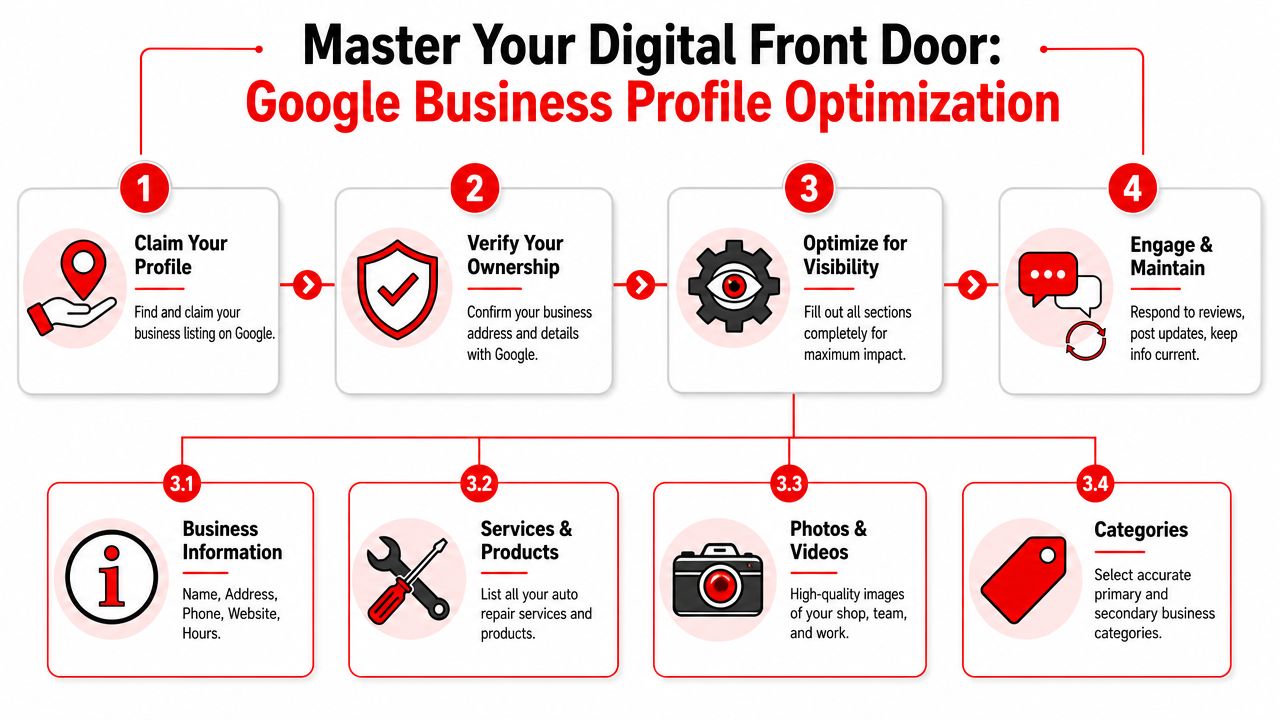
Google Business Profile is the first place most shops should work on. It's the listing customers see in Google Maps and local pack results, and it often decides whether someone calls, requests directions, or keeps scrolling. A practical workflow for auto repair starts with a fully optimized profile, then expands to citation consistency and reviews. Industry guidance also notes that inconsistent NAP data can confuse search engines, while high-quality reviews and photo-rich profiles improve trust and click-through.
Start with the details that affect calls
A claimed and verified profile is only the starting line. The shops that get real value out of GBP fill in every field that helps a customer decide fast.
Use this checklist:
Set the exact business name
Don't add extra keywords to the legal or public-facing name. Keep it consistent with signage, invoices, and every other listing.Choose the best primary category
“Auto Repair Shop” is usually the right primary category for a full-service independent shop. Secondary categories should match actual work performed, such as tire service, brake service, oil change service, or transmission repair.Lock in contact details and hours
Phone number, website, hours, holiday hours, and address must be current. If the shop closes early on Saturdays or changes hours seasonally, update it immediately.List real services
Add brake repair, diagnostics, suspension, engine repair, battery replacement, AC service, alignments, and other profitable work. A sparse services menu leaves money on the table.Upload strong photos
Include the front exterior, waiting area, service counter, bays, team, and examples of clean professional work. Drivers want proof that the place is real and active.
Use features most shops ignore
Many repair shops stop after basic setup. That leaves useful conversion tools untouched.
A better profile also includes:
- Q&A content that answers common concerns such as diagnostics, towing, financing, drop-off options, or whether the shop works on European vehicles.
- Posts for seasonal checks, AC service, brake specials, or holiday travel inspections.
- Attributes that highlight customer-friendly details if applicable, such as financing, waiting area convenience, or pickup and drop-off.
- Products or featured services that spotlight high-margin work and make key offers more visible.
A strong Google Business Profile should answer the customer's first five questions before the customer ever calls.
There's also a maintenance side to this. Shops often optimize the listing once and never revisit it. That's a mistake. Profiles need fresh photos, prompt review responses, updated service details, and regular checks for unwanted edits. If the shop's real-world operation changes, the profile should change with it.
Build Local Trust with Consistent Business Listings
Citations sound technical, but the concept is simple. Search engines compare the shop's business information across the web to decide whether the business is legitimate, active, and located where it says it is. If one listing shows an old suite number, another has the wrong phone number, and a third uses outdated hours, trust drops.
The foundation of local SEO for auto repair shops is consistency across business listings. Search engines use name, address, phone number, and hours to confirm legitimacy, and guides recommend claiming profiles on Google, Yelp, Facebook, Apple Maps, plus industry-specific sites like RepairPal and the Carfax Service Shop Directory.
Think of citations like a business credit report
A citation profile works a lot like a credit file. When the records line up, the business looks stable. When the records conflict, platforms have less confidence in what they're seeing.
That matters for two reasons:
- Search visibility suffers when platforms can't confidently connect the shop to one clear entity.
- Customers get frustrated when they call the wrong number, drive to an old address, or see hours that don't match reality.
The fix is boring, but effective. Standardize one master version of the shop's name, address, phone, website URL, and hours. Then use that exact format everywhere.
Where auto repair shops should clean up listings
Start with the directories and platforms that influence discovery and trust.
| Directory type | Why it matters | Common problem |
|---|---|---|
| Google and Apple Maps | Drives map visibility and navigation | Wrong hours or unverified edits |
| Yelp and Facebook | Often show up in brand searches | Duplicate profiles |
| RepairPal and Carfax Service Shop Directory | Adds industry relevance | Thin or incomplete profiles |
| BBB and Yellow Pages | Reinforces legitimacy | Old addresses and legacy phone numbers |
A practical cleanup process looks like this:
- Audit existing listings by searching the shop name, old phone numbers, and old addresses.
- Claim what's accurate and update what's outdated.
- Remove duplicates or request merges where platforms allow it.
- Fill out the profile fully with categories, photos, hours, and website details.
- Recheck after changes because some platforms overwrite data from third-party sources.
A citation isn't just an SEO signal. It's a customer-access problem if the information is wrong.
What doesn't work is blasting the business into dozens of low-quality directories and hoping volume solves the issue. For auto repair, clean data on the major platforms does more than a messy footprint scattered across the web.
Turn Customer Reviews into Your Best Marketing Asset
Reviews do two jobs at once. They help a shop rank better in local discovery, and they help a driver decide whether to trust that shop with a vehicle. Those are not separate wins. In local search, they work together.
Expert guidance on local-search performance points to review quality and volume versus nearby competitors as a meaningful ranking factor in Google Maps, which is why review acquisition and response time matter operationally, not just reputationally.
Why reviews change the buying decision
A driver comparing two nearby shops usually can't judge technical skill from a search result. What that driver can judge quickly is whether the business seems dependable. Recent reviews, detailed feedback, and owner responses create that trust signal.
The strongest reviews for repair shops usually mention specifics:
- The actual service such as brakes, diagnostics, AC, or suspension
- The experience including communication, timelines, and clarity
- The outcome such as solving a vibration, fixing a no-start issue, or catching a problem early
Those details help future customers feel understood. They also reinforce service relevance around the shop's actual work.
Build a repeatable review system
Most shops ask for reviews randomly. That produces random results. The better approach is a process tied to the service workflow.
A strong system includes:
The right moment
Ask after the customer picks up the car, approves the final invoice, or confirms satisfaction. Don't ask while a problem is unresolved.The easiest path
Send a direct review link by text or email. Fewer clicks means fewer abandoned attempts.The right person asking
The service advisor who handled the job often gets better follow-through than a generic blast.A response routine
Reply to positive and negative reviews. Thank happy customers and address complaints without getting defensive.
A shop that wants to make review collection part of daily workflow should look closely at tools built for that job, such as RedAppy's reviews feature.
Shops that wait for reviews to happen on their own usually get fewer of them, and they often hear from unhappy customers first.
Negative reviews also need a system. Don't copy-paste legal language. Respond like a professional business: acknowledge the concern, invite offline resolution, and show future customers that the shop takes service seriously. Even when a complaint is unfair, a calm response protects trust.
Transform Your Website into a Local Customer Magnet
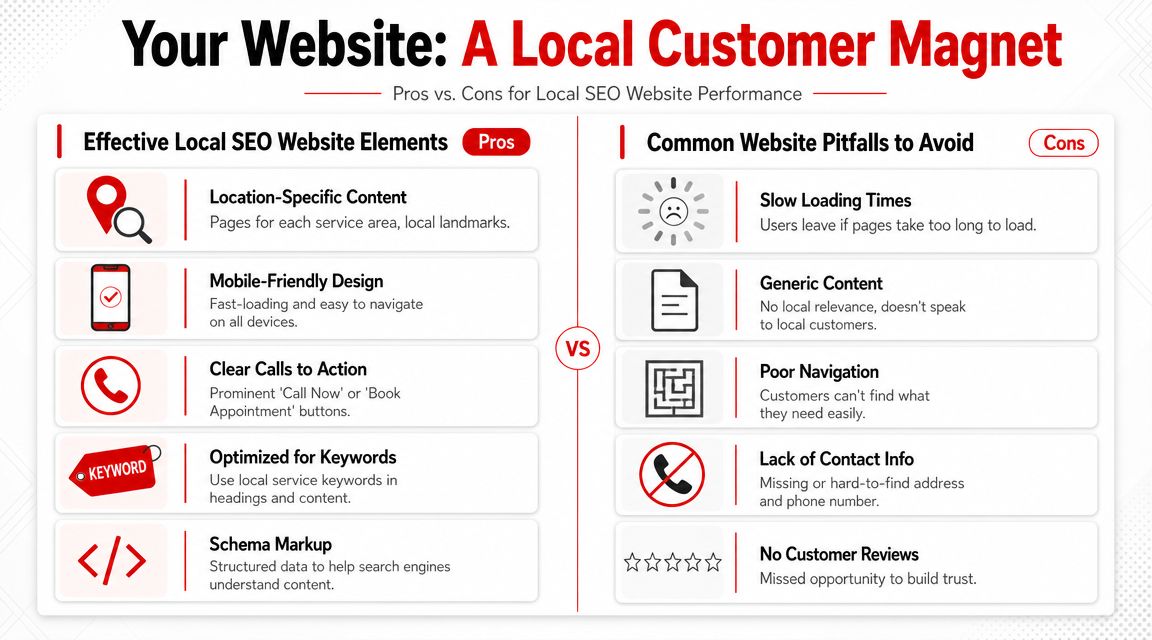
A Google listing gets attention. The website has to turn that attention into action. For local SEO for auto repair shops, the site should match how drivers search and how shops sell. That means separate pages for important services, clear local relevance, and content that answers real repair questions instead of vague marketing copy.
Local SEO for auto repair is also changing with AI-assisted search. Guidance increasingly emphasizes that business profiles must stay accurate and active, but many guides still miss how to optimize for service-specific intent such as model-specific repairs or EV maintenance. Structuring service menus and Q&A content so the shop is understood by both classic local search and AI-driven discovery is becoming the new frontier.
Build pages around real repair intent
The biggest website mistake in this industry is stuffing every service into one generic “Services” page. That page rarely ranks well for specific local searches, and it doesn't do much to help a worried driver decide.
A stronger setup looks like this:
- One page per core service such as brake repair, check engine diagnostics, oil changes, suspension, alignments, transmission service, and AC repair
- One page per location or service area if the business serves multiple cities or neighborhoods
- Optional specialty pages for diesel repair, fleet service, European vehicles, hybrid and EV maintenance, or mobile service areas if those are true offerings
Each page should connect the query to the customer's problem. A brake page should mention warning signs, safety concerns, what the shop inspects, and how to book. An EV maintenance page should explain what the shop handles instead of pretending every electric-vehicle service is in scope.
Write for drivers and search engines
Good local pages are plainspoken. They don't need awkward keyword repetition. They need clarity.
A solid service page usually includes:
- A direct title like “Brake Repair in Tampa”
- A short opening that confirms the service and service area
- Common symptoms customers recognize
- What the shop checks or repairs
- Trust elements such as reviews, certifications, warranties, or process details
- A visible call to action with call and booking options
The site also needs the basics dialed in:
- Mobile-friendly layout because local-intent searches on phones often come from urgent situations
- Clear contact information in the header and footer
- Fast loading pages
- Schema markup so search engines can understand the business and service structure
For shops comparing what a modern site experience should include, RedAppy's website features offer a useful benchmark.
Thin city pages stuffed with repeated place names don't build trust. Useful service pages tied to real local demand do.
Advanced Tactics to Dominate Your Service Area
Once the basics are in place, a shop can widen the gap between itself and nearby competitors by building stronger local authority. That authority comes from two places working together: structured data that helps search engines understand the business, and local relationships that prove the business matters in the community.
For repair shops, local visibility is the main battleground. Around 46% of all Google searches have local intent, and visibility in Google's local pack for terms like “brake repair in [city]” is often more important than broad national ranking.
Use schema to define the shop clearly
Schema markup is structured information added to a website so search engines can interpret the business more accurately. For auto repair, that means making it easier to identify the company, location, services, hours, and page purpose.
What matters most:
- Local business schema on key pages to reinforce business identity
- Auto repair service detail on service pages so each page matches a defined offering
- Consistent entity details that align with the shop's listings elsewhere
Schema won't rescue a weak site or bad reputation. But when everything else is solid, it helps remove ambiguity.
Earn local authority offline and online
Many link-building campaigns fail because they chase random websites that have nothing to do with the local market or the automotive category. Auto repair shops usually do better when links reflect real-world relationships.
Good examples include:
- Community sponsorships such as youth sports, charity drives, or local events
- Trade relationships with parts suppliers, tow companies, tire dealers, or fleet partners
- Local press mentions tied to community involvement or shop expertise
- Association and chamber listings where the business participates
A shop that works with collision centers or wants to understand supplier relationships can even use practical industry content like the to think more strategically about partner ecosystems and nearby referral opportunities.
Here's the trade-off. Schema helps search engines understand what the business is. Local links help validate that the business is known and relevant. One without the other leaves value on the table.
Tracking What Matters and Proving Your ROI
Local SEO should be measured the same way a shop measures anything else that affects profit. Not by vanity metrics alone, but by whether visibility leads to calls, visits, booked work, and better bay utilization. If the marketing report looks good but the car count doesn't move, something is off.
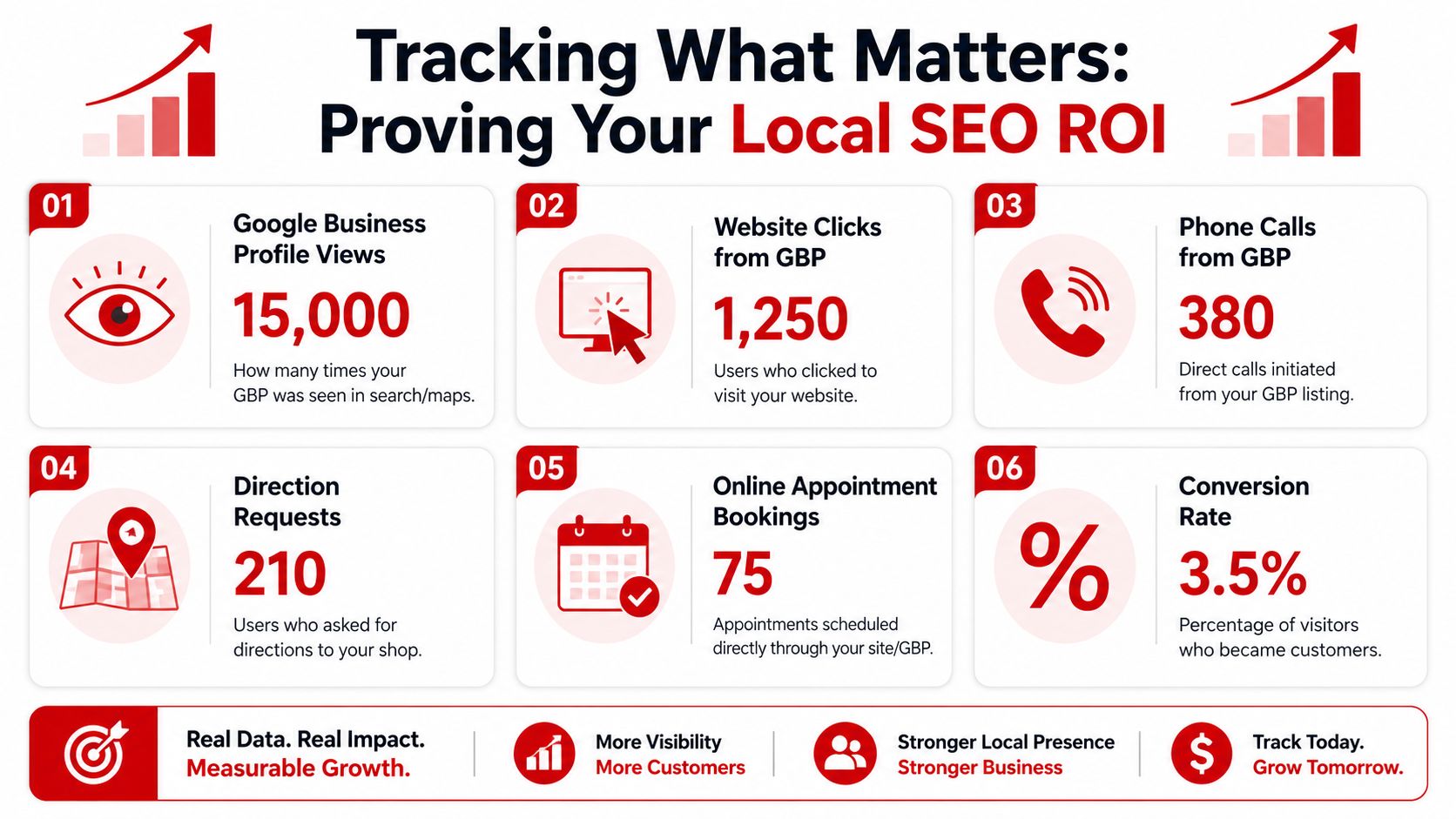
Expert guidance recommends using operational KPIs such as Google Business Profile impressions, website clicks, direction requests, and call volume, while also comparing review quality and volume against nearby competitors because that's a meaningful factor in Google Maps performance.
Watch the metrics tied to action
Some metrics deserve weekly attention because they reflect customer intent directly.
Focus on:
Phone calls from Google Business Profile
A strong signal that the listing is producing leads.Direction requests
Especially useful for shops that rely on local drive-in traffic.Website clicks
Helpful when tied to service pages and booking actions.Review pace and response time
Important for trust and local competitiveness.Rank movement in target areas
Best reviewed by city, ZIP code, or service area rather than one broad market average.
A spike in visibility without movement in calls may mean the listing looks weak. More website visits without appointments may mean the service pages don't match search intent.
Connect search activity to shop performance
Many shops stop too early. Local SEO reporting should connect to actual operations.
A practical review process looks like this:
| Metric | What it suggests | Shop question to ask |
|---|---|---|
| More GBP calls | Listing is converting searchers | Are advisors answering and booking efficiently? |
| More direction requests | Local discovery is improving | Are walk-ins or first-time visits increasing? |
| More traffic to brake or AC pages | Service intent is growing | Are estimates and inspections aligned with that demand? |
| Faster review growth | Trust signals are strengthening | Are more first-time customers saying they found the shop online? |
Analytics tools can help bridge that gap. For shops that want to connect marketing signals with booking and performance reporting, RedAppy's analytics features show what a more integrated view can look like.
If a report can't help the shop decide staffing, scheduling, or follow-up priorities, it's probably tracking the wrong thing.
Your Local SEO Implementation Checklist
Most shops don't fail at local SEO because the ideas are complicated. They fail because the work gets scattered across sticky notes, old logins, and tasks nobody owns. A checklist fixes that.
Local SEO Implementation Checklist and Timeline
| Phase | Task | Goal | RedAppy Advantage |
|---|---|---|---|
| First 30 Days | Claim and verify Google Business Profile | Control the main listing drivers see first | Centralized digital presence supports cleaner operations |
| First 30 Days | Standardize name, address, phone, website, and hours | Remove conflicting business data | One system reduces mismatched customer-facing info |
| First 30 Days | Add complete services, categories, photos, and FAQs to GBP | Improve trust and conversion from search | Shop assets and customer workflow are easier to organize |
| First 30 Days | Audit top directory listings and fix duplicates | Strengthen legitimacy signals | Fewer admin gaps between front desk and online presence |
| First 30 Days | Publish core service pages for highest-value repairs | Capture high-intent local searches | Website tools can simplify publishing and updates |
| Quarterly Tasks | Refresh photos on GBP and website | Show that the business is active and current | Regular workflow habits are easier to maintain in one platform |
| Quarterly Tasks | Review competitor listings and review trends | Spot local gaps and opportunities | Performance data is easier to compare over time |
| Quarterly Tasks | Update hours, seasonal offers, and service area pages | Keep search info aligned with real operations | Ops changes can be reflected faster online |
| Quarterly Tasks | Add FAQs for new service demand such as EV or model-specific work | Expand relevance for emerging search intent | Centralized service information supports faster updates |
| Ongoing Activities | Ask happy customers for reviews | Build trust and local visibility steadily | Review workflows can be built into customer follow-up |
| Ongoing Activities | Respond to all reviews promptly | Protect reputation and show professionalism | Teams can stay on top of communication tasks |
| Ongoing Activities | Track calls, clicks, directions, and booked work | Prove what's producing jobs | Analytics can connect activity to outcomes |
| Ongoing Activities | Keep service pages and listings accurate whenever shop details change | Prevent lost leads from outdated information | One system helps reduce manual admin work |
A few priorities deserve special attention:
- Assign ownership so one person is responsible for listings, one for review follow-up, and one for website updates if the team is large enough.
- Tie updates to shop events like new services, holiday hours, staffing changes, or expanded service areas.
- Review monthly instead of waiting until business slows down.
- Treat local SEO like front-desk process control because that's what it is. It affects calls, trust, scheduling, and car count.
Shops can do all of this manually. Many do. But manual systems break down when the counter gets busy, the phone rings nonstop, and nobody has time to chase duplicate listings or send review requests consistently.
RedAppy helps auto repair shops turn this playbook into a daily operating system instead of another unfinished marketing project. The platform combines shop management, digital inspections, invoicing, payments, analytics, a branded website, reviews, and workflow tools that keep the online front door aligned with what's happening inside the shop. For owners who want to see how that works in practice, explore RedAppy, review the platform's features, or reach out through the contact page.
Ready to Transform Your Shop?
RedAppy helps auto repair shops create professional digital estimates with photos and videos, send them instantly via text or email, and get customer approvals in seconds. No credit card required to start.