
Boost Profit: Managing Supplier Relationships in Your Auto
A vehicle is on the lift. The tech has already torn down the front end. The customer was promised pickup by late afternoon. Then the parts counter calls back and says the brake caliper that was sent is for the wrong trim package.
Now the bay is blocked, the tech loses rhythm, the advisor has to make an awkward phone call, and the whole day starts sliding. Most shop owners don't call that supplier relationship management. They call it a headache. But that's exactly what managing supplier relationships looks like on the shop floor.
In an auto repair shop, suppliers affect labor efficiency, comeback risk, gross profit, and customer trust. A good vendor doesn't just drop off parts. That vendor helps the shop keep jobs moving, avoid unnecessary returns, and make cleaner promises at the service desk. A bad one ties up lifts and burns payroll.
A lot of shops still handle parts sourcing with scattered calls, memory, and whatever rep answered fastest. That approach works until volume grows, staffing gets tight, or one key vendor starts slipping. Shops that want fewer surprises need a system, not just good instincts. Even broader purchasing teams have moved toward because buying, receiving, and paying can't stay disconnected without causing friction.
Table of Contents
- Your Suppliers Can Make or Break Your Shop
- Choosing the Right Parts Partners
- Setting Clear Expectations from Day One
- Integrating Parts Ordering into Your Daily Workflow
- Measuring Supplier Performance with the Right KPIs
- Optimizing Relationships and Resolving Disputes
- Turn Your Supplier Headaches into a Competitive Edge
Your Suppliers Can Make or Break Your Shop
A shop can have strong technicians, solid car count, and a full schedule, then still lose money because parts flow is sloppy. That usually shows up in ways owners know too well. The wrong radiator arrives. A “same-day” axle doesn't land until tomorrow. A return sits unresolved while the advisor keeps checking the clock.
Those problems don't stay in the parts room. They spread into labor utilization, customer communication, and cash flow. A delayed part can turn a profitable repair into a rushed handoff, an overnight stall, or a discount given just to calm a frustrated customer.
A supplier issue is rarely just a supplier issue. In a repair shop, it becomes a scheduling issue, a labor issue, and a customer service issue within minutes.
This is why managing supplier relationships has to be treated like an operating system. It isn't corporate jargon. It's the practical work of choosing the right vendors, setting clear rules, tracking performance, and fixing problems before they repeat.
The shops that do this well don't rely on whoever has the lowest line-item price that morning. They build dependable supply lanes for common jobs, backup lanes for risky categories, and clean communication for exceptions. That gives the front desk more confidence when quoting jobs and gives the back shop fewer reasons to wait around.
Choosing the Right Parts Partners
The cheapest supplier on paper can become the most expensive one in the building. If a vendor sends the wrong parts, misses cutoffs, fights every return, or takes forever to answer, the shop pays for it in wasted labor and broken promises.
A parts partner should be judged the same way a shop judges a technician. Can that partner perform consistently under pressure, communicate clearly, and reduce rework?
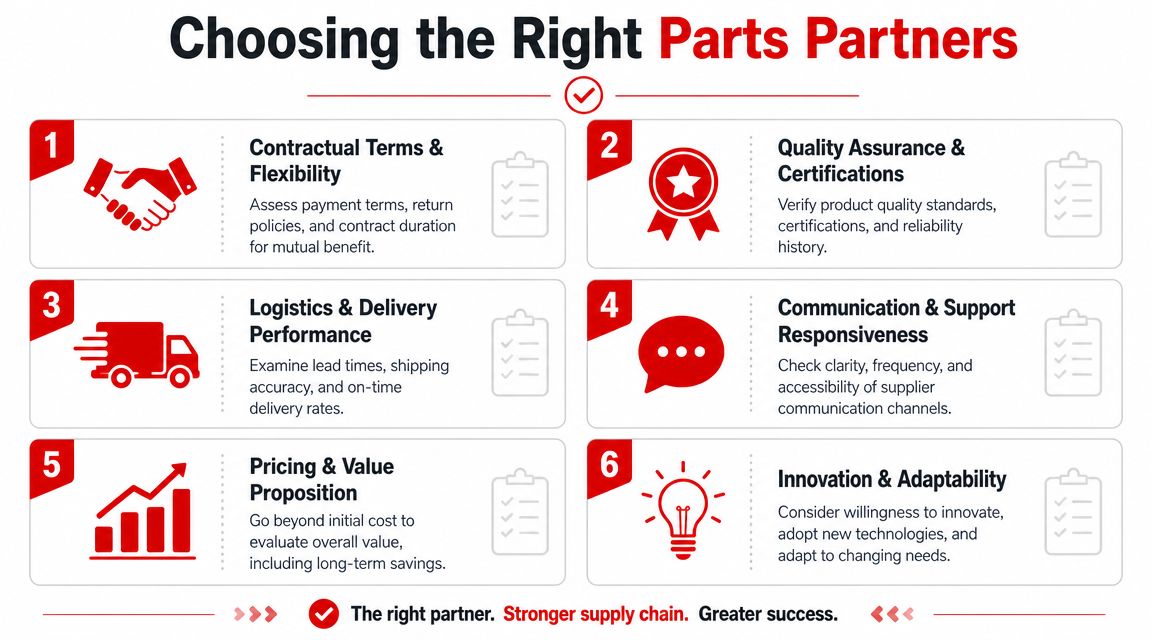
Price is only one line on the scorecard
A solid evaluation checklist usually includes more than line cost.
- Availability on common repairs. Brake jobs, suspension work, ignition components, filters, and batteries should be easy to source without daily drama.
- Delivery consistency. Fast doesn't help if fast is unpredictable. The shop needs vendors that hit the promised window often enough for advisors to quote with confidence.
- Catalog accuracy. A deep catalog means little if fitment data causes repeated mistakes on engine variants, trim levels, or fleet vehicles.
- Warranty and return handling. Counter staff who solve issues quickly are worth a lot more than a low posted price followed by a return argument.
- Communication quality. The best reps confirm substitutions, answer questions clearly, and flag backorders before the shop gets trapped.
- Overall value. Shops should look past the opening quote and think through labor disruption, return friction, and invoice cleanup. Teams looking to sharpen this side of procurement can borrow ideas from.
Practical rule: If a vendor creates avoidable phone calls every day, that vendor isn't saving the shop money.
Segment suppliers by risk and shop impact
Not every supplier deserves the same amount of attention. That's one of the biggest mistakes smaller shops make. They treat every vendor relationship the same, then wonder why important issues get missed.
A more durable approach is supplier segmentation. A technically sound SRM program starts with supplier segmentation, then applies different governance intensity by segment: strategic suppliers get frequent performance reviews, shared KPIs, and joint improvement plans, while noncritical suppliers are managed with lighter controls. JPMorganChase recommends using segmentation to prioritize where time and resources create the greatest impact in its guidance on.
For an auto repair shop, that can look like this:
Strategic suppliers
These are the vendors tied to daily throughput. The shop depends on them for high-volume categories or fast-turn jobs. They deserve regular reviews, tighter expectations, and a direct contact path when something goes sideways.
Specialty suppliers
These vendors handle harder-to-find items, dealer-only channels, machine shop support, tires, electronics, or fleet-specific parts. The shop may buy less often from them, but the repairs can be high-stakes.
Convenience suppliers
These are vendors used for occasional fill-ins, shop supplies, low-risk items, or emergency sourcing. They matter, but they don't need the same management time.
A smart shop avoids putting all trust in one primary vendor, especially for critical categories. Strong relationships matter. Dependency without a backup plan doesn't.
Setting Clear Expectations from Day One
Most supplier problems don't start as big failures. They start as fuzzy expectations. One side thinks “rush order” means one thing. The other side thinks it means another. Then everyone gets irritated when the part doesn't show up when the advisor expected.
Clear expectations fix a lot of friction before it starts. Shops don't need a thick legal packet to do that. They need a simple operating agreement that both sides can follow.
Build a simple operating agreement
A useful supplier setup document for an auto shop should be short and practical. It can fit on a page or two if it's written clearly.
Include the basics that affect daily operations:
- Order cutoff times. Spell out what counts as same-run, next-run, and special-order timing.
- Delivery windows. Define what “morning delivery” or “ASAP” means for the shop.
- Approved communication channels. Some issues should go through the counter line, others through text, email, or a rep.
- VIN and fitment verification rules. Decide when the shop sends VINs, photos, or OE numbers before ordering.
- Return conditions. Clarify core returns, electrical part policies, damaged-box issues, and who authorizes exceptions.
- Payment terms. Keep this clean. Billing confusion strains a relationship fast.
Many SRM programs fail because teams stay reactive and never define the target. Responsive notes that common failure modes include reactive management and unclear objectives, and that the framework only works when the organization defines specific goals, assigns ownership, and keeps governance active. It also notes that quarterly meetings with key vendors generally strike the right balance for review cadence in its article on.
Assign ownership inside the shop
Supplier performance doesn't improve if nobody owns the relationship. In a repair shop, that often means one person handles day-to-day contact while another reviews the bigger pattern.
A simple split works well:
- The service advisor or parts lead handles ordering, returns, and immediate issue escalation.
- The owner or manager reviews recurring problems, credit disputes, and larger account decisions.
- The technician reports fitment, quality, and packaging issues quickly so the shop has accurate feedback.
Good vendor management isn't about being aggressive. It's about being specific, consistent, and hard to confuse.
When negotiating with bigger suppliers, smaller shops shouldn't try to win every term. The better move is to protect the items that hit operations hardest. Delivery expectations, return handling, and response time usually matter more than squeezing out one more discount line. A supplier can say no to a price request. That same supplier may say yes to cleaner cutoff rules, a dedicated contact, or faster issue resolution.
Integrating Parts Ordering into Your Daily Workflow
A service advisor is building an estimate while a tech has a car tied up on the lift. The first supplier is out of stock. The second has the part, but only in a different brand. The third can deliver fast, but the price wrecks the margin. Meanwhile, the customer wants an answer in the next five minutes.
That is the daily parts problem in an auto repair shop. It is not a purchasing theory issue. It is a workflow issue.
If ordering still happens through phone calls, sticky notes, open browser tabs, and memory, the shop loses time in places that are hard to spot until the day gets backed up. The estimate takes longer to build. Approval gets delayed. A tech stands around waiting. The wrong part gets attached to the RO, or the right part gets ordered with the wrong quantity. Then the invoice shows up later and someone has to figure out why the numbers no longer match.
Harvard Business Review argued that strong supplier relationships work best when companies move past one-off transactions and build working habits that improve cost, quality, and execution over time in its discussion of. In a repair shop, that idea shows up on the floor, not in a strategy meeting. The supplier relationship gets tested while the advisor is quoting a brake job, the tech is waiting on a sensor, and the customer is deciding whether to approve the work.
Good integration starts with one rule. Parts activity should live inside the same daily system the shop already uses to run repair orders.
That means the team can check price, stock, brand options, and delivery timing while building the job, then attach the selected part directly to the RO. No retyping. No separate paper trail. No guessing later about which quote was approved.
A setup like that changes operations in practical ways:
- Advisors build estimates faster because supplier options are visible during write-up.
- Techs get fewer parts surprises because the ordered item stays connected to the job.
- Managers protect margin better because quoted cost and invoiced cost are easier to compare.
- Customers get clearer updates because the front desk can see whether a part is available, ordered, or delayed.
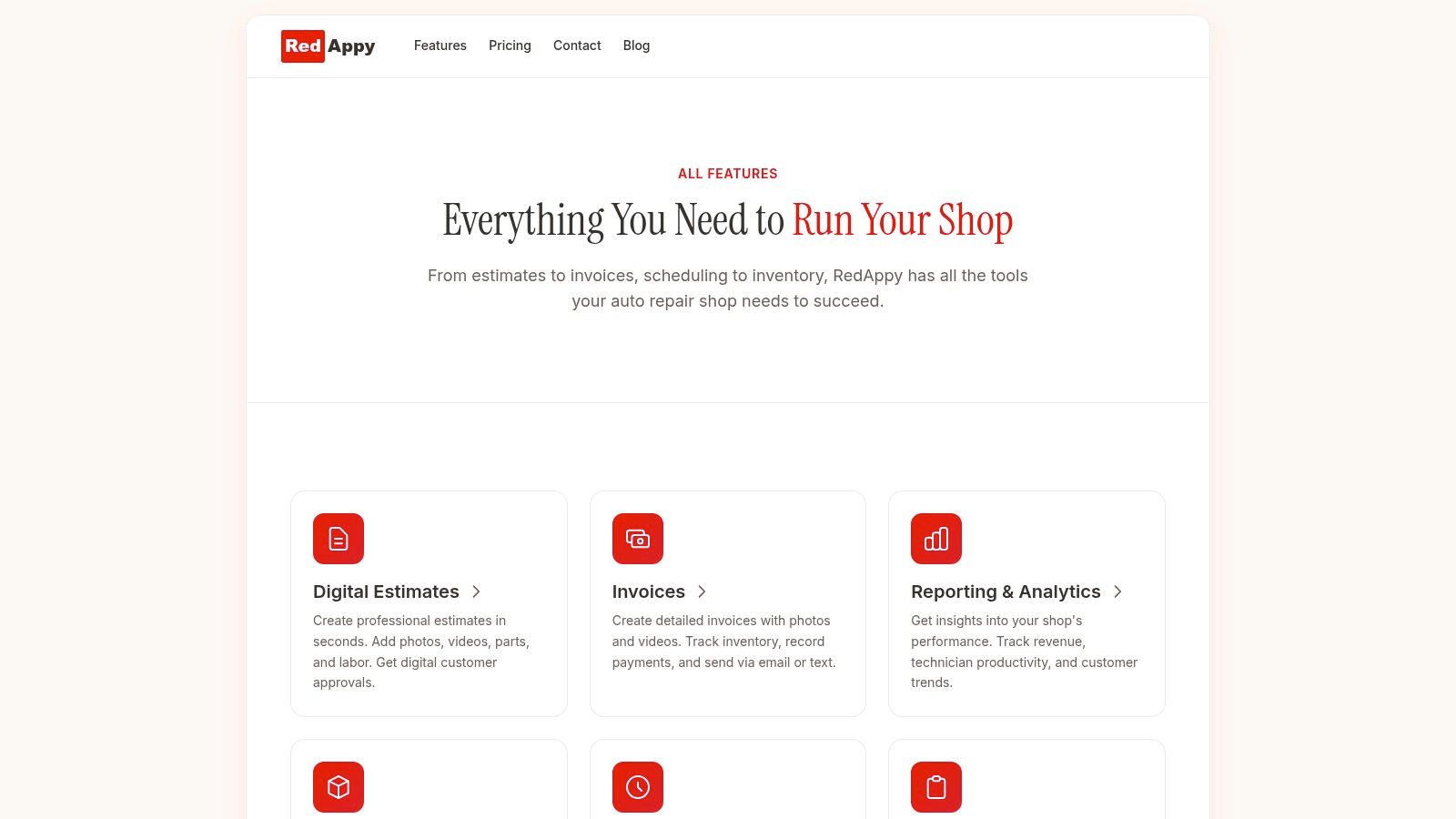
The biggest gain is fewer handoffs. Every handoff creates another opening for a missed note, a bad substitution, a return no one documented, or a price change that slips past the estimate. Once ordering is tied to the shop's live workflow, supplier patterns become easier to spot too. The team can see who answers fast, who has inventory when the catalog says they do, and who turns every afternoon into a parts chase.
When parts ordering sits inside the repair order workflow, supplier management becomes part of production control.
For a busy shop, that is the point. Better supplier relationships are useful, but only if they help cars move through the bays with less waiting, fewer callbacks, and cleaner gross profit on every ticket.
Measuring Supplier Performance with the Right KPIs
Most shops already judge vendors informally. They know who usually comes through and who usually causes problems. The issue is that informal judgment gets muddy when the day is busy. One helpful rep can mask a pattern of late deliveries. One cheap invoice can hide a pile of avoidable returns.
Tracking a few supplier KPIs gives the shop a cleaner view. It also keeps conversations factual when performance slips.
Phocas reports that 45% of organizations identify supplier performance management as a central feature of SRM, with key KPIs including delivery on time and in full, product quality, and price competitiveness in its guide to. That matters because it confirms supplier management isn't just relationship-building. It's an operating discipline built around measurable outcomes.
Track the metrics that affect labor and customer promises
An auto repair shop doesn't need a complicated dashboard to start. A spreadsheet, a disciplined parts log, or a shop system report can be enough if the team updates it consistently.
The best KPIs are the ones that answer practical questions:
- Did the part arrive when the advisor said it would?
- Was it the correct part the first time?
- Did the shop have to return it because of fitment, damage, or quality?
- Did the final invoice support the expected margin on the job?
A few metrics usually tell most of the story.
Key Supplier Performance KPIs for Auto Shops
| KPI | What It Measures | Why It Matters |
|---|---|---|
| On-time delivery | Whether parts arrive within the promised window | Late parts stall bays and force advisors to reset customer expectations |
| In-full delivery | Whether the entire order arrives complete | Partial deliveries create repeat calls and interrupt multi-part repairs |
| Order accuracy | Whether the correct part, quantity, and application were supplied | Wrong parts waste technician time and create avoidable returns |
| Product quality | Whether parts fail inspection, arrive damaged, or create comeback risk | Poor quality hurts trust, labor efficiency, and shop reputation |
| Price competitiveness | Whether supplier pricing supports healthy gross profit across routine work | Low margin parts erode profitability even when labor is strong |
| Return rate | How often parts are sent back because of error, defect, or fitment mismatch | High returns signal catalog problems, rushed ordering, or weak supplier controls |
| Credit resolution speed | How quickly the supplier fixes billing mistakes and return credits | Slow credits tie up cash and create accounting friction |
| Communication responsiveness | How quickly the supplier answers questions or flags exceptions | Good communication helps the shop adjust before a delay turns into a missed promise |
A useful trick is to separate return reasons. A defective part tells a different story than an ordering mistake or bad catalog data. If those causes get lumped together, the shop can blame the wrong problem.
Another important point is ROI. A good supplier relationship shouldn't be judged only by lower unit cost. Mature programs are increasingly evaluated on broader outcomes such as cost avoidance, speed, sustainability gains, new revenue opportunities, and risk responsiveness, as discussed in SDI's article on. For a repair shop, that translates into fewer stalled jobs, better labor flow, cleaner estimates, and less time spent cleaning up mistakes.
The right supplier KPI isn't “Do people like working with this rep?” It's “Does this vendor help the shop finish profitable work with less friction?”
Optimizing Relationships and Resolving Disputes
Even strong suppliers miss. The true test is what happens next. Shops that avoid conflict entirely often let weak performance drag on too long. Shops that explode over every mistake usually get labeled difficult and lose cooperation when they need it most.
The better approach is steady pressure backed by evidence.

Run reviews before small issues become expensive ones
Key suppliers should get regular business reviews, even if they're informal. A quarterly rhythm works well for many shops because it catches patterns without becoming meeting clutter.
Those reviews should stay practical:
- Bring actual examples. Late deliveries, wrong applications, damaged shipments, unresolved credits.
- Use the shop's own records. Repair orders, return logs, and invoice discrepancies are enough.
- Ask for one fix at a time. Too many demands at once usually get polite agreement and no change.
- Document what was agreed. If the supplier promises a new contact path or revised cutoff rule, write it down.
Good reviews aren't just for complaints. They're also where a shop can discuss stocking trends, seasonal work, common failures by vehicle line, and upcoming service demand. That helps strong suppliers support the shop better.
Use a fair process when service slips
When a dispute comes up, this order usually works best:
- Confirm the facts first. Wrong part, catalog mismatch, late truck, damaged box, billing error. The category matters.
- Contain the job impact. Find a replacement source, reset the customer promise, and free the bay if needed.
- Escalate with specifics. Order number, timeline, vehicle details, and what resolution the shop expects.
- Track repeats. A one-time miss is a normal business problem. A repeat pattern is a supplier performance problem.
- Decide whether trust is recovering. If the same issues keep returning, the shop needs to reduce exposure.
One of the toughest situations is supplier concentration. Some shops rely heavily on one vendor because that vendor has broad catalog access, strong credit terms, or the fastest route coverage. That can work until the relationship weakens or service drops. TradeBeyond points out that a key challenge is managing supplier relationships when the supplier base is highly concentrated or critical, and that stronger operators pair collaboration with formal third-party risk controls and contingency plans because relationship warmth alone doesn't prevent disruption in its discussion of.
That lesson applies directly to auto repair. A shop should know, in advance, which categories need backup sources, what substitutions are acceptable, and when to move volume away from an underperforming vendor. Loyalty matters. Operational dependence without safeguards doesn't.
A supplier should be replaced when poor performance becomes a pattern, resolution gets slower instead of faster, or the vendor starts costing more in delay and cleanup than it saves in price.
Turn Your Supplier Headaches into a Competitive Edge
Shops don't usually lose profit from one dramatic supplier failure. They lose it in daily friction. Wrong parts. Slow credits. Missed windows. Too many calls to confirm basic information. Managing supplier relationships well means stripping out that friction so the shop can quote faster, keep bays moving, and protect margin.
The practical path is straightforward. Choose parts partners with a full scorecard, not just a low price. Set clear rules early. Build ordering into the workflow of the shop. Track KPIs that show whether vendors help or hurt operations. Review the important relationships on purpose, and don't wait for repeated failures before acting.
The payoff isn't abstract. It shows up in cleaner schedules, less wasted technician time, tighter customer promises, and a calmer front desk. For an auto repair business, that's real competitive advantage.
Shops that want help turning parts ordering, inventory visibility, repair orders, and supplier coordination into one smoother workflow can explore RedAppy, review the features, or reach out through the contact page.
Ready to Transform Your Shop?
RedAppy helps auto repair shops create professional digital estimates with photos and videos, send them instantly via text or email, and get customer approvals in seconds. No credit card required to start.