
What Is Dynamic Pricing and How Auto Shops Use It
Dynamic pricing means prices flex with real-time demand, supply, or market signals rather than staying at a fixed sticker price, and about 74% of U.S. companies use it according to a. For an auto shop, that might mean a battery replacement carries a different rate during a sudden cold-weather rush than during a quiet weekday.
A service advisor can see the idea on a Monday morning. A cold snap has sent three cars into the lot with weak batteries, the waiting room is full, and a dispatcher wonders why a job that billed $189 last week now feels as if it should be $215. The answer isn't automatically to raise the price. The key question is whether demand, parts availability, technician capacity, customer urgency, or local competition has changed enough to justify a clear and defensible adjustment.
Airlines have managed that problem for decades. After deregulation, American Airlines pioneered yield management and introduced DINAMO in 1985, helping move fares from static price lists toward inventory-based optimization, as documented in this. A rideshare app applies a similar idea when demand rises faster than available drivers.
For a repair business, dynamic pricing is best understood as a revenue-management tool, not a license for surprise charges. It can help a shop use bays more evenly, plan around scarce parts, and offer customers choices. It can also create distrust if the rules feel hidden or personal. The sections ahead translate the airline concept into front-counter decisions, from the mechanics of pricing models to practical guardrails for auto repair.
Table of Contents
- The Monday Morning That Explains Dynamic Pricing
- How Dynamic Pricing Works
- Common Dynamic Pricing Models Worth Knowing
- Real-World Examples from Travel, Retail, and the Repair Bay
- Benefits and Risks Every Shop Owner Should Weigh
- Implementing Dynamic Pricing in an Auto Repair Shop
- Legal, Ethical, and Customer Communication Guardrails
- A Practical Takeaway and Where to Go Next
The Monday Morning That Explains Dynamic Pricing
A transmission diagnostic rush can change a shop's pricing decision before the first repair begins. Several vehicles arrive with warning lights, one technician is qualified for the diagnostic work, and the next open bay is not available until afternoon. A flat-rate menu may show one diagnostic charge, but the shop's capacity and the customer's urgency have changed.
A fixed price treats each appointment as interchangeable. Dynamic pricing responds to market conditions by asking what has shifted: technician availability, diagnostic capacity, parts access, nearby same-day appointments, or the customer's ability to wait. A vehicle needed immediately may have a clearly disclosed priority option, while a customer who can leave it overnight may choose a lower-priced slower slot.
The distinction also protects against a common misunderstanding. The separates dynamic pricing from personalized pricing. A dynamic price changes when demand, inventory, capacity, or another market signal changes. Personalized pricing changes because the business uses information about a particular customer.
The front-counter version
A service advisor could publish a standard transmission diagnostic rate, then offer two transparent choices: faster attention while diagnostic capacity is tight, or a lower rate during a less busy period. The rule applies to the appointment and service conditions, not to what the advisor guesses a customer can afford.
Airlines use a related approach with seats, hotels with rooms that expire unsold after a night, and rideshare platforms with available drivers and immediate requests. The describes dynamic offers as prices optimized when the customer shops.
Practical rule: A price change should have a business reason that an advisor can explain in one calm sentence.
Good implementation requires reliable information, a small set of pricing rules, and communication that gives the customer a genuine choice. The shop should state what changes the price, what each option includes, and when the quoted price expires. Without those controls, a flexible price becomes unpredictable, and customers may experience that unpredictability as gouging.
How Dynamic Pricing Works
A limited-resource framework makes the system easier to understand. A shop has a finite supply of technician hours, appointment slots, bays, and parts. Once a slot or hour is sold, that same capacity cannot be sold again.
Brake pads show how the decision develops. With plenty of stock and open installation capacity, a shop may have room for a promotional offer. If several sets sell and a supplier warns of a delay, the remaining inventory carries more value. The advisor must weigh what has sold, what remains, how soon the next job is needed, and which alternatives customers can find.
Three signals shape the offer
Demand measures how many customers want a service and how urgently they want it. A queue of battery calls before a freeze signals stronger demand than an empty appointment book.
Supply covers the resources available to complete the work, including bays, technician skills, appointment slots, and parts. A service can attract strong demand while remaining difficult to schedule if only one technician handles a complex diagnostic job.
Competition and context provide the outside view. Nearby posted rates, travel patterns, weather conditions, local events, and the time remaining before an appointment can influence the offer. The system does not need to react to every available signal. It needs to identify the signals that affect shop capacity or customer value.
Price elasticity describes how customers respond when a price changes. Customers may switch shops or postpone a nonurgent service when demand is more elastic. A vehicle needed before a scheduled trip may create less elastic demand. Elasticity does not judge the customer. It helps the shop estimate whether a change may lead to more completed work, fewer approvals, or more abandoned estimates.
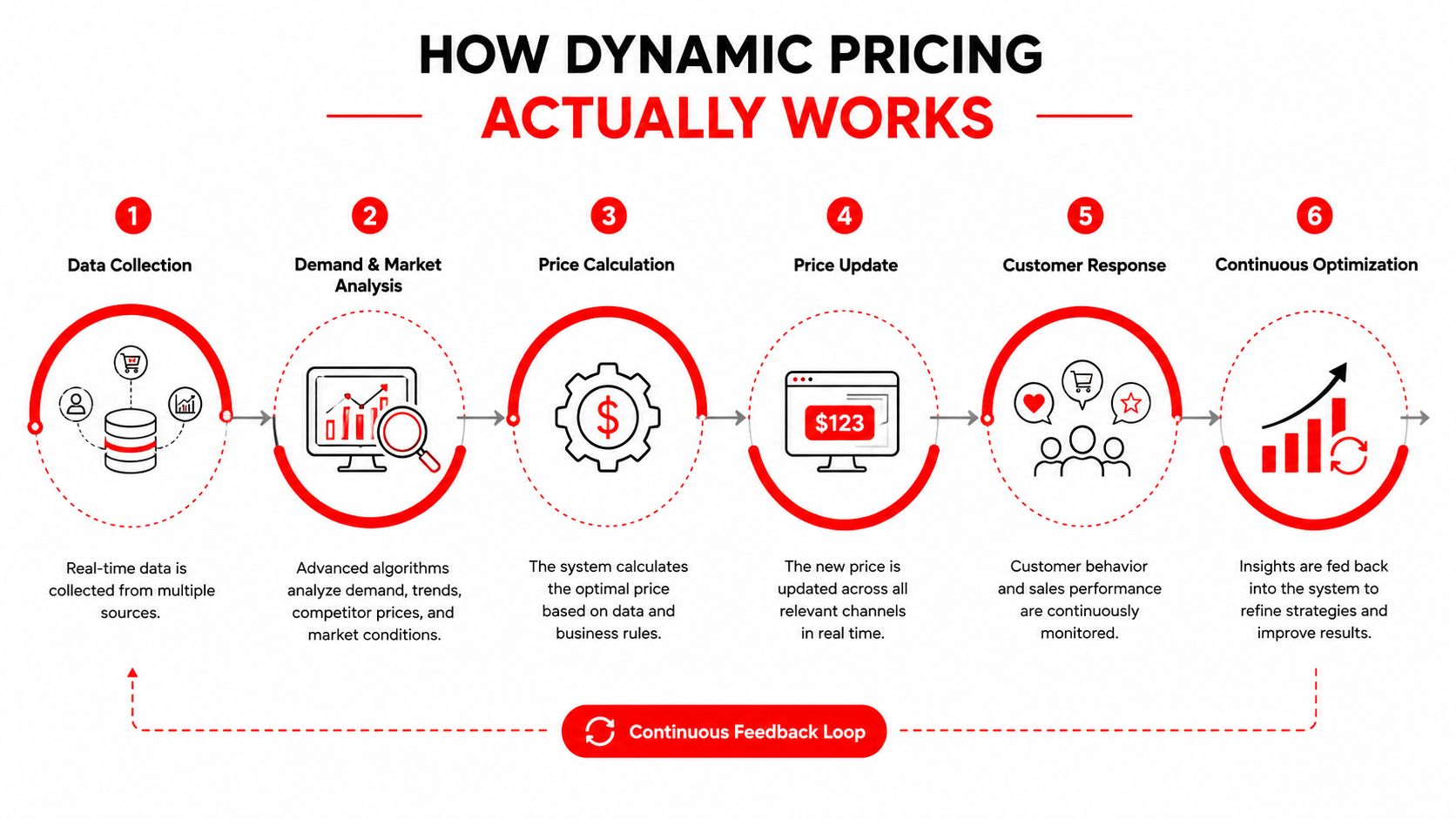
From signals to a shop decision
A dashboard can gather appointment demand, bay utilization, parts status, and competitor observations. The pricing system then applies a rule or recommendation, such as offering an off-peak appointment, adding a clearly disclosed priority fee, or keeping the posted rate when conditions do not justify a change.
Human review remains important. A model may identify high demand, while the service advisor determines whether the pressure reflects a real capacity problem, a data error, or an unusual event requiring extra care. That review connects airline-style pricing logic to the repair counter, where a transparent explanation and a genuine choice shape whether customers see the offer as practical scheduling or gouging.
Common Dynamic Pricing Models Worth Knowing
Shop owners don't need to memorize pricing theory to recognize the main models. Each model answers a different operational question, and the right choice depends on how quickly demand changes, how much control the shop has over scheduling, and how comfortable customers are with the explanation.
| Model | Mechanics | Best-Fit Shop Scenario | Complexity |
|---|---|---|---|
| Surge pricing | Raises an offer during a short demand spike or supply constraint | Same-day battery, tire, or cooling-system demand before severe weather | Medium |
| Segmented pricing | Uses different offers for defined customer groups or channels | Fleet contracts, maintenance plans, or online versus phone bookings | High |
| Time-based pricing | Changes the rate by appointment window or season | Lower-cost weekday slots and premium after-hours availability | Low |
| Competitor-driven pricing | Responds to comparable local offers | Common maintenance services in a crowded market | Medium |
| AI-optimized pricing | Learns from multiple signals and recommends frequent adjustments | Larger networks with clean data and centralized pricing control | High |
Surge pricing
Surge pricing is the most visible model. Algorithms raise prices when demand is high or supply is constrained, then lower them when conditions soften. The research on dynamic pricing mechanics identifies this pattern across ride-hailing, airlines, hotels, and electricity markets.
In a repair shop, surge pricing fits a short, measurable event. A freeze can increase battery demand, while a storm can create a rush for tire or wiper service. The shop should use a narrow rule, disclose the adjustment, and avoid treating an emergency as permission for unlimited increases.
Segmented pricing
Segmented pricing separates offers by a defined group or channel. A fleet account might have contractual labor terms, while a retail customer books through a public online schedule. The risk is that customers may see the model as personal discrimination if the shop can't explain the group distinction.
Time-based pricing
Time-based pricing is often the easiest starting point. The rate changes according to the appointment window, not the customer's profile. A shop can offer a quieter weekday slot at a lower rate or charge more for a limited after-hours appointment.
Competitor-driven pricing
Competitor-driven pricing uses market scans to position an offer against nearby shops. It can help an advisor avoid an outdated price, but constant matching can create a race to the bottom. Quality, warranty terms, and appointment speed still belong in the comparison.
AI-optimized pricing
AI-optimized pricing combines many signals and can make fine-grained recommendations. It has the greatest potential complexity because bad data can produce bad decisions at scale. A smaller shop usually benefits from transparent rules before adopting an automated model.
Real-World Examples from Travel, Retail, and the Repair Bay
A traveler booking an airline seat well before a holiday may see a different fare from someone searching close to departure. The airline has learned more about remaining inventory and demand, and the value of the final seats has changed. Airline revenue-management research frames the task as forecasting demand, estimating willingness to pay, and selecting a price while seats remain available, as described in this.
A rideshare fare can rise during a thunderstorm because more people request rides while fewer drivers want to be on the road. Electricity markets use a related structure, with higher rates during constrained peak periods and lower rates when demand is easier to serve. Retailers may reduce the price of aging inventory so shelf space and cash aren't tied up in products that aren't moving.
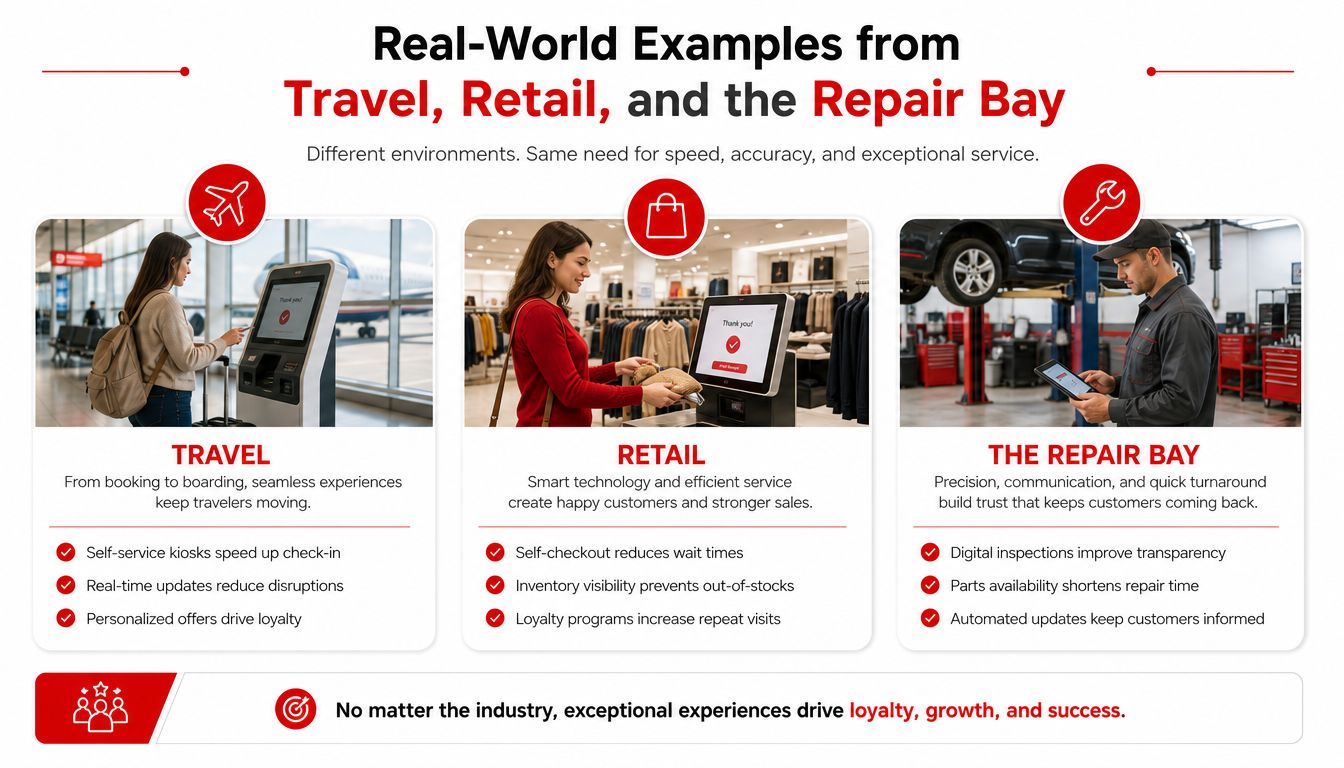
The same signals inside a shop
A regional fleet account books 22 vehicles during a two-week harvest. The demand signal is concentrated scheduling, not necessarily higher willingness to pay. A shop could respond with reserved capacity, a contract rate, and a different appointment calendar rather than applying a retail surge fee.
A winter freeze creates another pattern. Battery and coolant demand rises before the temperature drops, so the shop may reserve parts, extend appointment options, or offer a lower rate for customers willing to book outside the rush. The pricing decision supports capacity planning as much as revenue.
A transmission supply delay can lengthen the diagnostic backlog. In that case, a shop might separate diagnostic availability from repair completion, explain the parts constraint, and offer customers a choice between waiting, ordering the part, or using another provider. The response isn't just “charge more.” It is a change to the service offer based on scarce capacity.
Hospitality offers a useful comparison for advisors studying this approach. The resource shows why lodging businesses adjust rates around availability and demand. The repair bay has a different product, but the underlying question is familiar: what capacity remains, and what service option can the business offer?
The service advisor counter already contains these signals. The difference is whether the shop handles them through consistent rules or improvised discounts and surcharges.
Benefits and Risks Every Shop Owner Should Weigh
Dynamic pricing can improve a shop's operating choices, but the same flexibility can damage trust if the customer sees only a higher number. The trade-off isn't between “good pricing” and “bad pricing.” It is between a controlled system that matches real constraints and an opaque system that makes customers feel targeted.
| Dimension | Benefit | Risk |
|---|---|---|
| Revenue | Recovers margin on genuinely scarce appointment slots | A higher offer can feel like gouging during stressful events |
| Customer trust | Clear off-peak options can give customers more control | Frequent unexplained changes can make every quote feel unstable |
| Operational fit | Pricing can support smoother bay use and labor routing | Advisors may override rules inconsistently for regular customers |
| Competition | Market signals can keep common services positioned sensibly | Automatic matching can trigger a race to the bottom |
| Compliance | Documented rules create a reviewable process | Different prices for apparently identical customers can create legal exposure |
Where the upside appears
A shop with empty weekday capacity can use time-based offers to move work into quieter windows. That can smooth bay utilization without forcing every customer into a higher rate. A shop with a scarce diagnostic skill can reserve premium slots for urgent work while directing flexible customers toward standard appointments.
Dynamic pricing can also support labor routing. If a technician with a particular skill is available only during a narrow period, the shop can present that slot as a distinct service option. The customer receives a reason for the difference, and the manager can see whether the premium improves scheduling.
Where the exposure grows
The largest risk is perceived unfairness. A Gartner survey found that 68% of consumers felt taken advantage of when brands used dynamic pricing, as reported in the. The same source reports that fairness varies by context, with 40% finding dynamic pricing fair for movie theaters, compared with 33% for live concerts, where 49% found it unfair.
A model can also miss unusual conditions. A sudden safety issue, supply disruption, or community emergency may produce a mathematically logical price that feels morally wrong. Managers need an override process, a record of why it was used, and a rule against applying automatic increases to essential emergency repairs.
The best approach treats pricing as calibration. A shop can start with modest, visible adjustments, measure approval and repeat business, and stop any rule that creates confusion.
Implementing Dynamic Pricing in an Auto Repair Shop
A service manager can begin without building an in-house data science team. The first task is not changing prices. It is creating a reliable picture of the shop's constraints.
Build the input layer
The shop should capture:
- Bay utilization: Record how much appointment capacity is occupied by day and service type.
- Technician skill mix: Identify which jobs depend on scarce diagnostic, electrical, or transmission skills.
- Parts lead times: Track whether common parts are available, delayed, or subject to supplier changes.
- Seasonal demand history: Compare recurring patterns such as winter batteries, summer cooling work, and travel-related inspections.
- Competitor posting trends: Note comparable advertised rates, appointment availability, warranty terms, and service scope.
These inputs don't need to produce a perfect forecast. They need to show whether a proposed adjustment responds to a real operating condition.
Start with guardrails
Rule-based pricing is easier to audit than a black-box recommendation. A shop can set price floors tied to labor cost and ceilings capped at a small multiplier of the posted rate. The exact cap should reflect local law, service risk, and the shop's written policy. The guardrail infographic below emphasizes consumer protection, transparency, fairness, opt-out choices, and a customer-facing explanation.
A/B testing should change one variable at a time on matched weeks. For example, the manager might test an off-peak appointment offer while leaving the base labor rate unchanged. The team can then compare approval behavior and scheduling outcomes without claiming that every result came from pricing.
Give advisors a usable script
Quotes should show a range or a base price plus a clearly named adjustment. A wait-time premium should be connected to the requested appointment window, not hidden inside a vague miscellaneous fee. Advisors should have authority to override politely when a customer has a legitimate constraint, with the reason recorded for later review.
Weekly dashboard tiles can track effective labor rate, close ratio by price tier, repeat-customer rate, and average wait days. Each metric answers a practical question: did the shop protect margin, did customers approve the work, did trust hold, and did capacity improve?
Legal, Ethical, and Customer Communication Guardrails
A dynamic price still has to fit the ordinary rules of honest automotive service. A shop needs truthful estimates, written authorization before additional work, and no bait-and-switch between an advertised offer and the final quote. Labor rates usually have room for business judgment, but that freedom doesn't remove obligations around disclosure, local repair regulations, or truthful communication.
Regulation is moving toward greater transparency in several markets. The UK Competition and Markets Authority has reviewed dynamic pricing in connection with price-transparency rules, while New York's Algorithmic Pricing Disclosure Act requires disclosure when prices are set using personal data, according to this. Those examples don't replace local legal advice, but they show why shops should document what data affects a price.
Fairness depends on the explanation
Consumers react especially negatively when pricing feels personalized, opaque, or unpredictable. The YouGov material cited earlier describes dynamic pricing as less unfair when the demand trigger is visible than when the same price appears individualized, and it notes that transparency can reduce perceived unfairness.
A shop can turn that insight into three simple controls:
- Printed rate-change script: “This appointment carries a priority rate because same-day capacity is limited. The standard rate remains available in the next open window.”
- Estimate addendum: “Price adjustment reflects the selected appointment window and available shop capacity. No personal browsing, identity, or ability-to-pay data is used.”
- In-bay signage: Post the base rate, the factors that can change it, the customer's fixed-price option, and the process for questions or complaints.
Customer-facing standard: Customers shouldn't have to guess why a quote changed or whether another person received a different price for the same conditions.
The shop should also prohibit surge pricing for emergency safety work, review overrides, and keep a record of customer acceptance. A clear policy can support a response to a complaint, but local counsel should review the final wording before launch.
A Practical Takeaway and Where to Go Next
Dynamic pricing isn't just surge pricing for greedy companies. It is a discipline for matching a limited resource to changing conditions. In a repair shop, the scarce resource may be a bay, a technician's diagnostic skill, a same-day appointment, or a part that a supplier can't deliver quickly.
The strongest use cases don't depend on squeezing every customer for the highest possible ticket. They use scheduling choices, clear service tiers, and off-peak availability to help the shop serve more vehicles without making ordinary customers feel punished. A shop that understands its bay capacity, parts pipeline, and customer elasticity can make better offers while protecting the posted rate for customers who can wait.
Dynamic pricing also requires clean records. Appointment demand, technician availability, parts status, estimate approvals, and repeat visits should sit in one operational view, so the manager can test a rule and see its effects. A modern shop management platform can provide the place to explore those signals before a business commits to automation.
RedAppy brings estimates, digital inspections, scheduling, parts ordering, invoicing, payments, analytics, and a visual shop board into one workflow. Shops exploring more consistent capacity-based pricing can visit RedAppy to see how the platform connects front-counter decisions with day-to-day repair operations.
Ready to Transform Your Shop?
RedAppy helps auto repair shops create professional digital estimates with photos and videos, send them instantly via text or email, and get customer approvals in seconds. No credit card required to start.