
Best Auto Repair Shop Programs to Run a More Profitable Shop in 2025
Running a shop without the right auto repair shop programs is like diagnosing a car without a scan tool — you're guessing, and it costs you. Labor hours slip through the cracks, estimates take too long, and customers leave without approving work because the process feels slow or unclear. According to the Auto Care Association, the U.S. auto repair industry generates over $115 billion annually, yet many shops still rely on paper tickets and spreadsheets to manage it all.
The right software changes that fast. Modern shop management platforms handle everything from digital inspections and instant estimates to parts ordering, invoicing, and online payments — all in one place. Shops that make the switch typically recover hours of admin time every week and see measurable gains in approved repair orders and repeat business.
This article breaks down the best programs available in 2025, covering what each one does well, who it's built for, and where it falls short. Whether you run a single-bay garage or a multi-location operation, there's a tool here that fits how your shop works.
Table of Contents
- The Top Auto Repair Shop Programs at a Glance
- RedAppy — Best All-in-One Platform for Modern Repair Shops
- Mitchell 1 — Best for Repair Data and Technical Information
- Shop-Ware — Best for Paperless, Workflow-Focused Shops
- Tekmetric — Best for Multi-Location Analytics and Reporting
- Conclusion
- Frequently Asked Questions
The Top Auto Repair Shop Programs at a Glance
Pricing and features in the table below were verified as of 2025. Always confirm current pricing directly with each provider before purchasing.
| Program | Key Features | Pricing Tier | Best For | Standout Differentiator |
|---|---|---|---|---|
| RedAppy | Digital Shop Board, AI Repair Assistant, inspections, estimates, invoicing, parts ordering, analytics, branded website | Mid-range, month-to-month | Single-bay to multi-location shops wanting one platform | Built-in AI assistant + branded website included in every plan |
| ProDemand OEM data, labor guides, wiring diagrams, Manager SE shop management | Mid-to-high | Shops needing deep technical repair data | Industry-leading OEM repair information database | |
| Paperless workflow, photo-rich inspections, real-time customer communication | Mid-range | Shops eliminating paper and speeding up approvals | Fully cloud-based with a technician-first interface | |
| Reporting dashboards, KPI tracking, multi-shop management, parts + payment integrations | Mid-to-high | Data-driven owners running multiple locations | Advanced analytics and multi-location oversight in one dashboard | |
| Two-way texting, digital inspections, online booking, automated follow-ups | Mid-range | Shops focused on customer retention and reviews | Strong customer-facing communication tools built in |
Shops that switch from paper-based workflows to a dedicated management program typically save 8–12 admin hours per week — time that goes directly back into billable work and customer service.
A few things to keep in mind when reading this comparison:
- Pricing varies based on shop size, number of users, and add-ons. Request a direct quote for the most accurate number.
- "Best for" reflects the primary use case — most platforms overlap in features to some degree.
- Integrations matter as much as features. Check that each platform connects with your current parts suppliers, payment processor, and accounting software.
- Shops with specific workflow pain points may find one platform pulls ahead quickly based on their top priority — whether that's faster estimates, better inspections, or stronger reporting.
If you only need a quick answer: RedAppy covers the most ground in a single subscription, making it the strongest starting point for most independent shops. The sections below break down each platform in detail so you can match the right tool to your shop's actual needs.
RedAppy — Best All-in-One Platform for Modern Repair Shops
RedAppy is built for shops that want one platform to handle everything — from the first customer call to the final payment. It replaces the patchwork of separate tools many shops rely on and puts all the key workflows in one place.
What RedAppy Does
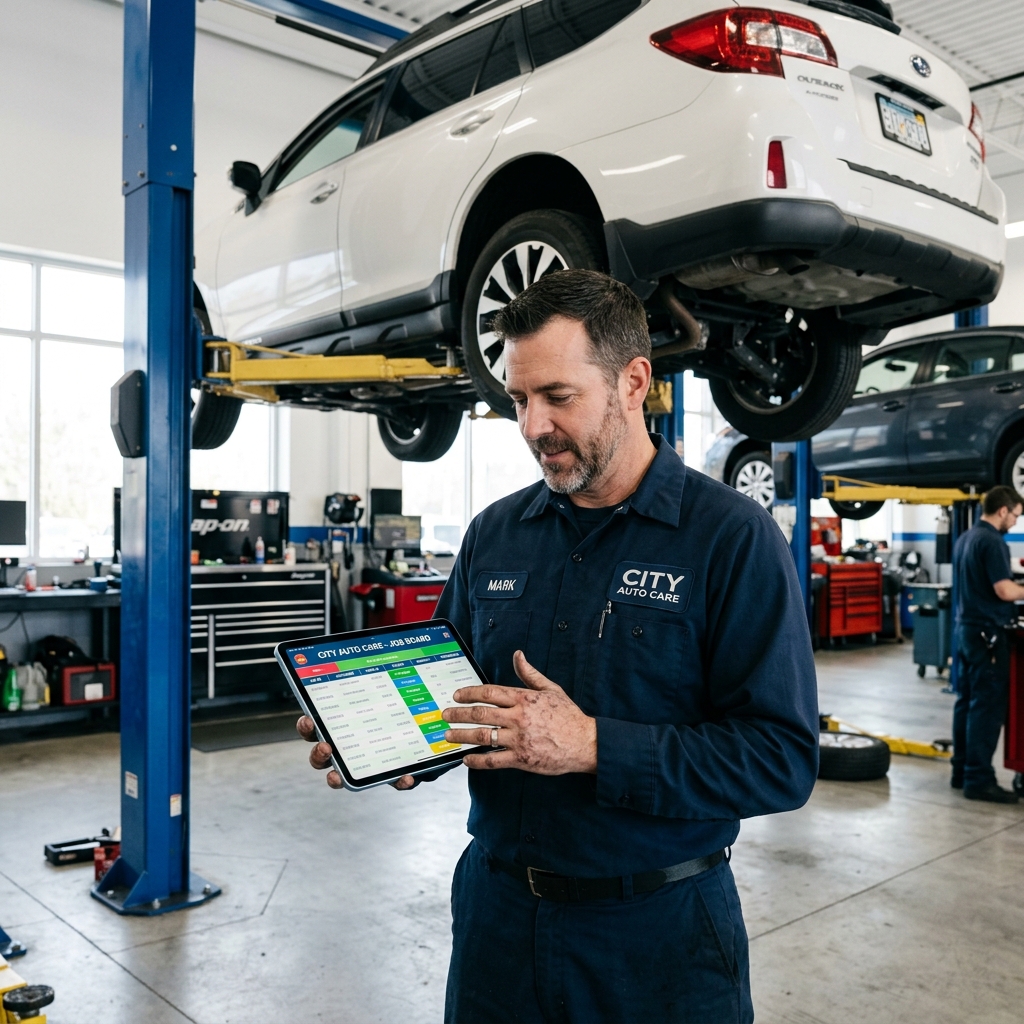
The Digital Shop Board is the center of the operation. It uses a Kanban-style layout — think sticky notes on a board, but digital — to show every job's status at a glance. Anyone on the team can see what's waiting, what's in progress, and what's ready for pickup without asking around.
From there, the workflow flows naturally:
- Digital inspections with photos and notes, so customers can see exactly what needs fixing
- Instant estimates generated from the inspection, reducing back-and-forth
- One-click invoicing that turns an approved estimate into a ready-to-send invoice
- Online payments so customers can pay from their phone
Parts ordering runs through multiple suppliers with real-time inventory, which means techs aren't calling around to check stock. Everything happens inside the same platform.
The AI Repair Assistant
The built-in AI Repair Assistant gives technicians labor times, diagnostic guidance, and shop insights on demand. In practice, this reduces time spent looking up repair data and helps less experienced techs work more confidently. It's not a replacement for a skilled technician, but it speeds up the research side of the job significantly.
Shops that reduce lookup time and admin work free up hours that go directly into billable labor.
Analytics and Customer Tools
RedAppy tracks revenue, technician efficiency, average repair order value, and repeat business in real time. Owners can see which techs are moving jobs fastest, which service categories drive the most revenue, and where jobs are stalling.
Customer lookup works by name, plate, or VIN, and full vehicle history is stored automatically. A team calendar centralizes scheduling so nothing falls through the cracks.
Built-In Website
Every RedAppy subscription includes a professional, branded website with contact forms. Shops can also list used vehicles directly on their site — a useful feature for operations that sell cars alongside repair services. Most shop management platforms don't include this, so it's a real differentiator for shops that want an online presence without paying for a separate web service.
Reported Results and Pricing
RedAppy reports typical outcomes including:
- 10+ admin hours saved per week
- More approved work through photo-rich digital inspections
- Strong first-year ROI based on time savings and increased approvals
Pricing is transparent with month-to-month terms — no long-term contracts required. The platform scales from single-bay garages to multi-location operations without a change in platform.
Who RedAppy Is For
| Shop Type | Fit |
|---|---|
| Single-bay independent shop | ✅ Strong fit |
| Growing multi-tech shop | ✅ Strong fit |
| Multi-location operation | ✅ Strong fit |
| Shop needing deep OEM technical data only | ⚠️ Pair with a data tool |
RedAppy suits shops that want to stop managing five different tools and start running one connected system. It's especially well matched for owners who want visibility into shop performance without hiring a dedicated analyst. If your biggest pain points are admin time, missed upsells, and disorganized job tracking, this platform addresses all three directly.
Mitchell 1 — Best for Repair Data and Technical Information
has been a trusted name in the auto repair industry for decades. It's best known for two core products: ProDemand for technical repair data and Manager SE for shop management. Shops that need deep, accurate OEM (original equipment manufacturer) information use Mitchell 1 as their go-to reference.
ProDemand — Technical Data for Diagnostics
ProDemand gives technicians access to OEM repair procedures, wiring diagrams, labor times, technical service bulletins (TSBs), and diagnostic trouble code (DTC) lookup. According to Mitchell 1, ProDemand covers over 3.5 billion data points across domestic and import vehicles.
In practice, this matters most when a technician hits a complex diagnostic problem — the kind where guessing wastes hours. Having accurate wiring diagrams and factory repair steps on screen speeds up the diagnosis and reduces comebacks.
Shops doing a high volume of diagnostic work — especially European imports or late-model vehicles with complex electronics — get the most value from ProDemand's depth of data.
Best use cases for ProDemand:
- Diagnosing intermittent electrical faults with wiring diagrams
- Looking up accurate labor times for estimates
- Accessing TSBs before starting a repair to catch known issues early
- Training newer technicians on proper repair procedures
Manager SE — Shop Management on the Operations Side
Manager SE handles the business side: estimates, invoices, work orders, parts ordering, and customer history. It integrates with ProDemand so technicians can pull labor times directly into estimates without switching between systems.
The platform has been around long enough that many shop owners and service writers already know it. That familiarity reduces the learning curve for shops switching from pen-and-paper or older systems.
What Manager SE covers:
- Work order creation and job tracking
- Parts ordering through integrated supplier catalogs
- Customer vehicle history
- Basic reporting on sales and labor
Pricing and Limitations
Mitchell 1 uses a subscription model, and pricing is quote-based — you contact their sales team for exact costs. Based on industry reports, ProDemand typically runs $150–$200+ per month, and Manager SE adds additional cost on top of that. Bundling both products increases the total spend.
| Product | Primary Use | Typical User |
|---|---|---|
| ProDemand | Repair data, diagnostics, wiring | Technicians |
| Manager SE | Estimates, invoices, job tracking | Service writers, owners |
| Combined | Full shop reference + management | Full-service shops |
The biggest honest limitation: Mitchell 1 is a strong technical platform, but it isn't built around the modern customer experience. Features like digital vehicle inspections with photos, two-way texting, or online payment portals are not its core strengths. Shops that want those tools will likely need to integrate third-party software or look at a more all-in-one option.
The learning curve for Manager SE is also steeper than newer cloud-native platforms. Some shops report that the interface feels dated compared to more modern alternatives.
Mitchell 1 is the right fit if:
- Your shop handles complex diagnostics regularly and needs reliable OEM data
- Technicians want one reference source for labor times, TSBs, and wiring
- You're already familiar with the platform and don't want to retrain staff
- Deep technical accuracy matters more to you than a polished customer-facing experience
Shop-Ware — Best for Paperless, Workflow-Focused Shops
is a cloud-based shop management system built around one core idea: eliminate paper entirely and keep every job moving. It's designed for shops that are tired of clipboards, printed repair orders, and chasing down approvals by phone.
What Shop-Ware Does Well
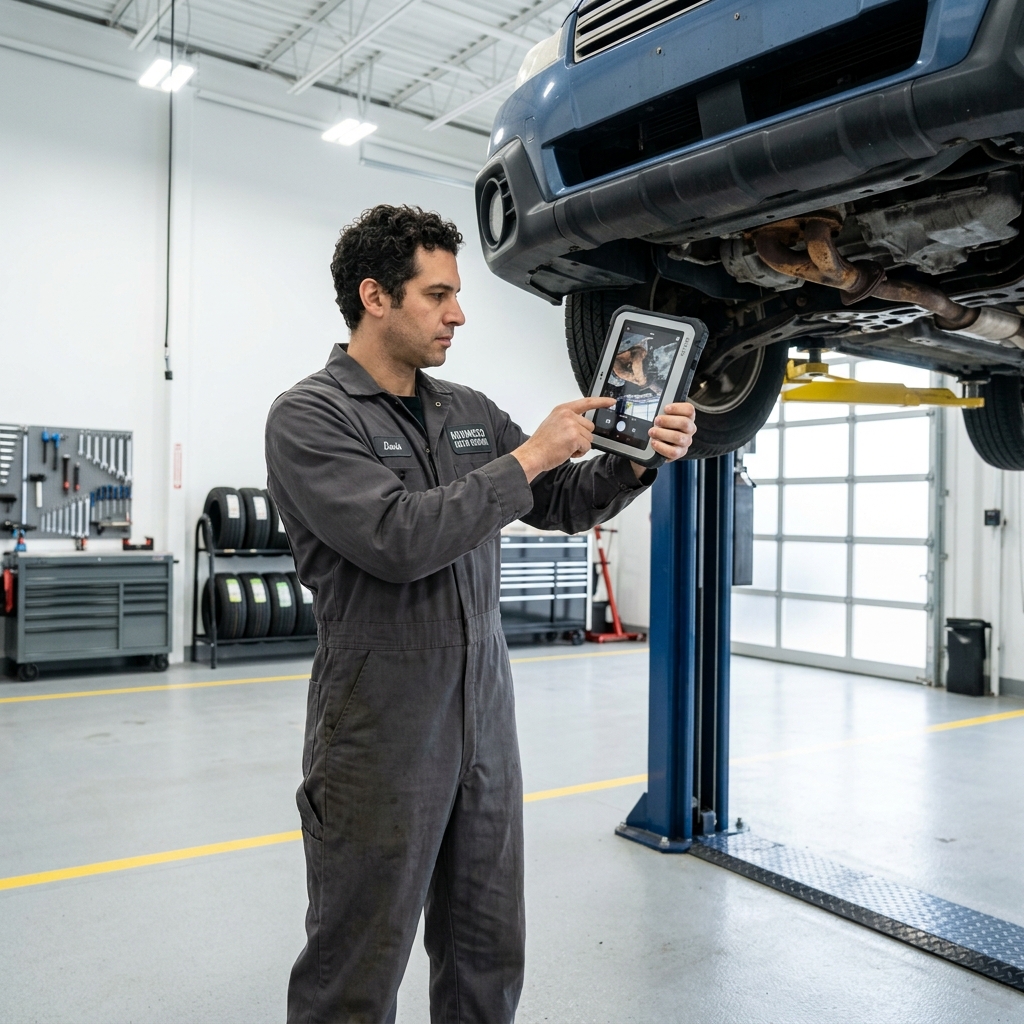
The platform centers on a technician-first workflow. Techs document findings directly from a tablet or phone, attaching photos and videos to each inspection item. Those visuals go straight to the customer in real time, which makes approval faster and reduces back-and-forth calls.
Shops that send photo-based inspections consistently see higher approval rates — customers are more likely to authorize work when they can see the problem themselves.
Key features include:
- Digital vehicle inspections (DVI) with photo and video capture at every step
- Real-time customer communication via text and email for estimate approvals
- Technician time tracking built into the workflow, not bolted on as an afterthought
- Cloud-based access from any device, no local server required
- Canned jobs and labor guide integration to speed up estimate building
In practice, the paperless model also creates a cleaner audit trail. Every approval, note, and status update is time-stamped and stored automatically.
Who Shop-Ware Is For
Shop-Ware suits independent shops and small groups that are actively modernizing their operations. According to Shop-Ware's own reported data, shops using their DVI tools see measurable increases in average repair order value — largely because photos surface deferred work that customers would otherwise never know about.
It's a strong fit for:
- Shops moving away from paper repair orders for the first time
- Owner-operators who want a clean, fast technician interface
- Service advisors who need instant customer responses without playing phone tag
Honest Limitations
Shop-Ware is focused on workflow and inspections — that's its strength, but it also means some adjacent features are thinner than competitors. Built-in marketing tools, automated follow-up campaigns, and customer retention features are more limited compared to platforms like AutoLeap or a full-stack solution like RedAppy. Shops that need robust email marketing or a branded website included out of the box will likely need to add third-party tools.
Pricing is also on the higher end of the mid-market range, which can feel steep for a single-bay shop still building volume.
If eliminating paper and speeding up customer approvals is your top priority, Shop-Ware is one of the most purpose-built tools available. If you need marketing, analytics, and operations in one package, compare it against broader platforms before committing.
Tekmetric — Best for Multi-Location Analytics and Reporting
is a cloud-based shop management platform built with data-driven shop owners in mind. It launched in 2015 and has grown steadily among independent shops and small multi-location groups that want more visibility into how their business is actually performing.
What Tekmetric Does Best
Tekmetric's reporting tools are its standout feature. The platform tracks key performance indicators (KPIs) — things like average repair order value, technician efficiency, parts margin, and car count — all from a single dashboard. For a shop owner managing two or three locations, being able to compare performance across sites in real time is genuinely useful.
Shops that can see their numbers clearly tend to make faster, better decisions — Tekmetric is built around making those numbers visible.
The platform also covers the core workflow needs:
- Digital vehicle inspections with photo and video attachments
- Two-way texting for customer approvals and updates
- Parts ordering integrated with major suppliers
- Online payment processing
- Repair order management from estimate to invoice
Tekmetric integrates with several third-party tools including Carfax, Kukui, and parts suppliers like PartsTech. According to, shops using the platform see an average increase in revenue per repair order after adopting its digital inspection workflow.
Who Tekmetric Is For
Tekmetric fits best with shops that are already running reasonably well but want clearer data to grow further. In practice, it's most popular with:
- Multi-location owners who need consolidated reporting across shops
- Growth-focused single-shop owners who track KPIs seriously
- Shops already comfortable with cloud software and digital workflows
Honest Limitations
For a solo technician running a small single-bay shop, Tekmetric can feel like more platform than needed. The depth of its reporting tools is an asset for data-focused owners, but it adds complexity for shops that just want a simple job board and invoicing. The pricing is also on the higher end of the market, which makes the ROI calculation more important to think through before committing.
| Feature | Available in Tekmetric |
|---|---|
| Multi-location dashboard | ✅ Yes |
| Digital inspections | ✅ Yes |
| Built-in branded website | ❌ No |
| AI repair assistant | ❌ No |
| Parts ordering | ✅ Yes (via integrations) |
| Customer two-way texting | ✅ Yes |
| Month-to-month pricing | Varies by plan |
If reporting and multi-shop visibility are your top priorities, Tekmetric is one of the stronger options available. If you also need a built-in website, AI diagnostic support, or more flexible pricing, it's worth comparing it against all-in-one platforms that bundle those features together.
Conclusion
Picking the right auto repair shop program comes down to three things: your shop size, your biggest operational pain points, and how much you want to manage across different tools.
If your main need is deep technical data and OEM repair information, Mitchell 1 is hard to beat. If eliminating paper and speeding up inspection approvals is the priority, Shop-Ware delivers a clean, focused workflow. Shops running multiple locations with a heavy focus on KPIs and reporting will find Tekmetric's dashboards genuinely useful. And if customer communication and retention are where you're losing ground, AutoLeap's two-way texting and automated follow-ups fill that gap well.
Most shops don't need the most powerful platform — they need the right one for where they are today and where they want to be in 12 months.
For shops that want a single platform covering operations, customer experience, analytics, and growth — without stitching together multiple tools — RedAppy is the strongest all-in-one option in 2025. It handles digital inspections, estimates, invoicing, payments, parts ordering, and customer-facing marketing from one dashboard. The built-in AI Repair Assistant, Kanban-style Digital Shop Board, and branded website mean you're not paying for three separate tools to do what one can.
Shops reporting 10+ admin hours saved per week aren't achieving that through one feature — it's the combination of automated workflows across the entire job lifecycle that adds up.
From experience, the shops that see the fastest ROI are those that commit to using the platform end-to-end rather than falling back on spreadsheets and paper for parts of the process.
- Single-bay or growing shops: RedAppy's month-to-month pricing and scalable feature set make it a low-risk starting point
- Technical-first shops: Pair Mitchell 1's ProDemand data with a management layer if deep OEM data is non-negotiable
- Paper-elimination focus: Shop-Ware suits shops mid-transition away from manual processes
- Multi-location operators: Tekmetric's reporting gives managers cross-location visibility without digging through individual records
- Retention-focused shops: AutoLeap's customer communication tools are purpose-built for review generation and repeat business
If you're ready to see what an all-in-one platform looks like in practice, explore RedAppy and request a demo to walk through how it fits your shop's workflow.
Frequently Asked Questions
What is the best software for an auto repair shop?
Mitchell 1 Manager SE, Shop-Ware, and Tekmetric are widely considered the best software for auto repair shops, offering features like digital vehicle inspections, invoicing, inventory management, and customer communication tools. Mitchell 1 is particularly popular for its integration with repair data, while Tekmetric is favored by growing shops for its cloud-based platform and real-time reporting.
What is the 30 60 90 rule for cars?
The 30-60-90 rule refers to recommended vehicle maintenance intervals at 30,000, 60,000, and 90,000 miles, covering services like fluid flushes, filter replacements, spark plugs, and belt inspections. Following this schedule helps prevent major mechanical failures and extends vehicle lifespan, with specific services varying by manufacturer.
How profitable is owning an auto repair shop?
Auto repair shop owners typically earn a net profit margin of 20–28%, with successful shops generating $500,000–$1 million or more in annual revenue depending on size and location. However, profitability depends heavily on labor rate efficiency, parts markup (typically 25–51%), technician productivity, and effective shop management software to reduce administrative overhead.
What's better than Alldata?
Mitchell 1 ProDemand and Identifix are frequently cited as strong alternatives to Alldata, offering comparable OEM repair data with faster search interfaces and better diagnostic trouble code (DTC) lookup features. Identifix is especially valued for its Real Fixes database, which provides confirmed repair solutions from verified technician experiences rather than just factory data.
Ready to Transform Your Shop?
RedAppy helps auto repair shops create professional digital estimates with photos and videos, send them instantly via text or email, and get customer approvals in seconds. No credit card required to start.