
Auto Repair Tool Kit: Build the Right Setup for Your Shop
A shop can look busy and still bleed money every day. A tech opens the wrong drawer, hunts for a socket that should be obvious, borrows a torque wrench from another bay, and a simple repair turns into an avoidable delay. That is usually not a talent problem. It's a tool kit problem, and more often than not, it's a workflow problem hiding inside a tool kit.
For shop owners, the smartest way to think about an auto repair tool kit is not as a single purchase. It's a staged investment matched to the jobs the shop sells, the vehicles it sees, and the way approvals move from estimate to bay to invoice. The global auto repair tools market was valued at USD 22.2 billion in 2023 and is projected to reach USD 35.4 billion by 2033, with a 4.78% CAGR over 2023 to 2033, and Asia Pacific is expected to grow the fastest during that period. That scale matters because tool demand is being driven by real repair complexity, not hobby buying.
Table of Contents
- Why Your Tool Kit Is Really a Workflow Decision
- What Belongs in an Auto Repair Tool Kit
- Essential Hand Tools and Why Specs Matter
- Choosing a Kit by Shop Size and Service Mix
- Budget Tiers and a Smart Buying Plan
- Connecting Tools to Shop Workflow and Profit
- Storage, Calibration, and Maintenance Habits
- Why a Smaller, Smarter Kit Often Beats a Bigger One
Why Your Tool Kit Is Really a Workflow Decision
A tech is half under the hood, half inside a drawer, and that drawer decides more than most owners want to admit. If the right socket isn't there, the job gets interrupted. If the torque wrench is buried, the final step gets delayed. If the storage system is a mess, the bay loses time every time someone reaches for a part of the process that should already be ready.
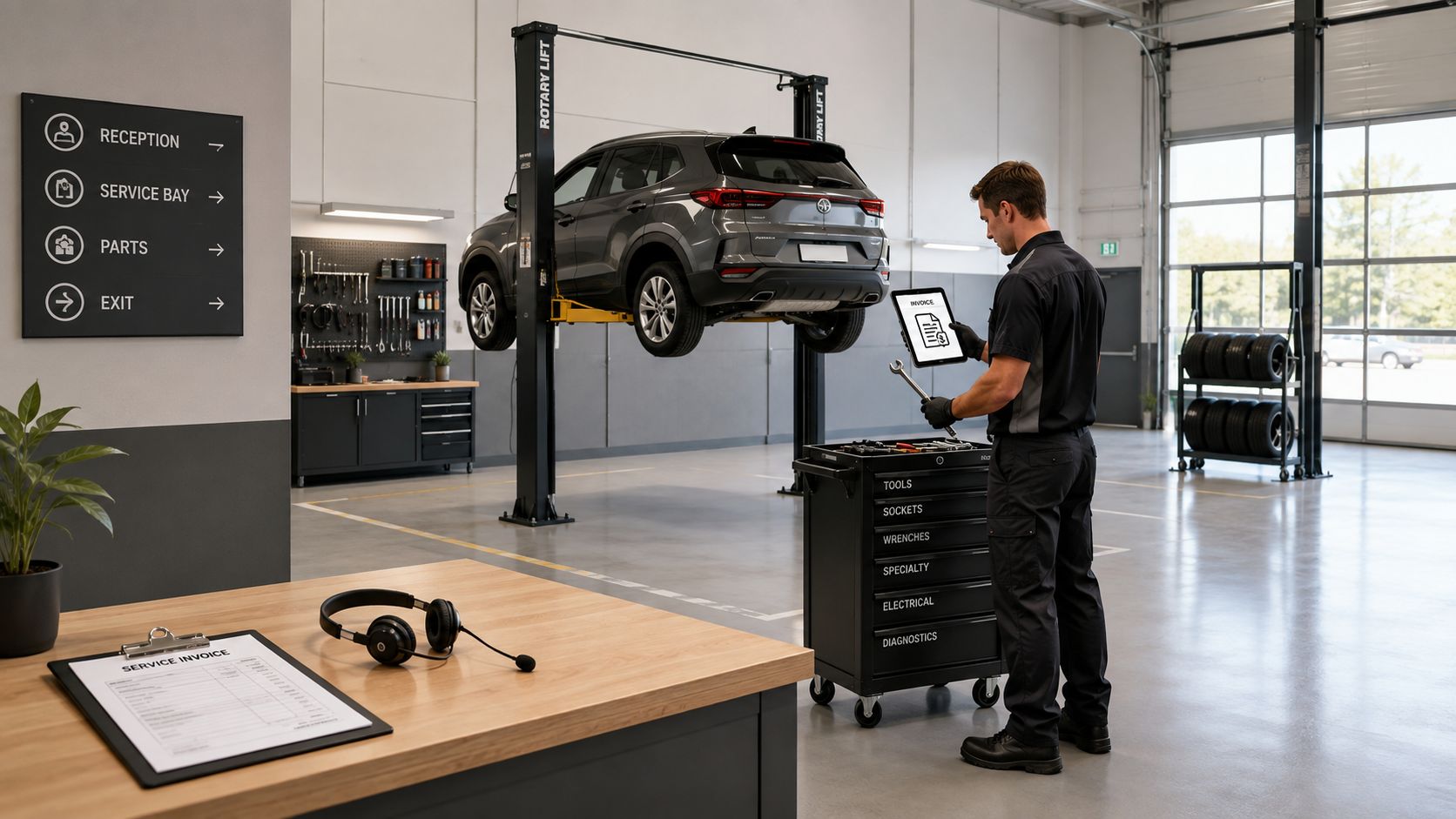
The real cost shows up in motion, not in the invoice
A good shop doesn't just own tools, it arranges them so work keeps moving. That's why the history of the auto repair tool kit matters. Mechanic tools evolved from early hand tools made of stone, wood, and bone, then bronze in the Bronze Age, then stronger steel during the Industrial Revolution, and later standardized sets and powered tools in the automotive era. The point isn't trivia. It's that the kit became a capital asset because the job became more complex.
A kit only pays for itself when the bay can finish work without hunting, borrowing, or improvising.
That's the lens shop owners need. The right set is the one that matches the services sold, the technicians on the floor, and the way the front counter pushes work into production. A lean brake bay, a drivability bay, and a full-service shop do not need the same layout, and treating them like they do creates dead time.
The 1995 survey quoted in the history source makes the ownership side plain. Most technicians spent $2,000 to $11,000 on tools, and annual replacement costs were estimated at 6% to 11% of a basic tool investment. That's not a one-and-done purchase. It's an ongoing operating decision tied to uptime, quality, and speed.
What Belongs in an Auto Repair Tool Kit
An auto repair tool kit is not just a socket set in a foam tray. It's the mix of tools that lets a shop handle routine service, deeper diagnosis, and the one-off repairs that show up when a vehicle won't cooperate. A weak kit forces workarounds. A solid one removes friction.
Build the core before chasing specialty gear
The core belongs in every shop because it covers the jobs that happen all day. That means socket and ratchet sets in multiple drive sizes, combination wrenches in metric and SAE, screwdrivers, pliers, hammers, and a torque wrench. For training and entry-level shop use, automotive programs commonly call for 3/8-inch and 1/2-inch drive socket sets, combination wrench ranges from about 5 mm to 22 mm, plus spark-plug sockets, pry bars, feeler gauges, and inspection mirrors to cover underhood work and chassis work.
That base should be thought of like a kitchen. A few good pans handle most meals, but one specialty pan opens up a dish the others can't do well. The same is true in a bay. A socket set and wrench set carry the load, while specialty tools handle the odd jobs that would otherwise waste time or damage parts.
Specialty gear belongs in the second layer. That includes diagnostic scanners, bore scopes, pullers, and specialty sockets for plugs, brakes, and suspension. A useful example of tool-adjacent shop discipline is cleaning. Shops that want cleaner, more consistent parts handling often look at resources like , because a well-run bay cares about what comes off the vehicle and how it's prepared for reassembly.
The clean split is simple. Buy the tools that solve daily jobs first, then add the specialty pieces that match the repair mix. Anything else is inventory without a purpose.
Essential Hand Tools and Why Specs Matter
A shop can spend money on the right lifts, scanners, and software, then lose time every day because the hand tools are sloppy. That usually shows up as rounded fasteners, rework, and techs wasting motion in the bay. Buy by price alone, and you end up paying again when the cheap tools wear out early or fit poorly on stubborn hardware.
Drive sizes, socket depth, and fastener access
A proper kit covers 1/4-inch, 3/8-inch, and 1/2-inch drives because each one serves a different job. Light trim work calls for one feel, chassis work calls for another, and heavier fasteners need the larger drive. A mixed-drive kit keeps a tech from forcing the wrong tool into a job that asks for more control or more torque.
Deep and shallow sockets matter for the same reason. Deep sockets reach recessed fasteners, while shallow sockets work better where clearance is tight. If a kit only has one depth, the tech starts improvising, and that is when corners get rounded and time gets burned.
Practical rule: if a fastener takes effort to reach, the right socket depth is not optional.
Ratchet quality and steel choice
Ratchet tooth count is not marketing fluff. A 72-tooth ratchet gives a 5-degree swing arc, which helps in cramped engine bays where handle travel is limited. That shorter swing arc matters because a tech can advance a fastener with less repositioning and less wasted motion.
Material matters too. Kits that use Cr-V, or chrome-vanadium, steel sockets are built for durability and corrosion resistance, which helps preserve fit under repeated loading. Better fit means less slip, less wear, and less wasted effort.
Metric and SAE coverage still belongs in the same box. Vehicles use both systems, and a socket set that covers both handles more fasteners than any other single tool category. For a shop building out a kit from scratch, that mixed set should sit near the top of the buying list, then the rest of the purchase plan should follow the service mix and the jobs the bay approves in workflow software. Software does not replace tools. It makes the tools matter more by turning equipped bays into approved work.
Choosing a Kit by Shop Size and Service Mix
A one-bay garage that handles brakes, batteries, and oil changes does not need the same kit as a shop that takes on drivability, electrical diagnosis, and broader mechanical repairs. Buy for the work order, not for the shelf. The service mix should drive the purchase list, and the shop's workflow software should confirm which bay is equipped to take on each job.
Starter bay, growing bay, full-service bay
A starter bay should stay lean and practical. Spend on the tools that leave the drawer every day, the storage that keeps them in sight, and the safety gear that keeps the tech moving without bad habits. A growing bay needs more diagnostic depth and more specialty coverage because job variety starts to expand fast. A full-service bay needs width, organization, calibration habits, and enough duplicates to keep multiple techs from fighting over the same tools.
For many shops, the first purchase is still a quality socket set with both metric and standard sizes. One says that single investment reaches more fasteners than any other tool type, then places a basic wrench set, solid screwdrivers, and safety equipment right behind it. That order makes sense because it covers the jobs that show up first.
A smart kit also follows the service mix. Brakes and routine maintenance call for a different emphasis than electrical work or deeper mechanical repair, so the bay should be built around the repeat work it is meant to approve in workflow software. If the software says a bay is ready, the tools should already be there. If they are not, the job waits, the schedule slips, and the tech starts borrowing.
Safety gear belongs in every tier
Safety gear is part of the kit at every level. Automotive guidance calls for eye protection, mechanics gloves, disposable gloves for fluid handling, hearing protection, respirators or safety masks, and steel-toe work boots or work shoes (automotive safety guide).
A shop that budgets for tools but skips PPE is buying speed and renting accidents.
That is the divide between a weak kit and a useful one. A smaller bay should buy fewer things, but the right fewer things. A larger bay should add tools that match the service mix, keep the floor safe, and make every approved job easier to finish without delay.
Budget Tiers and a Smart Buying Plan
Most owners overspend in the wrong place. They buy too much specialty gear before they've covered the basics, or they buy a bargain set that looks full but fails when the fastener gets stubborn. The fix is simple. Buy in stages and tie each stage to a real use case.
Buy in layers, not all at once
The first layer should be the starter tier. That means the socket and ratchet set, combination wrenches, screwdrivers, pliers, a torque wrench, and core PPE. That set touches the broadest share of jobs and gives the bay usable capacity fast.
The second layer is the professional tier. Diagnostic support starts to matter here, especially for newer vehicles with more electrical and computer-related issues. A code reader, multimeter, and other electronic tools belong here because they solve problems the hand tools can't even see. The old habit of building the biggest box on the shelf is weak strategy if the shop is losing time on diagnosis.
The third layer is the shop-ready tier. That's where specialty sockets, pullers, borescopes, and task-specific tools enter the picture, along with better organization and duplicates for common-use items. It's also where a shop starts to think about separate tool sets for different bays or service lanes.
| Tier | Best purchase focus | Upgrade trigger |
|---|---|---|
| Starter | Core hand tools and PPE | The bay can complete common jobs without borrowing |
| Professional | Diagnostics and electrical tools | More repairs stall at the diagnosis stage |
| Shop-ready | Specialty and duplicate tools | Multiple techs need the same tool at once |
The smartest move is to let job mix drive the next dollar. If the shop sees a lot of warning-light complaints, diagnostics move up. If it handles suspension, specialty pullers and alignment-related tools move up. If it mostly does routine service, the money stays with the basics longer.
Connecting Tools to Shop Workflow and Profit
A tool kit earns its keep only when it helps a tech inspect the car, write the estimate, and push the job toward approval. If the bays are equipped but the workflow is weak, the shop just collects expensive inventory.
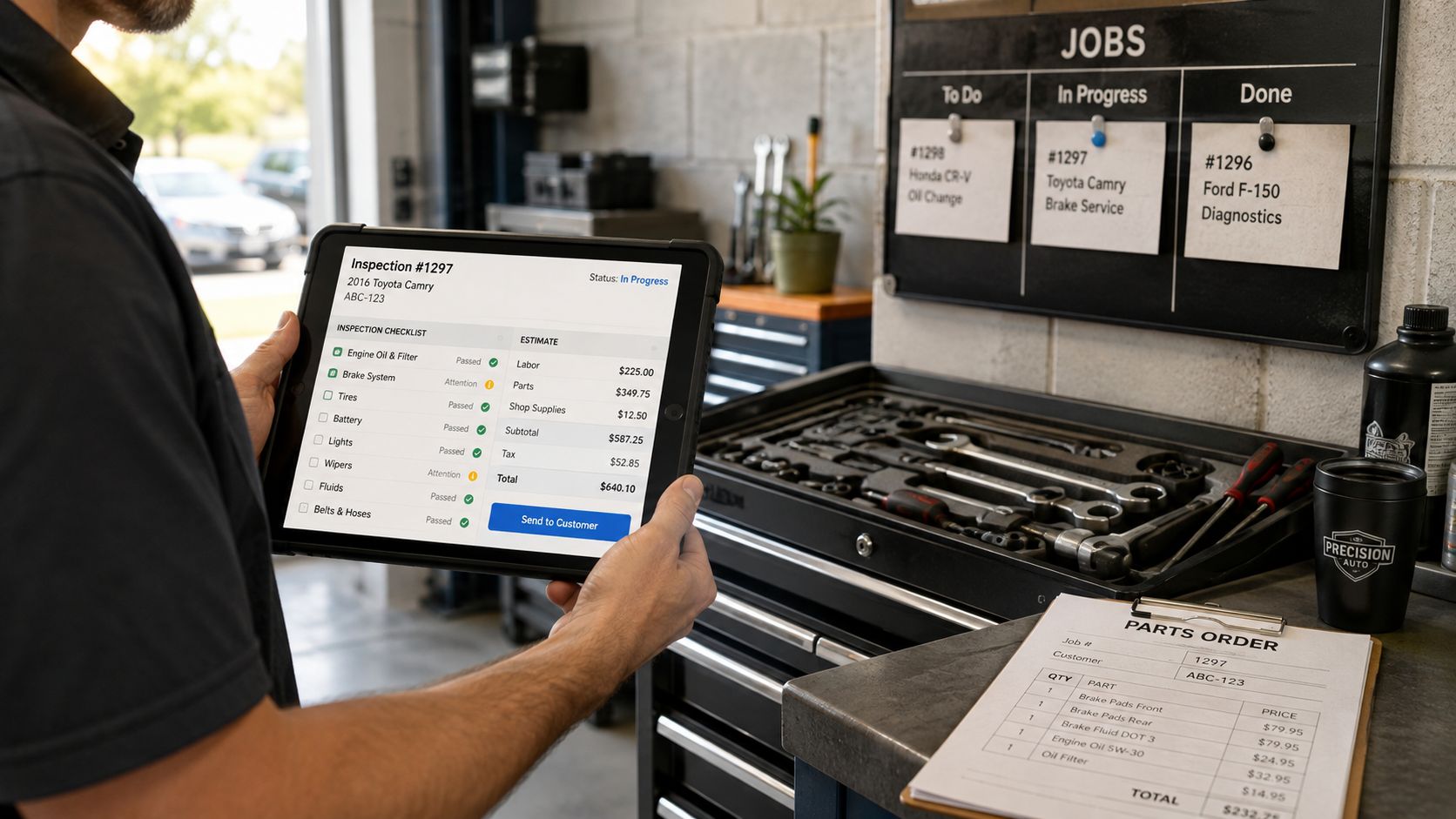
The bay has to feed the counter
A solid technician with the right tools can inspect with confidence. A sharp service advisor with a clean process can turn that inspection into an estimate the customer understands. Put those together, and the shop quits guessing. Digital inspections, parts ordering across multiple suppliers, and a visual job board turn tools into approved work, invoiced work, and fewer mistakes between the bay and the front counter.
RedAppy fits into that setup because it keeps the work moving in the right order. Software does not replace the physical kit. It makes the kit pay off by turning bay activity into approved jobs, invoiced work, and fewer handoff errors. A shop that can see the status of each job clearly moves faster than one that depends on memory, paper, and hallway conversations.
Approvals matter just as much. A vehicle in the bay with the right tools is still unfinished if the estimate is weak or the parts ordering stalls. A shop management system that tracks vehicle history, customer communication, and workflow across the front counter and the shop floor gives that inspection a place to turn into revenue.
A tool kit should sit inside the shop process, not outside it. The shops that make money treat tools, inspections, approvals, and invoicing as one chain. They do not just buy better equipment, they connect it to a system that gets work approved while the vehicle is still on the lift.
Storage, Calibration, and Maintenance Habits
A good kit decays fast when no one owns the routine behind it. Tools drift into the wrong drawers, torque wrenches lose trust, and sockets disappear one by one until a tech is wasting time every hour. Maintenance habits protect the purchase.
Make storage do the remembering
Shadow boards, foam cutouts, and tool chests that match the bay layout cut search time and make missing tools obvious. That matters because a visible gap is easier to fix than a missing-item mystery after the bay closes. Labeling specialty tools and loaner sets does the same thing, especially in shops where several people touch the same gear.
Torque wrenches should be calibrated on schedule and stored at their resting value so the internal spring isn't left under load. A wrench that no longer holds calibration is a liability, not a precision tool. If the tool no longer grips cleanly, retire the socket instead of forcing one more job out of it.
A clean tool drawer is a workflow habit, not a housekeeping bonus.
Make the end of shift count
End-of-shift audits should be a strict requirement. The tech checks the bay, returns borrowed tools, and makes sure specialty items aren't left under a hood or under a vehicle. That one habit stops a lot of shop drama before it starts.
Weekly wiping and inspection catch wear before a tool ruins a job. Color-coding drawers helps faster identification, and it also helps new hires learn where things live. None of that is glamorous, but it's how a shop keeps its money from leaking through the floor one missing wrench at a time.
Why a Smaller, Smarter Kit Often Beats a Bigger One
The biggest kit is usually the loudest sale, not the best investment. Shops chasing size often buy tools they won't use often enough, while the core bottleneck stays where it always was: diagnosis. That's why a smaller, smarter kit often outperforms a sprawling traditional one.
Diagnosis now drives more of the job than disassembly
Modern repair work spends a lot of time figuring out what's wrong. A multimeter, code reader or OBD-II scanner, power probe, bore scope, and service-manual access can do more for a newer-vehicle workflow than another full rack of generic extensions. The pain point is often not turning the bolt, it's proving which bolt even matters.
That's why content that only pushes sockets and screwdrivers misses the point. A traditional list tells a shopper how to disassemble. It doesn't tell them how to find an intermittent electrical fault, a sensor issue, or a warning light that keeps returning after the test drive.
A smart kit is narrower in some places and stronger in others. It prioritizes tools that support diagnosis first, then adds specialty items as the shop's service mix justifies them. For mobile work, that matters even more, because every pound of dead weight and every unused piece of steel has to earn a reason to travel.
A printable checklist for the shop wall
- Core hand tools: socket and ratchet sets, combination wrenches, screwdrivers, pliers, hammer, torque wrench.
- Safety equipment: eye protection, gloves, hearing protection, respirator or mask, steel-toe footwear.
- Diagnostic tools: code reader, multimeter, power probe, borescope, service information access.
- Specialty tools: spark-plug sockets, brake tools, suspension tools, pullers, inspection mirrors.
- Organization: labeled drawers, shadow boards, foam cutouts, end-of-shift audit process.
- Replacement watch list: any socket that slips, any torque wrench that won't hold trust, any missing duplicate on a high-use bay.
The best move is to mark what's already on the shelf, what's missing, and what gets replaced next. That turns the tool kit from a shopping list into an operating plan, and that's the kind of plan a shop can use tomorrow morning.
RedAppy helps shops turn equipped bays into approved work with digital inspections, instant estimates, parts ordering, invoicing, and a clear Digital Shop Board. If the goal is to connect the right auto repair tool kit to a faster, cleaner workflow, visit RedAppy and see how the system fits the way a real shop runs.
Ready to Transform Your Shop?
RedAppy helps auto repair shops create professional digital estimates with photos and videos, send them instantly via text or email, and get customer approvals in seconds. No credit card required to start.