
Best Automotive Shop Repair Software in 2025: Top Tools Compared
Finding the right automotive shop repair software can be the difference between a shop that runs smoothly and one that drowns in paperwork, missed appointments, and lost revenue. With more than 160,000 auto repair shops operating in the U.S. alone, the competition is fierce — and customers now expect fast estimates, digital communication, and transparent service.
The software market has exploded in recent years. Shops that adopt modern management platforms report saving hours of admin time each week, approving more jobs through photo-based inspections, and collecting payments faster. The tools available today go far beyond basic invoicing — they handle everything from parts ordering and technician scheduling to AI-powered diagnostics and real-time analytics.
This article breaks down the best options available in 2025, covering what each platform does well, who it's built for, and where it falls short. Whether you run a single-bay garage or a multi-location operation, there's a solution here worth considering.
Table of Contents
- How We Compared Automotive Shop Repair Software
- RedAppy: Best All-in-One Shop Management Platform
- Mitchell 1: Best for OEM Repair Data and Labor Guides
- ALLDATA: Best for Technical Service Bulletins and Diagnostic Data
- Shop-Ware: Best for Paperless, Digital-First Shops
- Conclusion
- Frequently Asked Questions
How We Compared Automotive Shop Repair Software
Choosing the right shop management software comes down to more than a feature list. For this guide, we evaluated each platform across five criteria that actually move the needle for auto repair shops.
Evaluation criteria:
- Features — Does the platform cover the full workflow, from estimates to payments, or just part of it?
- Pricing transparency — Are costs clear upfront, or buried behind sales calls?
- Ease of use — Can a service advisor get up to speed without weeks of training?
- Integrations — Does it connect with parts suppliers, accounting tools, and other systems you already use?
- Best fit — Who is each tool actually built for?
We focused on platforms with real user adoption in 2025, honest pricing information, and enough feature depth to serve shops beyond the basics.
Quick Comparison: Top Automotive Shop Repair Software
| Tool | Best For | Key Features | Starting Price | Free Trial |
|---|---|---|---|---|
| RedAppy | All-in-one shop management | Digital inspections, AI assistant, Kanban board, built-in website, analytics, parts ordering | Transparent monthly pricing | Yes |
| Mitchell 1 | OEM repair data & labor guides | ProDemand, Manager SE, SureTrack, wiring diagrams | ~$150–$400+/mo | Limited demo |
| ALLDATA | TSBs & diagnostic data | OEM TSBs, recall data, ALLDATA Manage Online | ~$149+/mo | No |
| Shop-Ware | Paperless, digital-first workflows | Cloud-based, digital MPI, customer approvals | Custom pricing | Demo available |
| Tekmetric | Data-driven shop owners | Reporting, DVI, job tracking, integrations | ~$199+/mo | Demo available |
Not every shop needs the same tool. A single-bay garage running on tight margins needs something different from a six-bay operation tracking technician efficiency across multiple locations.
The platforms above represent different philosophies — some prioritize technical repair data, others focus on workflow automation or business analytics. The sections below break down what each one does well, where it falls short, and which type of shop will get the most out of it.
For shops comparing shop management software features, the table above is a good starting point before diving into the details. Shops with specific needs around digital vehicle inspections or AI-powered repair guidance will find the individual breakdowns more useful.
RedAppy: Best All-in-One Shop Management Platform
RedAppy is a fully integrated shop management platform built to handle every step of the repair process — from the first customer call to the final payment — without switching between tools.
What RedAppy Does
RedAppy connects the parts of running a shop that usually require separate tools or manual tracking. The core workflow covers digital vehicle inspections, instant estimates, one-click invoicing, online payments, and multi-supplier parts ordering with real-time inventory visibility. Everything lives in one place.
The Kanban-style Digital Shop Board gives the entire team a live view of where every job stands — from check-in through inspection, approval, repair, and checkout. In practice, this reduces the back-and-forth between service advisors and technicians that slows down most shops.
Shops that can see every job's status in real time tend to catch bottlenecks before they become delays — and that's where labor hours stop leaking.
The AI Repair Assistant is built directly into the platform. It delivers labor time estimates, diagnostic guidance, and shop performance insights on demand. This isn't a bolt-on feature — it's integrated into the estimate and inspection workflow so technicians and advisors can pull up guidance without leaving the job.
Key Features
- Digital inspections with photo and video support — customers can approve work directly from their phone, which typically increases authorization rates
- Instant estimates generated from inspection findings, reducing advisor write-up time
- One-click invoicing that converts approved estimates without re-entering data
- Online payments processed through the platform
- Parts ordering across multiple suppliers with real-time pricing and availability
- Real-time analytics tracking revenue, technician efficiency, average repair order value, and repeat business rates
- Vehicle history and customer lookup by name, license plate, or VIN
- Team calendar for scheduling and capacity planning
- Built-in branded website with contact forms and optional used-car listings — included in every subscription
Reported Results
According to RedAppy, shops using the platform typically save 10+ admin hours per week and report a strong first-year return on investment. Photo-rich digital inspections directly contribute to more approved work — customers who can see the problem tend to authorize repairs at higher rates than those who receive a verbal explanation.
Pricing and Flexibility
RedAppy uses transparent, month-to-month pricing with no long-term contracts required. The platform scales from single-bay garages to multi-location operations, and customization options let shops configure the workflow to match how they already operate. There's no need to change your process to fit the software.
Who It's Best For
RedAppy is the strongest fit for shops that want a single platform to replace a stack of disconnected tools — scheduling software, an inspection app, a separate invoicing tool, and a third-party website. It's particularly well-suited for:
- Independent repair shops tired of managing multiple subscriptions
- Growing shops adding bays or locations who need scalable infrastructure
- Service advisors who want faster estimate-to-approval cycles
- Shop owners who want analytics without building custom reports
The built-in website is a genuine differentiator. Most shop management platforms don't include one, meaning shops pay separately for web hosting, design, and maintenance. RedAppy bundles this in, which matters for smaller operations watching overhead.
Honest Limitations
RedAppy is an operational and business management platform, not a technical data library. Shops that need deep OEM wiring diagrams, technical service bulletins, or a comprehensive repair information database will still want a tool like Mitchell 1 or ALLDATA alongside it. RedAppy handles the business side of the shop exceptionally well — the repair data side is where dedicated technical platforms have an edge.
Explore how RedAppy compares on pricing or see how digital inspections drive more approvals.
| Feature | RedAppy |
|---|---|
| Digital Inspections | ✅ Photo + video |
| AI Repair Assistant | ✅ Built-in |
| Kanban Shop Board | ✅ |
| Online Payments | ✅ |
| Multi-Supplier Parts Ordering | ✅ Real-time inventory |
| Built-in Website | ✅ Included |
| OEM Repair Data | ❌ Not included |
| Pricing Model | Month-to-month |
| Best For | All-in-one shop management |
Visit RedAppy's official site to see current pricing and book a demo.
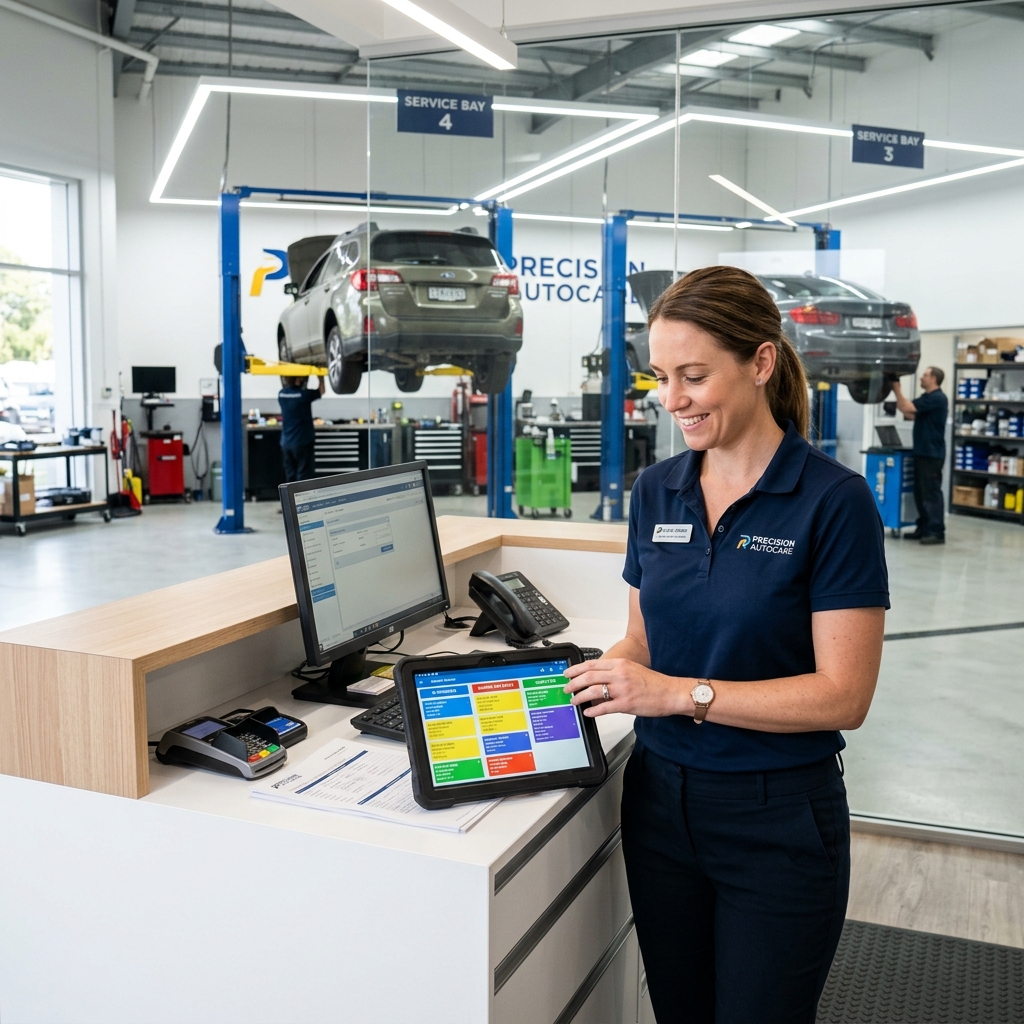
Mitchell 1: Best for OEM Repair Data and Labor Guides
Mitchell 1 has been a trusted name in the automotive repair industry for decades. Its two main products — and — serve different but complementary needs in a shop.
ProDemand: OEM Repair Data and Diagnostics
ProDemand is Mitchell 1's technical information platform. It gives technicians access to OEM repair procedures, wiring diagrams, component locations, and the SureTrack Real Fixes database — a collection of confirmed repair solutions pulled from millions of actual shop jobs.
In practice, SureTrack is where ProDemand earns its reputation. Instead of guessing on a tough diagnostic, technicians can search by symptom or code and see what parts and fixes other shops used to resolve the same issue. According to Mitchell 1, SureTrack contains data from over 100 million confirmed fixes.
Shops that handle complex diagnostics or European vehicles tend to get the most value from ProDemand's OEM wiring depth — it goes further than many general databases.
Best use case: A technician diagnosing an intermittent electrical fault on a late-model vehicle who needs OEM-level wiring diagrams and real-world fix data to avoid unnecessary parts replacement.
Manager SE: Shop Management and Workflow
Manager SE is Mitchell 1's shop management side. It handles estimates, work orders, invoicing, parts ordering, and customer history. It integrates directly with ProDemand, so labor times and repair data flow into estimates without manual re-entry.
The integration between the two products is one of Mitchell 1's strongest selling points. Shops that subscribe to both get a relatively seamless path from diagnosis to estimate to invoice inside one ecosystem.
Best use case: An established independent shop that already values OEM data accuracy and wants its management software to work within the same Mitchell 1 environment.
Mitchell 1 Pricing
Mitchell 1 does not publish flat pricing publicly. Costs vary based on shop size, number of users, and which products you bundle.
| Product | What It Covers | Typical Starting Range |
|---|---|---|
| ProDemand | OEM data, wiring, SureTrack | ~$150–$200+/month (estimated) |
| Manager SE | Estimates, invoicing, workflow | Varies by configuration |
| Bundle | Both products combined | Contact for quote |
Pricing is quote-based, which makes direct comparison harder. Always ask about contract length — some plans require annual commitments.
Honest Limitations
Mitchell 1 is strong on technical data but shows its age in a few areas:
- The interface, especially Manager SE, can feel dated compared to newer cloud-native platforms
- No built-in digital vehicle inspection tool at the level of modern competitors
- Customer-facing features like online payments and branded websites are not included
- Learning curve can be steep for shops switching from simpler systems
- Cloud access depends on the plan; some features are still desktop-based
From experience, Mitchell 1 makes the most sense for shops where technician accuracy and repair confidence are the top priority — not shops looking for an all-in-one customer experience platform. If workflow automation and customer communication matter as much as repair data, you'll likely need supplemental tools alongside it.
ALLDATA: Best for Technical Service Bulletins and Diagnostic Data
ALLDATA has been a go-to resource for automotive technicians since 1986, and it remains one of the most comprehensive sources of OEM technical data available today. Its core strength is depth of diagnostic information — not shop workflow management.
What ALLDATA Does
offers two main products for repair shops:
- ALLDATA Repair — Access to OEM repair procedures, wiring diagrams, technical service bulletins (TSBs), recall information, and diagnostic trouble code (DTC) explanations
- ALLDATA Manage Online — A shop management layer that adds estimates, invoices, work orders, and customer records
ALLDATA covers over 38,000 engine-specific repair procedures and pulls data directly from vehicle manufacturers. This matters because OEM data is the most accurate source for torque specs, fluid capacities, and step-by-step repair sequences. Third-party data providers sometimes lag behind or approximate these details.
Shops that work on a wide range of makes and models — rather than specializing in one brand — get the most value from ALLDATA's breadth of OEM coverage.
ALLDATA Pricing
ALLDATA does not publish pricing openly, but based on widely reported industry data:
| Product | Estimated Monthly Cost |
|---|---|
| ALLDATA Repair (single user) | ~$149–$199/month |
| ALLDATA Manage Online | Additional fee on top of Repair |
| ALLDATA Collision | Separate subscription |
Pricing varies by the number of users and modules selected. Shops that want both technical data and management features will pay for both products separately, which adds up quickly compared to all-in-one platforms.
What ALLDATA Does Best
Technical Service Bulletins are where ALLDATA genuinely leads. TSBs are official notices from manufacturers about known issues, software updates, and repair procedures. Having fast access to the right TSB can cut diagnostic time significantly — especially on intermittent issues that don't throw clean codes.
- Real-time recall data tied to specific VINs
- OEM wiring diagrams with component-level detail
- DTC lookup with manufacturer-specific repair paths
- Labor time guides based on OEM estimates
In practice, many technicians use ALLDATA specifically for diagnostic support and cross-reference it with a separate shop management platform for invoicing and workflow.
Honest Limitations
ALLDATA Manage Online is functional but basic compared to dedicated shop management software. It lacks features like digital multi-point inspections with photo capture, real-time parts ordering across multiple suppliers, or built-in customer-facing communication tools.
According to user reviews on platforms like Capterra and G2, the interface is considered dated, and the shop management side doesn't compete with modern platforms built around efficiency and automation.
If you're asking what's better than ALLDATA, the honest answer depends on what you need. For pure technical data, very few platforms match it. For running the business side of a shop, purpose-built management software will outperform it.
Who ALLDATA Is Best For
- Independent shops that handle diverse makes and models and need reliable OEM data on demand
- Diagnostic specialists who prioritize accuracy over workflow automation
- Shops already using a separate management platform who want ALLDATA purely as a technical reference layer
- Dealerships and OEM-aligned shops where manufacturer data accuracy is non-negotiable
If your shop's biggest challenge is on the business side — slow estimates, missed follow-ups, admin overload — ALLDATA alone won't solve that. Pairing it with a platform that handles workflow automation and customer communication gives you the best of both worlds, though it means managing two subscriptions and two logins.
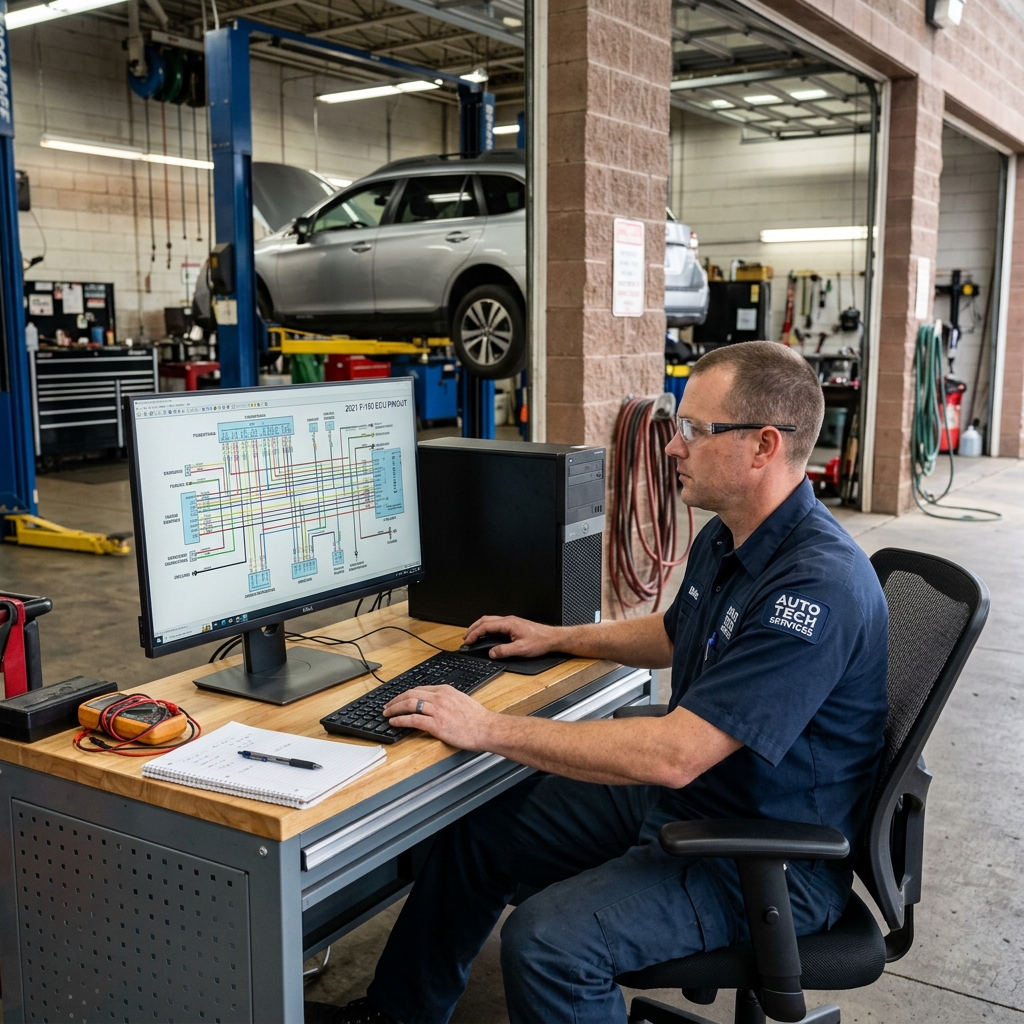
Shop-Ware: Best for Paperless, Digital-First Shops
Shop-Ware is a cloud-based shop management platform built around a fully paperless workflow. It's designed for shops that want to eliminate paper repair orders, speed up customer approvals, and give technicians a tablet-driven process from start to finish.
What Shop-Ware Does
Shop-Ware centers its workflow on digital multi-point inspections with photo and video attachments. Technicians document findings directly on a tablet, and customers receive a text or email link to review and approve work in real time — no phone tag required.
Shops that send photo-rich inspection reports see higher approval rates because customers can see the problem, not just hear about it.
Key features include:
- Digital repair orders with no paper at any stage
- Customer-facing approval portal for remote authorization
- Real-time technician-to-service-advisor communication through the platform
- Integrated canned jobs for faster estimate building
- Parts ordering through connected supplier catalogs
- Cloud access from any device with a browser
According to, shops using their platform report higher average repair order values tied directly to photo documentation in inspections.
Who Shop-Ware Is Best For
Shop-Ware works well for independent shops and small groups that have already decided to go fully digital — or want to make that switch. It's a strong fit for tech-forward owners who value a clean, modern interface over a feature-heavy system.
In practice, shops with service advisors and technicians who are comfortable on tablets tend to get the most out of it quickly. The onboarding process is relatively straightforward compared to legacy systems.
Limitations to Know
Shop-Ware's reporting and analytics tools are functional but not as deep as platforms built specifically around data-driven management. Parts catalog integration can vary by region and supplier. It also lacks a built-in branded website or marketing tools, so shops need separate solutions for customer acquisition.
Pricing is not publicly listed — you need to contact Shop-Ware directly for a quote, which makes side-by-side budget comparisons harder upfront.
| Feature | Shop-Ware |
|---|---|
| Digital Inspections | ✅ Yes, with photo/video |
| Customer Approval Portal | ✅ Yes |
| Cloud-Based | ✅ Yes |
| Built-in Website | ❌ No |
| Public Pricing | ❌ Quote required |
| Advanced Analytics | Limited |
| Parts Ordering | ✅ Yes |
If your priority is eliminating paper and modernizing how customers interact with your shop, Shop-Ware delivers on that promise. If you need deeper reporting, a built-in website, or AI-driven insights, a platform like RedAppy covers more ground in a single subscription.
Conclusion
The best automotive shop repair software depends on what's slowing your shop down right now. There's no single winner for every operation — but there's likely a clear fit for yours.
Here's a quick recap of where each tool shines:
- RedAppy — Best for shops that want one platform to handle everything: estimates, inspections, invoicing, parts ordering, analytics, and a built-in website. The AI Repair Assistant and Kanban shop board make it especially strong for owners who want to modernize without managing multiple tools.
- Mitchell 1 — Best for shops where technical accuracy is the top priority. If your team lives inside wiring diagrams and OEM repair procedures, Manager SE paired with ProDemand is hard to beat.
- ALLDATA — Best for diagnostic-heavy shops that need deep access to TSBs, recall data, and OEM documentation. Less suited as a standalone shop management solution.
- Shop-Ware — Best for shops committed to a fully paperless, tablet-driven workflow with strong customer-facing digital inspections.
- Tekmetric — Best for data-driven owners who want detailed performance reporting and job-level analytics to make smarter business decisions.
If you're running a growing shop and still juggling spreadsheets, paper ROs, and separate tools for estimates and invoicing, consolidating onto one platform typically recovers more time and revenue than any single feature upgrade.
For most independent shops looking to reduce admin work, speed up approvals, and get visibility into shop performance, an all-in-one platform delivers the fastest return. RedAppy covers that ground with transparent month-to-month pricing, built-in AI assistance, and tools that scale from a single bay to multiple locations.
You can explore RedAppy's features in more detail or compare pricing plans to see how it fits your shop's size and workflow. If you're still weighing options, the comparison table at the top of this guide is a good place to reset and match your priorities to the right tool.
Frequently Asked Questions
What's better than Alldata?
Mitchell 1 ProDemand and MOTOR TruSpeed Repair are widely considered strong alternatives to Alldata, offering more intuitive interfaces and robust OEM data coverage. Shop management platforms like Tekmetric, Shop-Ware, and AutoLeap also outperform Alldata in workflow automation, customer communication, and reporting features. The best choice depends on whether you need repair data, shop management, or an all-in-one solution.
How much does alldata repair cost?
Alldata Repair is typically priced at around $149 per month for a single-user subscription, with multi-user and shop management bundles costing more. They also offer an Alldata Manage Online add-on for shop management functions, which increases the total monthly cost. Pricing can vary based on contract length and the specific package selected.
How much does Mitchell 1 software cost?
Mitchell 1 ProDemand, their repair information software, starts at approximately $179–$199 per month for a single-user license. Their Manager SE shop management software is priced separately, generally ranging from $150 to $300+ per month depending on features and user count. Bundle pricing is available when combining both products, and Mitchell 1 offers custom quotes for multi-location shops.
Ready to Transform Your Shop?
RedAppy helps auto repair shops create professional digital estimates with photos and videos, send them instantly via text or email, and get customer approvals in seconds. No credit card required to start.