
Car Inspection Checklist: A Complete Guide for Drivers and Shops
A car inspection checklist is one of the most practical tools in automotive care — yet most drivers never see one until something goes wrong. Whether you're buying a used vehicle, preparing for a state safety inspection, or running a repair shop that needs to build customer trust, a structured checklist determines what gets caught and what gets missed. The difference between a thorough inspection and a rushed one can mean the difference between a safe vehicle and a roadside breakdown.
For drivers, inspections offer peace of mind and protect against unexpected repair costs. For shop owners, they are a direct revenue driver — that digital vehicle inspections increase approved work orders and average repair order value. A well-documented inspection also creates a legal and professional record that protects both the technician and the customer.
This guide covers everything from the standard components on a comprehensive inspection checklist to how repair shops can systematize the process for speed and accuracy. You'll find section-by-section breakdowns, a comparison of inspection types, and practical guidance on turning inspections into a repeatable, profitable workflow.
Table of Contents
- What a Full Car Inspection Consists Of
- The Complete Car Inspection Checklist (Section by Section)
- Conclusion
- Frequently Asked Questions
What a Full Car Inspection Consists Of
A full car inspection is a structured evaluation of a vehicle's major mechanical and safety systems, conducted by a qualified technician or state-certified inspector. The scope depends on the purpose: a state-mandated inspection checks compliance with minimum legal standards, while a pre-purchase or comprehensive service inspection examines the vehicle's overall condition and remaining service life.
Inspections generally fall into three categories: safety, emissions, and mechanical condition assessments. These may occur together or separately, depending on state law and the reason for the inspection. A "full" inspection, as performed at a professional shop, typically covers all major systems — exterior, powertrain, brakes, steering, suspension, interior safety features, and undercarriage.
Inspection scope is not standardized nationally. A vehicle that passes inspection in one state may not meet the requirements in another.
The identifies vehicle defects as a contributing factor in hundreds of thousands of crashes annually, which is the core justification for mandatory inspection programs. Regular inspections serve both road safety and emissions compliance goals.
Safety Inspection vs. Emissions Inspection
Safety inspections and emissions inspections serve different purposes and check different systems. Understanding the distinction matters because many drivers assume they are the same test.
Safety inspections evaluate whether a vehicle meets minimum roadworthiness standards. Inspectors check components that directly affect the driver's ability to control the vehicle and protect occupants — brakes, tires, lights, steering, mirrors, seatbelts, and windshield condition. The test is pass/fail based on physical condition and function.
Emissions inspections measure the pollutants a vehicle releases into the atmosphere. Technicians connect a scan tool to the vehicle's to check whether the engine management system is functioning correctly and all readiness monitors are set. Older vehicles may undergo a tailpipe test that directly measures exhaust output.
| Feature | Safety Inspection | Emissions Inspection |
|---|---|---|
| Primary goal | Roadworthiness | Environmental compliance |
| Systems checked | Brakes, lights, tires, steering, glass | OBD-II monitors, catalytic converter, EVAP system |
| Pass/fail basis | Physical condition and function | Fault codes and readiness monitor status |
| Conducted by | State-certified mechanic | State-certified mechanic or emissions station |
| Who requires it | ~32 states | ~34 states (with OBD or tailpipe programs) |
Some states require both tests, and they may be conducted at the same station during a single visit. Others require only one or the other. A handful of states — including Florida, Minnesota, and Michigan — have no mandatory periodic vehicle inspection program at all.
In states that combine both tests, failing either component means the vehicle does not receive its inspection sticker, regardless of how it performed on the other test.
According to the, vehicle inspection and maintenance programs can reduce hydrocarbons and carbon monoxide emissions by 15–20% in participating areas. This is why emissions testing tends to be concentrated in urban counties with documented air quality issues, rather than applied uniformly statewide.
Pre-Purchase Inspection vs. State-Mandated Inspection
These two inspection types share some overlap in what they examine, but they serve entirely different purposes.
A state-mandated inspection confirms that a vehicle meets the legal minimum standards required to operate on public roads. It does not evaluate whether the vehicle is a sound financial purchase, has deferred maintenance, or is approaching the end of a major component's service life. A car can pass a state inspection and still need thousands of dollars in near-term repairs.
A pre-purchase inspection (PPI) is commissioned by a prospective buyer and conducted by an independent mechanic before the sale is finalized. The goal is a complete picture of the vehicle's condition — including items that are functional but worn, mismatched body panels suggesting prior collision repair, evidence of oil leaks, and anything that may require attention within the next service interval.
| Characteristic | State-Mandated Inspection | Pre-Purchase Inspection |
|---|---|---|
| Commissioned by | State government | Prospective buyer |
| Purpose | Legal compliance | Informed purchase decision |
| Scope | Minimum safety/emissions standards | Comprehensive mechanical condition |
| Result | Pass/fail sticker | Detailed condition report |
| Cost (typical range) | $10–$50 | $100–$200 |
| Who performs it | Certified inspection station | Independent mechanic of buyer's choice |
In practice, a thorough pre-purchase inspection will examine everything on the state checklist plus significantly more — transmission behavior under load, cooling system pressure, brake rotor thickness measurements, suspension wear, and a full review of vehicle history through services like Carfax or the NHTSA VIN lookup tool.
Fleet operators conduct a third type of inspection: scheduled preventive maintenance inspections that follow manufacturer intervals or regulatory requirements (such as DOT inspections for commercial vehicles). These are outside the scope of this guide but follow similar structured checklists adapted to fleet-specific risk and compliance needs.
Safety Inspection vs. Emissions Inspection
A safety inspection and an emissions inspection serve different purposes, and many drivers confuse the two. A safety inspection evaluates whether a vehicle's mechanical systems are fit for road use. An emissions inspection tests whether the vehicle's exhaust output and pollution control systems meet environmental standards. Some states require both; others require only one or neither.
What Each Inspection Examines
Safety inspections focus on components that directly affect a driver's ability to control the vehicle and avoid crashes. Inspectors check:
- Brakes (pad thickness, rotor condition, hydraulic lines)
- Tires (tread depth, sidewall condition, inflation)
- Lights (headlights, brake lights, turn signals, hazard lights)
- Steering and suspension
- Windshield condition and wiper function
- Seatbelts and mirrors
- Horn operation
Emissions inspections focus on air quality. Depending on the state and vehicle age, this may involve:
- An OBD-II scan that reads onboard diagnostic data (used on most vehicles made after 1996)
- A tailpipe test that directly measures exhaust gases such as hydrocarbons (HC), carbon monoxide (CO), and nitrogen oxides (NOx)
- A visual check of the catalytic converter, fuel cap, and exhaust system for tampering or obvious failure
A vehicle can pass a safety inspection and fail an emissions test — or vice versa. They measure entirely different things.
Which States Require Each Type
Requirements vary significantly by state. According to the, approximately 31 states operate vehicle emissions inspection programs, though not all require them statewide — some limit testing to counties with documented air quality problems.
| State | Safety Inspection | Emissions Inspection | Notes |
|---|---|---|---|
| Pennsylvania | Annual | Required in select counties | Combined or separate, depending on county |
| Texas | Annual | Required statewide | Combined into one "two-in-one" inspection since 2015 |
| California | No statewide safety inspection | Biennial (Smog Check) | Among the strictest emissions standards in the U.S. |
| Florida | None | None | No mandatory vehicle inspection program |
| New York | Annual | Required statewide | Both conducted at registered inspection stations |
| Virginia | Annual | Required in certain localities | Separate inspections |
States without any inspection program — such as Florida, South Dakota, and Arkansas — place full responsibility on vehicle owners to maintain roadworthiness.
Whether Inspections Are Conducted Together or Separately
Some states have merged safety and emissions testing into a single visit, while others keep them separate. Texas consolidated its two inspections into one combined inspection in 2015, simplifying the process for drivers. New York conducts both tests at the same station but treats them as distinct procedures.
In states that require both types, failing one does not automatically fail the other. A vehicle with a cracked exhaust manifold, for example, might fail an emissions test due to excess hydrocarbon output while still passing every safety checkpoint. This distinction matters because reinspection fees, repair timeframes, and exemption rules are often applied separately to each inspection type.
Understanding state-specific compliance requirements helps shop owners and drivers avoid confusion about which systems need attention before an inspection appointment.
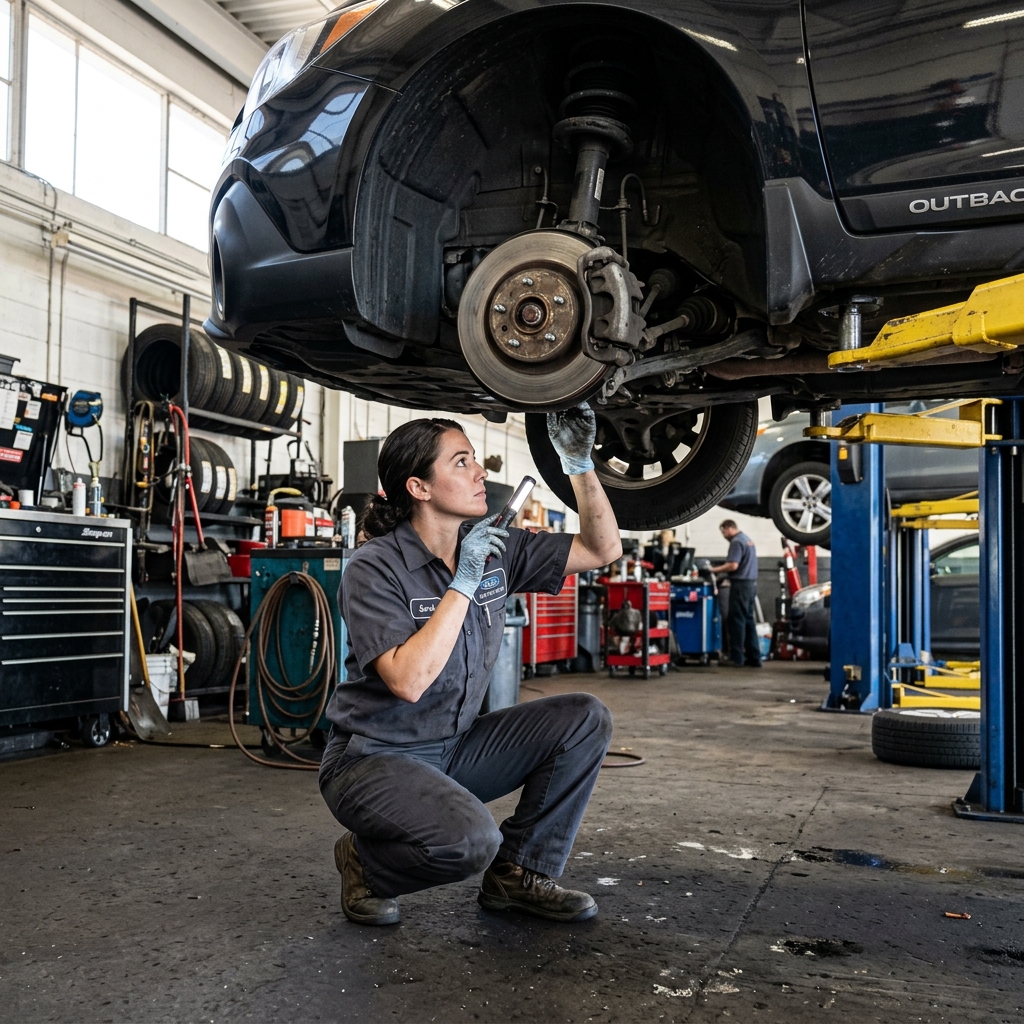
Pre-Purchase Inspection vs. State-Mandated Inspection
A pre-purchase inspection is a voluntary evaluation commissioned by a prospective buyer to assess the overall condition and value of a used vehicle. A state-mandated inspection is a legally required check confirming that a vehicle meets minimum safety or emissions standards to operate on public roads. The two serve fundamentally different purposes, and passing one does not guarantee the other's criteria are met.
Purpose and Scope
A state inspection answers one question: does this vehicle meet the legal minimum threshold for road use? Inspectors check a defined list of items — brakes, lights, tires, steering — against pass/fail standards set by state law. They are not evaluating the vehicle's overall health, remaining service life, or whether it represents good value.
A pre-purchase inspection (PPI) answers a different question: what is the true condition of this vehicle, and what will it cost to own? A mechanic performing a PPI has no regulatory checklist to follow. In practice, a thorough PPI covers everything a state inspection does, plus items the state has no interest in — engine compression, transmission behavior under load, signs of prior accident repair, fluid contamination, and deferred maintenance.
A vehicle can pass a state safety inspection and still require thousands of dollars in near-term repairs. State inspections confirm minimum compliance, not mechanical soundness.
What a Mechanic Checks in a Pre-Purchase Inspection
A qualified mechanic conducting a PPI will typically evaluate:
- Frame and body: Weld quality, panel alignment, signs of flood or collision damage
- Engine: Compression, oil consumption, coolant condition, signs of head gasket failure (e.g., milky oil, white exhaust smoke)
- Transmission: Shift quality, fluid color and smell, signs of slippage
- Brakes: Remaining pad and rotor life beyond the legal minimum
- Suspension and steering: Worn bushings, ball joints, tie rod ends, and shock absorbers
- Exhaust system: Rust, leaks, catalytic converter integrity
- Electrical systems: Battery health, alternator output, warning lights
- Tires: Tread depth, uneven wear patterns indicating alignment or suspension issues
- Undercarriage: Rust severity, fluid leaks, CV axle and control arm condition
- OBD-II history: Stored and pending fault codes, readiness monitor status
A PPI typically costs between $100 and $200 at an independent shop, according to. For a vehicle priced at $10,000 or more, this cost is negligible relative to the risk it mitigates.
What a State Inspector Checks
State inspectors work from a fixed regulatory checklist. The exact items vary by state, but most programs include:
| Inspection Category | Typical State Requirement |
|---|---|
| Brakes | Minimum pad thickness, functional parking brake |
| Tires | Minimum tread depth (commonly 2/32 inch) |
| Lights | All exterior lights functional |
| Windshield | No cracks obstructing driver's line of sight |
| Steering | No excessive play |
| Horn | Functional |
| Emissions (where required) | OBD-II monitors set, no active fault codes |
State inspectors are not evaluating whether a vehicle is a reliable purchase. They are confirming it meets the minimum standard to be legally operated. A car with 3/32 inch of brake pad remaining — nearly worn out — can still pass inspection in most states, because it clears the legal minimum.
Key Differences at a Glance
| Factor | Pre-Purchase Inspection | State-Mandated Inspection |
|---|---|---|
| Who requires it | Buyer (voluntary) | State law (mandatory) |
| Purpose | Assess condition and value | Confirm minimum legal compliance |
| Scope | Comprehensive, holistic | Fixed regulatory checklist |
| Pass/fail result | No — produces a condition report | Yes — vehicle passes or fails |
| Cost to buyer | $100–$200 typically | $10–$75 depending on state |
| Conducted by | Independent mechanic of buyer's choice | State-certified inspection station |
| Frequency | Once, before purchase | Annually or biennially per state law |
From experience, buyers who skip a PPI on used vehicles priced above $8,000 frequently underestimate repair costs discovered within the first six months of ownership. A state inspection sticker on the windshield is not a substitute for independent mechanical evaluation.
Always have a pre-purchase inspection performed at an independent shop — not at the dealership selling the vehicle. Independence eliminates any conflict of interest in the report.
For drivers preparing a vehicle for a state inspection specifically, the How to Prepare Your Vehicle Before an Inspection section covers the practical steps to take beforehand.
The Complete Car Inspection Checklist (Section by Section)
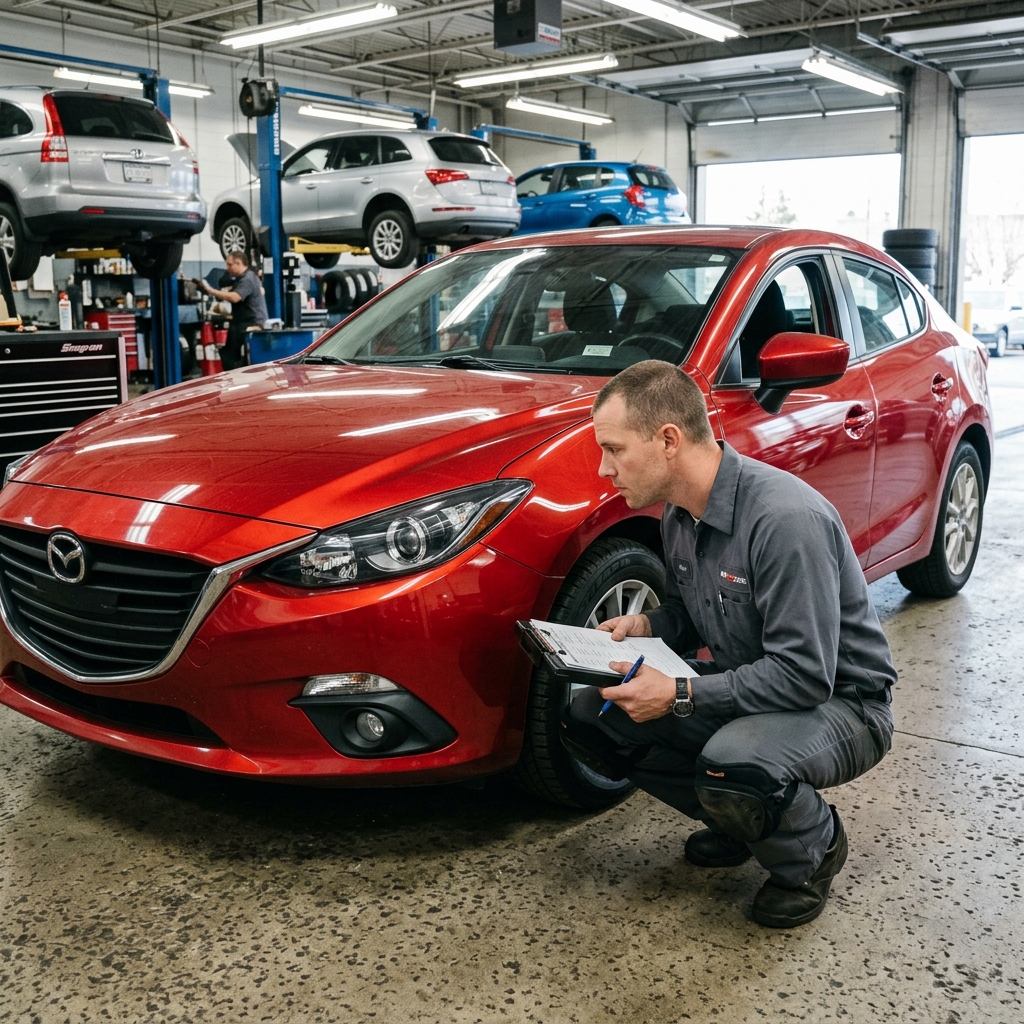
The exterior and body inspection covers everything visible from outside the vehicle — lights, glass, tires, wheels, and structural condition. A technician works around the entire perimeter before opening the hood, because exterior defects are among the most common reasons a vehicle fails a state safety inspection on the first attempt.
Exterior and Body
Lights
Every exterior light must function and aim correctly. This includes headlights (low and high beam), tail lights, brake lights, reverse lights, turn signals, and hazard flashers. Many states require that headlights produce a minimum light output and are aimed within a specified range — misaimed headlights are a citable defect even if the bulb works.
- Inspect all bulbs for function, including side marker lights
- Check for cracked or yellowed lenses that reduce output
- Verify brake lights activate under pedal pressure, not just when the ignition is on
- Confirm turn signals flash at the correct rate (a rapid flash often signals a burned bulb)
Windshield and Glass
Windshield condition is a pass/fail item in most state programs. A crack or chip in the driver's line of sight — typically defined as the area swept by the wipers — will result in a failure. Chips outside that zone may be acceptable depending on size and location.
- Check for cracks longer than a few inches anywhere on the windshield
- Inspect side and rear glass for damage that impairs visibility or structural integrity
- Test windshield wipers for streak-free contact across the full sweep
- Verify washer fluid sprays correctly and nozzles are not clogged
Mirrors
All required mirrors must be present, secure, and provide an unobstructed rear view. A missing driver-side mirror is a defect in virtually every state program.
- Confirm the driver-side mirror is intact and adjustable
- Check the rearview mirror for secure mounting and an unobstructed field of view
- Inspect passenger-side mirror if required by state or OEM specification
Tires
Tires are one of the highest-failure items in roadside and state safety inspections. The reports that tire-related crashes cause approximately 11,000 incidents annually, underlining why tread depth and condition receive close scrutiny.
| Inspection Point | Minimum Standard | Notes |
|---|---|---|
| Tread depth | 2/32 inch (legal minimum) | 4/32 inch recommended for wet traction |
| Sidewall condition | No bulges, cuts, or cord exposure | Any cord showing is an immediate failure |
| Inflation pressure | Per door placard (PSI) | Check cold, before driving |
| Tread wear pattern | Even across the contact patch | Uneven wear indicates alignment or suspension issues |
| Spare tire | Present and inflated | Temporary spares have mileage and speed limits |
A tire measuring 2/32 inch of tread depth meets the legal minimum but stops significantly longer on wet pavement than a tire at 4/32 inch. Shops should note this distinction when advising customers.
Wheels
Wheels must be free of cracks, significant bends, and missing hardware. A bent wheel can cause vibration, uneven tire wear, and handling instability — all of which are safety concerns independent of the tire itself.
- Check each wheel for visible cracks or fractures, particularly around lug holes
- Verify all lug nuts are present and properly torqued
- Inspect wheel covers or hub caps for secure attachment
Body and Frame
Visible structural damage is assessed during the exterior walk-around. State inspectors generally look for damage that affects vehicle handling, visibility, or occupant protection.
- Look for sharp or protruding metal edges created by collision damage
- Check that all doors open, close, and latch securely
- Inspect bumpers for condition — detached bumper components can become road hazards
- Note any visible frame deformation, particularly near suspension mounting points
In practice, a thorough exterior inspection takes five to ten minutes when performed systematically from one corner of the vehicle and working around the perimeter. Skipping this structure leads to missed items, particularly on the rear and underside of body panels where damage accumulates without being obvious from a standing position.
Exterior and Body
A car inspection checklist is both a safety discipline and a documentation standard. For drivers, it provides a structured way to identify problems before they become failures — on the road or at the inspection station. For shops, it is the foundation of every repair order, every customer conversation, and every liability record.
The checklist categories covered in this guide — exterior and body, under the hood, brakes and steering, interior systems, and the undercarriage — represent the minimum scope of any thorough inspection. State-mandated inspections like Pennsylvania's annual safety program cover a defined subset of these areas. Pre-purchase inspections go further, evaluating wear patterns and long-term reliability. Both serve the same underlying purpose: reducing risk through documented evidence.
Drivers who review their vehicle against a checklist before an appointment are significantly less likely to face reinspection fees or unexpected repair costs.
For shop operators, the shift from paper checklists to digital inspection platforms has measurable consequences. Photo-documented inspections build customer trust, increase work approval rates, and create a searchable vehicle history that supports repeat business and reduces disputes. Platforms like RedAppy centralize this workflow — from the first VIN lookup through digital inspection, estimate approval, and final payment — so nothing falls through the gaps between departments.
The practical steps for any driver are straightforward:
- Run through the checklist sections in this guide before scheduling an inspection
- Address known warning lights rather than hoping an inspector will overlook them
- Verify all exterior lights are functional, including brake lights and turn signals
- Check tire tread depth with a tread depth gauge — the legal minimum in most states is 2/32 inch, but 4/32 inch is the safety threshold
- Confirm fluid levels are within the acceptable range before the appointment
For shops, the operational priorities are equally clear:
- Standardize inspection checklists across all technicians
- Use digital tools to attach photos to each flagged item
- Maintain complete vehicle histories accessible by VIN, plate, or customer name
- Communicate inspection results to customers with enough detail to support informed decisions
are ultimately about preventing failures — mechanical, regulatory, and communicative. A consistent, well-documented inspection process protects the driver, supports the technician, and gives the shop a record it can stand behind. Whether you operate a single-bay garage or a multi-location fleet service, the checklist is where that process begins.
Conclusion
A car inspection checklist is both a safety discipline and a documentation standard. Used consistently, it protects drivers from preventable failures, helps shops deliver transparent service, and creates a verifiable record of a vehicle's condition over time.
Drivers who work through a checklist before their annual inspection — confirming fluid levels, testing all lights, and addressing active warning lights — are significantly more likely to pass on the first attempt. Reinspection fees and the inconvenience of a return visit are avoidable with basic preparation.
A single failed inspection item, such as a burned-out brake light or a low tire, can require a full reinspection in many states. Addressing obvious issues beforehand costs little and saves time.
For shop operators, the stakes are higher. A systematic inspection process does more than satisfy a regulatory requirement — it builds customer trust, surfaces repair opportunities, and creates a legal record that protects the shop. Shops that move from paper checklists to digital inspection workflows consistently report higher customer approval rates, largely because photo documentation makes findings tangible and credible to vehicle owners.
Platforms like RedAppy support this workflow end to end — from digital inspections with photo capture to searchable vehicle history by VIN, plate, or customer name, through to one-click invoicing and online payment. That continuity, from check-in to final payment, reduces administrative time and keeps inspection data organized and retrievable.
The core sections of a thorough inspection — exterior, under the hood, brakes and steering, interior safety systems, and the undercarriage — each address distinct failure risks. No single item is trivial. A cracked CV boot, a marginal brake rotor, or an EVAP system fault can each result in a failed inspection or, more seriously, a roadside breakdown.
State requirements add a layer of complexity. Inspection frequency, emissions testing, and exemption rules vary significantly across the country. Understanding what your state requires — and what a shop is actually evaluating — helps drivers engage more meaningfully with the inspection process rather than treating it as a bureaucratic formality.
Consistent, documented inspections are one of the clearest signals a shop can send that it operates with professionalism and integrity. Customers who receive photo-documented reports are more likely to approve recommended work and return for future service.
Used proactively, a car inspection checklist is a straightforward tool with a direct impact on safety, cost, and shop efficiency. The discipline of working through it — system by system, every time — is what separates reactive maintenance from genuine vehicle stewardship.
Frequently Asked Questions
What does a full car inspection consist of?
A full car inspection typically covers over 30 components, including brakes, tires, lights, steering, suspension, fluid levels, belts, hoses, battery, exhaust system, and windshield wipers. Inspectors also check safety systems like airbags and seatbelts, along with under-hood components and the vehicle's undercarriage. State-required inspections may additionally include an emissions test to measure exhaust output.
What should I include on my vehicle inspection checklist?
A thorough vehicle inspection checklist should include tires (tread depth and pressure), brakes, all exterior lights, fluid levels (oil, coolant, brake fluid, transmission fluid), battery condition, belts and hoses, windshield wipers, and steering response. Also include checks for leaks, horn function, mirrors, seatbelts, and any dashboard warning lights. Documenting mileage and inspection date helps track maintenance intervals over time.
What will fail a vehicle inspection?
Common inspection failures include worn brake pads or rotors, tires with tread depth below 2/32 of an inch, non-functioning headlights or brake lights, cracked windshields obstructing the driver's view, and excessive exhaust emissions. Faulty steering components, broken seatbelts, and a malfunctioning horn can also result in an automatic fail. Any safety-critical system that is missing or not operating to standard will typically cause a rejection.
What are the requirements for vehicle inspections in Pennsylvania?
Pennsylvania requires annual safety inspections performed by a state-certified inspection station, covering brakes, lights, tires, steering, horn, wipers, and glazing (glass). Vehicles registered in certain counties also require an annual emissions test through the Pennsylvania Enhanced Emission Program. Vehicles that fail must be repaired and re-inspected within a designated timeframe to maintain legal registration.
Ready to Transform Your Shop?
RedAppy helps auto repair shops create professional digital estimates with photos and videos, send them instantly via text or email, and get customer approvals in seconds. No credit card required to start.