
Car Repair Data: How to Find, Use, and Benefit From It
Every decision in your shop — how long a job takes, what to charge, which parts to stock — runs on car repair data. Most shop owners collect this information without realizing it. Every invoice, inspection report, and parts order is a data point waiting to be used.
The problem is that most shops let that data sit idle. According to, the U.S. auto repair industry generates over $100 billion in annual revenue — yet many independent shops still manage their numbers through spreadsheets or gut instinct. That gap between data collected and data used is where profit gets lost.
This guide explains what car repair data actually includes, where it comes from, how to read it, and how modern shop management tools like RedAppy help you turn raw numbers into real business decisions — from smarter scheduling to higher average repair orders.
Table of Contents
What Is Car Repair Data?
Car repair data is any structured information about how vehicles are diagnosed, repaired, and maintained. This includes repair cost estimates, labor time guides, diagnostic trouble codes (DTCs), technical service bulletins (TSBs), parts pricing, and vehicle history records. Both shop owners and car owners rely on this data — shops use it to price jobs accurately and work efficiently, while consumers use it to understand what they're paying for and why.
Accurate repair data is the difference between a shop that wins customer trust and one that loses jobs to competitors with faster, clearer estimates.
Yes, there are databases for car repairs. Professional platforms like ALLDATA, Mitchell1, and Identifix compile repair procedures, labor times, and diagnostic data from OEM sources and real-world shop records. Consumer-facing tools like CarFax, AutoCheck, and RepairPal offer a more accessible view of vehicle history and typical repair costs. Government sources, including the, cover safety recalls and technical bulletins. So repair data doesn't live in one single place — it exists across professional software, OEM portals, government sources, and shop management systems.
Types of Car Repair Data
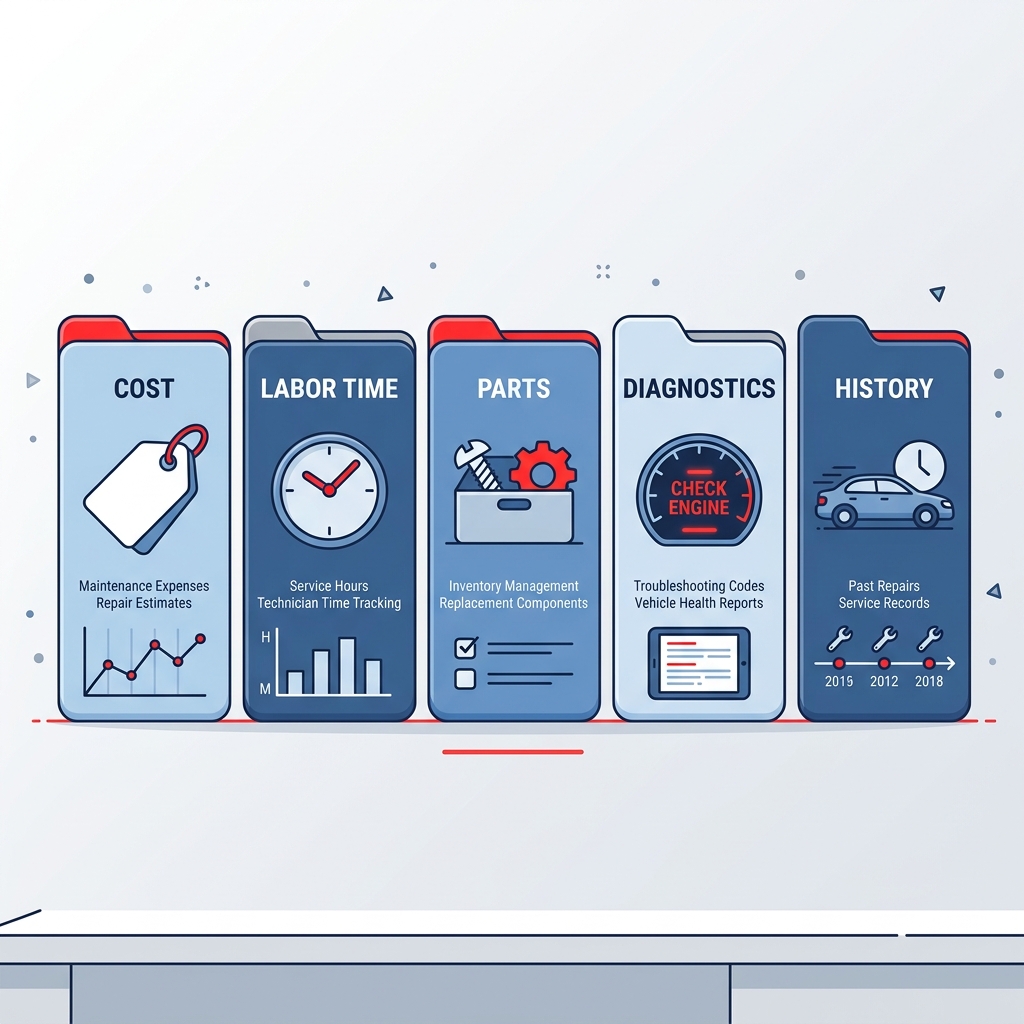
The five main categories of car repair data serve different purposes depending on who's using them.
Repair cost data covers the price of parts and labor for specific jobs on specific vehicles. This is what consumers look up when comparing estimates and what shops use to price their services competitively.
Labor time data tells technicians and service writers how many hours a given repair is expected to take. These are called flat-rate hours, and they're the foundation of most shop pricing models.
Diagnostic and technical data includes DTCs, wiring diagrams, component locations, and TSBs. A TSB is an official notice from a manufacturer about a known issue and its recommended fix. This data is essential for accurate diagnosis.
Vehicle history data tracks what has happened to a specific vehicle — past repairs, accidents, ownership changes, and mileage. This is most useful when buying a used car or reviewing a long-term customer's service record.
Shop performance data is internal data generated by the shop itself — revenue per repair order, technician efficiency, comeback rates, and customer retention. This type is often overlooked but is critical for business growth.
| Data Type | Primary User | Key Source | Example Use |
|---|---|---|---|
| Repair cost data | Shops & consumers | Mitchell1, RepairPal | Building or comparing estimates |
| Labor time data | Shop owners, technicians | ALLDATA, Chilton | Pricing labor on repair orders |
| Diagnostic / TSB data | Technicians | OEM portals, Identifix | Diagnosing intermittent faults |
| Vehicle history data | Consumers, used car buyers | CarFax, AutoCheck | Pre-purchase inspection decisions |
| Shop performance data | Shop owners, managers | Shop management software | Tracking ARO, efficiency, retention |
Where Car Repair Data Comes From
The most authoritative source for repair procedures is the OEM — the original equipment manufacturer. Automakers publish detailed repair manuals, wiring schematics, and TSBs for every vehicle they produce. Professional data providers license this content and repackage it into searchable databases that shops can use without hunting through manufacturer portals.
The (National Highway Traffic Safety Administration) maintains a publicly accessible database of recalls, complaints, and TSBs. According to NHTSA records, there have been over 900 million vehicles affected by recalls in the U.S. since the agency began tracking them — which gives you a sense of how much technical data exists at the federal level alone.
Telematics systems — the onboard diagnostic tools in modern vehicles — generate real-time data about vehicle health, driving behavior, and fault codes. This data is increasingly being used by connected repair platforms to flag issues before a customer even calls.
Shop management software contributes a layer that OEM databases can't: aggregated, real-world repair order data. When thousands of shops record what they actually charged, how long a job actually took, and which parts they used, that data becomes a powerful benchmark for the industry. Learn how shop management platforms collect and use this data to help owners make smarter decisions.
Types of Car Repair Data
Car repair data falls into five main categories. Each type serves a different purpose — some help shops price and perform repairs accurately, while others help consumers make smarter decisions about their vehicles.
Here's how the major categories break down:
| Data Type | What It Includes | Primary Users |
|---|---|---|
| Repair cost data | Labor rates, parts pricing, regional cost benchmarks | Consumers, shop owners, insurers |
| Labor time data | Flat-rate hours per repair operation by make/model/year | Technicians, service advisors |
| Diagnostic data / TSBs | OBD-II fault codes, technical service bulletins, recall notices | Technicians, shop managers |
| Vehicle history data | Past repairs, accidents, ownership changes, mileage records | Consumers, used-car buyers |
| Shop performance data | Revenue, average repair order, technician efficiency, customer retention | Shop owners, managers |
Repair Cost Data
Repair cost data tells you what a specific repair should cost — including parts, labor, and shop fees. Sources like track national averages, and AAA reported that the average annual vehicle maintenance and repair cost reached $1,325 in recent years. Shops use this data to set competitive prices. Consumers use it to check whether an estimate is reasonable before they say yes.
Labor Time Data
Labor time data — often called flat-rate data — specifies exactly how many hours a repair should take for a specific vehicle. A water pump replacement on a 2018 Honda Accord might carry a flat-rate time of 2.4 hours, regardless of how long it actually takes a technician to complete it. This data comes from OEM manuals and third-party databases like Mitchell1 and ALLDATA. It's the foundation of every repair estimate a shop writes.
Diagnostic Data and Technical Service Bulletins
Diagnostic data includes OBD-II trouble codes (like P0420 for a failing catalytic converter) and the repair procedures linked to them. Technical Service Bulletins (TSBs) are official notices from manufacturers about known issues and recommended fixes — they're not recalls, but they guide technicians toward proven solutions. The is publicly accessible and covers millions of bulletins across virtually every make and model sold in the US.
Shops that regularly reference TSBs catch known issues faster, reduce diagnostic time, and avoid comebacks — which directly protects their reputation and profit margin.
Vehicle History Data
Vehicle history data tracks what's happened to a specific car over its lifetime — previous repairs, accident reports, title changes, odometer readings, and service intervals. Services like Carfax and AutoCheck aggregate this from repair shops, insurers, and state DMV records. For consumers buying used vehicles, this data can reveal patterns that predict future repair costs.
Shop Performance Data
This category is often overlooked, but it's arguably the most valuable for running a profitable business. Shop performance data is generated internally — every repair order, invoice, and customer interaction produces it. Metrics like average repair order (ARO), technician efficiency, car count, and repeat customer rate tell a shop owner exactly where money is being made and where it's being left on the table. Modern shop management platforms capture and analyze this data automatically, turning daily operations into actionable business intelligence.
Where Car Repair Data Comes From
Car repair data comes from several distinct source types, each serving a different part of the industry. Understanding where the data originates helps explain why some sources are more accurate or comprehensive than others.
OEM Repair Manuals and Technical Data
Original equipment manufacturers (OEMs) — companies like Ford, Toyota, and GM — produce detailed repair documentation for every vehicle they build. This includes wiring diagrams, torque specifications, step-by-step procedures, and factory labor times. OEM data is the most authoritative source available because it comes directly from the engineers who designed the vehicle.
Most professional repair databases license this data directly from manufacturers. That licensing relationship is what separates paid professional platforms from free alternatives. OEM portals like or GM's SI2000 also provide direct access, though often on a per-vehicle or subscription basis.
Government and Regulatory Sources
The maintains one of the most valuable free repositories of vehicle technical data. It includes Technical Service Bulletins (TSBs), safety recall notices, consumer complaint data, and defect investigations across millions of vehicles and model years.
According to NHTSA, there are over in its public database. These bulletins document known issues and manufacturer-recommended fixes — data that directly informs how shops diagnose and repair vehicles. Any shop or consumer can search this database at no cost.
Telematics and Connected Vehicle Data
Modern vehicles generate real-time data through onboard diagnostics (OBD) systems and connected telematics platforms. When a warning light triggers or a fault code is stored, that data can be transmitted to manufacturers, fleet managers, or repair networks. According to, connected cars generated over 25 gigabytes of data per hour as of the early 2020s — a volume that's only growing.
This telematics data feeds into predictive maintenance systems and helps manufacturers identify widespread issues before they become recalls.
Shop Management Software and Repair Order Data
Every time a shop completes a repair, it generates a repair order — a structured record containing the vehicle, the complaint, the diagnosis, the labor hours, the parts used, and the final cost. When thousands of shops use the same management platform, that aggregated repair order data becomes enormously valuable.
Aggregated shop data reveals real-world labor patterns and parts failure rates that OEM manuals alone can't capture — it reflects what repairs actually take in a working shop environment, not just what they should take in theory.
Shop management platforms like RedAppy collect this data at the transaction level, creating an internal intelligence layer that reflects each shop's own history and performance over time.
Third-Party Data Aggregators
Companies like CARFAX and AutoCheck compile vehicle history data from insurance claims, state DMV records, auction reports, and service records. This produces a longitudinal view of a vehicle's repair history across its lifetime and multiple owners.
| Data Source | Primary Use | Access Model | Best For |
|---|---|---|---|
| OEM repair manuals | Procedures, specs, labor times | Paid subscription or per-vehicle | Technical accuracy |
| NHTSA database | TSBs, recalls, complaints | Free, public | Diagnostics, defect research |
| Telematics systems | Real-time fault data | OEM or fleet program | Predictive maintenance |
| Shop management software | Repair orders, shop analytics | Subscription (shop-level) | Business intelligence |
| Vehicle history aggregators | Ownership and repair history | Paid consumer reports | Pre-purchase decisions |
In practice, no single source covers everything. Professional shops typically draw from at least two or three of these sources to build accurate estimates and make reliable diagnoses. The trend in modern shop management platforms is to consolidate as many of these sources as possible into a single workflow — reducing the time technicians spend switching between tools.
How Repair Cost Databases Work
Repair cost databases are built on two core data streams: OEM (manufacturer) data and aggregated real-world repair order data. OEM data includes factory labor times, parts diagrams, and technical service bulletins published directly by vehicle manufacturers. Aggregated data comes from millions of actual repair orders processed by shops across the country. Together, these sources let a database give you both what a repair should take and what it actually costs in practice.
How Labor Time Guides Calculate Flat-Rate Hours
Labor time guides assign a fixed number of hours to every common repair operation — this is called "flat-rate time." A brake job on a 2019 Ford F-150 might be listed at 1.8 hours regardless of whether the technician finishes in 90 minutes or takes two and a half hours.
Flat-rate hours are originally set by OEM engineers based on controlled shop tests. Third-party database providers then validate and adjust these times using real-world feedback from their shop networks. According to, their ProDemand platform cross-references OEM data with verified repair data from thousands of shops to improve accuracy.
Flat-rate time is how shops price labor consistently — it protects both the shop and the customer from wildly variable estimates.
This is why two shops using the same database will often give you very similar labor quotes, even if their hourly rates differ.
How Parts Pricing Is Sourced
Parts pricing in repair databases typically comes from three places: OEM dealer pricing, aftermarket distributor price lists (from suppliers like NAPA, Worldpac, or LKQ), and real-time catalog feeds updated as prices change. Most platforms display both the shop's cost and the suggested retail price, letting the shop build in a standard markup.
Some platforms integrate directly with parts suppliers so technicians can check live inventory and order without leaving the software. This matters in practice — a part showing "in stock" in a static catalog might actually have a three-day lead time. Real-time feeds reduce that guesswork.
How Shops Use This Data to Build Estimates
The standard workflow looks like this:
- Technician identifies the repair needed (through inspection or customer complaint)
- They pull up the vehicle by year, make, model, and engine in the database
- The database returns the labor time for that specific operation
- Parts pricing populates automatically from the connected catalog
- The advisor reviews, adjusts markup if needed, and sends the estimate
In a well-integrated shop, this process takes a few minutes. In a shop where the technician looks up labor time in one tab, checks parts in another, and manually types everything into an invoice, it can take significantly longer — and errors creep in.
Comparing the Major Repair Data Platforms
The four most widely used platforms each have a different approach to data coverage, pricing, and workflow integration.
| Platform | Data Type | Pricing Model | OEM vs. Aftermarket | Integrations |
|---|---|---|---|---|
| ALLDATA | OEM-only repair data, TSBs, wiring diagrams | Per-vehicle or flat subscription | OEM-focused | Limited native integrations; some SMS partnerships |
| Mitchell1 ProDemand | OEM + real-world verified data, TSBs | Monthly subscription (per user) | Both OEM and aftermarket | Integrates with Mitchell1's Manager SE SMS |
| Identifix Direct-Hit | Confirmed fixes from technician community, TSBs | Monthly subscription | Aftermarket-leaning, real-world fixes | Integrates with some third-party SMS platforms |
| Integrated Shop Software (e.g., RedAppy) | Labor times, parts catalogs, AI-assisted diagnostics | Bundled into shop management subscription | Aftermarket + multi-supplier | Native — estimate, invoice, parts order in one platform |
ALLDATA is widely respected for OEM accuracy and is the go-to choice when factory-correct procedures matter most. Mitchell1 ProDemand adds a layer of real-world repair data that many technicians find useful for diagnosing tricky vehicles. Identifix takes a community-driven approach — its value is in confirmed fixes shared by working technicians, not just what the factory manual says.
Each platform is strongest in a different area. ALLDATA wins on OEM fidelity. Mitchell1 wins on breadth. Identifix wins on real-world diagnostic guidance from fellow techs.
The honest limitation of all three: they are reference tools, not workflow tools. A technician still needs to copy data into a separate estimating system, which creates friction and the possibility of entry errors. Integrated shop platforms solve this by embedding repair data directly into the workflow — but their data depth may not yet match the specialized databases on every vehicle.
According to a, the majority of independent shops subscribe to at least one paid repair database, with many paying for two or more to fill coverage gaps. That overlap adds up — $150 to $300 or more per month in database costs alone, before accounting for shop management software.
Learn how shop management software can consolidate your tools
Comparing the Major Repair Data Platforms
The major repair data platforms each serve a distinct slice of the market. Choosing between them comes down to what kind of data your shop needs, how it fits into your workflow, and what you're willing to pay.
Here's how the four leading options stack up:
| Platform | Data Type | Pricing Model | OEM vs. Aftermarket | Key Integrations |
|---|---|---|---|---|
| ALLDATA | OEM repair procedures, TSBs, wiring diagrams | Per-vehicle or all-makes subscription (~$150–$200/mo) | Primarily OEM | Limited native integration with shop management software |
| Mitchell1 | Labor times, parts pricing, TSBs, ProDemand estimating | Subscription-based (~$150–$300/mo depending on tier) | Both OEM and aftermarket | Integrates with some shop management systems |
| Identifix | Confirmed fixes, diagnostic tips, community-sourced data | Subscription (~$100–$200/mo) | Aftermarket-focused, real-world fixes | Limited direct integrations |
| Integrated Shop Software (e.g., RedAppy) | Labor times, AI diagnostics, shop analytics, parts ordering | All-in-one monthly subscription | Aftermarket-focused with AI assistance | Native — estimating, invoicing, inspections, and data in one platform |
ALLDATA
ALLDATA is owned by AutoZone and draws directly from OEM repair documentation. That makes it one of the most accurate sources for factory repair procedures, torque specs, and wiring diagrams. According to ALLDATA, their database covers over 44,000 engine-specific vehicles.
The limitation is workflow. ALLDATA is primarily a reference tool. Technicians look up the data, then manually carry it into a separate estimating or invoicing system. That tab-switching adds friction to every repair order.
Mitchell1
Mitchell1's ProDemand platform combines OEM data with SureTrack, a database built from millions of real-world repair orders. This dual-source approach makes it strong for both initial estimates and diagnostic troubleshooting.
Mitchell1's SureTrack layer is particularly useful for high-frequency repairs — it surfaces what parts and fixes actually resolved the problem across thousands of similar vehicles.
Mitchell1 also integrates with some shop management software, which reduces some of the workflow gaps. The pricing scales with the features you add, so total cost can climb quickly for full-featured access.
Identifix
Identifix takes a different approach. Instead of leading with OEM documentation, it leads with confirmed fixes — real technician-submitted solutions to real diagnostic problems. This makes it especially valuable for shops dealing with complex or intermittent electrical faults.
In practice, Identifix works best as a diagnostic companion rather than a primary data source. Most shops use it alongside a broader platform rather than as their only tool.
Integrated Shop Software
Platforms like RedAppy represent a newer category: tools that embed repair data — labor times, AI-assisted diagnostics, parts pricing — directly inside the shop management workflow. Instead of switching between a repair database and an estimating tool, technicians work in a single environment.
The trade-off is depth. Integrated platforms may not match the raw OEM documentation coverage of ALLDATA or the community fix data of Identifix. But for many independent shops, the workflow efficiency and the addition of business analytics — revenue tracking, technician performance, customer retention — outweigh that gap.
No single platform is best for every shop. A high-volume transmission specialist may need the depth of ALLDATA. A general repair shop juggling 15 ROs a day may get more value from a platform that reduces administrative overhead while still delivering solid labor time and diagnostic data.
The smartest move is to evaluate each platform against your actual daily workflow, not just its feature list. Most offer free trials or demos — use them before committing.
Conclusion
Car repair data works on two levels — and understanding both is what separates shops that survive from shops that grow.
The first level is external repair data: labor times, diagnostic codes, TSBs, and parts pricing pulled from professional databases. This data helps shops write accurate estimates, avoid diagnostic guesswork, and build customer trust. For consumers, it's the foundation for evaluating whether a quote is fair or whether a repair is worth doing at all.
The second level is internal shop data: repair orders, technician efficiency, average ticket value, comeback rates, and customer retention. This is the data that most shops collect but few actually analyze. According to industry benchmarks, the average ARO for independent shops hovers around $350–$450 — but shops that actively track and act on their internal data consistently outperform that range.
The shops that treat their own repair orders as a data source — not just paperwork — have a built-in competitive advantage that no external database can replicate.
These two dimensions aren't separate tools. They're most powerful when they work together in a single workflow. A technician who can pull up a labor time, flag a TSB, build an estimate, and have that data automatically feed into performance analytics is operating at a fundamentally different level than one toggling between five browser tabs and a whiteboard.
That's where the industry is heading. AI is accelerating the shift. Tools like RedAppy's AI Repair Assistant are designed to surface the right data — labor times, diagnostic guidance, shop insights — at the moment a technician needs it, without breaking the workflow.
The practical takeaway for shop owners evaluating their options:
- Don't treat external repair data and internal analytics as separate purchases. Look for platforms that integrate both.
- Prioritize workflow fit over feature lists. A database with 100 million records doesn't help if technicians won't use it.
- Month-to-month terms matter. The shop management space is evolving fast. Locking into a multi-year contract on any platform carries real risk.
- Benchmark your own numbers. Knowing the industry average ARO is useful. Knowing yours — and watching it move — is what drives decisions.
For consumers, the message is simpler: repair cost data is more accessible than ever. Whether you're applying the $3,000 rule to an aging vehicle or comparing estimates on a transmission job, free tools and professional-grade data are within reach if you know where to look. Understanding what your repair data means before authorizing work is one of the most practical ways to protect your budget.
The broader trend is clear. As telematics, AI diagnostics, and cloud-based shop platforms mature, the gap between data-driven shops and reactive ones will widen. Shops that invest now — in the right tools, the right integrations, and a habit of actually reading their analytics — are positioning themselves ahead of that curve.
If your shop is evaluating where to start, RedAppy offers a platform built around exactly this combined approach: external repair intelligence and internal business analytics in one system, with transparent pricing and no long-term lock-in.
Frequently Asked Questions
Is there a database for car repairs?
Yes, several professional databases exist for car repair information, including ALLDATA, Mitchell 1, and Identifix, which provide OEM repair procedures, wiring diagrams, and technical service bulletins (TSBs). The NHTSA also maintains a public database of complaints, recalls, and investigations at nhtsa.gov. For DIYers, resources like iATN (International Automotive Technicians Network) and AutoMD offer accessible repair data.
Is there a way to get ALLDATA for free?
ALLDATA does not offer a fully free version, but it provides a limited free trial for new users. Some public libraries offer free access to ALLDATA or similar platforms like Mitchell 1 ProDemand through their digital resource programs. Alternatively, manufacturer-specific portals (such as TIS for Toyota or ETKA for Volkswagen) sometimes provide free OEM repair data for their own vehicles.
What is the $3000 rule for car repairs?
The $3,000 rule is a general guideline suggesting that if a repair costs more than $3,000 on a vehicle worth less than that amount, it's typically smarter to replace the car rather than fix it. It helps owners avoid "throwing good money after bad" on a depreciating asset. The rule isn't universally standardized but is widely cited by mechanics and financial advisors as a practical decision-making threshold.
What's better than ALLDATA?
Mitchell 1 ProDemand is widely considered a strong competitor to ALLDATA, offering real-world repair data and a more intuitive interface. Identifix is preferred by many professional technicians for its direct-hit repair solutions based on confirmed fixes from actual shop data. For European vehicles specifically, Haynes Pro or manufacturer-native systems like BMW's ISTA are often regarded as more accurate alternatives.
Ready to Transform Your Shop?
RedAppy helps auto repair shops create professional digital estimates with photos and videos, send them instantly via text or email, and get customer approvals in seconds. No credit card required to start.