
How to Attract New Customers for Auto Repair Shops
A Tuesday morning can expose an auto repair shop's entire acquisition problem. Two bays are occupied, several technicians are waiting on parts, and the owner is looking at an open schedule while wondering where the next approved job will come from. The shop has loyal customers, a good reputation, and capable technicians, yet none of those assets help if a nearby driver can't find the business, trust it, or reach the front desk quickly.
Learning how to attract new customers isn't about collecting more impressions. It's about building a system that turns local intent into booked appointments, approved estimates, and profitable work orders. The strongest systems combine local visibility, a mobile-friendly path to contact, evidence-based communication, referrals, disciplined follow-up, and source-level measurement.
Table of Contents
- The Empty Bay Problem Every Shop Owner Knows
- How Local Search Actually Brings Repair Customers
- Turning Your Website and Google Business Profile Into Booked Jobs
- Why Photo-Rich Inspections Are Your Real Competitive Edge
- Building a Referral Engine That Runs After Every Repair
- Adding Paid Ads, Social Discovery, and Used-Car Listings
- Converting Calls and Contact Forms Into Real Appointments
The Empty Bay Problem Every Shop Owner Knows
A shop owner may react to an empty bay by posting on social media, buying an advertisement, or offering a discount. Those actions can create activity, but activity isn't the same as work. A phone call that goes unanswered, a form that sits in an inbox, or a customer who receives a vague estimate will not become a completed repair just because the shop appeared in front of them.
The reactive model depends on walk-ins, occasional word of mouth, and customers remembering the shop when something breaks. That model can keep a business alive, but it makes scheduling unpredictable. It also hides weak points. If the shop receives few inquiries, visibility may be the problem. If it receives inquiries but books few appointments, the issue may be response speed or unclear next steps. If appointments rarely become approved work, the shop may have a trust and communication problem.
A deliberate acquisition system treats every tactic as part of one commercial path:
- Visibility: A nearby driver finds the shop while searching for a service.
- Relevance: The listing or page answers the specific repair question.
- Trust: Reviews, photos, explanations, and policies reduce uncertainty.
- Contact: The customer can call or submit a short form without friction.
- Booking: Staff confirm the vehicle, concern, timing, and appointment.
- Approval: The inspection and estimate make the recommended work understandable.
- Retention: The customer receives a useful follow-up and a reason to return or refer.
Practical rule: Every acquisition source should be judged by the approved work it produces, not by how busy the dashboard looks.
That standard changes the owner's weekly questions. Instead of asking which post received the most views, the team asks which source produced booked appointments, which appointments produced approved estimates, and which customer groups returned for additional service. It also makes trade-offs clearer. A slow, high-intent channel may be more valuable than a busy channel that sends price shoppers who never authorize work.
The shop floor remains the starting point, but the solution isn't just “more marketing.” It's a connected operating process that makes the shop easier to discover, easier to trust, easier to contact, and easier to choose.
How Local Search Actually Brings Repair Customers
A driver with a warning light rarely begins with a broad brand search. The search usually reflects an immediate need, such as brake repair, diagnostics, an oil service, or a nearby mechanic. That intent gives local search a practical advantage over general awareness advertising because the customer is already trying to solve a problem.
BrightLocal's consumer research found that 80% of U.S. consumers search online for local businesses at least weekly and 32% do so every day, while 72% considered three or fewer businesses before deciding and 75% made that decision in under 30 minutes. A repair shop often has only a short window to communicate location, capability, credibility, and an obvious next action.
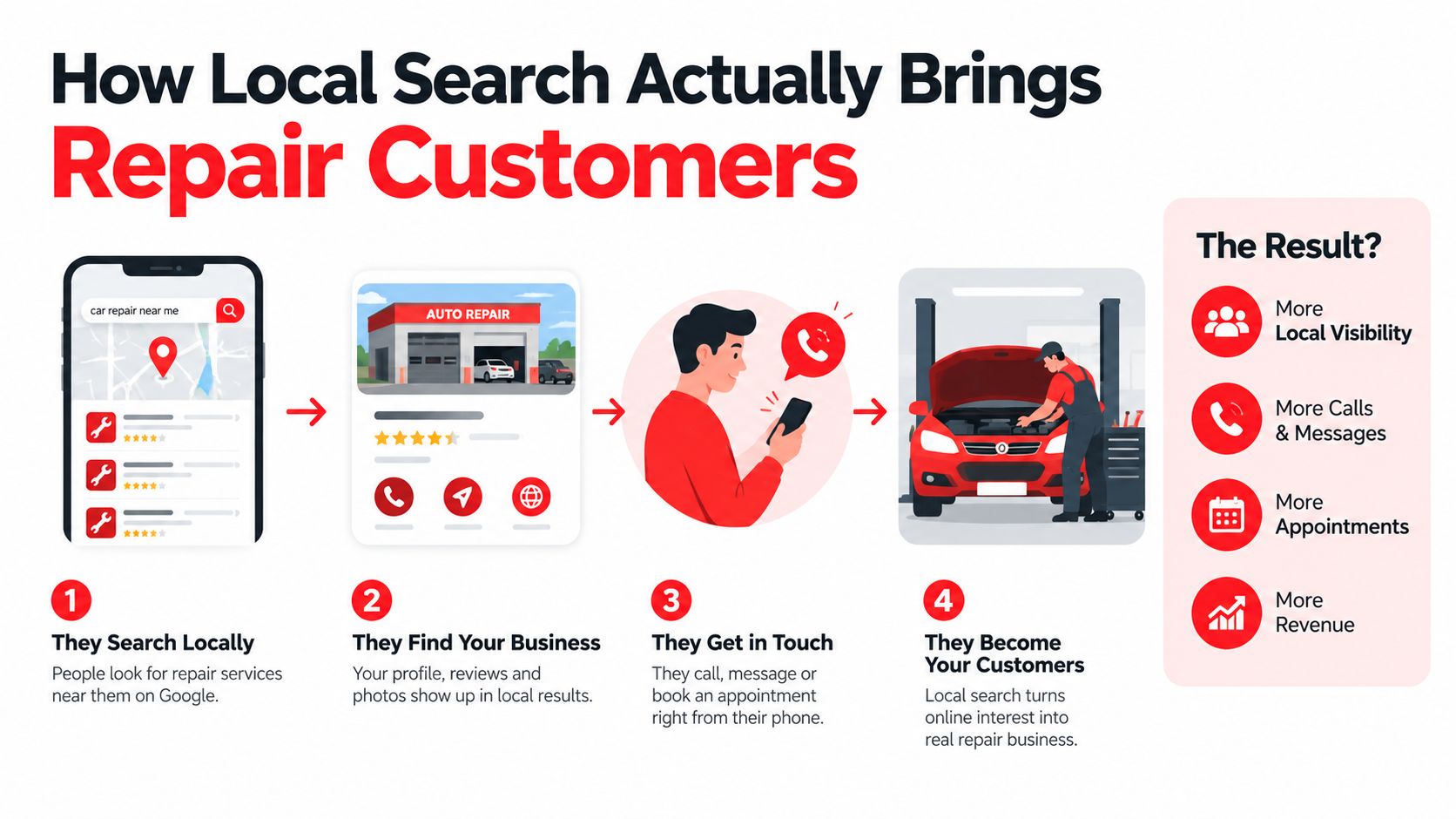
Control the information customers see
A Google Business Profile is a starting point, not the complete local strategy. The same business name, address, phone number, opening hours, service area, and service descriptions should appear consistently across the profile, website, map listings, and relevant directories. Contradictory information creates hesitation at exactly the moment a customer is comparing options.
The shop also needs service-specific pages. A page for brake repair should explain what the service covers, which symptoms justify an inspection, how the appointment works, and how the customer can call or request help. A generic homepage forces the visitor to search again for the answer, which adds friction and weakens relevance.
Photos support the same purpose. Exterior images help customers identify the building, while service and inspection images give visitors evidence that the business handles real work. Reviews should reinforce the shop's standards, especially communication, estimate clarity, timing, and follow-through.
For a practical explanation of how local visibility fits together, offers useful context on local search result elements and optimization priorities.
Audit the local path before buying traffic
A shop should check these items before spending on another channel:
- Business details: Verify hours, phone number, address, service area, and holiday information.
- Service relevance: Confirm that brake repair, diagnostics, oil service, and other priority jobs have dedicated pages or clear profile categories.
- Mobile contact: Test click-to-call buttons and forms on an actual phone.
- Trust evidence: Review photos, recent customer feedback, warranty information, and technician explanations.
- Conversion tracking: Separate calls, forms, direction requests, booked appointments, approved estimates, and paid work orders.
- Response ownership: Assign a person to monitor calls, messages, and form submissions during operating hours.
Local search works when the shop controls the complete customer journey, not just the listing. A prominent result that sends visitors to outdated hours or an awkward form still loses the job.
Turning Your Website and Google Business Profile Into Booked Jobs
A driver searches for brake work from a phone, reaches the shop's profile, and calls within minutes. The shop either turns that intent into a scheduled visit or loses it to a competitor. The website and Google Business Profile must make the next action obvious and connect it to follow-up.
Build service pages around jobs customers actively seek, including brake repair, diagnostics, and oil service. Each page should identify the service area, display accurate hours, explain what happens after contact, and offer two clear choices: call the shop or request an appointment. Avoid remote diagnosis. The page's job is to reduce uncertainty, capture the concern, and start a useful conversation.
Google research reported that 50% of smartphone local searches resulted in a store visit within one day, compared with 34% for computer or tablet searches, and 18% of smartphone local searches led to a purchase within a day versus 7% for non-local searches. The operational takeaway is clear: mobile conversion belongs at the center of the booking process.
Build for the phone in the customer's hand
A mobile visitor should reach a person without pinching, zooming, opening several menus, or completing a long intake form. Place the phone number near the top of the page and keep the booking button easy to find. Ask only for information the advisor needs to respond, such as name, phone number, vehicle, concern, and preferred timing.
A branded website with integrated contact forms can shorten the route from search to inquiry, but the form is only the first handoff. Someone must monitor submissions, call back promptly, confirm the appointment, and record the source. The commercial result is a booked appointment, followed by an approved estimate and completed work order.
Measure the commercial result
Track each stage separately so marketing activity can be tied to shop revenue:
| Stage | What to record |
|---|---|
| Inquiry | Call, form submission, message, or direction request |
| Appointment | Date, source, vehicle, service requested, and booking status |
| Estimate | Inspection result, recommended work, estimate amount, and approval status |
| Work order | Completed repair, revenue, gross profit, and customer history |
| Follow-up | Review request, referral source, and next maintenance opportunity |
A Google Business Profile may generate calls, while a service page may generate forms. Paid search may produce both. Without source labels, an owner cannot tell which channel creates approved work and which produces unqualified inquiries.
Rankings, impressions, and clicks help diagnose visibility, but they do not fill a bay by themselves. Give more attention to a smaller source that produces approved jobs than to a larger source that generates activity without appointments. That discipline keeps the website focused on work orders, not vanity metrics.
Why Photo-Rich Inspections Are Your Real Competitive Edge
Independent shops don't need to win every customer by being the cheapest option. For complex work, the more durable advantage is reducing perceived risk.
J.D. Power's 2025 U.S. Aftermarket Service Index, based on 10,348 vehicle owners, found that aftermarket providers still trail dealerships in customer trust for complex vehicle repairs (J.D. Power's Aftermarket Service Index). That trust gap matters when a customer is considering engine, electrical, brake, or advanced-driver-assistance work. A low price may attract attention, but it doesn't answer the customer's deeper questions: Is the diagnosis proven? Is the repair urgent? What evidence supports the estimate? What happens if the concern returns?
Photo-rich inspections give the service advisor a way to answer those questions before the customer approves the work.

Turn evidence into a customer-facing product
A strong inspection report combines visual proof with plain-language notes. It identifies the observed condition, explains the consequence, separates urgent work from work that can be planned, and links each recommendation to an itemized estimate. Warranty information and realistic completion expectations complete the picture.
That process helps in three places:
- Before approval: The customer sees why the work is being recommended.
- During the repair: The customer receives clearer progress updates and fewer surprises.
- After completion: The customer has a record that supports confidence, future maintenance, and referrals.
Transparency should also appear in acquisition content. A service page can show how the shop documents brake wear. A social post can explain how a diagnostic result is confirmed. A review request can remind a satisfied customer to mention communication, photos, and estimate clarity. The same operating habit supports search content, reputation building, and sales conversion.
A discount lowers the price. Evidence lowers the customer's fear of making the wrong decision.
The distinction is important. Discounts may create short-term inquiries, but they can attract customers who compare only price and leave when another shop offers less. Clear inspections make the shop's process visible, allowing an independent business to compete on professionalism and accountability.
The shop should set a standard for every report. Photos need to be relevant, notes need to be understandable to a non-technician, and recommendations need to distinguish fact from opinion. When technicians and advisors follow that standard consistently, transparency becomes a recognizable part of the brand and a practical reason for a new customer to approve work.
Building a Referral Engine That Runs After Every Repair
Word of mouth shouldn't depend on whether a customer happens to mention the shop at a neighborhood gathering. The front desk can turn a successful repair into a repeatable referral process, provided the timing and measurement are handled carefully.
A Harvard Business Review study reported that roughly 20% of new customers came through referrals, yet those customers generated 72% of new-customer profits. The commercial lesson is that referral performance shouldn't be judged only by lead volume. A referred customer may arrive with more trust and require less persuasion before booking or approving work.
Use a clear post-service sequence
The process should begin at checkout, when the shop can ask permission for follow-up communication. After the repair, the customer receives the digital invoice and inspection record. Once the shop has delivered the completed work successfully, staff request an honest review. The referral invitation comes after that, with a simple contact or booking link that the existing customer can share.
The sequence matters. Asking for a positive review in exchange for a reward damages credibility and may conflict with platform policies. A shop can offer a referral incentive where appropriate, but it should never ask customers to manipulate reviews or recommend work they haven't experienced.
The follow-up should also reflect the vehicle and repair history. Maintenance reminders can be segmented by mileage, repair type, and expected service interval. A customer who recently declined nonurgent work shouldn't receive aggressive messages immediately afterward. Suppressing unsuitable reminders protects trust and keeps useful communication from becoming spam.
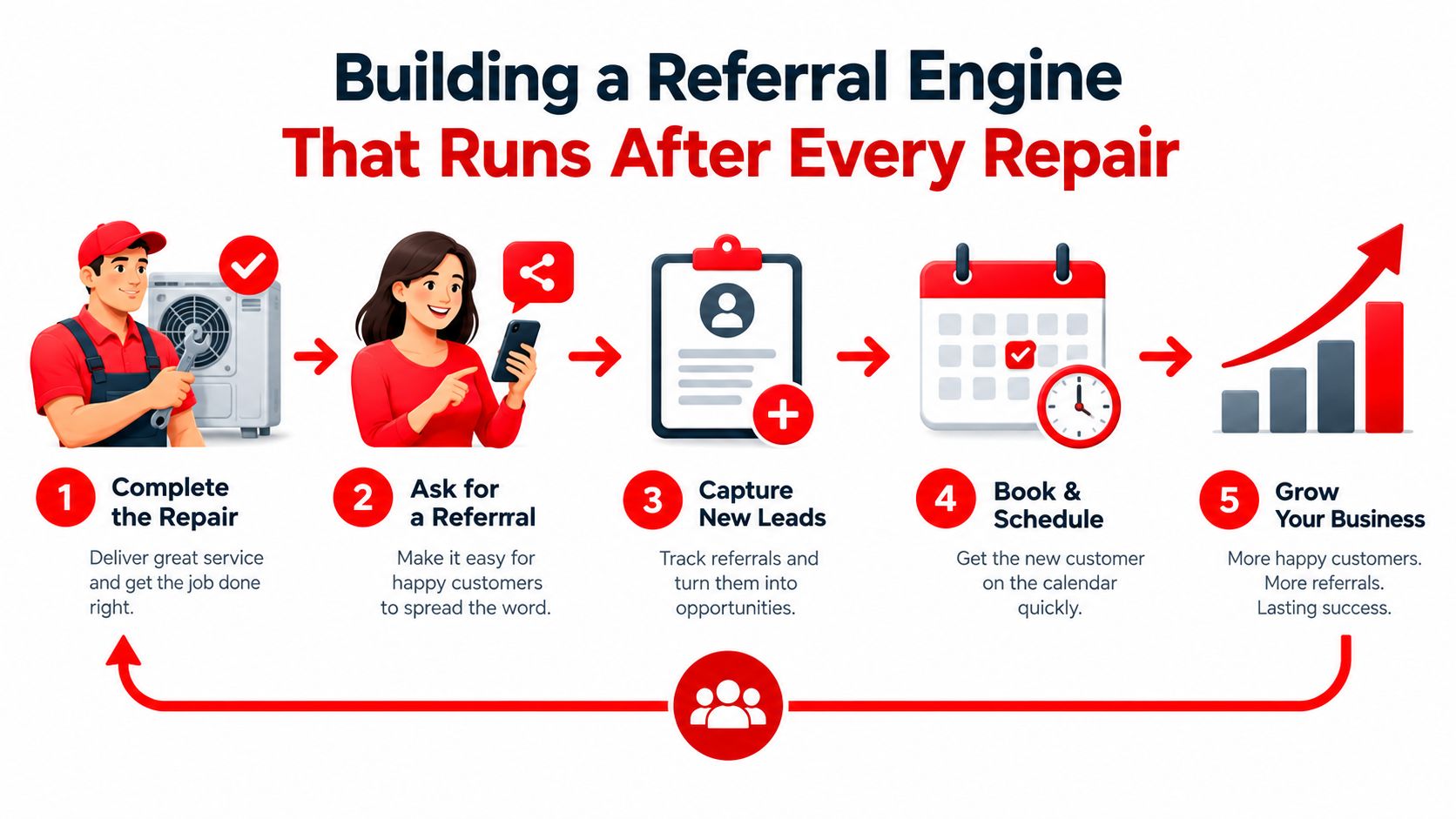
Measure the engine, not the activity
The owner should track four outcomes:
- Referral rate: How many new inquiries identify an existing customer as the source?
- Repeat-visit rate: How often do acquired customers return for another service?
- Gross profit per acquired customer: Which sources produce economically useful work after acquisition costs?
- Customer lifetime value by cohort: How does the value of referral customers compare with customers from other channels over time?
The front desk must distinguish a referral lead from a referral customer. An unverified name passed along by an existing customer isn't the same as a booked appointment, and a booked appointment isn't the same as paid repair work. Those stages belong in separate fields.
A referral program also depends on the underlying service experience. Customers are more likely to recommend a shop that communicates clearly, supplies evidence, completes work reliably, and provides an invoice they can understand. The referral request starts after the repair, but the reason to refer is created throughout the entire visit.
Adding Paid Ads, Social Discovery, and Used-Car Listings
Paid channels work best after the shop has a reliable conversion path. Google Ads can direct high-intent searches toward a brake, diagnostic, or urgent-repair page, but the campaign can't compensate for inaccurate hours, slow responses, or a form no one monitors. The first paid test should have a narrow service focus, a defined geographic area, and source tracking that continues through the approved work order.
Budget decisions should follow capacity and economics rather than a generic spending rule. A shop with limited availability may need short campaigns during predictable slow periods instead of an always-on campaign that creates demand the team can't handle. The useful question isn't whether the ad received clicks. It's whether the cost of the campaign produced appointments and approved work at acceptable margins.
Social discovery deserves attention because local search no longer happens only in a traditional search box. BrightLocal's consumer-search research found that 1 in 4 Gen Z consumers reported using social media as their primary method for local search, while 15% of consumers used Google Maps as their first destination. A shop should keep its service descriptions, hours, phone number, location, photos, and booking path consistent across the platforms that matter to its customers.
A practical resource on turning social activity into commercial action is. The principle is more important than the platform: every post needs a useful destination, such as a service page, inspection explanation, or contact form.
Used-car listings can add another entry point. A customer who trusts a shop's inspection process may also look to that business when searching for a vehicle. A branded website with optional used-car listings can support that relationship without forcing the shop to manage another customer-facing vendor. The listing still needs accurate details and a direct inquiry path, otherwise it becomes another page that generates attention without appointments.
Converting Calls and Contact Forms Into Real Appointments
The acquisition system is tested when a real person calls or submits a form. A missed call, vague answer, or forgotten callback can erase the value of every preceding channel.
The shop should define a response standard that the front desk can follow during busy periods. Staff confirm the vehicle, the customer's concern, and the desired timing. They explain the next step without promising a diagnosis they haven't performed. If an estimate window or inspection fee applies, the advisor should communicate it clearly and record the source of the inquiry.
Contact forms need the same discipline. Every submission should create an assigned task, an owner, and a follow-up status. A digital shop board can make unanswered inquiries visible alongside vehicles already checked in. Customer lookup by name, plate, or VIN helps staff find vehicle history quickly, which avoids making a returning customer repeat information and gives the advisor useful context.
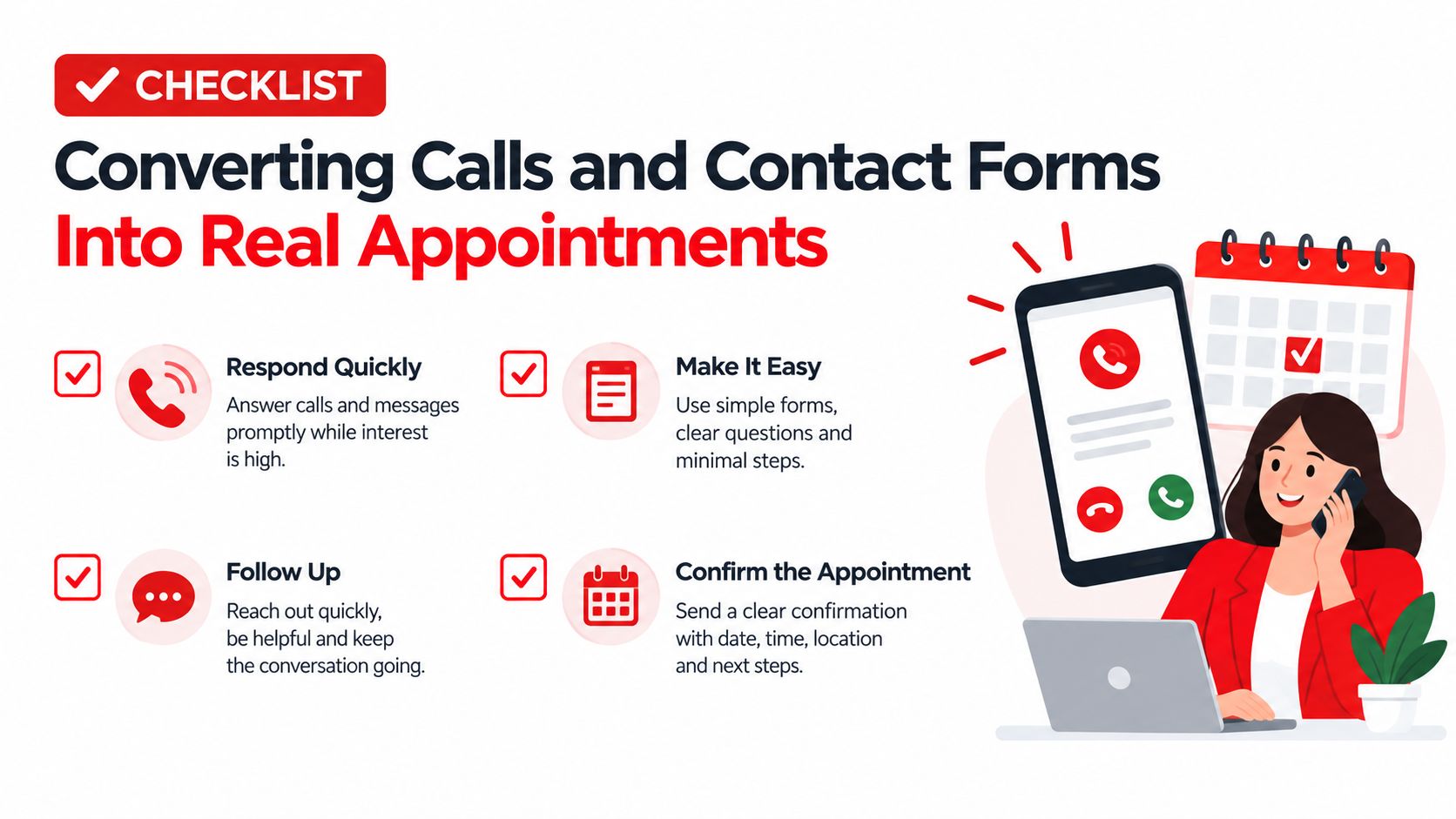
The most common conversion failures are operational:
- Long hold times or calls that reach voicemail without a prompt callback.
- Forms that request too much information before a customer can ask for help.
- Vague pricing language that makes the shop sound evasive.
- Leads that aren't tagged by source, so closed work can't be attributed.
- Appointments that aren't followed through to estimates and paid repairs.
A weekly review should take only a focused discussion. The team identifies which source produced the most booked appointments, which source produced the most approved estimates, and which sources generated inquiries that quietly disappeared. That review connects local search, website content, inspections, referrals, paid campaigns, and front-desk execution to the same business outcome.
RedAppy provides an all-in-one shop management platform with a professional branded website, contact forms, digital inspections, estimates, customer lookup, scheduling, and analytics that can connect inquiries to completed work. Visit RedAppy to review the features or contact the team about building a more measurable path from customer discovery to approved repair.
Ready to Transform Your Shop?
RedAppy helps auto repair shops create professional digital estimates with photos and videos, send them instantly via text or email, and get customer approvals in seconds. No credit card required to start.