
How to Hire Automotive Technicians for Your Auto Repair Shop
Approximately 70,000 automotive service technician and mechanic openings are projected each year in the United States from 2024 through 2034, including both growth and replacement demand, according to the. That makes technician hiring an operating system, not a panic response every time a bay becomes empty.
A shop that posts a job only after a resignation is already behind. The better approach keeps sourcing, screening, onboarding, scheduling, training, and retention connected. The technician who accepts the offer must find the same pay structure, workflow, equipment, and advancement path that appeared during the interview.
Table of Contents
- Why Hiring Technicians Is a Pipeline, Not a Vacancy
- Auditing Your Shop Before You Post the Job
- Sourcing Channels That Actually Produce Applicants
- Screening for Skill, Not Just Years on the Resume
- Designing an Offer That Earns Loyalty
- A Practical 90-Day Onboarding and Measurement Plan
- A Short Checklist and Your Next Step
Why Hiring Technicians Is a Pipeline, Not a Vacancy
A vacancy-fill mentality starts with urgency. A technician leaves, repair orders pile up, customers wait longer, and the owner publishes a generic job description. The first applicant who appears qualified gets an interview, then the shop makes an offer before anyone has defined the actual role.
That process creates predictable confusion. An entry-level technician may be judged against the standards of a diagnostic specialist. A skilled diagnostician may arrive expecting reliable scan-tool support and organized dispatching, only to find that every job is assigned by interruption. The shop calls the problem a hiring failure, but the failure happened before the job was posted.
The labor market supports a permanent pipeline. The BLS identifies replacement demand from retirement, career changes, and other separations as part of the projected annual openings, not only new jobs. A shop can't recruit only when headcount drops and expect a stable team. It needs relationships with technical schools, referral sources, apprenticeships, and adjacent trades before an urgent vacancy appears.
Define the role before defining the candidate
The job description should describe the work the shop can support. A general service technician, an engine-performance technician, and a lead diagnostician need different equipment, supervision, pay mechanics, and performance expectations.
Before publishing an opening, the service manager should record:
- Technical responsibility: Which work can the technician perform independently, and which work requires review?
- Workflow responsibility: Will the technician write diagnostic notes, document inspections, communicate findings, or only complete assigned repairs?
- Equipment requirement: Which scan tools, information systems, specialty tools, and test equipment are available?
- Development opportunity: What can an entry-level hire learn, and what can an experienced technician lead?
- Operating constraints: Which schedule, bay, workload, and compensation structure are genuinely available?
A pipeline also gives the shop a more honest choice between developing an early-career technician and hiring an experienced diagnostician. Those are not interchangeable hires. The first requires mentoring and protected learning time. The second requires technical autonomy, diagnostic support, and a role that uses advanced ability instead of burying it under routine work.
| Factor | Vacancy-Fill Approach | Pipeline Approach |
|---|---|---|
| Trigger | A resignation or workload crisis | Ongoing recruiting activity |
| Role definition | A broad “experienced mechanic” label | Specific competencies and responsibilities |
| Candidate evaluation | Résumé and interview impression | Structured skills evidence and references |
| Onboarding | Immediate assignment to available work | Planned ramp with mentoring and checkpoints |
| Retention | Treated as an employee issue | Treated as a workflow, pay, and management responsibility |
| Leadership view | Hiring is an occasional expense | Hiring is a core operating process |
Practical rule: A shop shouldn't ask only whether a candidate can do the work. It should ask whether the shop has built a role in which that candidate can do good work consistently.
The pipeline model also exposes a hard truth. Recruiting competitors' employees alone can't solve a replacement-driven labor market. A durable system combines referrals, school relationships, paid training, clear progression, predictable scheduling, and modern workflow tools that reduce avoidable friction in the bay.
Auditing Your Shop Before You Post the Job
A qualified technician evaluates the shop, too. The interview isn't a one-way inspection. Candidates notice broken scan tools, cluttered bays, missing information subscriptions, weak parts coordination, unclear dispatching, and compensation that depends on verbal explanations.
A pre-hire audit should score five operating areas on a simple scale from 1 to 5. The score isn't a scientific benchmark. It's a forcing device that makes the owner identify the gaps an applicant will see during a shop visit or working interview.
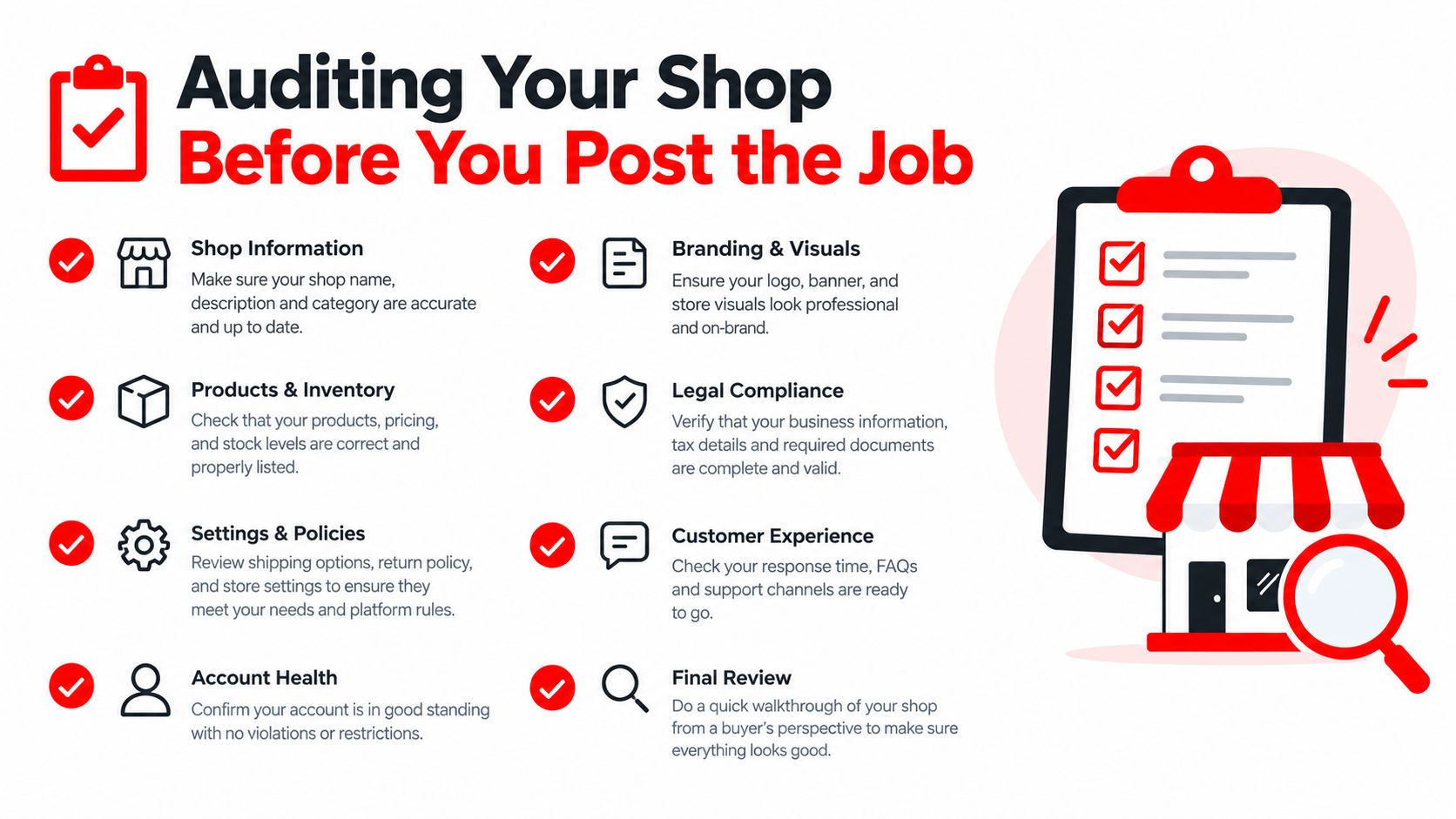
Five checkpoints that affect acceptance
- Tools and equipment: Inspect lifts, battery testers, scan tools, scopes, chargers, specialty tools, and safety equipment. A low score means the technician will spend time compensating for the shop instead of diagnosing vehicles.
- Bay utilization: Walk through the bays during a normal shift. Check whether vehicles, parts, cores, and discarded components block movement or delay work.
- Workload visibility: Review repair-order volume, flagged hours, diagnostic time, and the amount of work assigned to each technician. The shop needs to know whether the role has enough productive work without creating an impossible queue.
- Compensation clarity: Write down the hourly or flat-rate structure, benefits, guarantees where applicable, tool support, training support, and realistic expectations. “Competitive pay” isn't a compensation plan.
- Advancement criteria: Document what separates an apprentice, general technician, diagnostic specialist, and foreman. If the owner can't explain the next step, a candidate can't evaluate the opportunity.
The lowest score matters more than the average. A clean lobby won't offset a broken diagnostic platform. A generous pay rate won't repair a bay that makes every job harder. Two obvious gaps should be fixed before the posting goes live, while the remaining gaps should be disclosed candidly during interviews.
Candidates don't need a perfect shop. They do need an accurate picture. A manager who promises modern workflow tools and then assigns work through scattered notes creates distrust before the first paycheck. The same is true when an offer describes hourly pay but the day-to-day operation depends on uncertain flat-rate production.
Turn the audit into a hiring filter
The audit should shape the job description and interview. If the shop has strong electrical equipment but limited diagnostic coverage, the posting can target a technician who wants to build that capability. If the shop has heavy workload but weak mentoring, the owner should not advertise a development role until a mentor and training schedule exist.
This step prevents repeated onboarding failures. Instead of blaming each departing technician, the manager can identify whether the shop is losing people because of equipment, workload, pay, management, or a missing career path.
Sourcing Channels That Actually Produce Applicants
No single recruiting source fits every shop. A small garage that needs a diagnostic specialist immediately should not use the same channel mix as a growing operation that wants to develop entry-level talent.
Training supply reinforces the need for several channels. Reporting from TechForce Foundation and WardsAuto placed U.S. automotive technician employment at 794,600 in 2023, more than 5% above the 2019 pre-pandemic level, while projected demand exceeded 470,000 technicians between 2024 and 2028. The same report projected more than 89,000 new technician roles in 2028, including approximately 71,671 replacement positions, and recorded 37,449 postsecondary transportation-program completions in 2023. These figures appear in.
Match the channel to the hiring problem
Technical colleges and high-school career programs are the strongest long-term source for entry-level development. They let a shop observe practical ability, communication, attendance, and curiosity before making an offer. The cost is patience. School relationships require consistent contact, shop tours, guest instruction, internships, or apprenticeship coordination.
Employee referrals usually produce the clearest cultural context because an existing technician can explain the actual work environment. Referrals still need structured screening. A trusted employee may recommend a friend who is likable but not suited to the role, and favoritism becomes expensive when the same rubric isn't used.
General job boards provide reach and applicant volume. They also create résumé noise. A precise posting should name the vehicle systems, diagnostic responsibilities, schedule, pay formula, available equipment, and training support. Broad language attracts broad applications.
Mobile and fleet operations can produce experienced candidates who understand utilization, documentation, and service discipline. The shop must explain why the move benefits the technician. A candidate won't leave a fleet role for another vague promise of “competitive pay.”
Competitor shops may produce senior talent quickly, but poaching isn't a complete strategy. Replacement demand keeps replenishing vacancies, and an aggressive hiring approach can damage local relationships. The offer must compete through operating quality and progression, not only money.
| Channel | Applicant Quality | Cost per Hire | Time-to-Applicant | Best-Fit Shop |
|---|---|---|---|---|
| Technical schools | Strong development potential | Relationship investment | Longer cultivation | Shops building an entry-level bench |
| Employee referrals | Strong context and cultural fit | Referral incentive or staff time | Often faster | Shops with a trusted existing team |
| General job boards | Wide and uneven | Posting and screening time | Often fast | Shops needing broad reach |
| Mobile or fleet operations | Practical experience | Targeted outreach | Variable | Shops seeking experienced technicians |
| Competitor shops | Potentially advanced skills | High relationship risk | Variable | Shops with a clear senior-level offer |
A simple decision tree works well. If the shop needs capability immediately, use referrals and targeted outreach while keeping a school relationship active. If the shop can train, prioritize technical programs and apprenticeships. If applicant flow is weak, add a general job board, then improve the job description before adding more advertising.
The shop should never rely on one source. A pipeline is healthy when the next candidate conversation starts before the current vacancy becomes an emergency.
Screening for Skill, Not Just Years on the Resume
Years on a résumé don't reveal diagnostic reasoning, documentation quality, test discipline, or coachability. A technician may have long tenure with limited exposure to electrical faults, while an early-career applicant may reason carefully, use a scan tool correctly, and ask for help before replacing an unnecessary component.
A structured screen produces better comparisons. Every candidate should face the same core questions, practical expectations, and scoring rubric. The manager can then distinguish a skill gap that training can solve from a reasoning problem that will create comebacks.
Build layers into the screen
Start with a short diagnostic exercise based on drivability, electrical, and troubleshooting scenarios. The exercise should test the order of operations: symptom confirmation, visual inspection, scan data, circuit testing, repair validation, and documentation. The goal isn't to reward memorized answers. It is to reveal whether the candidate tests a cause before recommending a part.
Then verify credentials precisely. ASE eligibility and ASE certification aren't the same thing. The explain that candidates must pass the relevant test and document qualifying hands-on experience, while classroom or training-lab time doesn't automatically count as workplace experience.
Ask for the exact certification series, the experience category supporting it, and the certification status. ASE certification covers specific technical areas, not one general mechanic credential. The lists areas such as engine repair, transmissions, drivetrains, suspension and steering, brakes, electrical and electronic systems, heating and air conditioning, and engine performance. It also identifies different scored-question counts by test and requires professional certifications to be retested every five years.
Use a paid working interview
A paid working interview should use a known fault or a controlled repair task that reflects the shop's actual workload. A senior technician should score the candidate on safe vehicle handling, scan-tool use, test planning, communication, estimate notes, repair verification, and willingness to stop when evidence is incomplete.
The interview questions should also change. “How many years has the candidate wrenched?” is less useful than:
- “Walk through the last intermittent no-start diagnosis.”
- “What evidence separated a wiring fault from a failed module?”
- “How was the repair verified before delivery?”
- “What information would the service advisor need to explain the recommendation?”
- “Which diagnostic step would be repeated if the first result contradicted the symptom?”
A useful companion resource is this guide to, which supports evaluating demonstrated capability rather than relying on résumé labels.
| Screening Method | What It Measures | Time Required | Predictive Value |
|---|---|---|---|
| Résumé review | Background and claimed exposure | Short | Low without verification |
| Structured phone screen | Communication and basic fit | Short | Moderate for early filtering |
| Diagnostic exercise | Reasoning and test sequence | Focused | Stronger than tenure alone |
| Credential verification | Exact certification and experience basis | Administrative | Essential for accurate claims |
| Paid working interview | Practical execution and shop fit | Extended | Strong when scored consistently |
| Reference conversation | Reliability and working behavior | Variable | Useful confirmation, not a substitute |
The manager should record evidence, not impressions. A candidate who needs training can still be a strong hire if the gap is visible, teachable, and matched to the shop's capacity.
Designing an Offer That Earns Loyalty
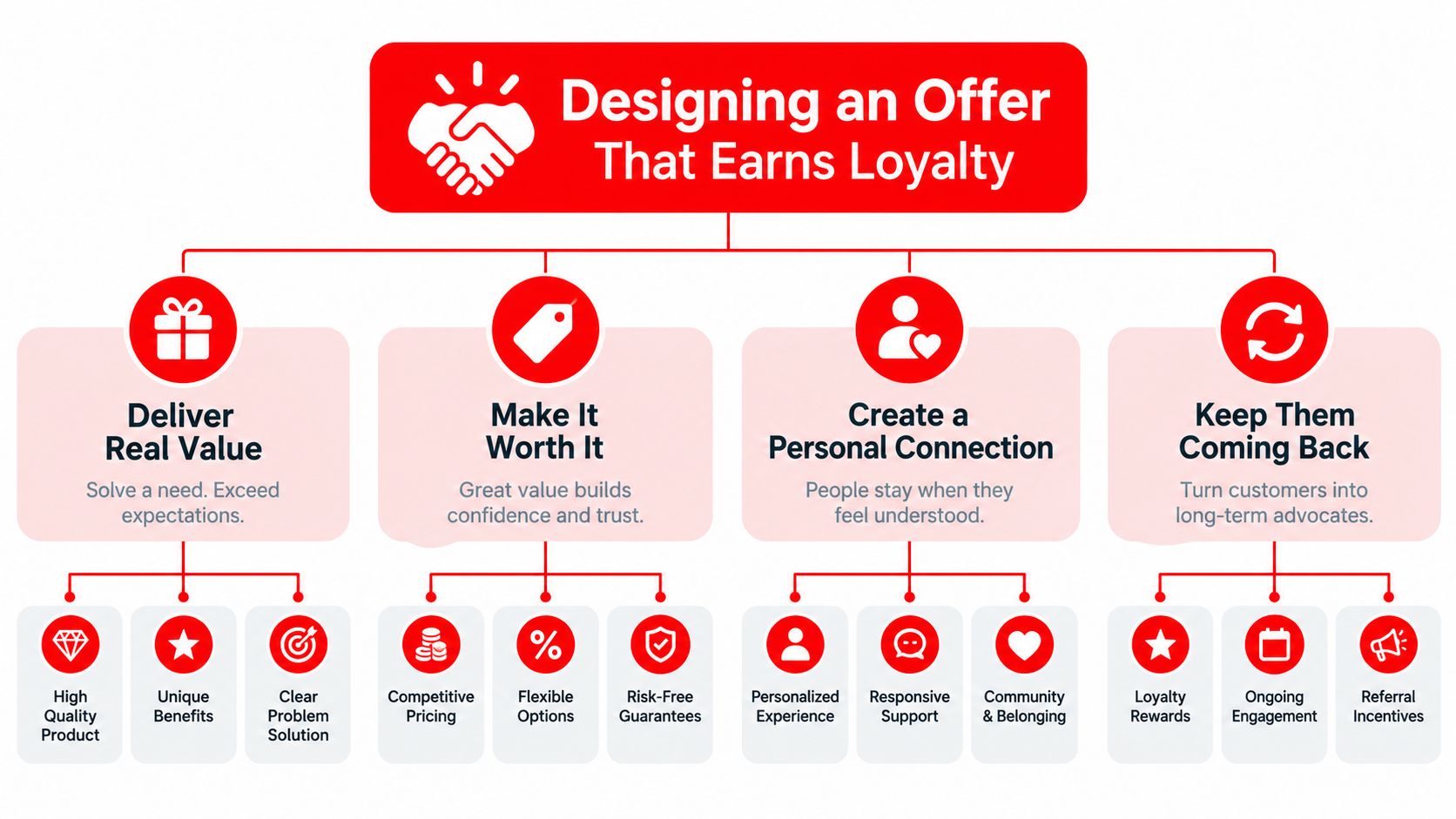
Retention begins before the offer is signed. A technician leaves early when the job, pay mechanics, schedule, or advancement path differs from what the interview promised. Compensation matters, but it can't compensate for disorganized work, weak support, or a future that remains undefined.
Survey reporting from MOTOR found that 31% of surveyed shops identified technician shortages as their biggest challenge. The same reporting identified competition from other industries, negative perceptions of the profession, low compensation, inadequate benefits, and limited advancement as barriers. Shops most often retained technicians through a positive work environment, competitive pay and benefits, and work-life balance, while only 10% reported offering a clear formal career path. The findings are summarized in.
Put the employment proposition in writing
A credible offer should explain three financial elements:
- Base pay: State the hourly rate or flat-rate structure, including how the shop handles guarantees, training time, meetings, and nonproductive delays.
- Productivity formula: Explain how bonuses or incentives are calculated, which data is used, and when the numbers are reviewed.
- Visibility: Show the technician how flagged hours, billed work, diagnostic time, comebacks, and approved estimates are recorded.
The offer should also describe tool support, training support, benefits, scheduling expectations, facility standards, and the progression ladder. A technician shouldn't need to reverse-engineer the compensation plan from a conversation with the owner.
The ladder can include supervised entry-level work, general repair responsibility, diagnostic specialization, and foreman duties. Each move should depend on demonstrated competencies, quality results, documentation, and the ability to support the workflow. Promotions earned through visible evidence create less conflict than raises negotiated through frustration.
Treat early-career technicians as professionals
A 2025 survey of 308 Gen Z technicians and 300 repair-shop owners found that 48% of owners considered attracting younger technicians very or extremely challenging, while 67% identified finding skilled technicians as a major hurdle. Owners and candidates also disagreed about loyalty. 58% of owners believed younger technicians leave more often, while Gen Z respondents viewed themselves as no less loyal than other generations. The survey reported that 70% of shops offered structured training, and 63% reported average technician tenure of at least five years. These findings come from.
The practical response isn't to stereotype younger technicians as disloyal. It is to make development concrete. Weekly one-on-ones, written goals reviewed every 30 days, a named mentor, and a direct answer to “what does year two look like?” establish trust through operating facts.
A career path isn't a slogan on a job posting. It is a written sequence of skills, reviews, responsibilities, and pay changes.
A Practical 90-Day Onboarding and Measurement Plan
A new technician often forms an opinion of the shop after the first few weeks, when the daily reality becomes clearer than the interview. If dispatching is chaotic, tools are unavailable, promised mentoring disappears, or pay data can't be explained, the employee starts evaluating an exit before the owner sees a performance problem.
A 90-day plan keeps the relationship factual. It should be visible to the owner, service manager, mentor, and technician through the same shop management records used for repair orders and scheduling.
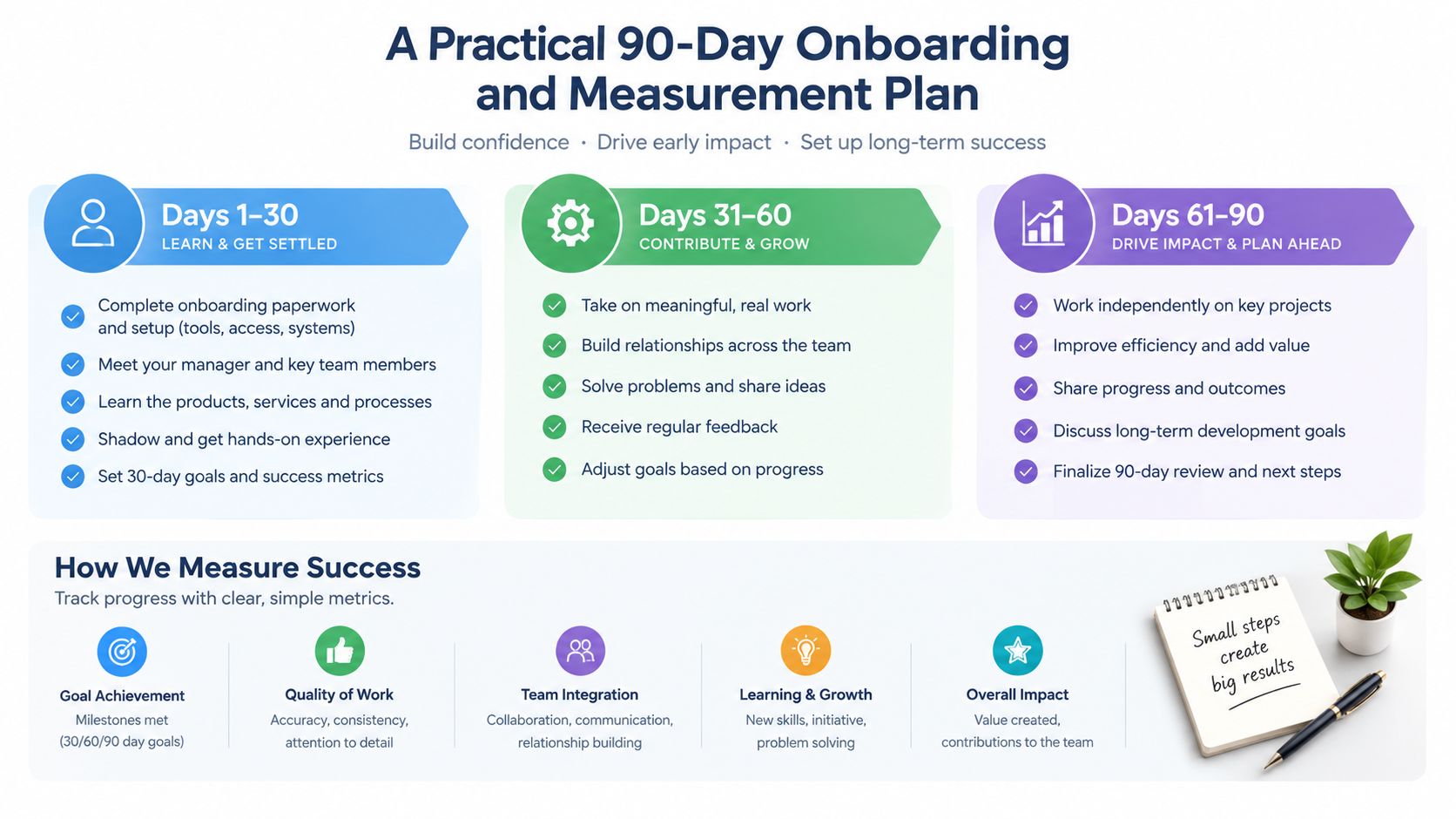
Days 1 through 30 establish the environment
The first phase should cover the shop tour, safety procedures, tool inventory, parts process, inspection standards, customer communication rules, and the shop management system. The new technician should pair with a mentor on appropriate jobs rather than being sent immediately into the hardest available repair.
Daily end-of-shift debriefs catch problems while they are still easy to solve. The manager should ask what blocked progress, which information was missing, whether the workload matched the role, and whether the technician understood the pay calculation. A short conversation can prevent a quiet assumption from becoming a resignation.
A practical can help the manager prepare access, documentation, equipment, and introductions before the first shift.
Days 31 through 60 build controlled independence
The technician can begin solo flat-rate work with mentor review on each relevant ticket. The manager should schedule a first independent diagnostic assignment that matches demonstrated skill, then review the test plan, notes, estimate accuracy, and repair verification.
This is also the right period for a direct check-in about pay, scheduling, team fit, workload, and support. The discussion should compare the written offer with the actual experience. If the shop sold a progression path, the manager should identify which competency milestone comes next and what evidence will demonstrate it.
Days 61 through 90 measure performance
The final phase should review flat-rate efficiency against the agreed expectation, comeback rate, estimate accuracy, training completion, documentation quality, and teamwork. A shop can set an internal target such as a comeback rate under 2% or estimate accuracy above 90%, but those are management targets, not universal industry facts. The target must be defined before measurement begins and interpreted alongside job difficulty and supervision.
The owner and technician should sign a forward plan covering training, work mix, mentor support, and the next progression review. The dashboard should hold the same data used in the conversation, so the meeting stays focused on observable performance rather than the sales pitch made during recruitment.
Management test: If the shop can't show a new technician the evidence behind a performance conversation, the shop hasn't built a measurement system yet.
A separate survey of 514 shop owners and managers found that 46% said the skilled-technician shortage had a moderate to highly significant impact on their business. In related reporting, 31% of 752 general repair shops named technician shortages as their biggest challenge, while only 3% listed improving turnover and retention among their top goals. The findings are covered in. The lesson is operational. Shops should track 90-day acceptance, first-year retention, productivity ramp, comebacks, training completion, and hiring source instead of treating a signed offer as the finish line.
A Short Checklist and Your Next Step
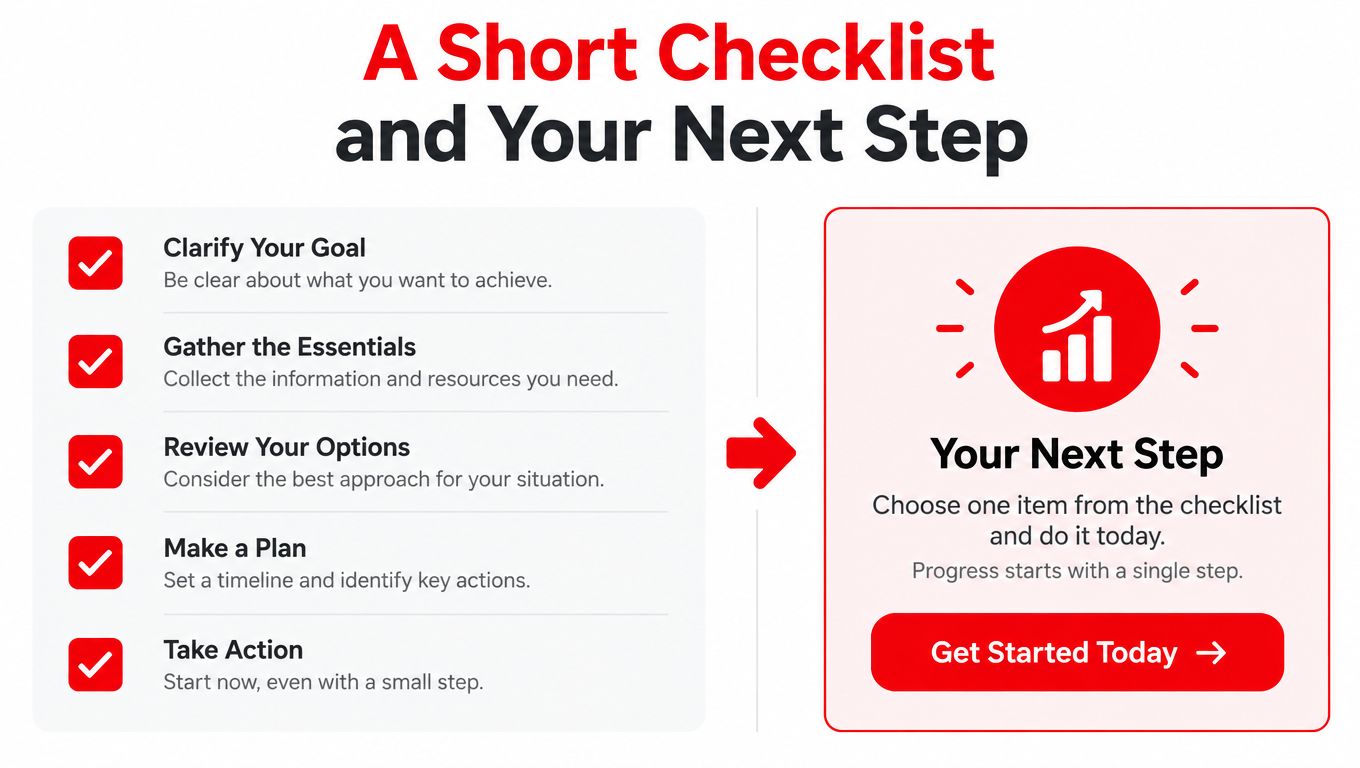
A repeatable technician pipeline can fit on one operating checklist. The owner or service manager should review it before advertising, during selection, and after the offer is accepted.
- Define the position: Name the technical level, daily responsibilities, equipment available, schedule, and expected documentation.
- Audit the shop: Score tools, bays, workload, compensation clarity, and advancement criteria from 1 to 5.
- Use several sources: Maintain school, referral, job-board, fleet, and local industry relationships instead of waiting for one channel to deliver.
- Screen consistently: Use the same diagnostic exercise, credential verification, competency questions, reference process, and paid working interview for every serious candidate.
- Write the offer clearly: State pay mechanics, benefits, tool and training support, scheduling, review dates, and progression requirements.
- Assign a mentor: Give the new technician a named person responsible for practical support and regular feedback.
- Track the ramp: Record productivity, diagnostic quality, estimate accuracy, comebacks, training completion, and employee feedback in the shop system.
- Review retention: Compare outcomes by hiring source, manager, location, role, and progression milestone.
The hiring process becomes calmer when the shop's operating data is visible. Scheduling shows whether the role has workable capacity. Workflow records show whether jobs move without unnecessary delay. Progression data gives the technician a fair explanation of what comes next.
RedAppy connects repair-order dispatching, scheduling, inspections, estimates, technician workflow, and performance analytics in one shop management platform. Shop owners ready to replace hiring guesswork with clearer workflow and progression data can explore the RedAppy features or contact the team to discuss the shop's operating needs.
Ready to Transform Your Shop?
RedAppy helps auto repair shops create professional digital estimates with photos and videos, send them instantly via text or email, and get customer approvals in seconds. No credit card required to start.