
Car Inspection List: Every Check Your Vehicle Needs
A complete inspection list car owners can rely on is one of the most practical tools in vehicle maintenance. Most mechanical failures don't happen without warning — they develop slowly through worn parts, low fluids, and ignored symptoms. A structured checklist catches those problems before they become expensive repairs or roadside breakdowns.
According to the, nearly 80% of vehicles on the road need service or repairs of some kind. That statistic reflects how easy it is to fall behind on routine checks, especially without a clear system to follow.
This guide covers every major inspection point your vehicle needs — from fluid levels and brakes to tires, lights, and safety systems. Whether you're a driver doing a quick walk-around or a shop technician running a full multi-point inspection, this reference gives you a precise, organized framework to work from.
Table of Contents
What Is a Car Inspection?
A car inspection is a systematic evaluation of a vehicle's components to confirm they meet defined safety, mechanical, or emissions standards. Depending on the context, an inspection may be required by law or performed as a preventive maintenance measure.
The distinction between these two types matters for vehicle owners and shop operators alike.
Two Main Types of Car Inspections
State-mandated inspections are required by law and must be completed at licensed inspection stations. They fall into two categories:
- Safety inspections — evaluate mechanical components that affect the safe operation of the vehicle, such as brakes, tires, lights, and steering.
- Emissions inspections — measure pollutants from the vehicle's exhaust system and verify that emissions control equipment is functioning correctly.
Some states require both. Others require only one, or neither.
Thirty-four states plus the District of Columbia require periodic vehicle inspections — but requirements vary significantly in scope, frequency, and enforcement. According to the, states administer their own programs independently, meaning a vehicle that passes in one state may not meet the standards of another.
General maintenance inspections are performed at the owner's or technician's discretion. These multi-point inspections (MPIs) are not tied to legal requirements. Their purpose is to identify wear, potential failures, and deferred maintenance before problems escalate.
Why the Distinction Matters
A state inspection confirms minimum legal compliance — it is a pass/fail evaluation against a fixed standard. A maintenance inspection goes further, giving technicians the opportunity to document the overall condition of the vehicle across every major system.
In practice, vehicles can pass a state inspection and still have components approaching the end of their service life. A maintenance inspection captures that nuance; a state inspection typically does not.
Relying solely on state inspection results to assess vehicle condition is a common error. A passed sticker confirms compliance, not overall health.
This is why the inspection list for cars used by professional shops typically extends well beyond what any state program requires. It functions as a complete reference document — one that serves both regulatory compliance and long-term vehicle reliability.
The checklist structure covered in the next section reflects that broader standard, organized by vehicle system for thorough, consistent evaluation.
Complete Car Inspection Checklist
A complete inspection list for cars covers every major system that affects safety, reliability, and legal compliance. The sections below organize each check by system, giving technicians and vehicle owners a structured reference for what gets evaluated during a thorough inspection.
Exterior and Structural Checks
Exterior checks confirm that the vehicle's visible components are roadworthy and meet minimum safety standards. Inspectors evaluate tires, lighting, glass, mirrors, and body structure before moving to mechanical systems.
Tires and Wheels
- Tread depth at or above 2/32 inch (the federal minimum; many states fail vehicles at 2/32" or below)
- Even tread wear across all four tires — uneven wear signals alignment or suspension problems
- No visible sidewall bulges, cuts, or exposed cords
- Correct tire pressure (found on the driver's door jamb sticker, not the tire sidewall)
- Lug nuts present and torqued to spec; no cracked or bent wheels
Tires are the single most common reason vehicles fail state safety inspections. According to, underinflated tires contribute to roughly 11,000 tire-related crashes annually in the United States.
Lighting
| Light Type | What Inspectors Check |
|---|---|
| Headlights | Both low and high beams functional; correct aim |
| Taillights | Illuminate when headlights are on |
| Brake lights | Activate on pedal application on all positions |
| Turn signals | Flash at correct rate, front and rear |
| Hazard lights | Both sides flash simultaneously |
| Reverse lights | Illuminate when transmission is in reverse |
| License plate light | Illuminates the plate at night |
Glass and Wipers
- Windshield free of cracks or chips in the driver's direct line of sight (most states fail cracks longer than 6 inches in the swept area)
- Wiper blades make full, streak-free contact with the glass
- Rear defroster operational where applicable
- All mirrors — driver side, passenger side, and rearview — present, secure, and providing unobstructed sightlines
Body and Structure
- No sharp edges or protruding metal that could injure pedestrians
- Hood latch secures fully and does not pop open during driving
- Doors open, close, and latch from both inside and outside
- No structural rust that compromises the frame or unibody integrity
Under the Hood
Engine bay checks focus on fluid levels, belts, hoses, the battery, and the air intake system. In practice, a skilled technician can complete a visual under-hood inspection in under ten minutes using a systematic approach.
Fluid Levels and Condition
| Fluid | Acceptable Level | Visual Warning Signs |
|---|---|---|
| Engine oil | Between MIN and MAX on dipstick | Milky color (coolant contamination), metal particles, very dark and gritty |
| Coolant (antifreeze) | At or above MINIMUM line on reservoir | Rusty color, oily film on surface |
| Brake fluid | Between MIN and MAX lines | Dark brown or black color indicates moisture absorption |
| Power steering fluid | Within operating range | Foamy or discolored fluid |
| Transmission fluid | At correct level (varies: warm/cold) | Burnt smell, dark color, metal flake particles |
| Windshield washer fluid | Sufficient for visibility use | N/A — not a safety-critical fluid but noted |
Battery
- Terminal connections tight and free of corrosion (white or blue-green buildup)
- Battery case not cracked or swollen
- Battery date sticker — most lead-acid batteries have a 3–5 year service life
- Voltage and cold cranking amps tested with a load tester when age or condition is uncertain
Belts and Hoses
- Serpentine belt shows no cracking, glazing, or fraying; tensioner holds correct tension
- Timing belt replaced per manufacturer interval (typically every 60,000–105,000 miles depending on the engine)
- Coolant hoses firm, not soft or spongy; no swelling at clamps or visible cracks
Air Filter
- Paper element not clogged with debris or oil
- Housing fully sealed with no air leaks that would allow unfiltered air into the engine
Brake System
The brake system is one of the highest-priority areas in any inspection list for cars. Inspectors measure pad thickness, assess rotor condition, and check hydraulic components for leaks.
Brake Pads and Rotors
- Pad thickness: below 2mm (approximately 1/16 inch) is a failure threshold in most states; many shops recommend replacement at 3–4mm
- Rotors measured with a micrometer — must meet manufacturer's minimum thickness specification
- No deep scoring, heat cracks, or blue discoloration on rotor faces
- Rotors should not show lateral runout (wobble) beyond 0.002–0.005 inch, which causes pedal pulsation
Hydraulic Components
- Brake lines and hoses show no corrosion, kinking, or seeping fluid
- Master cylinder reservoir at correct level with no external leaks
- Brake calipers slide freely; pistons extend and retract without seizing
Parking Brake
- Engages within the adjustment range specified by the manufacturer
- Holds the vehicle stationary on a grade when applied
A spongy brake pedal that travels close to the floor almost always indicates either air in the brake lines or a failing master cylinder — both require immediate attention before the vehicle is driven.
Safety and Emissions Systems
These checks confirm that occupant protection systems work correctly and that the vehicle's exhaust output meets regional environmental standards.
Occupant Safety
- Seatbelts latch, retract smoothly, and lock under sharp deceleration
- Airbag warning light does not remain illuminated after startup (a lit SRS light indicates a stored fault code)
- Horn sounds immediately on activation
- Steering wheel has no excessive play (more than 2 inches of free movement at the rim is a common failure standard)
OBD-II Emissions Readiness
Vehicles from the 1996 model year onward use the standardized OBD-II diagnostic port. According
Exterior and Structural Checks
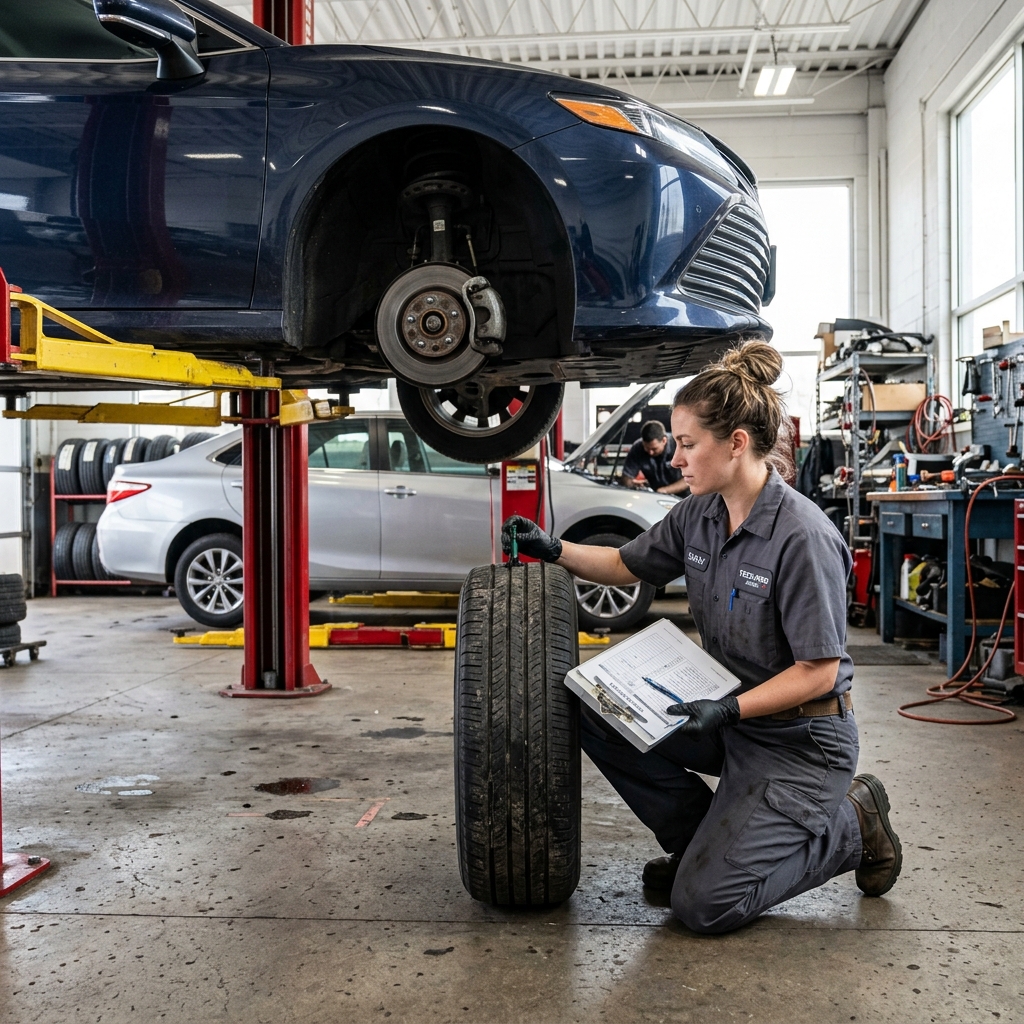
Exterior checks cover the components most exposed to wear, road hazards, and weather. A technician evaluates each item visually and, where applicable, against a measurable standard.
Tires and Wheels
Tires are the most frequently failed item in state safety inspections. The federal minimum tread depth is 2/32 of an inch, measured at the shallowest groove. Many shops and safety organizations recommend replacement at 4/32" to maintain adequate wet-road traction. According to the, underinflated or worn tires contribute to roughly 11,000 crashes annually in the United States.
A complete tire inspection covers:
- Tread depth — measured with a gauge or the penny/quarter test
- Sidewall condition — cracks, bulges, or cuts that indicate structural damage
- Inflation pressure — checked against the vehicle placard (not the tire's maximum)
- Wheel condition — visible cracks, bent rims, or missing lug nuts
- Spare tire — presence and inflation level (where required by state law)
Uneven tread wear across a tire's width often signals an alignment or suspension problem rather than a tire fault — the tire is showing a symptom, not the cause.
Exterior Lights
Every lighting system is tested for function and proper aim. A single burned-out brake light can cause a state inspection failure.
| Light Type | What Is Checked |
|---|---|
| Headlights (low/high beam) | Function, aim, lens clarity |
| Brake lights | Activation on pedal press, all units |
| Turn signals (front and rear) | Correct flash rate, no hyper-flash |
| Reverse lights | Illuminate when transmission is in reverse |
| Hazard lights | All four corners activate together |
| License plate light | Illuminates the plate at night |
In practice, cloudy or yellowed headlight lenses reduce light output by up to 80%, which is a common reason headlights fail aim standards even when the bulb is functional.
Windshield and Glass
Inspectors look for cracks or chips in the driver's line of sight. Most states define a failure as any crack longer than a specified length within the swept area of the wipers — commonly 6 inches or a crack that intersects the driver's direct sightline.
- Wiper blades — must clear the glass cleanly without streaking or skipping
- Washer fluid system — nozzles must spray when activated
- Rear defroster — checked for function in states that include it in the standard
Mirrors and Body
Mirrors are a legal requirement in every state. Inspectors confirm that the driver can see rearward from both the driver's side and interior mirror. A missing or broken passenger mirror may or may not be a failure depending on the state.
Body panel checks in a standard multi-point inspection focus on safety rather than cosmetics. Sharp edges from collision damage, improperly latching hoods, or doors that cannot seal shut are documented as safety concerns. Surface rust or minor dents are generally noted as observations rather than failures unless they affect structural integrity or create a road hazard.
Under the Hood
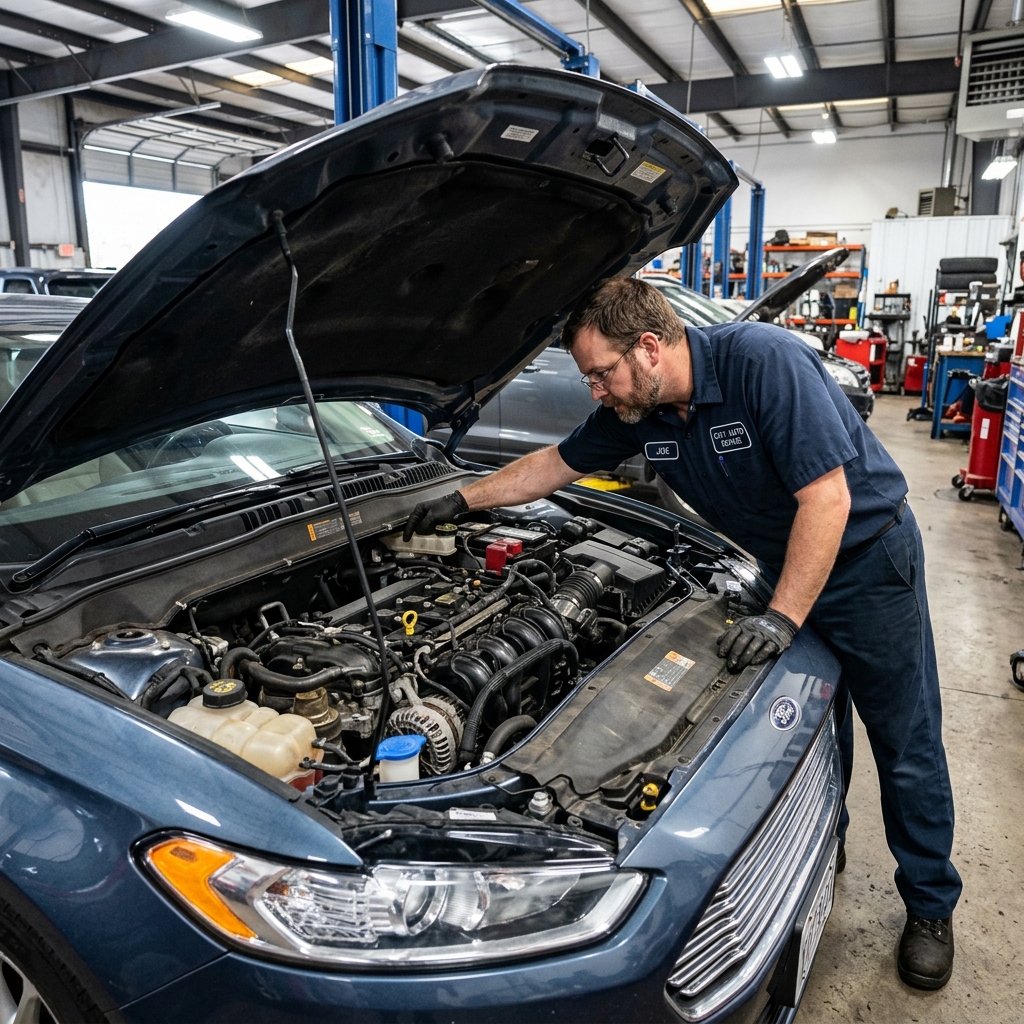
Engine components are not visible from the outside, but they give clear signals when something is wrong. A thorough inspection list for cars always includes a full under-hood review, because fluid levels, belts, and electrical components degrade before symptoms appear on the dashboard.
Fluids
Technicians check seven core fluids during a standard under-hood inspection. Each fluid has a defined acceptable range and visual indicators that indicate contamination or depletion.
| Fluid | What Technicians Look For | Common Warning Sign |
|---|---|---|
| Engine oil | Level on dipstick; color (dark or milky) | Low level; burnt smell; sludge |
| Coolant | Level in reservoir; color; freeze point | Brown discoloration; low level |
| Brake fluid | Level in master cylinder; moisture content | Level below MIN line |
| Power steering fluid | Level; condition | Dark or foamy appearance |
| Transmission fluid | Level; smell; color | Burnt odor; dark red or black color |
| Windshield washer fluid | Level only | Empty reservoir |
| Battery electrolyte | Level in non-sealed batteries | Low cell fluid; corrosion on terminals |
Milky or foamy engine oil often indicates coolant contamination — a sign of a blown head gasket that requires immediate attention before further driving.
Belts and Hoses
The serpentine belt drives the alternator, power steering pump, and air conditioning compressor. A failed belt can disable multiple systems simultaneously. Technicians inspect it for cracking, fraying, glazing, and correct tension. According to, serpentine belts should be inspected every 60,000–90,000 miles and replaced at the first sign of wear.
Radiator hoses and heater hoses are checked for softness, hardness, swelling, or cracks. In practice, a hose that feels brittle or spongy under hand pressure is close to failure, even if it shows no visible leaks.
Air Filter
A clogged engine air filter restricts airflow to the engine, reducing fuel efficiency and performance. Technicians remove the filter housing and inspect the filter element visually. A gray or black filter with visible debris is flagged for replacement. The U.S. Department of Energy notes that a clean air filter can improve fuel economy on older carbureted vehicles by up to 14%, though the effect is smaller on modern fuel-injected engines.
Battery
Battery condition is assessed with a load tester or conductance tester, which measures cranking amps against the rated specification. Visual checks cover terminal corrosion, case swelling, and cable condition. A battery more than three to five years old is typically flagged as a watch item regardless of test results, since according to AAA.
What Technicians Note on the Report
From experience, a clear under-hood report separates immediate concerns from advisory items. Most professional inspection workflows categorize findings as:
- Immediate action required — fluid at or below minimum, cracked belt, failing battery
- Monitor and service soon — fluid slightly low, minor hose softness, filter due within next service interval
- No action needed — within specification, no visible wear
This tiered structure helps customers understand urgency without feeling overwhelmed by a long list of items.
Brake System
The brake system is one of the most critical inspection points on any vehicle. Most state safety inspections treat brake failure as an automatic disqualification, and for good reason — brake-related issues contribute to approximately 22% of vehicle crashes caused by mechanical failure, according to.
Brake Pads
Pad thickness is the primary measurement technicians check. Most states set a minimum thickness of 2mm (roughly 1/16 inch) before a vehicle fails inspection. In practice, technicians also look for uneven wear across the pad surface, which can indicate a sticking caliper or misaligned rotor.
| Component | Minimum Standard | Common Failure Signs |
|---|---|---|
| Brake pads | 2mm thickness | Squealing, uneven wear, metal-on-metal contact |
| Rotors | No deep grooves or cracks | Vibration when braking, visible scoring |
| Brake fluid | Full, clear to light yellow | Dark or milky color indicates contamination |
| Brake lines | No leaks or corrosion | Soft pedal, visible wetness near connections |
| Calipers | Free movement, no leaks | Pulling to one side, uneven pad wear |
| Parking brake | Holds vehicle on grade | Fails to engage or releases immediately |
Rotors
Rotors are measured for minimum thickness using a micrometer. Each vehicle has a manufacturer-specified discard thickness stamped on the rotor itself. Rotors that fall below this spec, or show deep grooves, heat cracks, or warping, are a failure point in most jurisdictions.
A rotor worn past its discard thickness cannot dissipate heat effectively, which increases stopping distance and raises the risk of brake fade under hard braking.
Brake Lines and Hoses
Inspectors examine brake lines for rust, corrosion, kinking, and active leaks. Rubber brake hoses deteriorate from the inside out, so external appearance alone is not a reliable indicator of condition. A soft or spongy brake pedal often points to air in the lines or a compromised hose — both are inspection failures.
Parking Brake
The parking brake must hold the vehicle stationary on a grade without assistance from the main brake system. Inspectors test engagement and release. Cable-actuated systems stretch over time; electronic parking brakes are checked through the vehicle's diagnostic interface.
Calipers
Calipers apply clamping force to the rotor through the brake pads. A seized caliper keeps constant pressure on one side, causing uneven pad wear and pulling during braking. Inspectors look for fluid leaks around caliper seals and check for free movement of the sliding pins.
From experience, brake system failures account for a disproportionate share of inspection rejections — particularly on vehicles older than eight years where corrosion has degraded lines and hardware. Addressing brake wear before the inspection appointment avoids the cost of a retest and keeps the vehicle on schedule.
Conclusion
A thorough inspection list for cars serves two distinct purposes: it protects vehicle owners from preventable failures, and it gives auto repair shops a consistent, defensible workflow for documenting vehicle condition.
For owners, working through a structured checklist before an annual inspection reduces the chance of a surprise failure. Addressing a burned-out bulb or a low fluid level at home costs far less than a re-inspection fee or a roadside breakdown. The sections above cover every major system — exterior, underhood, brakes, safety, and emissions — giving drivers a reliable reference point before they visit a shop.
Vehicles that receive regular multi-point inspections are significantly less likely to experience unexpected mechanical failures. According to AAA, vehicle owners who follow recommended maintenance schedules spend, on average, less than half as much on emergency repairs as those who skip routine service.
For shops, the inspection process is only as reliable as the system used to run it. Paper checklists get lost, findings go undocumented, and customers have no way to verify what was actually checked. Digital inspection tools solve this directly. Photo-rich reports give customers visual evidence of wear, which builds trust and accelerates estimate approval.
Platforms like RedAppy bring the entire inspection workflow into a single system — digital checklists, photo documentation, instant estimates, and one-click invoicing. Technicians capture findings in real time, and customers receive clear, professional reports they can review and approve without a phone call.
Key Takeaways by Role
For vehicle owners:
- Use the checklist in this guide as a pre-inspection reference before your annual state inspection
- Address visible issues — lights, wipers, tire tread — before arriving at the shop
- Keep records of every inspection and repair for resale value and warranty purposes
- Follow your manufacturer's recommended service intervals, not just the state-mandated annual schedule
For shop owners and technicians:
- Standardize your inspection process with a consistent, itemized checklist for every vehicle
- Use digital tools to document findings with photos — this reduces disputes and increases approval rates
- Communicate results clearly to customers using reports they can read and understand without mechanical knowledge
- Track inspection data over time to identify repeat issues and service opportunities
The inspection list for cars outlined in this guide reflects current industry standards and state requirements. Whether you are a vehicle owner preparing for your next inspection or a shop looking to improve your inspection workflow, the same principle applies: document everything, communicate clearly, and act on findings before they become failures.
Modern shop management platforms have made this easier than at any point in the industry's history. Shops that invest in structured digital inspections consistently report higher customer approval rates, fewer comebacks, and stronger long-term retention. That outcome starts with a reliable, complete inspection checklist — and the tools to execute it consistently every time.
Frequently Asked Questions
What should I include on my vehicle inspection checklist?
Include checks for lights (headlights, brake lights, turn signals), tires (tread depth, pressure, condition), brakes, fluid levels (oil, coolant, brake fluid), windshield wipers, battery, belts, hoses, and all safety systems including seat belts and airbag warning lights. Also inspect the exhaust system, steering, suspension, and any visible fluid leaks. A thorough checklist covers both mechanical safety and emissions-related components.
What is included in a car inspection?
A standard car inspection covers safety-critical systems including brakes, tires, steering, suspension, lights, horn, windshield, mirrors, and seat belts. Most states also include an emissions test checking exhaust output and the vehicle's OBD (onboard diagnostic) system for fault codes. The exact scope varies by state, but inspections typically take 30–60 minutes.
What will fail a car inspection in VA?
In Virginia, common inspection failures include worn brake pads or rotors, tires with less than 2/32-inch tread depth, non-functioning lights, cracked windshields obstructing the driver's view, and faulty steering or suspension components. Emissions-related failures, such as an illuminated check engine light or a malfunctioning catalytic converter, will also result in a failed inspection. Expired or missing safety equipment like wipers that streak or smear can cause failure as well.
What to bring for car inspection in NY?
For a New York State vehicle inspection, bring your vehicle registration and proof of insurance, as inspectors are required to verify both documents. No appointment is generally needed at licensed inspection stations, but having your vehicle's VIN readily accessible can speed up the process. If your vehicle is due for an emissions inspection, ensure the check engine light is not on beforehand, as this will automatically trigger a failure.
Ready to Transform Your Shop?
RedAppy helps auto repair shops create professional digital estimates with photos and videos, send them instantly via text or email, and get customer approvals in seconds. No credit card required to start.