
Maryland Auto and Truck Repair: A Local SEO Playbook
A Maryland shop can have a busy bay board, a ringing phone, and a fleet manager waiting on turnaround time all before the first coffee is gone. That pressure is exactly why Maryland auto and truck repair marketing can't be treated like generic local SEO. The main job is to make sure the right customer finds the shop, trusts the estimate, and approves the work without dragging the service advisor into a long back-and-forth.
Table of Contents
- The Maryland Shop Window Where Local Search Happens
- Why the Maryland Repair Market Demands a Real SEO Plan
- Building a Local Landing Page That Actually Converts
- Turning Your Google Business Profile Into a Daily Sales Tool
- Reviews, Citations, and Schema as One Reputation Layer
- Converting Search Traffic Into Approved Repair Orders
- Your 30-Day Playbook and the Questions Maryland Shoppers Ask
The Maryland Shop Window Where Local Search Happens
Monday morning in a mixed light-duty and fleet shop usually starts with a pileup, not a plan. One advisor is trying to pin down a diesel diagnostic, another is answering a call about a state inspection follow-up, and a returning fleet manager wants a turnaround time before lunch. The bay board is moving, but the front desk is moving faster.
That's where local search becomes the front door. A driver who searches for Maryland auto and truck repair is not browsing for fun, they're trying to decide who gets the next work order. If the shop's website, Google listing, and service pages don't make the answer obvious in a few seconds, the caller moves on.
The front desk and the search result are the same job
A good service advisor already knows the pattern. The customer wants a short explanation, a clear next step, and confidence that the shop handles the right kind of vehicle. Search visibility matters because it places the shop in that exact moment of decision, before the phone rings or the key fob hits the counter.
Practical rule: the best local SEO does not create demand, it captures demand that was already there.
That means every digital touchpoint has to behave like a clean handoff. The page needs to say what the shop fixes, who it serves, and how fast a customer can reach someone. If the shop does both passenger and commercial work, the message should reflect that split instead of burying it under vague “full service” language.
What the owner should optimize for
The right question is not “How many clicks did the site get?” The better question is “Did the searcher become a repair order?” That shift changes what gets written, what gets photographed, and what gets tracked.
A shop owner in Maryland gets more value from a page that answers fleet concerns, estimate questions, and repair-category questions than from a broad splash page with polished stock photos. The same is true for map visibility. The goal is to win the next job, not a vanity metric that never reaches the bay board.
Why the Maryland Repair Market Demands a Real SEO Plan
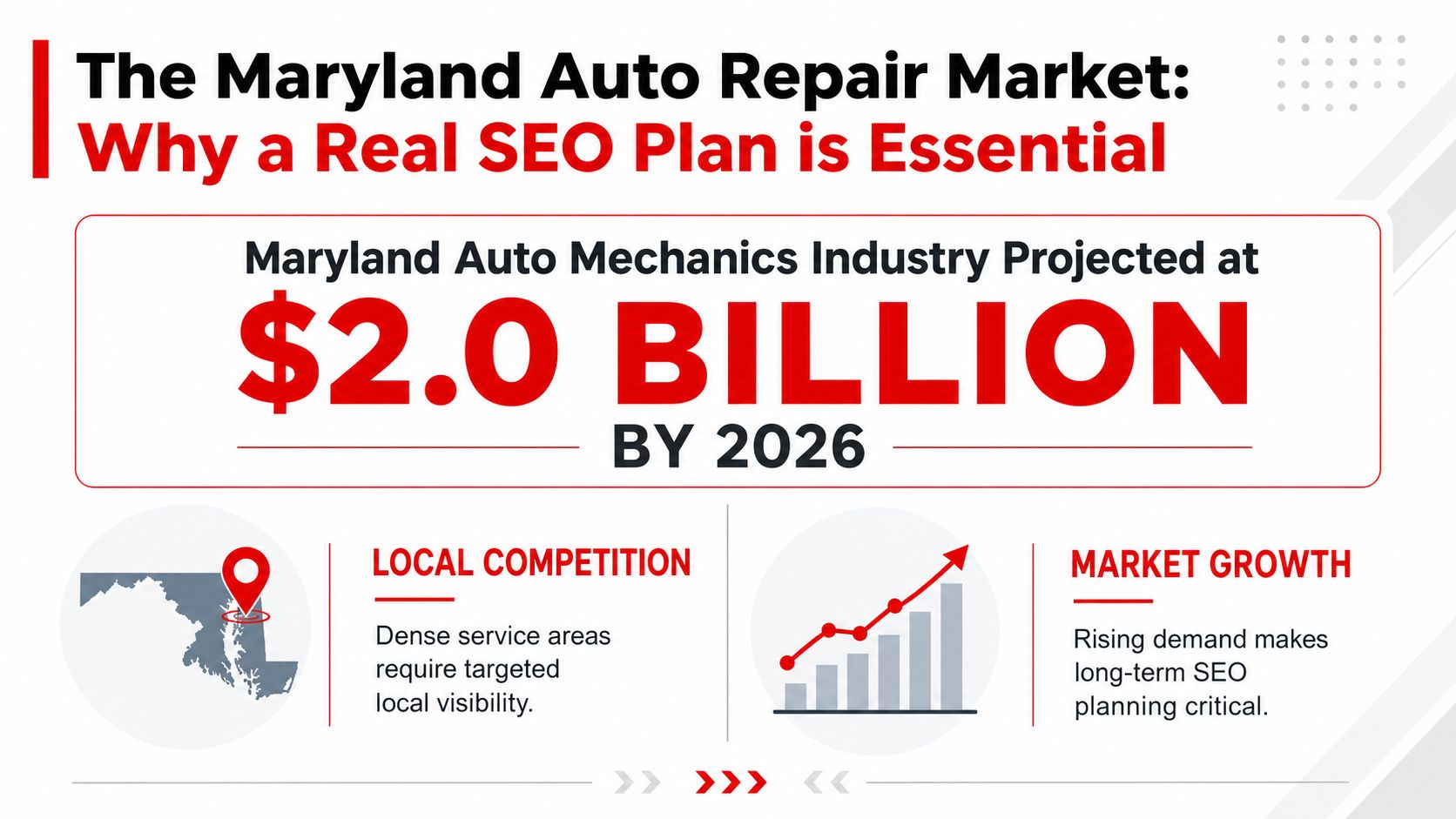
Maryland is not a tiny repair market where a shop can coast on word of mouth alone. IBISWorld projects Maryland's auto mechanics industry at $2.0 billion in 2026, with 5,865 businesses and 14,235 employees, and it says business count rose at an average annual rate of 1.9% from 2021 to 2026 while market size grew 0.6% annually over the same period, according to the. For a single-location shop, that's a crowded field with real competition at the map level.
The market also includes heavy-duty demand. IBISWorld estimates the U.S. truck repair industry at $18.1 billion in 2026 in its. At the labor level, Maryland had 13,030 automotive service technicians and 5,380 truck and diesel mechanics in 2020, which shows a workforce that spans both light-duty and commercial work. That mix matters because the shop is not marketing to one buyer type, it's marketing to at least two.
What those numbers mean in practice
A mature market changes the SEO playbook. A shop has to compete for both passenger-car owners and commercial accounts, which means the website must speak clearly to both audiences without sounding split in half. The map pack gets more crowded, the review profiles matter more, and the service pages have to separate general repair from diesel and fleet work.
Generic advice often fails. A single “auto repair” page doesn't do enough for a Maryland shop that handles diagnostics, brakes, suspensions, fleet maintenance, and truck work. Searchers want to know whether the facility fits their vehicle and their schedule.
The visibility advantage is local, not abstract
A shop does not need to be the biggest business in the state to win. It needs to be the clearest option in its cluster. That means local pages, strong GBP management, and a reputation layer that keeps the shop consistent across search, maps, and review platforms.
A local repair shop usually wins by being easier to understand than its competitors.
For Maryland owners, that clarity turns into more booked work. In a market this mixed and this mature, a deliberate local SEO plan is not extra marketing, it is table stakes.
Building a Local Landing Page That Actually Converts
A local landing page should work like a digital service writer. When a Maryland driver lands on it, the page should answer three questions fast. What does the shop fix, where is it, and how does the customer reach someone now?
Start with the page elements that drive action
The page needs a city-specific H1, a hero section that names the main services and the service area, and prominent click-to-call and tap-to-text buttons. If the shop serves both light-duty and commercial work, separate the offer clearly. Brakes, alignments, diagnostics, diesel repair, suspensions, and fleet PM should not all sit in one blur.
A good local page also keeps the basics clean.
- NAP consistency: The shop name, address, and phone should match everywhere the customer sees them.
- Embedded map: A visible Google Map helps reinforce location and directions.
- Trust signals: ASE certifications, fleet logos, and recognizable affiliations help the page feel real.
- FAQ block: Short answers should mirror how Maryland customers ask about estimates, timing, and vehicle types.
A page like that reduces friction before the first call. It also helps the front desk because the customer arrives with better expectations.
Use schema so search engines understand the business
Schema markup gives search engines structured clues about the shop, the services, and the location. LocalBusiness, AutoRepair, and review-related schema help connect the page to the physical operation instead of leaving Google to guess. That matters when the shop has more than one service lane or more than one audience.
The page should not read like a slogan contest. It should sound like a shop that knows its own workflow. A freight-minded customer and a commuter with a check-engine light need different reassurance, but they both need the same thing, a clear next step.
Make the page answer the questions that matter
A Maryland shop often loses conversions because the page sounds polished but vague. The better page says what kind of vehicles it sees, how appointments are handled, and what customers should expect when they arrive. That is especially important when the business handles both walk-in repairs and scheduled fleet work.
Turning Your Google Business Profile Into a Daily Sales Tool
A Google Business Profile should behave like an active counter, not a parked sign. The right category setup, hours, photos, and updates can turn searches into calls if someone keeps feeding it useful information. A shop that only logs in when a review goes wrong is leaving one of the best local assets untouched.
Match the profile to the bay board
The primary category should fit the main business, and the secondary categories should reflect the service mix. If the shop handles diagnostics, truck work, or fleet maintenance, the service list should sound like the actual board inside the building. That way the profile doesn't overpromise or confuse the searcher.
Hours matter too. A fleet-friendly shop often follows a standard weekday pattern, and one Maryland truck and auto facility on shows Monday through Friday from 8:00 AM to 5:00 PM, which fits commercial scheduling needs and helps avoid missed diagnostics windows and parts delays. Accurate hours reduce wasted calls and missed arrivals.
Use the profile as a communication channel
Photos should not be random. Upload real images of the building, the team, service bays, vehicles in process, and finished jobs. Geo-tagged photos help reinforce that the shop is local and active. The Q&A feature can answer repeat questions before they land in the phone queue, and messaging can catch after-hours inquiries that would otherwise go cold.
The posts feature is useful when it stays practical. Seasonal reminders, inspection prep, and service reminders do more than fill space. They show that the shop is open, current, and paying attention.
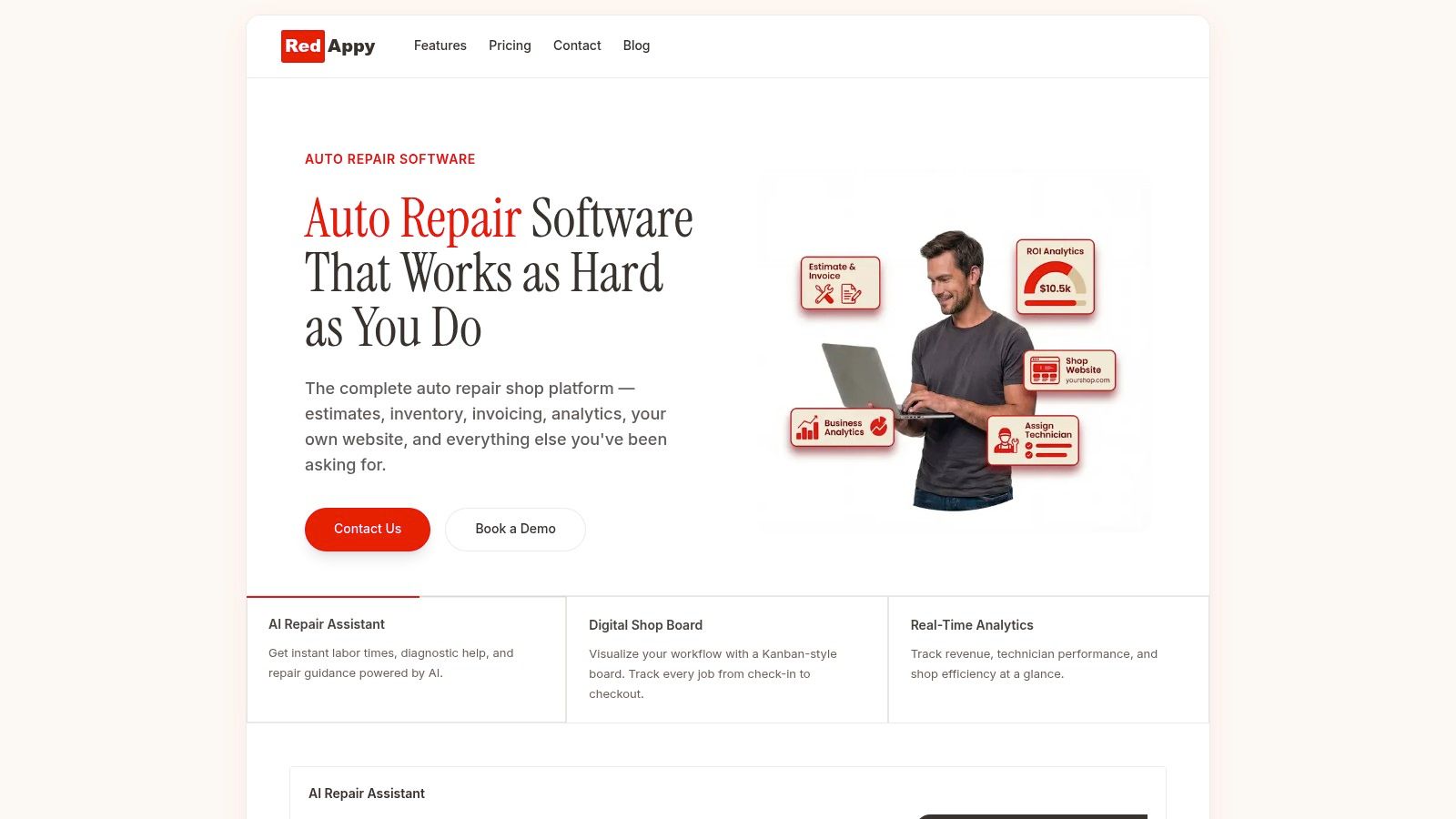
For shops that want a deeper operational approach, is a useful reference point on how profile management gets structured in practice.
The profile works best when someone treats it like a weekly maintenance task, not a one-time setup.
Keep the profile aligned with real operations
If the phone is answered by one person in the morning and another in the afternoon, the profile should not promise a response style the team cannot keep. If the shop is focused on diagnostics-first triage, the listing should guide the customer toward that process. Consistency here is what keeps GBP from becoming a source of confusion.
Reviews, Citations, and Schema as One Reputation Layer
Most shops treat reviews, citations, and schema as separate chores. That's a mistake. These three pieces work together to tell Google, and the customer, that the shop is real, consistent, and worth trusting.
Reviews need a repeatable habit
A shop should ask every approved customer for a review, not just the happiest ones. Response time matters too, and every review should get a reply within 48 hours so the business looks attentive and active. Repeated complaints about communication, delays, or estimate clarity should be treated as training notes for the front desk, not as noise.
Citations should stay tight and boring. Google, Yelp, Apple Maps, Bing Places, and automotive-specific directories matter most because they reinforce the shop's name, address, and phone across places customers check. Quantity is not the point. NAP consistency is.
Schema ties the trust signals together
Schema markup helps the business communicate in a format search engines can read cleanly. LocalBusiness schema tells Google what type of business this is, AutoRepair schema helps define the service category, and Review schema can support richer presentation when the content qualifies. None of that replaces good content, but it makes the content easier to interpret.
The reputation layer gets even more important as repair access changes. Maryland's proposed vehicle repair-access law would require manufacturers to make diagnostic and repair information available to owners and independent repair facilities by subscription on fair and reasonable terms, according to the. That could shape how independent shops compete for diagnostics work because access to OEM data affects what they can diagnose and how quickly.
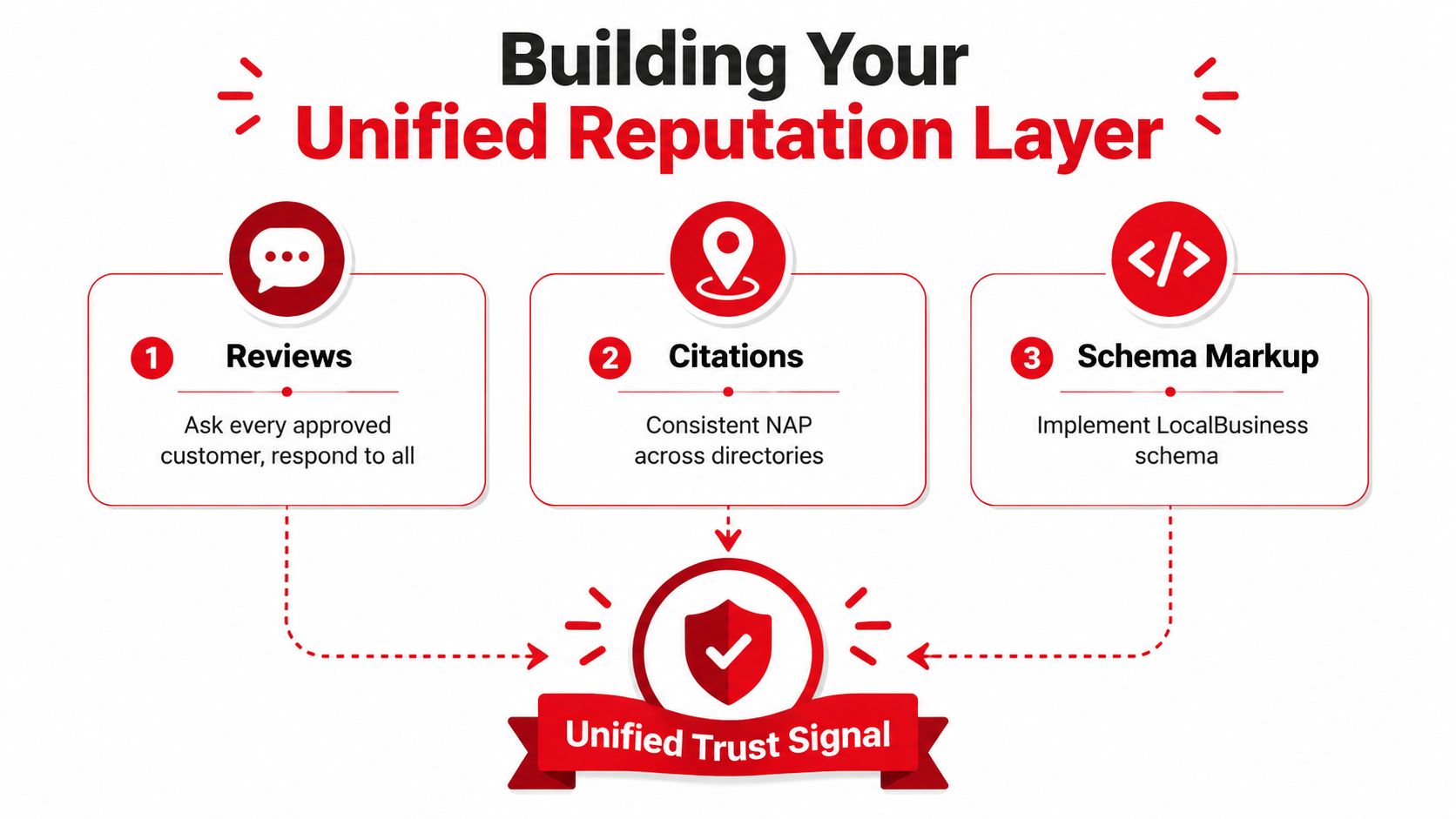
Consistency across profiles and structured data usually beats clever marketing language.
The payoff is trust, not decoration
A shop that keeps its review replies, directory listings, and schema in sync looks easier to choose. That matters for a customer comparing three nearby options on a phone screen. It also matters for fleet managers who need fewer surprises and less back-and-forth.
Converting Search Traffic Into Approved Repair Orders
Getting the click is only the first half. The value shows up when the customer approves work without stalling the process. That means the intake flow has to be built around speed, clarity, and documentation.
Start with inspection-first intake
The best shops capture vehicle details early, then send a digital inspection with photos before the conversation gets fuzzy. That lets the customer see the condition, understand the recommendation, and approve work from the phone. It also keeps the advisor from repeating the same explanation three times.
Maryland consumer guidance adds another reason to document carefully. Customers should get an estimate for work over $25 upon request, the final bill should stay within 10% of the estimate unless the customer is notified, and replaced parts and receipts should be kept on request. The Yelp page for Maryland Auto and Truck Repair in Glen Burnie reflects that many shoppers are asking about rights, disputes, and proof, not just an address.
Make the approval path easy to follow
A messy approval process slows the bay and frustrates the customer. A clean one uses photos, clear labor notes, and one place to say yes or no. That protects the shop because the estimate is documented, and it protects the customer because the scope is visible before work starts.
For parts sourcing, shops also need a practical way to compare options before promising delivery times. A useful starting point is, especially when the repair depends on getting the right part quickly and without surprise delays.
Where a platform fits in
A shop management platform can pull the front desk, the bay board, and the invoice into one workflow. RedAppy is one option in that category, with digital inspections, instant estimates, one-click invoicing, parts ordering across multiple suppliers, and a Kanban-style Digital Shop Board that keeps jobs visible from check-in to checkout. That kind of setup matters because search traffic only becomes revenue when the approval process is fast enough to keep the vehicle moving.
Your 30-Day Playbook and the Questions Maryland Shoppers Ask
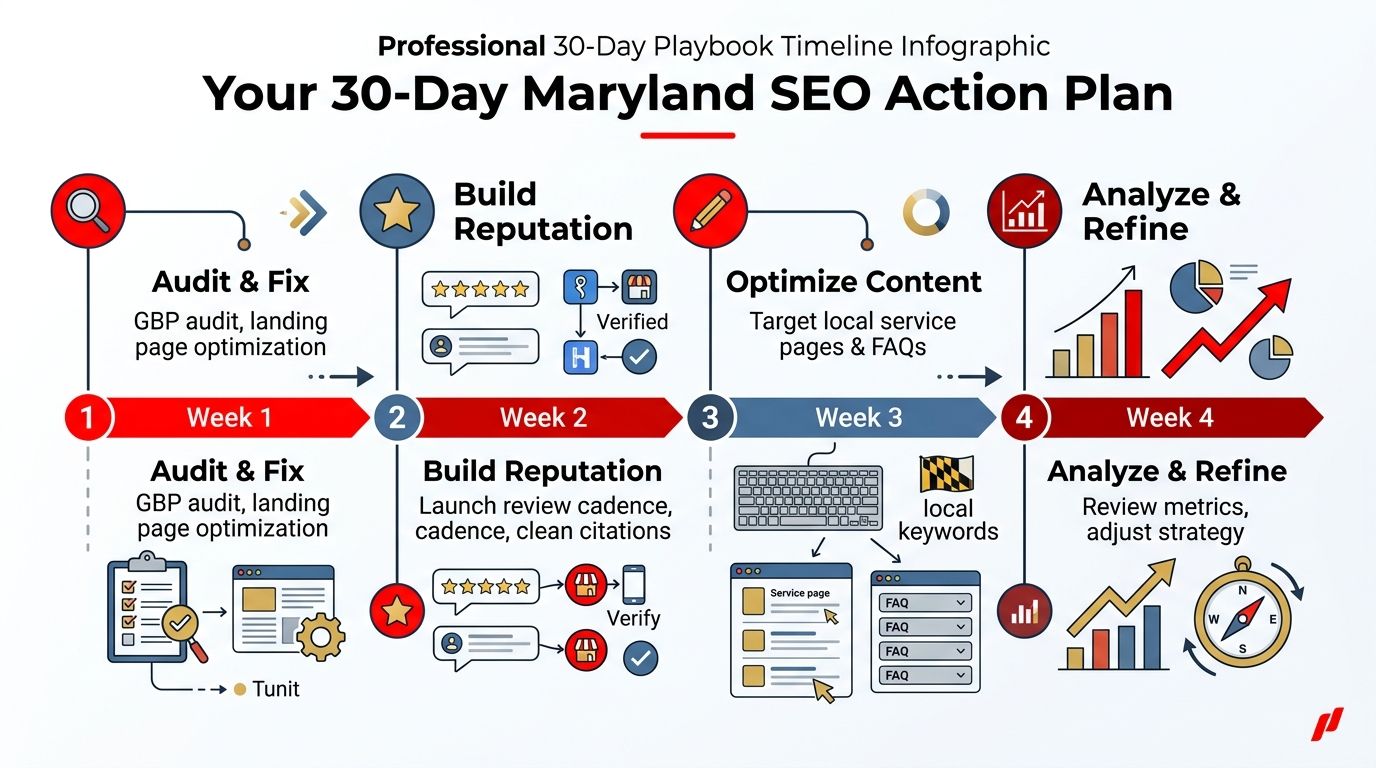
A Maryland shop does not need a giant marketing rebuild to get moving. It needs a disciplined month of cleanup and follow-through. The goal is simple, make the shop easier to find, easier to trust, and easier to approve.
A practical 30-day sequence
Week 1, Audit and fix. Clean up the landing page, confirm NAP consistency, tighten the service-area wording, and check that the Google Business Profile hours, categories, and services match the bay board.
Week 2, Build reputation. Start the review request cadence, reply to every review within 48 hours, and clean up the main citations so the same business details show up across directories.
Week 3, Optimize content. Add schema markup, publish a location page for the core service area, and create two short content pieces that answer common repair questions without drifting into fluff.
Week 4, Analyze and refine. Turn on local ads if the budget supports it, wire up call tracking, and watch which pages and profile actions lead to repair orders.
Questions Maryland shoppers ask most
What do the 10-day and 30-day SERO windows mean? The Safety Equipment Repair Order process requires the cited problems to be repaired within 10 days, and proof of repair must be submitted to the Maryland State Police Automotive Safety Enforcement Division within 30 days, according to the. Shops need to build their scheduling and documentation around that timeline.
What happens when a repair goes wrong? Customers are expected to give the shop a reasonable number of chances to fix the problem before escalating to the Office of Consumer Protection. That makes communication and documentation part of the repair, not an afterthought.
How does estimate accuracy protect both sides? It keeps the customer from surprise charges and keeps the shop from disputes over scope. The estimate is not just paperwork, it is part of the service promise.
A shop should make the next move obvious
The strongest local marketing systems do not rely on luck. They connect the phone, the website, the estimate, and the final payment into one clean path. Shops that want that kind of structure can review RedAppy, since it brings intake, approvals, invoicing, parts, and job tracking into one workflow built for repair operations.
Ready to Transform Your Shop?
RedAppy helps auto repair shops create professional digital estimates with photos and videos, send them instantly via text or email, and get customer approvals in seconds. No credit card required to start.