
Mobile Mechanic Business Card Ideas That Win More Customers (2025)
Your business card is often the first physical impression a potential customer gets of your mobile mechanic business — and in a trade built on trust, that first impression matters. The right mobile mechanic business card ideas can mean the difference between a call-back and a toss in the trash. In 2025, customers have more choices than ever, and a generic, forgettable card won't cut it.
A well-designed card signals professionalism before you've even popped the hood. It tells customers you're organized, reliable, and worth their time — exactly the qualities someone wants in a mechanic coming to their driveway or parking lot.
This article covers the best design layouts, must-have information, creative ideas, and real examples to help your card do more work for your business. Whether you're just starting out or refreshing your brand, you'll walk away with clear, actionable ideas you can use right away.
Table of Contents
- What Makes a Mobile Mechanic Business Card Actually Work
- At a Glance: 8 Business Card Styles Compared
- 1. The QR Code Card — Link Straight to Your Services and Reviews
- 2. The Slogan Card — Make a Promise They'll Remember
- 3. The Service Menu Card — Show Exactly What You Fix
- Conclusion
- Frequently Asked Questions
What Makes a Mobile Mechanic Business Card Actually Work
A business card that generates calls does three things fast: it tells people what you do, why you're trustworthy, and exactly how to reach you. For a mobile mechanic, the stakes are even higher. You're asking someone to let a stranger work on their car — often at their home or office. The card has to earn that trust in about three seconds.
Most forgettable cards fail because they focus on looks over function. A great mobile mechanic card communicates speed, availability, and convenience — the three things that separate you from a shop that requires a tow and a week-long wait.
The Core Elements Every Mobile Mechanic Card Needs
Here's what should appear on every card, no exceptions:
- Your name and business name — people hire people, not logos
- Phone number — large, easy to read, and ideally click-to-call via QR
- Service area — "Serving Austin and surrounding areas" answers the first question before they ask it
- Top 2–3 services or a clear tagline — brakes, oil changes, diagnostics, or a line like "We come to you"
- A trust signal — years in business, ASE certified, 5-star Google rating, or a license number
- One clear call to action — "Call or text anytime" or "Scan to book online"
Mobile mechanics compete on convenience. Your card should make that convenience obvious in under five seconds.
Why Mobile Mechanics Need a Different Approach Than Fixed Shops
A traditional shop card can lean on location and foot traffic. A mobile mechanic card can't. You have no storefront to anchor trust, so the card itself has to carry more weight.
According to the, referrals and word-of-mouth remain the top source of new customers for service businesses. A business card is the physical handoff point for that word-of-mouth moment — it either closes the loop or breaks it.
The language on your card should also signal availability. Phrases like "Same-day service," "Available evenings and weekends," or "No shop required" do more selling than a generic tagline ever will. They answer the customer's real question: Can you help me right now, without making my life harder?
What to Leave Off
Clutter kills cards. From experience, the biggest mistakes mobile mechanics make are:
- Listing every service they've ever performed
- Using a logo so large there's no room for contact info
- Skipping a service area entirely — leaving people guessing
- Using a personal Gmail address instead of a branded one
- No website or QR code, which means no way to verify legitimacy
| Element | Include It? | Why |
|---|---|---|
| Phone number | ✅ Always | Primary conversion tool |
| Email address | ✅ Recommended | Adds professionalism |
| Service area | ✅ Always | Filters irrelevant leads |
| Website or QR code | ✅ Strongly recommended | Builds trust, enables booking |
| Social media handles | ⚠️ Optional | Only if actively maintained |
| Full service list | ❌ Avoid | Use the back or a menu card instead |
| Home address | ❌ Skip | Mobile mechanics don't need one |
The back of your card is prime real estate. Most mechanics leave it blank. The best ones use it to close the sale.
A clean front with a single strong call to action, paired with a purposeful back — a service menu, QR code, or referral offer — is the formula that actually generates calls. The sections below show exactly how each approach works in practice.
At a Glance: 8 Business Card Styles Compared
| Card Style | Best For | Key Design Element | Est. Cost per 100 | Standout Feature |
|---|---|---|---|---|
| QR Code Card | Tech-savvy customers, urban markets | QR code linking to booking page or reviews | $20–$40 | Drives traffic to a live, updatable destination |
| Slogan Card | Brand-building, new mechanics | Bold one-liner headline | $15–$35 | Answers "why you?" instantly |
| Service Menu Card | Customers who comparison-shop | Bulleted service list on the back | $25–$45 | Card doubles as a reference sheet |
| Referral Card | Word-of-mouth growth | Discount offer with tear-off or code | $30–$60 | Customers actively pass these on |
| Specialty/Niche Card | Fleet, EV, diesel, or European car owners | Niche-specific headline and imagery | $20–$40 | Filters for high-value jobs |
| Digital NFC Card | Fleet managers, dealerships, high-end clients | Tap-to-share chip | $15–$80 one-time | Never runs out, always up to date |
| Loyalty Punch Card | Repeat service customers | Punch or stamp boxes | $20–$35 | Encourages return visits |
| Combo Print + Digital | Mechanics wanting maximum reach | QR + NFC on one card | $40–$80 | Covers every customer type |
The card style that works best isn't the fanciest one — it's the one that matches how your ideal customer decides who to call.
A few things worth knowing before diving into each style:
- Cost estimates are based on standard quantities from common print vendors like or Canva Print. Premium finishes (soft-touch laminate, spot UV, rounded corners) add $10–$25 per 100.
- Digital NFC cards have a higher upfront cost but zero reprint costs as your info changes.
- Referral and punch cards typically run slightly higher because they need heavier card stock to survive being passed between hands.
- Most mobile mechanics benefit from running two card styles at once — a primary card for first impressions and a referral or specialty card for specific situations.
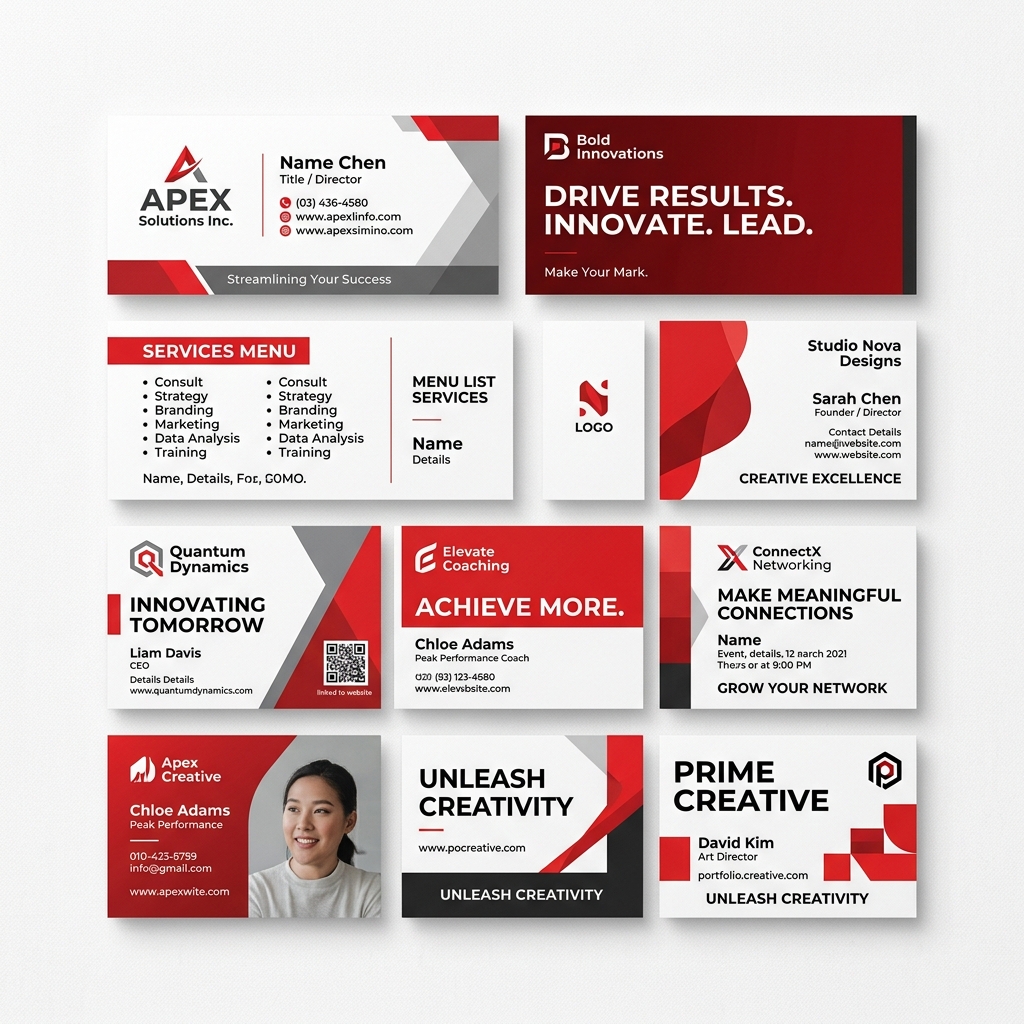
The sections below break down each style with a real example layout, what to put on it, and the one thing that makes it work. Use this table to jump to whichever style fits your situation, or read through to find the combination that makes the most sense for your market.
1. The QR Code Card — Link Straight to Your Services and Reviews
A QR code turns a small piece of cardstock into a live, clickable experience. Instead of just reading your number, a potential customer can scan your card and land on your booking page, Google review profile, or a gallery of completed jobs — all within seconds.
What to Put Behind the QR Code
The QR destination matters more than the code itself. Send people somewhere that closes the deal. The best options for mobile mechanics are:
- Booking page — lets customers schedule on the spot while your card is in their hand
- Google Reviews profile — social proof does the selling for you
- Branded website with service list — gives them the full picture in one place
- A digital inspection sample — shows professionalism before they even call
Customers who read online reviews are 58% more likely to convert than those who don't, according to BrightLocal's 2023 Consumer Review Survey.
RedAppy includes a professionally branded website with every subscription, which means your QR code has a real destination — not a blank Facebook page or a generic link. That website can display your services, contact form, and used-car listings, so the card does more than start a conversation. It finishes one.
Sample QR Code Card Layout
Here's a practical front-and-back layout you can hand off to a designer or set up yourself:
| Side | Element | Notes |
|---|---|---|
| Front | Name + phone number | Large, readable font — 14pt minimum |
| Front | Tagline ("Mobile Auto Repair — We Come to You") | One line only |
| Front | Logo or icon | Keep it simple |
| Back | QR code (centered, generous white space) | Test it on multiple phones before printing |
| Back | "Scan for reviews + booking" | One short instruction line beneath the code |
Keep the back clean. A QR code surrounded by clutter loses trust before anyone scans it.
Choosing the Right QR Generator
Free tools like let you create a dynamic QR — meaning you can update the destination URL without reprinting the card. Dynamic codes are worth the small monthly fee. If your booking link changes or you move platforms, your cards stay valid.
In practice, print a small batch first (50–100 cards) and test the scan rate before committing to a large order. Most online printers charge $15–$30 for 100 cards, so testing is low risk.
A QR code without a strong landing page is like a door that opens to an empty room — the card gets the tap, but the destination closes the deal.
When This Card Works Best
The QR code card earns its place when you're handing cards to customers who've just had a good experience — right after completing a job, at a parking lot, or during a fleet check-in. The moment is warm, and a quick scan to leave a review while sentiment is high converts better than any follow-up text or email later.
Pair this with a clean digital inspection process so customers who scan your code also see photo evidence of your work — building the kind of trust that turns a one-time call into a repeat customer.
2. The Slogan Card — Make a Promise They'll Remember
A great slogan does something a phone number can't — it answers "why should I call you?" before the customer even thinks to ask. On a business card, you have about three seconds to make an impression. A sharp one-liner buys you more of that time.
Why Slogans Work on Business Cards
Slogans trigger emotion and memory. According to, people remember messages that connect to a feeling or a personal benefit far longer than plain facts. For mobile mechanics, the core benefit is obvious: you save the customer time and hassle. A good slogan says exactly that — fast.
The psychology here is simple. When someone finds your card in a drawer two weeks after you handed it to them, they won't remember your name. But they might remember "We Come to You — No Tow Truck Needed." That line re-sells you without any extra effort.
A slogan works hardest when it speaks to the customer's frustration, not your service features.
8–10 Mobile Mechanic Slogans Worth Stealing (or Adapting)
Here are slogan examples grouped by the emotional angle they target:
Convenience-focused:
- We Come to You, So You Don't Have To Go Anywhere
- Your Driveway Is Our Shop
- Fixed at Your Door. Done by Noon.
Reliability-focused:
- Show Up. Fix It. Every Time.
- No Waiting Room. No Waiting.
- Honest Work. Fair Price. Your Place.
Speed-focused:
- Same-Day Service, Wherever You Are
- Back on the Road Fast
Trust-focused:
- You Watch the Repair. We Earn Your Trust.
- Real Mechanic, Real Results — At Your Location
The best slogan for your card is the one that matches what your best customers say when they refer you. In practice, listening to how repeat customers describe you to a friend is the fastest way to find your real slogan.
Sample Slogan Card Layout
| Card Element | Content Example |
|---|---|
| Front — Name | Jake Rivera, Mobile Auto Repair |
| Front — Slogan | Your Driveway Is Our Shop |
| Front — Phone | (555) 820-4411 |
| Front — Service area | Serving Austin & Surrounding Areas |
| Back — Tagline support | Oil Changes · Brakes · Diagnostics · Battery Replacement |
| Back — CTA | Text or call for same-day availability |
Keep the slogan the largest text element on the front, after your name. If it's competing with your phone number for visual weight, the card loses focus.
What Makes a Slogan Card Succeed (or Fail)
Works well when:
- The slogan is specific, not generic ("Fixed Fast at Your Location" beats "Quality Auto Service")
- The design gives the slogan room to breathe — white space is not wasted space
- It pairs with a clean logo or color scheme that reinforces the brand tone
Falls flat when:
- The slogan is vague enough to fit any trade ("Reliable. Professional. Affordable.")
- Too many words crowd the front of the card
- The promise the slogan makes isn't backed up by the experience — if you take three days to respond, "Same-Day Service" becomes a liability
Having a professional branded presence to back up a bold slogan matters. If a customer scans your card and lands on a polished website — with your services, photos, and booking option front and center — the slogan pays off. That's the kind of first impression that converts a pocket card into a booked job. See how a branded website supports your marketing as part of a complete shop setup.
The slogan on your card is a promise. Everything that happens after the call is where you keep it.
3. The Service Menu Card — Show Exactly What You Fix
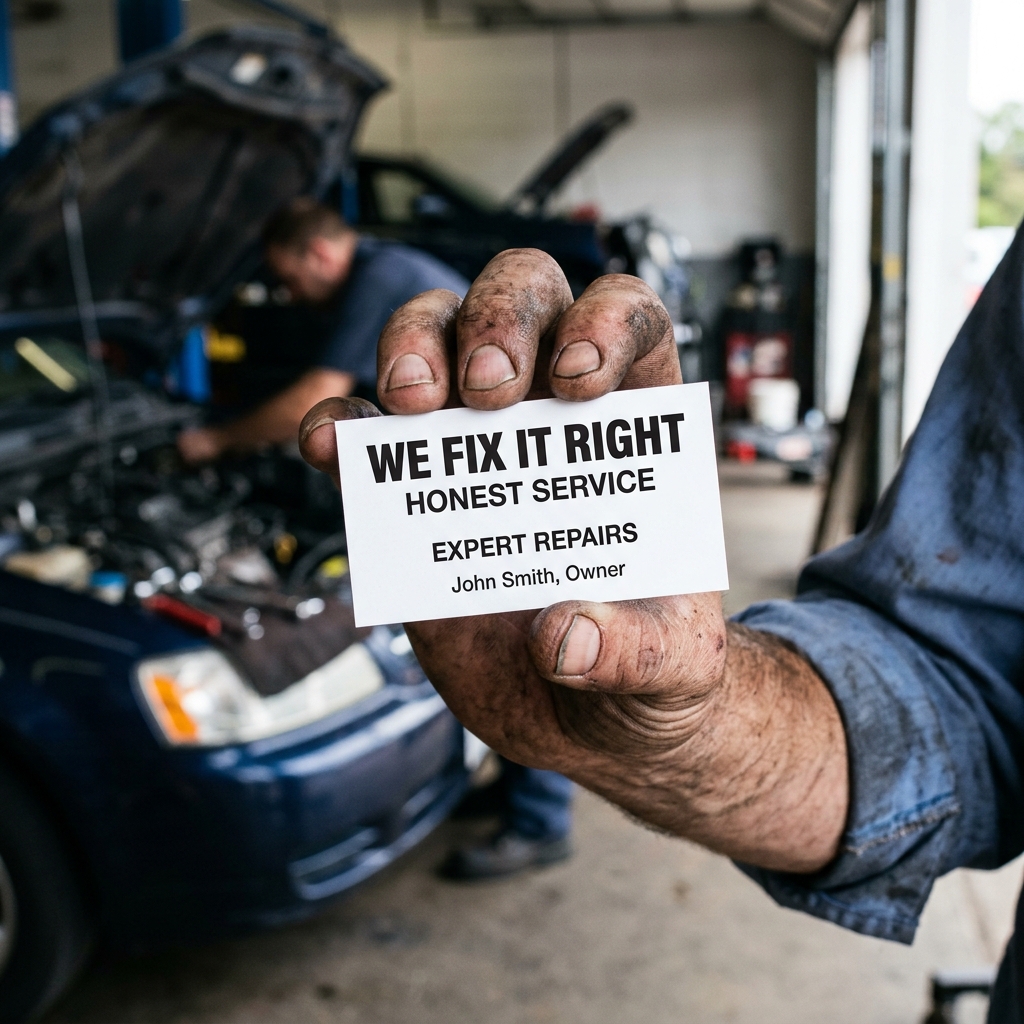
Most business cards say what a mechanic is. A service menu card shows what a mechanic does — and that's a much more useful thing to hand someone.
The idea is simple: use the back of your card as a mini-menu. List your top 6–8 services, and suddenly your card becomes something people keep because it answers a real question: "Can this guy handle my problem?"
Sample Service Menu Card Layout
Front:
- Your name + "Mobile Mechanic"
- Phone number (large)
- Service area ("Serving Greater Austin")
- A short trust signal ("Licensed & Insured · 500+ 5-Star Jobs")
Back:
SERVICES
✓ Oil & Filter Changes ✓ Brake Pads & Rotors
✓ Battery Replacement ✓ Diagnostic Scans
✓ Alternator & Starter ✓ AC Recharge
✓ Pre-Purchase Inspections ✓ Suspension & Shocks

Same-Day Service Available — Call or Text: [Your Number]
This format works because it removes a mental hurdle. Instead of wondering whether you handle their specific job, the customer scans the list and self-qualifies. According to, customers are far more likely to reach out when they already know the answer is "yes."
Choosing the Right Services to Feature
This is where mechanics often overthink it. The goal isn't to list everything you can do — it's to list the services people actually search for and call about most.
From experience, the strongest performers for mobile mechanics are:
- Oil changes — high volume, easy trust-builder for new customers
- Brake jobs — consistent demand, strong margins
- Battery replacement — urgent, location-flexible, perfect for mobile
- Diagnostic scans — signals technical competence
- Pre-purchase inspections — attracts motivated, ready-to-pay customers
Knowing your most-booked services isn't guesswork — it's data. A platform like RedAppy tracks which repair orders close most often, so you can build your service menu around what actually drives revenue, not what you assume does.
The Limitation to Watch
Cluttered cards kill conversions. If your service list turns into a wall of text, people stop reading. Stick to 6–8 items maximum, use a clean two-column layout, and leave breathing room around each line. Use short phrases, not full sentences.
If you specialize — say, European vehicles or diesel trucks — that's worth its own card format entirely. (The next section covers exactly that.)
What Makes This Card Style Work
| Design Element | Why It Matters |
|---|---|
| Two-column list | Easy to scan in under 5 seconds |
| Checkmarks or icons | Signals organization and professionalism |
| "Same-day available" note | Creates urgency without pressure |
| Service area on front | Filters out calls outside your range |
| Phone + text option | Matches how customers actually communicate |
The service menu card has a longer useful life than a plain contact card because it stays on the fridge or in the glove box. People return to it when a new problem comes up — even months later. That's a marketing channel that costs nothing after the initial print run.
Conclusion
Your business card is the first impression. But it's the experience after the call that decides whether a customer comes back — or refers their friends.
The best mobile mechanic business cards share a few things in common. They're clear about what you do and where you do it. They give people an easy reason to call. And they reflect the kind of professionalism customers will actually experience when you show up.
The card is the handshake. Your systems are the follow-through.
Whether you go with a QR code that links to live reviews, a punchy slogan that sticks in someone's mind, or a referral card that turns one happy customer into three, the style you choose should match your strongest competitive advantage. A diesel specialist should own that on the card. A fleet-focused mechanic should speak directly to fleet managers. A generalist who prides himself on speed should say exactly that.
The limitation every mechanic hits is this: a card can get someone to call, but it can't close the job on its own. Customers who scan your QR code, visit your website, or text your number are making a fast judgment about whether you're professional enough to trust with their vehicle. If the experience on the other end feels scattered — no easy way to book, no clear estimate, no follow-up — the card did its job and you didn't.
That's where platforms like RedAppy close the gap. Every subscription includes a branded, professional website that gives your QR code a worthy destination. Digital inspections with photos build the kind of trust that converts first-time callers into repeat customers. Instant estimates and online payments make the whole transaction feel modern and frictionless — which is exactly what mobile mechanic customers expect when they choose you over driving to a shop.
- Pick the card style that matches your edge — niche expertise, speed, referrals, or convenience
- Link your QR code to something that converts — reviews, a booking page, or your RedAppy-powered website
- Back up your card's promise with tools that deliver a professional experience from first call to final payment
- Test one or two card styles with a small print run before committing to 500 copies
According to the, a referred customer has a 16% higher lifetime value than a non-referred one. That stat alone makes the referral card worth printing alongside whatever primary style you choose.
The mechanics who win more customers in 2025 aren't just the ones with the best cards. They're the ones whose entire customer experience — from the card in someone's hand to the invoice in their inbox — feels consistent, trustworthy, and easy. Start with a great card. Build the rest of the experience to match.
Frequently Asked Questions
What are some creative business card ideas for a mobile mechanic?
Effective mobile mechanic business cards often feature a bold wrench or gear icon, your service area, and a QR code linking to booking or reviews. Using a dark background with high-contrast text (black/red or navy/silver) conveys professionalism and trust. Including a tagline like "We Come to You" alongside your phone number and website ensures key information is instantly visible.
What are some good slogans for mobile mechanics?
Strong slogans emphasize convenience and reliability, such as "Your Driveway Is Our Shop," "We Fix It Where You Park It," or "Roadside Relief, Anytime." Other popular options include "Bringing the Garage to You" and "No Tow? No Problem." The best slogans are short, memorable, and highlight the core benefit of on-site service.
How much should a mobile mechanic charge per hour?
Mobile mechanics typically charge between $75 and $150 per hour, depending on location, specialization, and experience level. Rates in major metropolitan areas can exceed $150/hour, while rural markets may average closer to $70–$90/hour. Many mobile mechanics also add a service call fee of $50–$100 on top of their hourly labor rate.
What are the three C's in mechanics?
The three C's in mechanics stand for Condition, Cause, and Correction — a standardized diagnostic framework used when writing repair orders. "Condition" describes the symptom the customer reports, "Cause" identifies the root problem found during inspection, and "Correction" details the repair performed to fix it. This system is widely taught in automotive training programs and required by many dealerships for proper documentation.
Ready to Transform Your Shop?
RedAppy helps auto repair shops create professional digital estimates with photos and videos, send them instantly via text or email, and get customer approvals in seconds. No credit card required to start.