
What Does Cupping of Tires Mean and How to Fix It
Tire cupping, also called tire scalloping, is an irregular tread-wear pattern where repeating scooped-out spots appear every three to four inches around the tire. It means the tire has been bouncing or briefly losing steady road contact because of an underlying mechanical issue.
A customer usually doesn't come in saying “cupping.” They complain about a rhythmic hum, a steering wheel that shakes, or a ride that feels uneven, and the clue is hiding in the tread.
Table of Contents
- Recognizing Tire Cupping in Your Shop
- How to Tell Cupping Apart from Other Wear Patterns
- The Root Causes Behind Tire Cupping
- Step-by-Step Diagnostic Checks for Cupped Tires
- Repair Recommendations and When to Replace Tires
- Preventing Cupping and Streamlining Shop Workflow
Recognizing Tire Cupping in Your Shop
A van rolls in with a complaint that sounds familiar, a low hum at speed and a ride that feels choppy over clean pavement. The tires look decent from five feet away, but the moment a tech runs a palm across the tread, the problem shows up as repeating scooped-out spots.
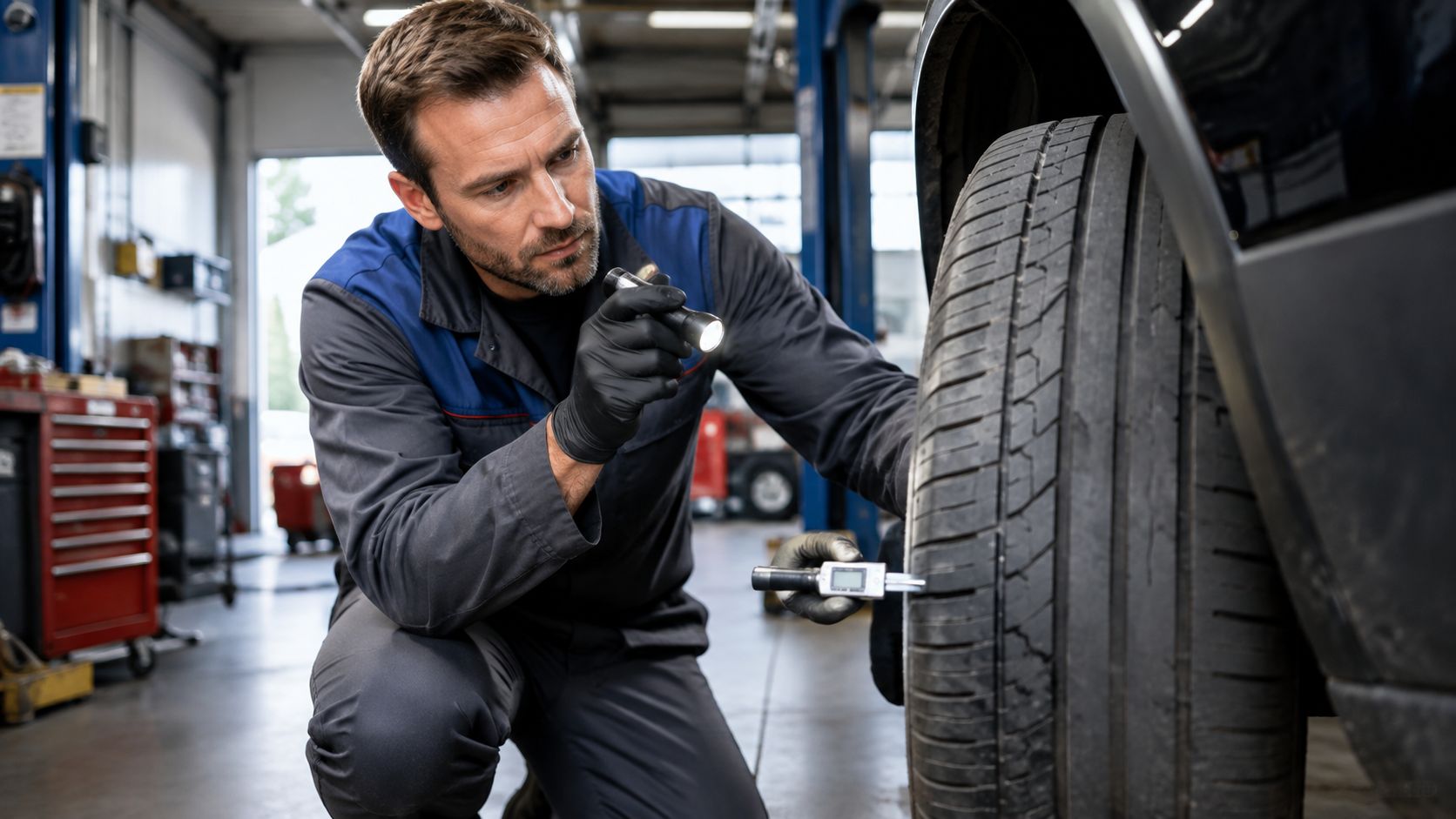
What the tread is telling you
Tire cupping is a visible record of the tire's contact patch failing to stay steady. Bridgestone describes the wear as repeating spots around the tire, and the important takeaway is that this isn't normal, even wear, it's evidence of bounce or skip over time. A cupped tire is usually not the root problem, it's the symptom the customer can finally see.
Practical rule: when the tread feels like a washboard under the hand, the shop should stop thinking “bad tire” and start thinking “why did this tire stop tracking smoothly?”
The customer-facing explanation needs to stay simple. The tire has been hitting the road, unloading, then hitting again in the same rhythm long enough to carve those scoops into the tread. That's why cupping matters to a shop owner, it points to a vehicle condition that will usually show up again on replacement rubber if the cause doesn't get fixed.
How to confirm it fast
A quick walk-around is enough to catch most cases before the car goes on the lift. Run a hand around the circumference, not just across the tread, and feel for alternating high and low spots. Pair that with a visual check under shop lighting, because the wear often shows as a repeating pattern rather than a random bald patch.
For a service advisor, that first confirmation turns a vague noise complaint into a real diagnostic lane. The customer may have come in asking about tires, but the tread pattern says the vehicle needs a chassis check too. A good inspection checklist, like the, helps keep that walk-around consistent when the bay is busy.
How to Tell Cupping Apart from Other Wear Patterns
Cupping gets misread all the time because several wear patterns can feel “uneven” to a customer. The fix is to separate what you see, what you feel, and what part of the vehicle usually caused it.
Read the tread, don't guess from the noise
Cupping feels like a repeating series of scoops. Alignment-related wear usually shows a directional edge pattern, balance-related wear tends to create isolated flat spots or a vibration complaint that comes and goes with speed, and underinflation more often attacks the shoulders. The tire itself will tell the truth if the technician takes a minute to look and feel carefully.
The hand test matters because the tread pattern often reveals the fault faster than the noise does.
A clean diagnostic habit is to inspect both the inner and outer shoulders, then compare the tread blocks side to side. Feathering usually has a sawtooth feel, where one edge of each block feels sharper than the other. Cupping feels more like a sequence of dips, especially when the hand moves along the rolling direction.
Tire Wear Pattern Diagnostic Comparison
| Wear Pattern | Visual Signs | Tactile Feel | Common Root Cause |
|---|---|---|---|
| Cupping | Repeating scoops or low spots around the tread | Bumpy, wavy, uneven in a repeating pattern | Suspension bounce, imbalance, alignment, rotation issues |
| Alignment wear | Feathered or angled tread block edges | Sharp one way, smooth the other | Toe or camber problems |
| Balance-related wear | Isolated flat spots or a speed-linked vibration complaint | A rhythmic thump or hop, often less obvious by hand | Wheel imbalance or runout |
| Underinflation wear | Shoulder wear on both sides | More edge wear than scooping | Low tire pressure |
The table is useful because it stops the common over-repair mistake. If the wear is feathered, balance won't cure it. If the wear is a repeating scoop pattern, an alignment-only sale won't hold unless the suspension and rotation history are checked too.
That split saves time, parts, and comebacks. A shop that can name the pattern correctly can sell the right inspection the first time, and that's a lot easier than explaining why brand-new tires are already wearing the same way.
The Root Causes Behind Tire Cupping
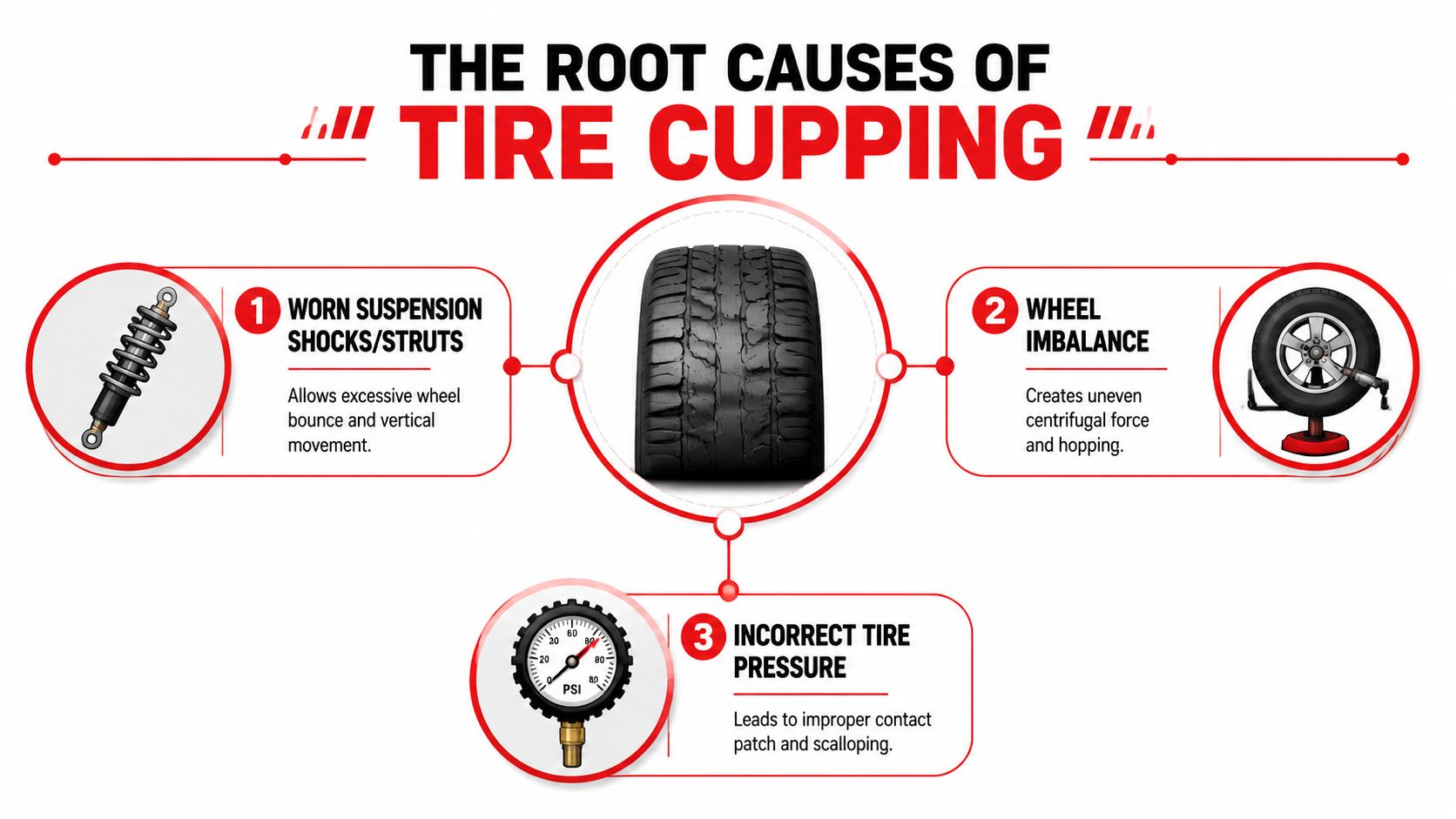
Cupping usually starts when the tire stops staying planted with even force. The wheel bounces, shifts, or scrubs instead of rolling cleanly, and the tread wears in a repeating rhythm that shows up later as those scoop marks.
Suspension bounce is the main failure mode
Worn shocks or struts let the wheel oscillate after a bump instead of settling immediately. That bounce creates dynamic loss of road contact, so the tire lands, lifts, and lands again in the same cycle, which is why industry guidance treats worn dampers as the leading cause. Bridgestone also ties cupping to worn shocks or struts, wheel imbalance, misalignment, and suspension issues, but the common thread is a tire that isn't maintaining stable contact with the pavement.
Balance, alignment, and pressure contribute differently
Wheel imbalance doesn't usually create the same story as bad damping. It introduces a repeated hopping or shake at speed, which can carve wear into specific spots if it goes on long enough. Misalignment works differently again, because the tire scrubs sideways as it rolls, and that side-load changes how the tread disappears.
Incorrect pressure is part of the picture too, but it tends to shift where the tire carries load rather than create the classic bounce cycle by itself. That's why a good tech doesn't stop at the tread pattern. The worn rubber is telling a story about how the tire moved, not just how long it's been on the car.
Why the tire itself is rarely the real problem
The useful message for customers is simple. Cupping is evidence of an underlying vehicle problem, not a stand-alone tire defect. If the root cause stays in place, the replacement tire will often start the same wear cycle again.
That matters for estimates and warranty conversations. A shop that explains the cause in plain language can justify the repair order more clearly and avoid the trap of selling rubber without correcting the fault that damaged it.
Step-by-Step Diagnostic Checks for Cupped Tires
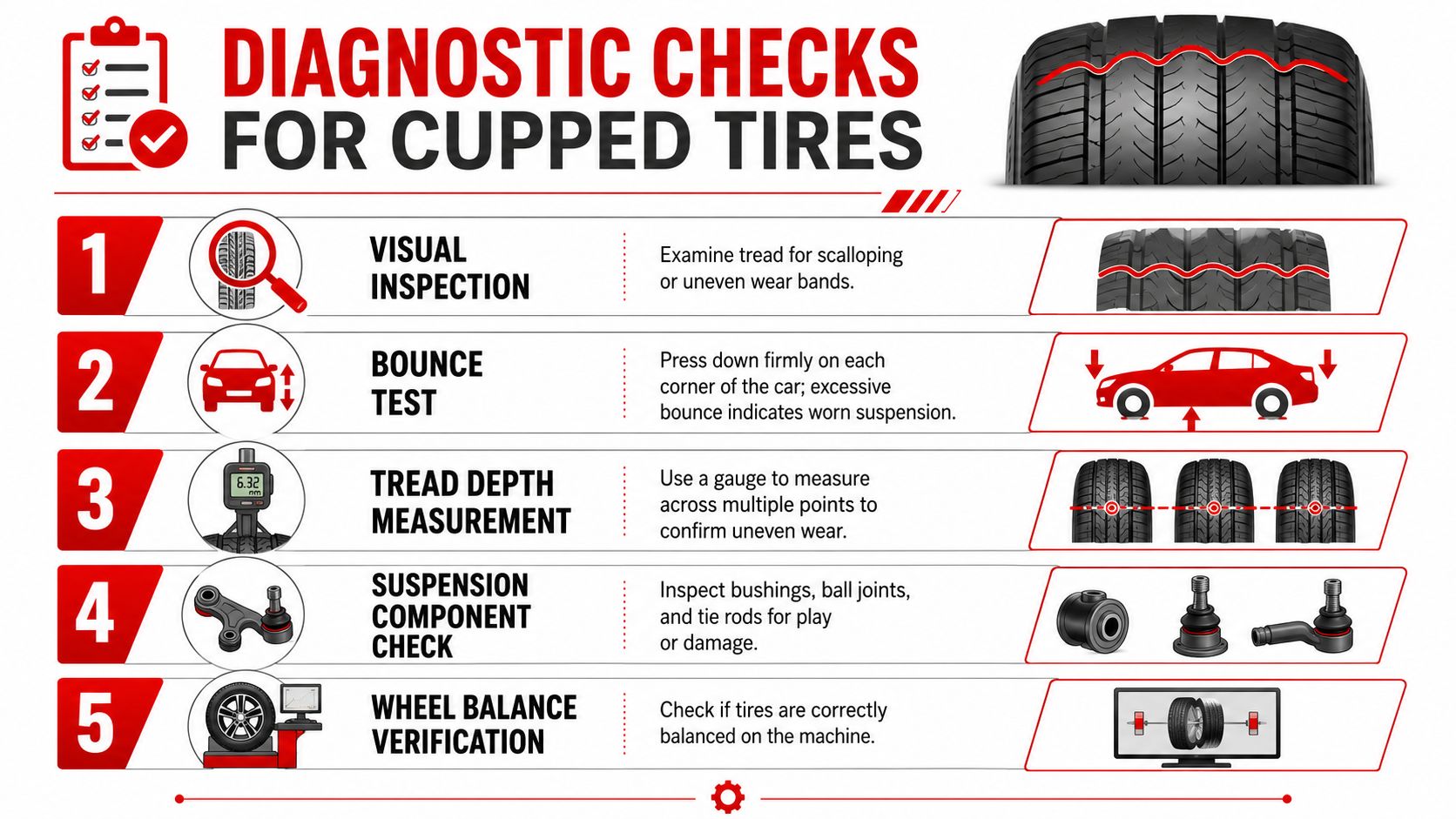
A repeatable workflow keeps the diagnosis from turning into a parts hunt. The best shops move from the tread pattern to the chassis, then confirm whether the problem is bounce, balance, or alignment before they recommend anything.
Start with the corner that feels worst
Check each tire by hand and by eye, then do a bounce test at each corner. If the body keeps moving after the release, the suspension isn't controlling the spring well enough. That test won't name the exact failed part, but it does tell the shop where to dig deeper.
Next, inspect the shock or strut body for leakage and obvious damage. Then move to bushings, ball joints, and tie rods, because play in those parts can let the wheel track poorly even when the damper itself isn't the only issue. A cupped tire often reflects more than one weak link.
Verify the support systems before ordering tires
Spin balancing comes next if the tread wear and complaint point toward a speed-related shake. If the wheel is out of balance, the correction belongs there, not in the tire rack. Alignment measurement follows if the steering feel, edge wear, or pull suggest the tire is scrubbing as it rolls.
The rotation history matters just as much as the mechanical inspection. Les Schwab recommends rotating tires every 5,000 miles, and its guidance links missed rotations with cupping. That makes rotation records part of the diagnosis, not just a maintenance note.
Document what the customer can see
Photos help here because cupping is visual once you know where to look. Take tread shots, note the worst position on the vehicle, and attach any suspension findings to the repair order so the advisor isn't translating from memory later. That paper trail makes the recommendation easier to sell and harder to dispute.
Shop habit that pays off: record the tread pattern, the bounce-test result, and the suspension findings in the same inspection note. That keeps the diagnosis from being split across three conversations.
Repair Recommendations and When to Replace Tires
The wrong move is replacing a tire first and hoping the noise goes away. If the bounce, imbalance, or alignment problem stays on the car, the next tire can develop the same pattern and the comeback lands back in the shop.
Fix the cause first, then decide on the tire
When cupping is still mild, the shop may be able to reduce the symptom by correcting balance, alignment, suspension wear, and the rotation pattern. But the tread itself doesn't heal, so the remaining question is whether the tire still has enough usable life and usable noise level to stay in service. Once the tread is scooped or the ride complaint is severe, replacement becomes the safer recommendation.
A good estimate separates the vehicle repair from the tire decision. That keeps the customer from thinking the shop is padding the invoice, and it makes the sequence logical, first restore stable contact, then decide whether the tire is still worth saving.
Safety drives the urgency
The safety side matters because worn damping affects more than rubber. Braking performance research cited by TheCarBuzz says shocks operating at just 50% efficiency can increase stopping distance by 23%, which it translates to about 21 extra feet when stopping from 31 mph. That doesn't mean every cupped tire is an emergency, but it does mean the underlying suspension concern can carry a real safety cost.
For the customer, the message is straightforward. If the tire is noisy, vibrating, or the tread is too far gone, replacement is part of the fix. If the suspension is worn, that repair comes first or the new tire is likely to follow the old one into the scrap pile.
Sell the repair with proof
Photos, tread measurements, and a clear explanation beat a vague “it looks bad” conversation every time. Show the repeating scoop pattern, point out the weak part on the chassis, and explain why replacing only one piece won't solve the underlying bounce cycle. That is the difference between a one-time ticket and a repeat return.
Preventing Cupping and Streamlining Shop Workflow
Prevention comes from two habits, catching the condition early and documenting maintenance before the tread turns noisy. Shops that build that into every inspection spend less time defending comebacks and more time selling work that holds.
Build rotation and suspension checks into routine service
Rotation history should be reviewed on every tire complaint and every tire service visit. Since Les Schwab ties missed rotations to cupping and recommends 5,000-mile rotation intervals, that schedule belongs in the shop's reminder system and on the advisor's checklist. Suspension checks also need to live inside alignment work, not outside it.
That matters because a customer rarely notices cupping at the first scuff mark. By the time the hum shows up, the wear pattern has already developed enough to be felt by hand, and the shop is no longer preventing the problem, it's cleaning up after it. Early inspections are cheaper than surprise replacements.
Use inspection photos to sell the right job
Digital inspections help because tread wear is easier to approve when the customer sees it. A photo of the tread, a note about the bounce test, and a suspension finding in the same estimate make the recommendation harder to ignore. That also reduces the chance that the advisor sells a tire-only fix when the chassis is still the primary problem.
A Kanban-style shop board helps the same way behind the counter. It keeps the cupped-tire job moving from check-in to diagnosis to estimate without losing the tread photos or suspension notes in the shuffle. For shops trying to reduce admin drag and turn inspections into approvals, a platform such as RedAppy can centralize digital inspections, estimates, and job tracking.
If cupped tires keep coming back in the bay, the repair process needs better visibility, better notes, and a tighter handoff from technician to advisor. RedAppy helps shops manage digital inspections, estimates, and job flow in one place, so cupped-tire findings are easier to document and easier to sell. Visit RedAppy to see how a cleaner workflow can support stronger approvals and fewer comebacks.
Ready to Transform Your Shop?
RedAppy helps auto repair shops create professional digital estimates with photos and videos, send them instantly via text or email, and get customer approvals in seconds. No credit card required to start.